
Forged Soft Seated Trunnion Ball Valves
CARILO forged soft seated trunnion ball valves are used to open or stop flow in natural-gas stations, oil and gas pipelines, refineries and other clean-fluid lines. The ball is held in place by upper and lower supports. Spring-loaded soft seats provide tight shutoff while keeping the valve easier to operate at high pressure.
Choose SPE/SPE DBB for built-in pressure relief, DPE/DPE DIB-1 for two sealing barriers, or SPE/DPE DIB-2 for a mix of backup sealing and pressure relief. We confirm the pressure direction and relief method before production.
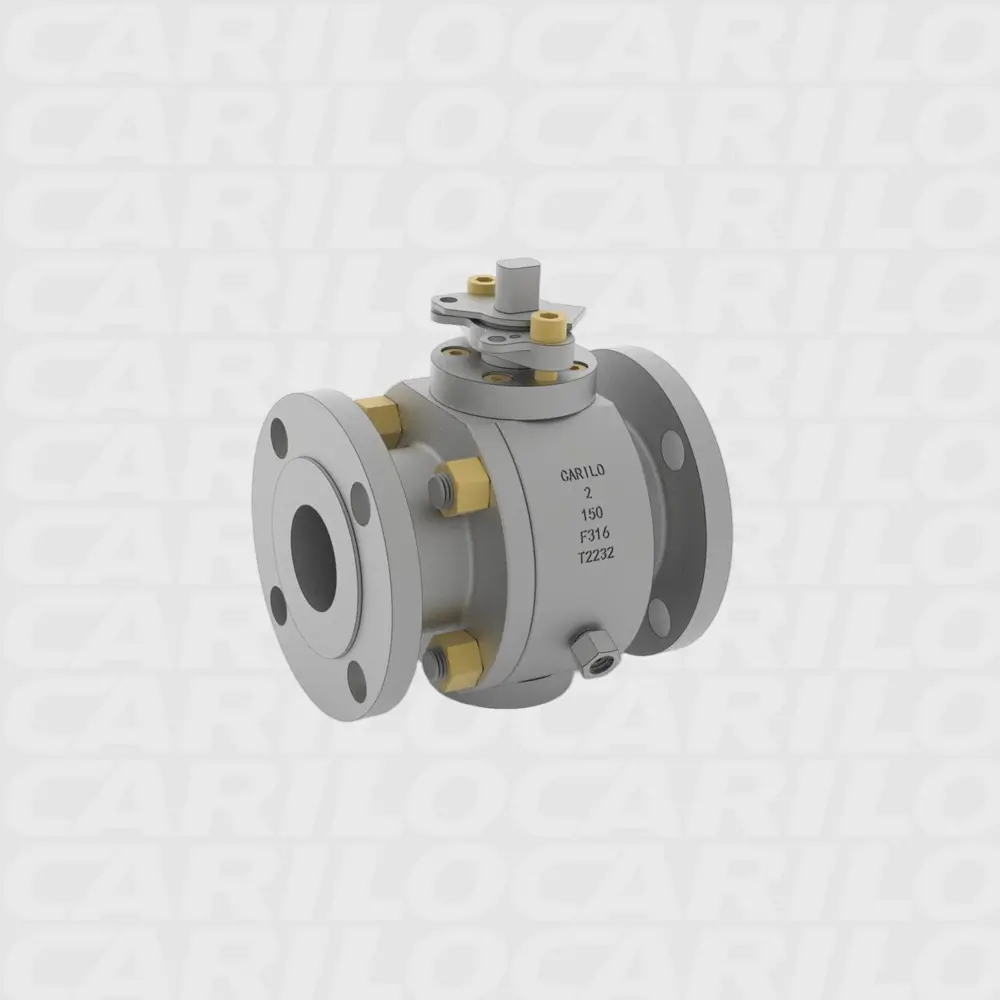
Built for reliable shutoff in high-pressure pipelines.
The ball is held in place by upper and lower supports. Pipeline pressure is carried by these supports instead of pushing the ball hard against one seat. This helps reduce operating force and protects the soft seats, especially on larger and higher-pressure valves.
Safety and sealing features
The final feature set depends on valve size, pressure class, seat type, operator and the requirements in your order.
- Stem designed to resist blowout
- Anti-static connection between ball, stem and body
- Backup sealing for fire-safe service
- Release path for trapped body pressure
- Optional emergency sealant injection for stem and seats
- O-ring and gasket sealing combination
- Delta ring seat design (optional)
- Lipseal design (optional)
- Superior stem sealing performance compliant with low-emissions environmental standards (optional)
Ball held by upper and lower supports
The supports keep the ball in position and carry the pressure load. This reduces the load on the seats compared with a floating ball valve.
Seats kept in contact by springs
Springs keep the seats touching the ball at low pressure. Pipeline pressure or pressure inside the valve then helps the selected SPE or DPE seat seal more tightly.
Two- or three-piece bolted body
The bolted body allows internal parts to be inspected and repaired when the valve design and site conditions allow it.
Choose the seat setup that matches your pipeline.
The three options below handle pressure in different ways. Compare how each setup seals, how trapped pressure is released, and whether a second sealing barrier is needed.
DBB with self-relieving seats
Each seat seals when pressure comes from the pipeline side. If pressure builds inside the closed valve body, one SPE seat can move slightly and release that pressure back to the lower-pressure side.
- Can shut off pressure from either end under the stated test conditions
- Built-in pressure relief through an SPE seat
- Common choice when automatic self-relief is required
DIB-1 with two sealing barriers
Both DPE seats can seal against pressure from the line or from inside the valve body. If the first seat leaks, the second seat can still provide a backup barrier when the valve is designed and tested for DIB-1 service.
- Two pressure-activated sealing barriers
- Usually needs a separate cavity pressure-relief device
- Relief pressure and discharge location must be stated
DIB-2 with relief and backup sealing
One SPE seat and one DPE seat are used together. The SPE side provides the pressure-relief path, while the DPE side provides the backup barrier in the required pressure direction.
- DPE seat is normally placed on the protected downstream side
- SPE seat provides the planned pressure-relief path
- Flow arrow, seat direction and test direction must match
A closed valve can trap liquid inside the body. Sunlight, heat tracing, hot pipework or a shutdown can warm this liquid and raise the pressure quickly. We confirm the pressure-relief path before the valve is approved.
Learn about trapped cavity pressureSizes, pressure classes and connection options.
- Body construction
- Two-piece or three-piece bolted forged body. The available design depends on size and pressure class.
- Bore options
- Full bore or reduced bore. For pigging service, the complete finished opening through the valve must be checked.
- Flanged ends
- Raised-face or ring-type-joint flanges to the applicable ASME B16.5 or ASME B16.47 standard.
- Welded ends
- Socket-weld ends to ASME B16.11 or butt-weld ends prepared to ASME B16.25.
- Design basis
- Designed to API 6D requirements. State the required standard edition and any special requirements in the order.
- Face-to-face
- Face-to-face dimensions follow the applicable API 6D requirement and the approved drawing.
- Temperature range
- -20°F to 392°F (-29°C to 200°C). The actual limit depends on pressure, body material, seat material and seals.
- Seat arrangements
- SPE/SPE DBB, DPE/DPE DIB-1 or SPE/DPE DIB-2. Pressure direction and the method used to release trapped pressure must be confirmed.
- Testing scope
- Inspection and testing can follow API 6D, ISO 5208 and API 598 as required by the order.
- Qualification scope
- API 607 fire-safe testing, ISO 15848-2 low-emission requirements and PED 2014/68/EU documents can be supplied when required and applicable.
- Operation
- Available with a lever, gearbox, bare shaft, pneumatic actuator, electric actuator or hydraulic actuator.
- Primary duty
- Made for open-close shutoff of clean gas, hydrocarbons and compatible industrial fluids. It is not intended for normal flow control.
Pressure class is only one part of the rating. The allowed working pressure also depends on temperature, body material, end material, bolts, seats, O-rings, packing and gaskets.
For pigging service, check the smallest finished opening through the valve ends, seats and ball port. Pipe wall thickness, weld shape, gasket position, coating and the fully open ball position can all reduce the clear opening.
Six details that help us select the right valve.
Size and pressure class are not enough for an accurate quote. Please also provide the fluid, temperature, pressure direction, worst-case conditions, actuator power supply and required test documents.
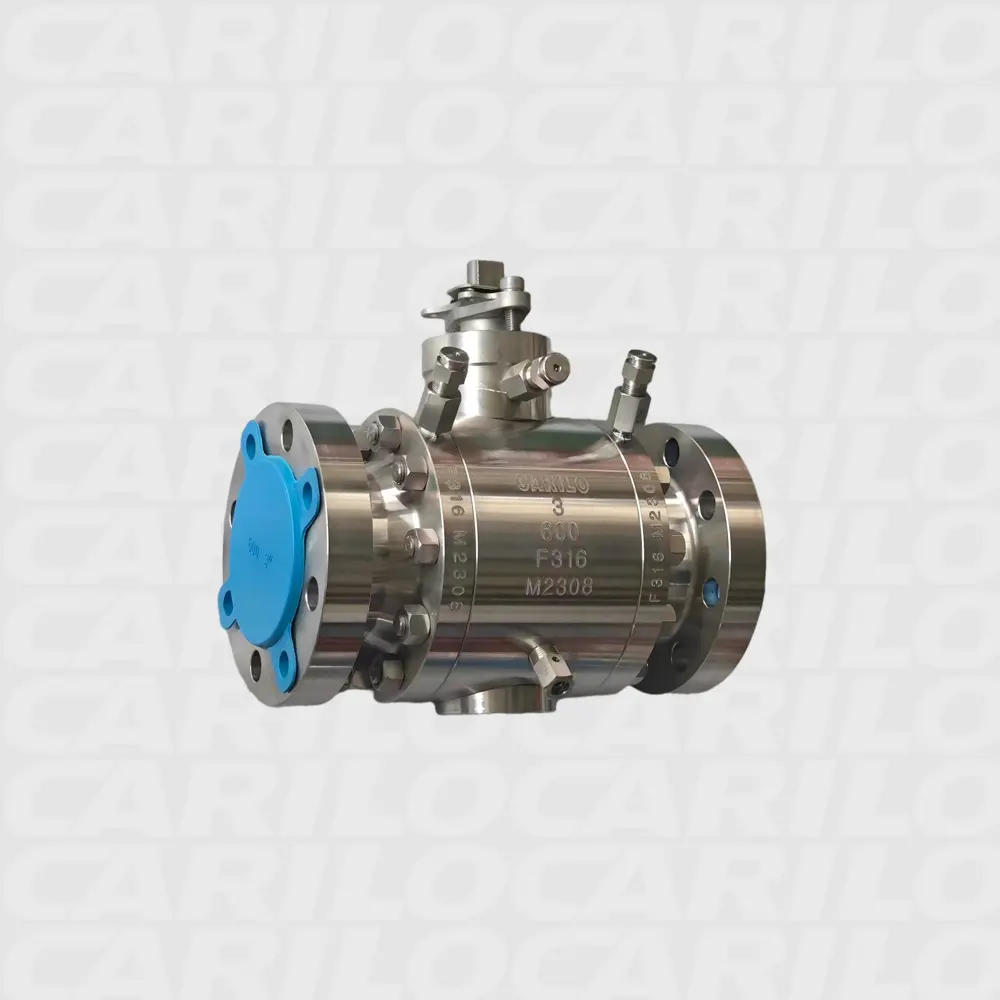
Valve images & products by CARILO VALVE.
Unauthorized use prohibited.
Tell us the fluid, pressure and temperature
Tell us what flows through the valve, whether it contains particles, the lowest and highest temperature, normal and maximum pressure difference, design pressure and any unusual operating condition.
Check pressure class at higher temperaturesChoose full bore or reduced bore
Full bore gives a larger flow path and is often used for pigging. However, the exact pig or inspection tool still needs to be checked against the finished valve and connecting pipe.
Check whether the pig can passSelect DBB, DIB-1 or DIB-2
Tell us which side normally has pressure, whether you need a backup sealing barrier and how pressure trapped inside the closed valve should be released.
See how SPE and DPE seats workChoose the connection and installation position
Choose RF, RTJ, socket-weld or butt-weld ends. Also provide pipe wall thickness, matching flange or weld size, corrosion allowance, coating, pipe loads, actuator weight and installation direction.
Check wall thickness and corrosion allowanceTell us how the valve will be operated
Tell us whether the valve is manual or automated, whether it must fail open or fail closed, the lowest available air or hydraulic pressure, voltage, required opening time and emergency shutdown duty.
Check actuator sizingList the tests and documents you need
List the required pressure tests, fire-safe or low-emission records, NDE, PMI, third-party inspection, material certificates, ITP, FAT, coating records and final manufacturing documents.
See available traceability recordsChoose materials and an operator that fit the job.
The body, ball, stem, seats, seals, packing, bolts, gearbox and actuator need to work together. The correct choice depends on the fluid, pressure, temperature, corrosion risk and required operating force.
Body, ball and stem materials
Carbon steel, low-alloy steel and stainless steel can be selected to suit the fluid, temperature, pressure class, corrosion allowance and impact-test requirements. NACE MR0175 / ISO 15156 sour-service requirements can be reviewed when requested.
Seat and seal materials
Available seat materials include PTFE, reinforced PTFE and PEEK. Available sealing-ring materials include NBR, FKM and EPDM for suitable valve models. The final choice depends on the fluid, concentration, pressure, temperature, rapid pressure drop and particle content.
Stem sealing and low-emission options
Low-emission stem packing can be supplied when ISO 15848-2 is required. Packing material, tightening load, backup sealing, stem finish and temperature changes are checked together to limit leakage without making the valve too hard to operate.
Learn about stem packingActuator sizing and torque limits
The actuator must have enough force to open and close the valve at the lowest available power supply. Its maximum output must also stay below the safe torque limit of the stem, ball drive, key, coupling, gearbox and mounting parts.
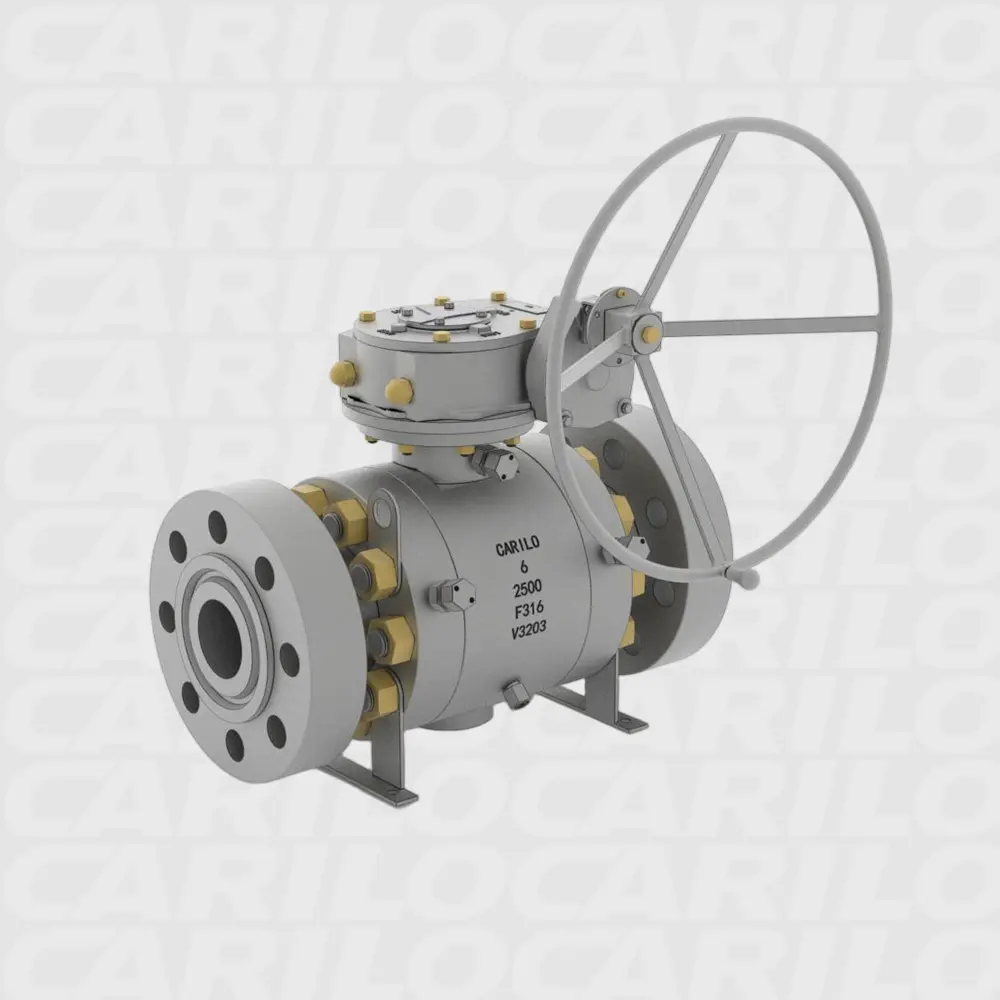
Reliable shutoff for clean gas and liquid lines.
Soft seats are a good choice when tight shutoff and easy operation are important. Lines with abrasive particles, slurry, high temperature, heavy erosion or frequent severe cycling may need a metal-seated valve instead.
Gas transmission and distribution stations
For main lines, station inlets and outlets, metering, compression and distribution shutoff, with the required pressure-relief and emergency shutdown setup.
Oil and gas pipelines
For section shutoff, pig launcher and receiver stations, piggable lines and emergency shutdown packages after bore and actuator checks.
Refinery and petrochemical isolation
For clean hydrocarbon and compatible process lines that need open-close shutoff within the selected seat material limits.
Automated valve packages
Can be supplied with a gearbox or pneumatic, electric or hydraulic actuator, with ISO 5211 mounting, travel stops, position indication and the required fail position.
How we check, test and document each order.
Material verification
Before production, we confirm the material grade, heat or batch number, certificate link, impact testing, PMI and sour-service requirements.
Machining and dimensional control
Key dimensions of the body, bore, seats, stem and end connections are checked against the approved drawings and tolerances.
Assembly and functional checks
We check seat direction, stem retention, anti-static connection, gearbox or actuator alignment, position indication and travel stops.
Pressure and leakage testing
Body, seat and operating tests follow the approved inspection plan, test standard, pressure direction and acceptance limits.
Protection and shipment
Openings, internal surfaces, actuator movement and external coating are protected for export packing and delivery.
Documents supplied with the order
Required documents are agreed before production. Available records can support purchasing, third-party inspection, handover and later review.
Inspection, spare parts and after-sales support
CARILO can provide spare parts, technical support, in-house NDE and document support. For CARILO valves, we use the original production records where available. For other brands, we first review the drawing, sample and whether the work is practical.
View valve service supportOther valve types for tougher service conditions.
High temperature, abrasive particles, limited installation space or cryogenic service may need a different valve design. Check the full working condition instead of changing only the seat material.
Helpful answers for common valve problems.
These guides explain common questions about seat direction, trapped pressure, actuator sizing, stem torque and field leakage. Always use the approved drawing and procedure for the exact valve.
Ball valve leaks in only one flow direction
See how seat direction, wrong installation, incomplete travel and seat damage can cause one-way leakage.
Why pressure builds inside a closed ball valve
Learn how heat, seat leakage and vaporization can raise trapped pressure, and how that pressure can be released safely.
Actuator safety factor for normal and emergency duty
Size the actuator using the real valve torque, the lowest power supply and a suitable safety margin.
Maximum allowable stem torque and actuator limits
Keep the actuator output below the safe limit of the stem, coupling, gearbox and other drive parts.
Valve indicates closed but flow continues
Check the travel stop, actuator connection, bypass line, seat condition and pressure direction.
Common questions before you order.
The final valve is selected from your actual working conditions, approved drawings and order requirements.
What is the available size and pressure range?
What is the difference between DBB, DIB-1 and DIB-2?
Is a full-bore valve automatically piggable?
Which seat and seal materials can be considered?
Can the valve be supplied with an actuator?
Is this valve suitable for abrasive, slurry or high-temperature service?
Which inspection and documentation can be specified?
What information is required for an accurate RFQ?
Send us your working conditions for a clear valve recommendation.
Before quoting, CARILO can check the valve body, seat setup, trapped-pressure relief, bore, end connection, operator, materials, tests and required documents.
- Size & class
- Media
- Pressure & temperature
- Seat direction
- Materials
- Actuator
- Testing
- Documents
- Quantity
- Destination