
CARILO Floating Ball Valve
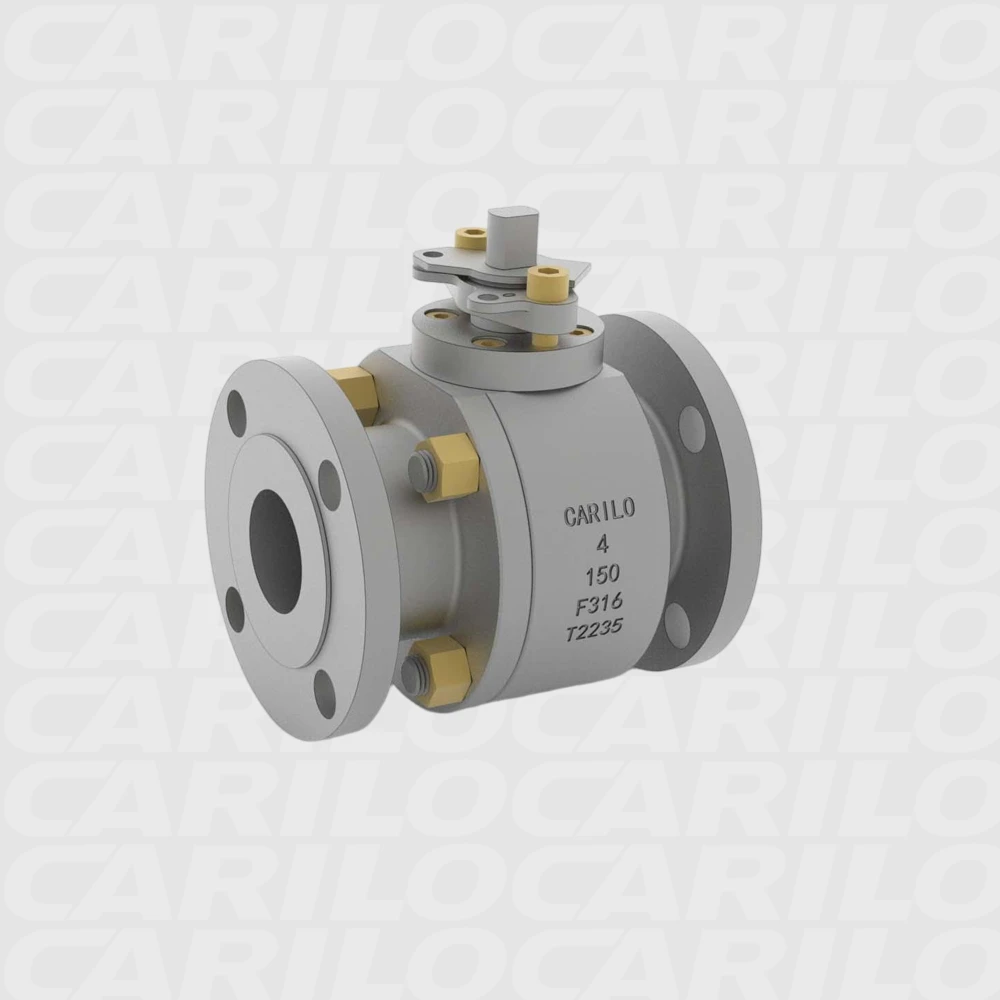
Forged Soft-Seated Floating Ball Valve
This forged ball valve is available in two-piece or three-piece construction. Line pressure pushes the floating ball against the downstream soft seat to provide tight shut-off in either flow direction. Sizes and pressure classes are available from Class 150 to Class 2500, with full-bore or reduced-bore options.
Sealing Principle
How the Floating Ball Creates a Tight Seal
The ball sits between two soft seats and is free to move slightly. When the valve is closed, line pressure pushes the ball against the downstream seat. This extra contact pressure helps the valve stop flow without visible leakage.
Review gas-pipeline sealing considerationsOpen or Close in a Quarter Turn
Turning the stem 90 degrees opens or closes the valve. When open, the hole through the ball lines up with the pipe. When closed, the solid side of the ball blocks the flow.
Pressure Pushes the Ball Against the Seat
When pressure builds on the inlet side, the ball moves slightly toward the outlet seat. This makes the seal tighter as line pressure increases.
Bubble-Tight Shut-Off
The soft seat, smooth ball surface, correct assembly, and pressure testing work together to meet ISO 5208 Rate A when the valve is used with suitable clean media.
Works in Either Flow Direction
The valve can stop flow from either direction, which gives you more flexibility when planning the piping layout.
NOTICE: © Valve images & products by CARILO VALVE. Unauthorized use prohibited.
Technical Specification
Main Sizes, Materials, and Connection Options
Use the information below to match the valve to your pressure, temperature, fluid, piping connection, operating method, and leakage requirement.
- Valve design
- Side-entry floating ball valve designed to API 6D requirements
- Size and class
- 1/2"–8", Class 150–300; 1/2"–4", Class 600; 1/2"–2", Class 900–1500; 1/2"–1.5", Class 2500
- Temperature
- Standard range -29°C to 200°C (-20°F to 392°F), subject to seat, seal, material, and pressure-temperature rating
- Body construction
- Bolted two-piece or bolted three-piece forged split body
- Port configuration
- Full bore or reduced bore
- End connections
- RF, RTJ, socket weld, or butt weld to applicable ASME dimensional standards
- Operation
- Lever handle, gear operator, bare shaft, or ISO 5211 actuator-mounted package
- Standard materials
- Carbon steel, stainless steel, duplex, super duplex, and project-specific corrosion-resistant alloys
Design Features
Built-In Safety and Sealing Features
Tell us if you need low-emission packing, special seat or seal materials, sour-service materials, or an actuator package. We will include these items in the valve specification and quotation.
Anti-Blowout Stem
The stem is held inside the body, helping prevent it from being pushed out by line pressure.
Anti-Static Device
A spring-loaded anti-static device helps carry static electricity from the ball and stem to the valve body.
Bi-Directional Shut-Off
The valve can shut off flow from either direction, making piping installation easier.
Low-Emission Packing
Low-emission stem packing can be supplied when ISO 15848-2 Class A testing is required.
Low Pressure Drop
The full-bore version keeps the flow path close to the pipe diameter, reducing pressure loss and allowing pigging when required.
Different Seal Options
O-rings, lip seals, graphite parts, and different elastomers can be selected to suit the fluid and temperature.
Ready for an Actuator
The ISO 5211 mounting pad allows the valve to be fitted with pneumatic, electric, or hydraulic actuators.
Compact Forged Body
The forged body gives the valve a strong pressure-containing structure while keeping the overall size compact.
Choose the Right Bore
Full Bore or Reduced Bore
Choose full bore when low pressure loss or pigging is important. Choose reduced bore when lower weight and cost are more important. The bore size also affects valve torque and the space needed in the pipeline.
See when to use soft seats or metal seatsFull Bore
The ball port closely matches the pipe internal diameter.
- Minimum flow restriction
- Pipeline pigging capability
- Suitable for gas and viscous clean media
Reduced Bore
The ball port is smaller than the connecting pipeline bore.
- Lower valve weight
- Lower material cost
- General water, air, and oil isolation
Size and Pressure Range
Available Sizes for Each Pressure Class
Pressure class alone is not enough. Also check the working temperature, fluid, body material, seat material, pipe connection, and test standard.
Class 150–300
1/2"–8"
- Water treatment systems
- HVAC isolation
- Refinery utility lines
- Light-duty gathering service
Class 600
1/2"–4"
- Petrochemical process lines
- Refinery hydrocarbon streams
- Process water systems
- Moderately corrosive clean fluids
Class 900–1500
1/2"–2"
- Wellhead control lines
- High-pressure injection
- Boiler feedwater isolation
- High-pressure hydraulic lines
Class 2500
1/2"–1.5"
- High-pressure oilfield service
- Critical hydraulic isolation
- Selected refinery duties
- High-pressure service with special requirements
Quality Assurance
Materials, Tests, and Records You Can Check
Your order can include material certificates, size checks, pressure-test reports, operation checks, drawings, and other inspection records you request.
Read the forged-valve manufacturing guideMaterial Records
Heat numbers and material certificates can be followed from the forged parts through machining, assembly, testing, and final documents.
Size and Dimension Checks
We check important dimensions, flange details, surface condition, wall thickness, and coating thickness against the approved drawing or specification.
Seat and Shell Testing
Seat leakage testing is carried out at 1.1 times the rated pressure, and the valve body is hydrostatically tested at 1.5 times the rated pressure, according to the stated test standard.
Functional and Torque Checks
The valve is opened and closed to check smooth operation. Torque readings can also be used to choose the correct handle, gearbox, or actuator.
Material and Hardness Checks
Chemical composition, hardness, and impact test results can be checked when required by the material grade or order specification.
Documents Before Shipment
Material reports, inspection records, pressure-test reports, drawings, and requested certificates can be prepared before shipment.
Quality Documents
Open the Files Used to Review Our Quality System
Check available certificates, quality-management information, and the ball valve catalogue while reviewing materials, tests, and inspection records.
Forging
The main pressure-containing parts are forged to provide a strong and consistent metal structure.
Machining
CNC machines are used to control body dimensions, stem size, ball finish, and the surfaces that contact the seats.
Assembly
The ball, seats, stem, seals, gaskets, and body bolts are assembled with the materials listed in the approved specification.
Test and Release
Pressure, leakage, operation, appearance, and size checks are completed before painting, marking, and packing.
Standards and Records
Standards Available for Your Order
Tell us which standards and certificates your order needs. Availability depends on the valve size, pressure class, material, design, testing level, and destination market.
Options for Your Service Conditions
Choose Materials, Seals, and Actuation for Your Service
Send us the fluid, pressure, temperature, and operating details. We can help you choose suitable body materials, seat materials, seals, actuators, tests, and documents.
Review actuator torque and safety-factor selectionCorrosion-Resistant Alloys
Duplex, super duplex, Alloy 625, Alloy 825, and other corrosion-resistant materials are available for seawater, corrosive fluids, or sour service when required.
Automated Valve Packages
Pneumatic, electric, or hydraulic actuators can be supplied with limit switches, position indicators, and other control accessories.
Seat and Seal Materials
Seat and seal options include PTFE, RPTFE, PEEK, PCTFE, Devlon, graphite, FKM, HNBR, and FFKM. The correct choice depends on the fluid, pressure, and temperature.
Inspection and Documentation
Third-party inspection, non-destructive testing, high-pressure gas testing, fugitive-emission testing, fire-safe records, and extra documents can be included when requested.
Helpful Guides Before You Order
Simple Guides for Choosing the Right Valve
These guides explain seat choices, emission testing, forged-valve manufacturing, pressure classes, and actuator torque in clear terms.
Soft-Seated vs Metal-Seated
See when a soft seat is suitable and when a metal seat is the safer choice.
Read guide Compliance GuideISO 15848 Fugitive-Emission Testing
Learn what ISO 15848 testing checks and which records may be included.
Read guide Actuation GuideBreak Torque and Run Torque
Learn the difference between break torque and running torque before choosing a gearbox or actuator.
Read guide Manufacturing GuideHow Forged Ball Valves Are Made
See how forged valve parts are made, machined, checked, tested, and recorded.
Read guide Product TopicHigh-Pressure API 6D Forged Ball Valves
See the main design, seat, connection, and testing choices for high-pressure ball valves.
Read guide SupportValve Engineering Help Center
Find clear answers about floating valves, trunnion valves, seats, materials, testing, and standards.
Visit help centerCommon Questions
What Customers Usually Ask
Clear operating details help us quote the right valve and avoid changes after production starts.
Which pressure classes and sizes are available?
What is the standard operating-temperature range?
Which body materials can be supplied?
Can the valve be supplied with an actuator?
When should a metal-seated valve be selected instead?
Which documents can be requested with the order?
What information is needed for an accurate quotation?
Request a Quote
Send Us the Basic Details of Your Application
Send the size, pressure, temperature, fluid, materials, connection type, quantity, and operating method. We will use these details to prepare the valve specification and quotation.