
Forged Cryogenic Ball Valves Down to −196°C
CARILO manufactures side-entry cryogenic ball valves for LNG, petrochemical and industrial-gas systems. Floating and trunnion-mounted structures, soft or metal seats, forged construction up to NPS 48, and pressure classes from ASME Class 150 to 2500LB are available to match different fluids, temperatures and line conditions.
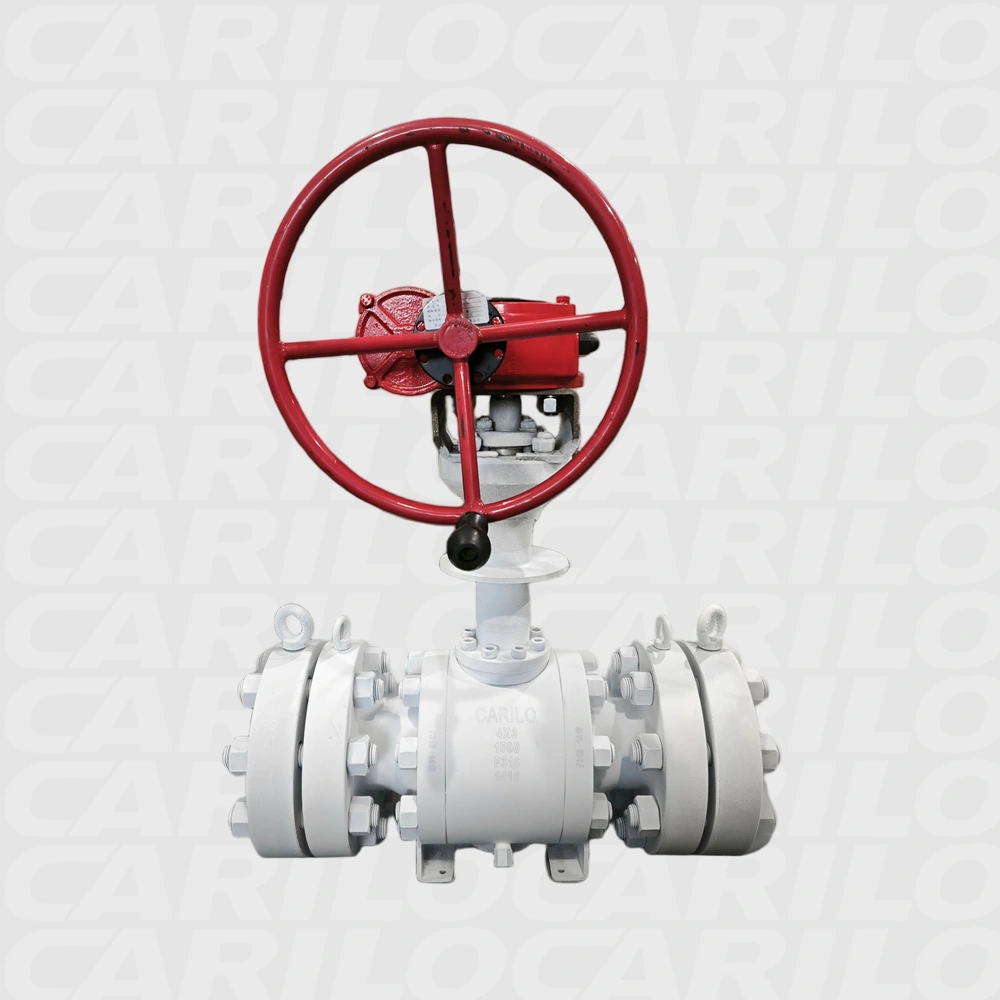
Choose the Right Seat and Valve Type for the Fluid
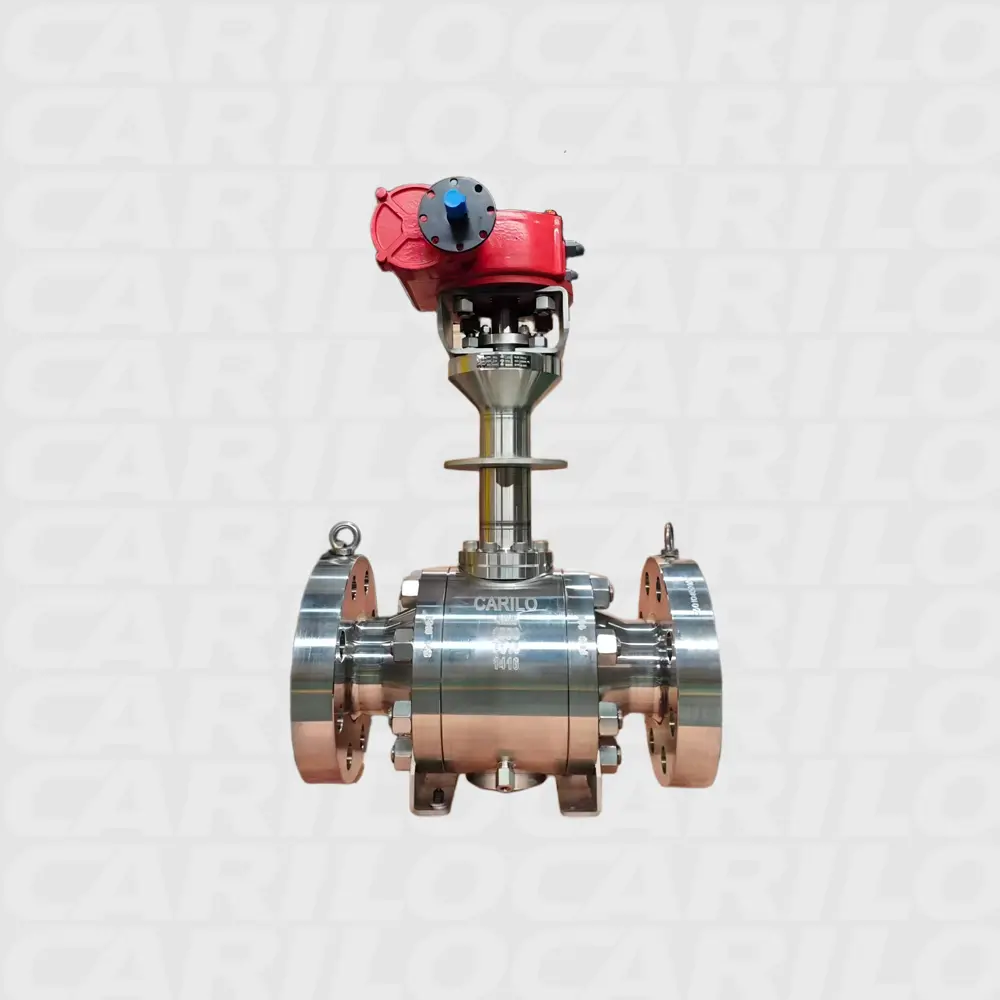
Very low temperatures make metal parts shrink and can make seals harder. CARILO uses an extended bonnet, suitable body materials, smooth sealing surfaces, low-temperature treatment and cold testing to help the valve keep working and sealing correctly.
Clean LNG, LOX, LIN and LAR usually use a soft seat because it seals tightly and needs less force to operate. Fluids with particles, strong wear or frequent hot-and-cold changes may need a forged metal-seated ball valve. Large-bore, high-pressure lines normally use a trunnion-supported structure, while compact pipelines may use a floating-ball design.
Temperature Ranges from LPG to LNG
Four Things That Matter in Very Cold Service
For more help with valve selection, read CARILO’s LNG cryogenic ball valve selection guide.
Metal Must Stay Strong
The body, bonnet and other pressure parts must stay strong at the lowest working temperature.
Parts Shrink in the Cold
The ball, seat, stem and body shrink by different amounts. This can change sealing pressure and operating force.
Keep Stem Packing Away from the Cold
The extended bonnet keeps the stem packing farther from the cold fluid, which helps reduce stem leakage.
Agree on the Test Standard
The order should clearly state the shell test, seat test, stem test and allowed leakage level.
NOTICE: © Valve images & products by CARILO VALVE. Unauthorized use prohibited.
Use the Lowest Working Temperature When Choosing the Valve
Provide the lowest temperature, fluid condition, pressure, allowed leakage, operating frequency, actuator supply and insulation details. These items affect the valve material, seat, bonnet length and operating force.
How to Choose - Floating Ball Valve or Trunnion Mounted Ball Valve
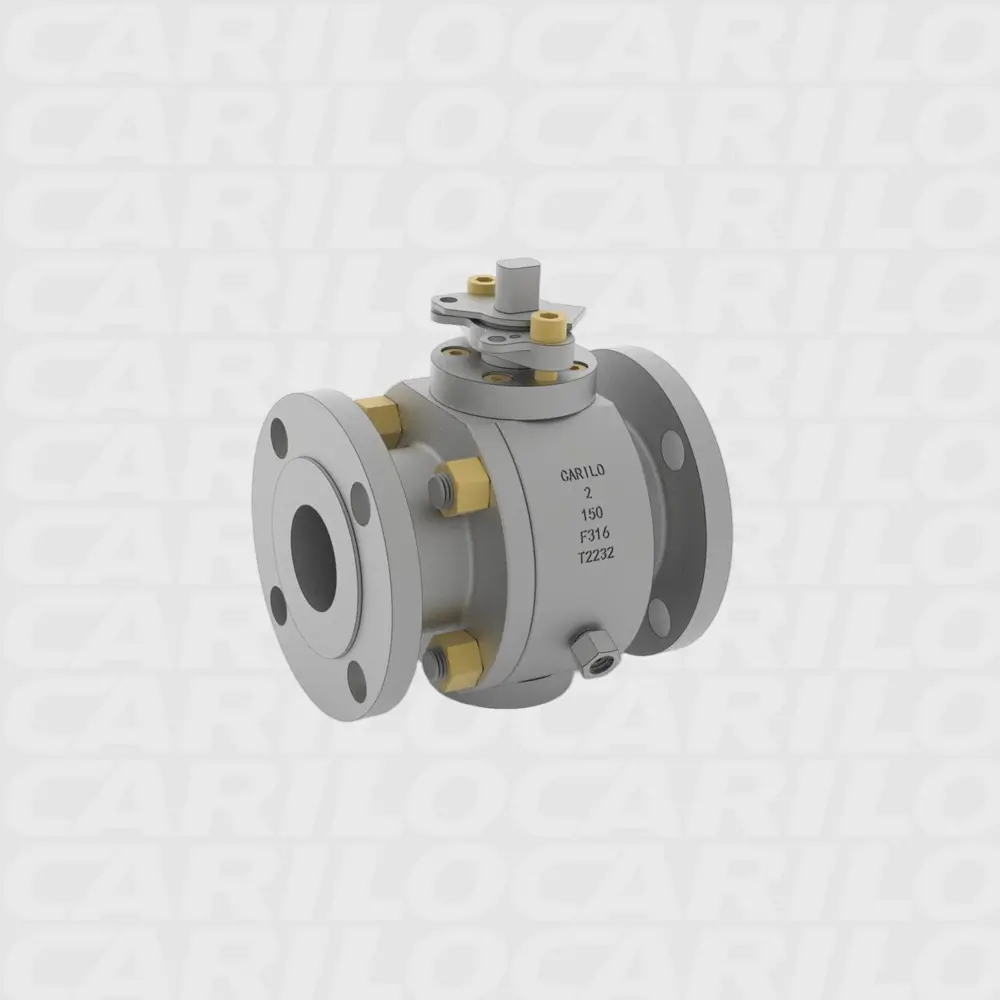
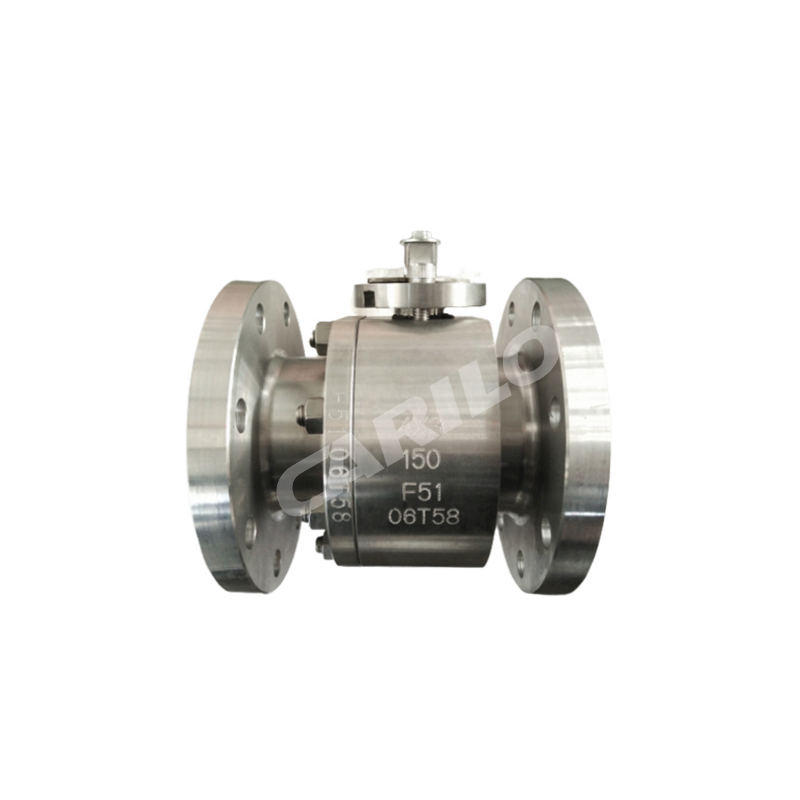
Side-Entry Cryogenic Floating Ball Valve
A compact design for small and medium cryogenic pipes. It needs less operating force and suits frequent opening and closing.
- Structure
- Floating ball, compact side-entry layout
- Size
- NPS 1/2″ to 8″
- Pressure
- ASME Class 150 to 2500LB
- Typical Duty
- Small and medium lines with frequent isolation cycles
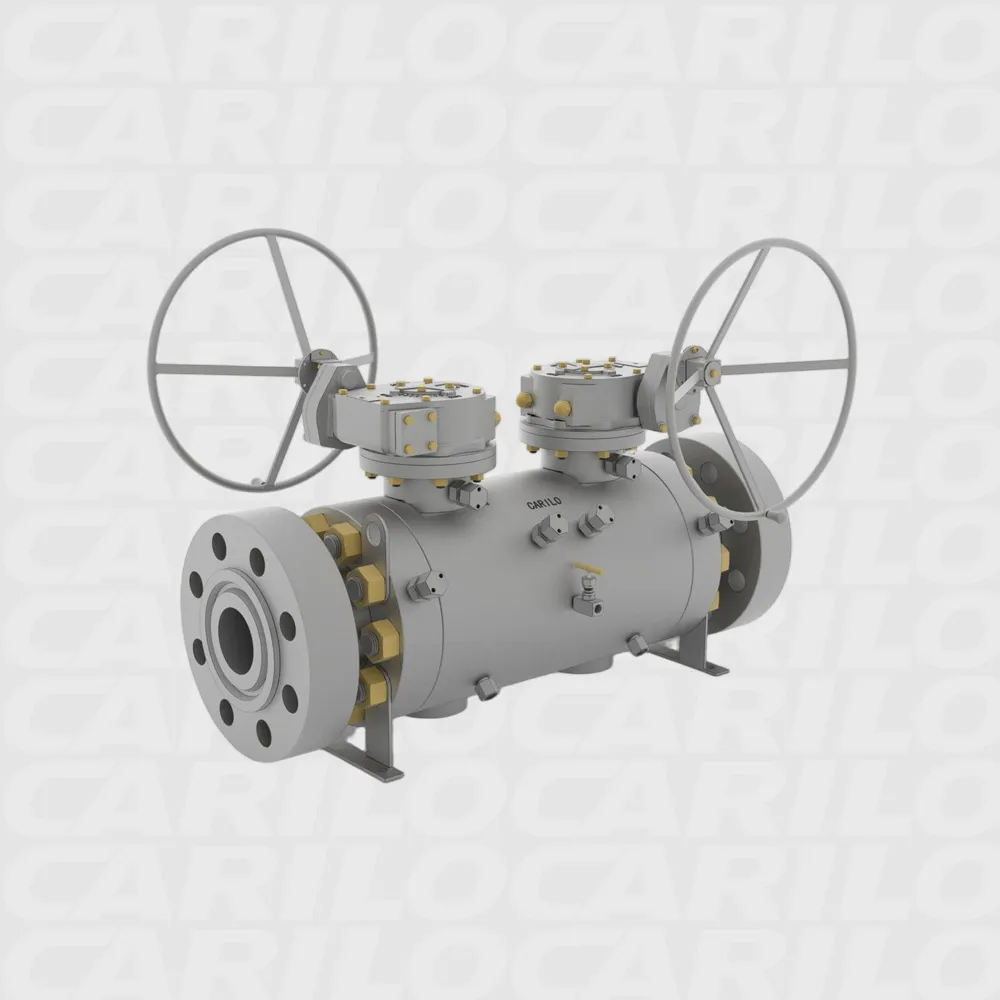
Side-Entry Cryogenic Trunnion-Mounted Ball Valve
The supported ball handles larger pipe sizes and higher pressure, and reduces the load on the seats.
- Structure
- Trunnion-supported ball
- Soft Seat
- NPS 1/2″ to 48″
- Metal Seat
- NPS 1/2″ to 40″
- Pressure
- ASME Class 150 to 2500LB
Choose the Body Material by the Lowest Working Temperature
Materials for cold service must pass the required low-temperature impact test. For LNG-grade F316L and CF3M, the listed maximum carbon content is 0.03 percent.
| Minimum Temperature | Cast Steel | Forged Steel | Typical Medium or Process |
|---|---|---|---|
| −46°C | LCC / LCB under ASTM A352 | LF2 under ASTM A350 | LPG and low-temperature carbon-dioxide service |
| −101°C | LC3 / CF3 / CF8 under ASTM A352 or A351 | LF3 under ASTM A350 | Ethylene and propylene service |
| −196°C | CF3M / CF8M under ASTM A351 | F316 / F316L under ASTM A182 | LNG, liquid oxygen, liquid nitrogen and liquid argon |
Body and Bonnet
Forged or cast stainless steelSelected according to minimum temperature, pressure class and corrosion demand.
Stem
XM-19 / Inconel 718Strong stem materials for low-temperature service and extended bonnets.
Ball
316L with hard facingHardened and finished to match the selected seat.
Seat
PCTFE / PTFE / STL / NISS / TCCSoft or metal seats selected by temperature, fluid particles and operating frequency.
Packing and Gasket
Graphite / Elgiloy / PTFE lip sealStem and body seals selected to stay tight when parts shrink in the cold.
Choose Full Bore for More Flow or Reduced Bore for Lower Weight and Torque
Full Bore
The opening through the valve is close to the pipe opening. It gives more flow and is the better choice when pressure loss must be kept low.
Read the full-bore pigging check guide before using a valve in a piggable line.
Reduced Bore
The valve opening is smaller than the pipe opening. It is useful when a small increase in flow resistance is acceptable.
The actual weight, cost, pressure loss and torque depend on valve size, pressure class, material and seat design.
Socket Weld, Butt Weld and RF or RTJ Flanges
Socket Weld
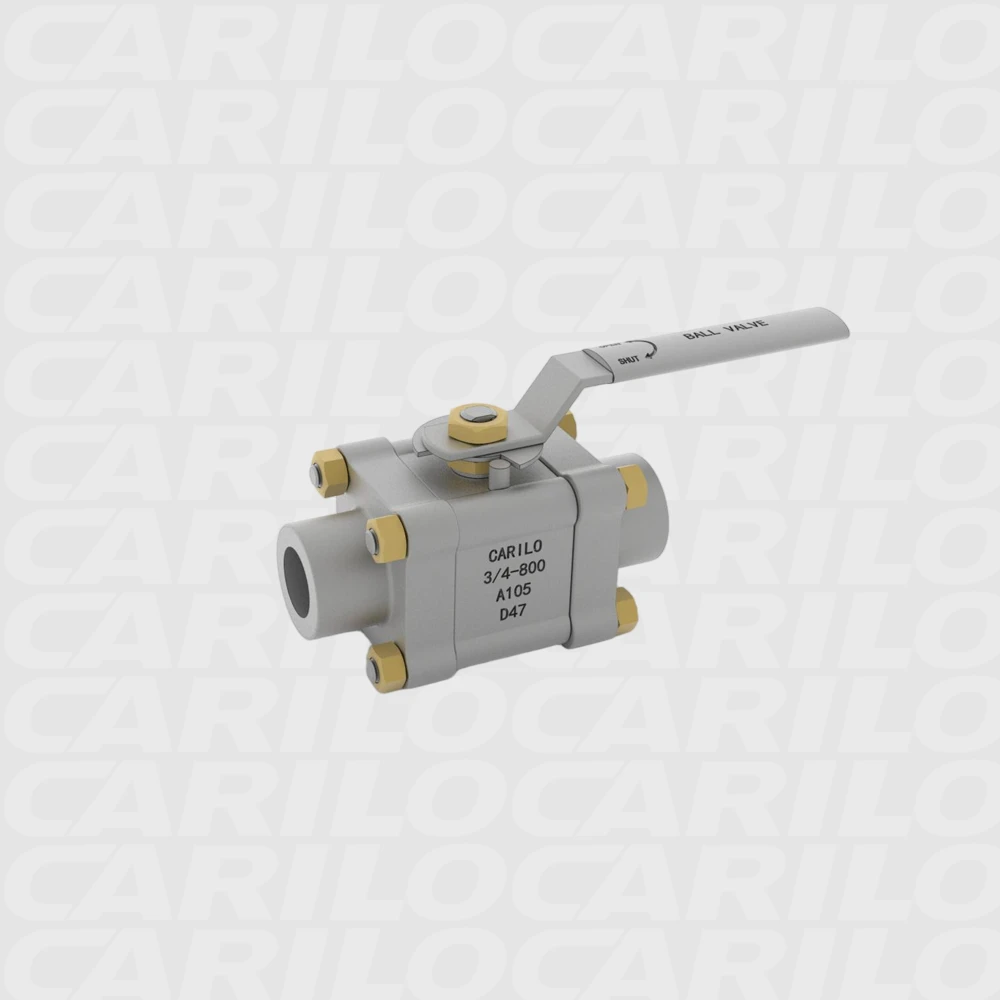
ASME B16.11NPS 1/2″ to 2″ forged ends for instrument, sample, pilot and small-bore cryogenic manifold lines.
Butt Weld
ASME B16.25Welded ends for LNG, LOX and LIN process piping where a permanent pipe connection is preferred.
Flanged RF or RTJ
ASME B16.5 / B16.47Flanged ends for tank nozzles, pump headers and loading arms that may need to be removed for maintenance.
NPS 1/2″ to 48″ and ASME Class 150 to 2500LB
| Pressure Class | Available NPS Range | Typical Service |
|---|---|---|
| Class 150–300 | NPS 1/2″ to 8″ | LNG storage headers and low-pressure pump discharge |
| Class 600 | NPS 1/2″ to 4″ | LNG liquefaction processes and air-separation cold boxes |
| Class 900–1500 | NPS 1/2″ to 2″ | LNG loading arms and high-pressure pump suction |
| Class 2500 | NPS 1/2″ to 1-1/2″ | Instrument lines, sample lines and high-pressure manifolds |
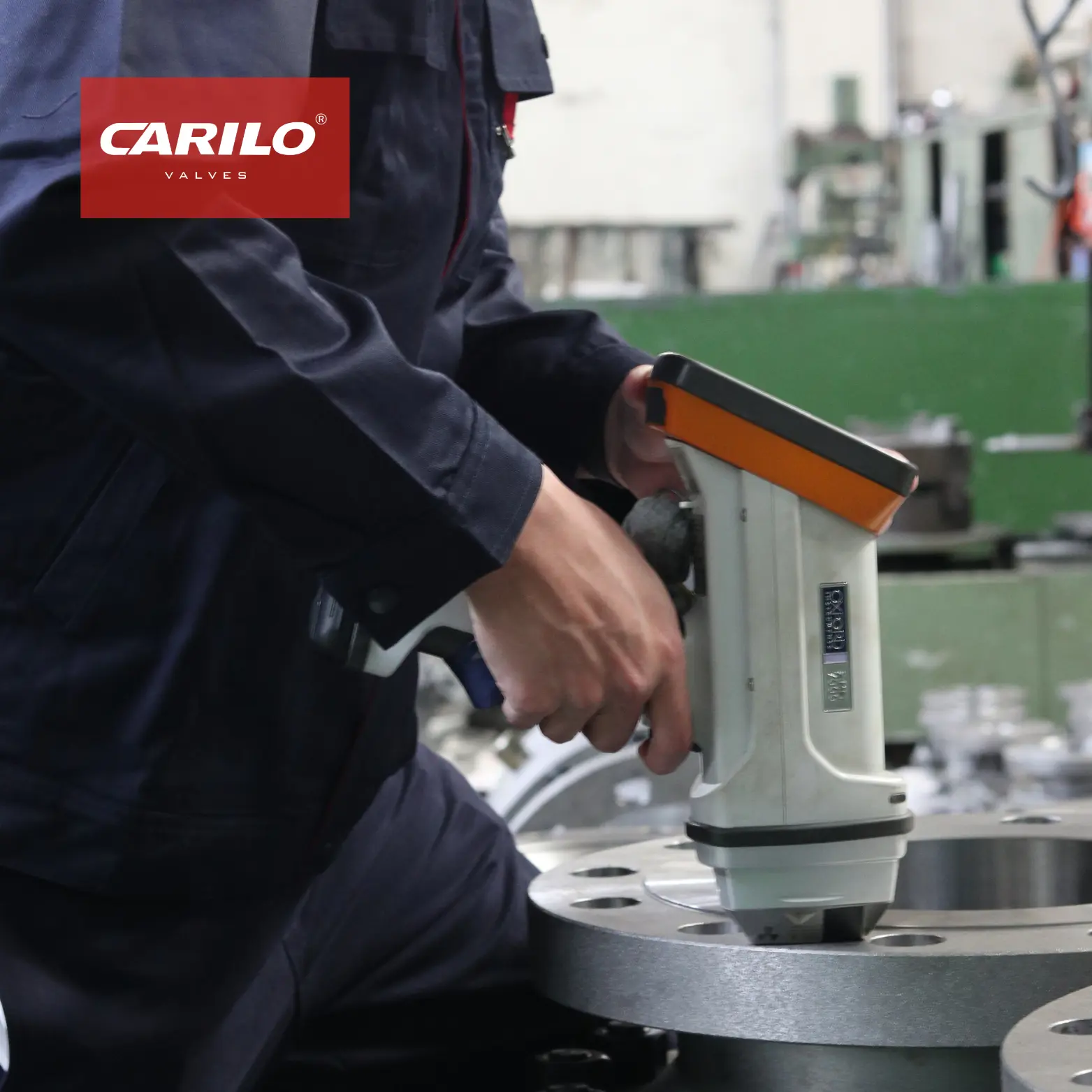
Know What Will Be Tested and Which Reports You Will Receive
CARILO can provide inspection and documentation support, including material checks, NDE, inspection plans and order records.
Hydrostatic shell and valve pressure testing under the confirmed inspection procedure.
The valve is cooled, operated and checked for leakage using the agreed test temperature and leakage limit.
Extended body or bonnet considerations and project-specified helium leakage testing where required.
PT, MT, UT, RT or PMI can be used when required by the material, part shape and inspection standard.
Batch-related MTC, component identification and test records according to the order scope.
The ITP, witness points and third-party inspection should be agreed before production starts.
Eleven Production Steps from Material Check to Packing
Incoming Material Inspection
MTC and chemical-composition verification.
Rough Machining
CNC turning and milling of pressure and trim parts.
First Cryogenic Treatment
Parts are treated at −196°C and held for four hours.
Finish Machining and Polishing
Final machining and polishing to the 0.2 μm surface target.
Second Cryogenic Treatment
A second cold treatment helps the finished parts keep their size.
NDT Inspection
PT, MT, UT or RT is used when required by the order.
Degreasing and Cleaning
Parts are cleaned before assembly; oxygen service can require stricter degreasing.
Valve Assembly
Seats, stem, seals and bolts are installed and checked.
Pressure and Cryogenic Test
API 598 and BS 6364 testing at the specified condition.
Final Inspection
Final checks cover dimensions, markings, surface condition and documents.
Packaging and Delivery
Protected export packing; FOB Ningbo or agreed shipping term.
Where These Cryogenic Ball Valves Are Used
LNG Systems
Liquefaction plants, receiving terminals, storage tanks, loading systems and fuel-gas supply lines operating around LNG temperature.
Petrochemical Low-Temperature Lines
Ethylene, propylene and other cold process lines that need reliable sealing through repeated temperature changes.
Liquid Nitrogen and Oxygen
Transfer points, tank outlets and pipeline isolation with degreasing or oxygen-clean requirements confirmed by specification.
Tanker Trucks and ISO Containers
Compact side-entry valves for limited manifold space, transport vibration and repeated loading and unloading cycles.
Air-Separation Plants
Oxygen, nitrogen and argon cold-box and transfer systems with rapid pressure changes and cleanliness requirements.
Common Standards Used for Design, Testing and Quality Records
Zhejiang Carilo Valve Co., Ltd. was established in 2000 and operates from Wuxing Industrial Zone, Oubei, Wenzhou. Learn more about the company’s production and quality-control capabilities on the CARILO company profile.
Pipeline Valve Design
Requirements for pipeline-valve design, manufacturing, testing, marking and records.
Cryogenic Valve Inspection
Low-temperature operation and leakage inspection for valves intended for cryogenic service.
Body and Bonnet Extension
Requirements relevant to cryogenic body or bonnet extension arrangements.
Valve Inspection and Test
Common shell and seat pressure-test requirements for industrial valves.
Fire-Safe Option
Fire-test certificates are available for applicable valve designs. Ask for the certificate that matches the selected valve.
Low-Emission Stem Seal
Low-emission stem seals are available when the order includes an emission limit.
Impact Testing
The material is checked for strength at the required low temperature.
Quality System
CARILO states that its ISO 9001 certificate is available for customer review on request.
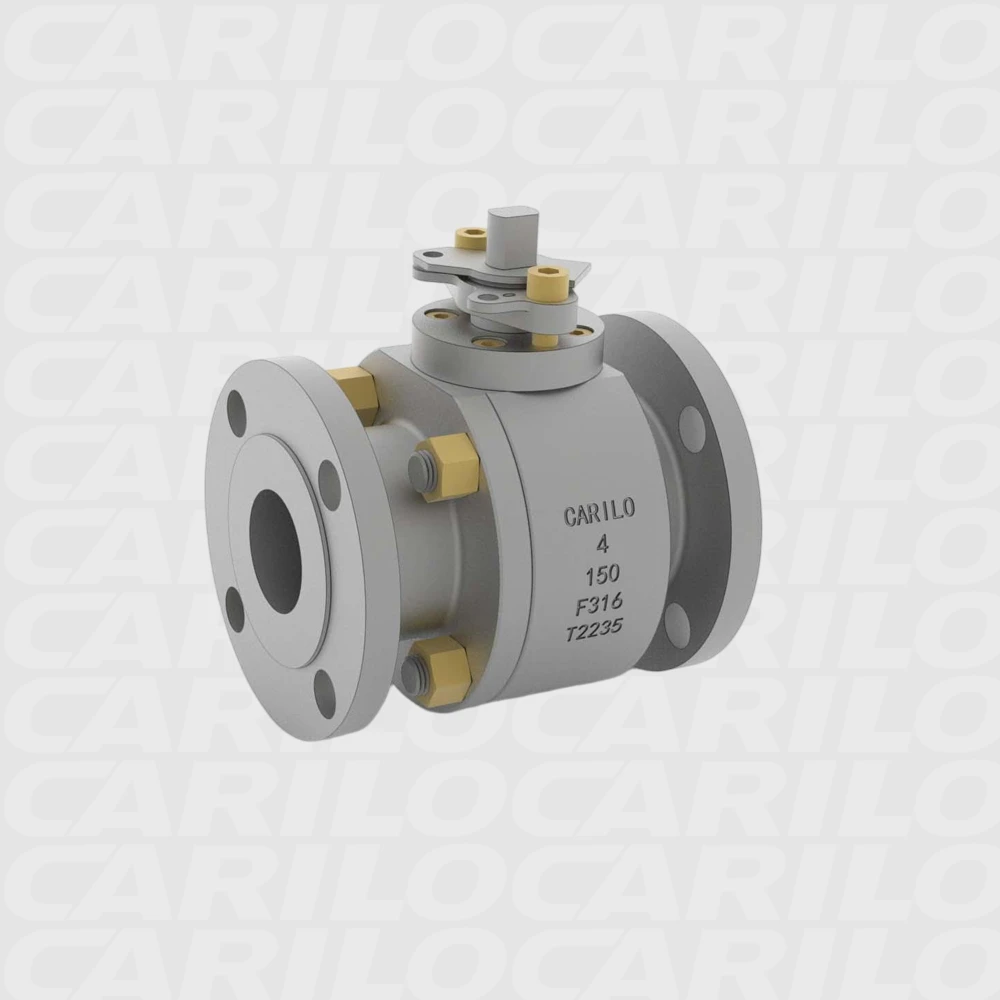

Useful Guides for Choosing and Maintaining Ball Valves
Cryogenic Valve Selection for LNG Applications
Compare application zones, leakage standards, material grades, seats and extended-bonnet requirements.
LNG EngineeringExtended Bonnet and Material Selection
Review the effects of low-temperature toughness, contraction, stuffing-box temperature and cryogenic testing.
Cavity SafetyPressure Build-Up Inside a Closed Ball Valve
Learn why trapped liquid can create high pressure and how the valve can release or control it.
Field MaintenanceStem Leakage After Thermal Cycling
Learn common causes of stem leakage after temperature changes and what to check.
Send These Details to Get the Right Valve and Price
These details help CARILO choose the material, seat, bonnet length, operator, tests, documents and delivery time.
Common Questions Before Ordering a Cryogenic Ball Valve
What is the minimum operating temperature?
Which body materials are available for −196°C LNG service?
Are fire-safe configurations available?
Which end connections can be supplied?
How long is the extended bonnet?
Can CARILO manufacture OEM or custom cryogenic ball valves?
Which tests and delivery documents are available?
What is the typical delivery time?
Send Your Valve Details for a Technical Review and Quote
Send the fluid, lowest temperature, design pressure, size, pressure class, body and seat materials, bore, end connection, actuator, quantity and test requirements. CARILO normally replies with a technical and price proposal within 48 hours after receiving complete information.