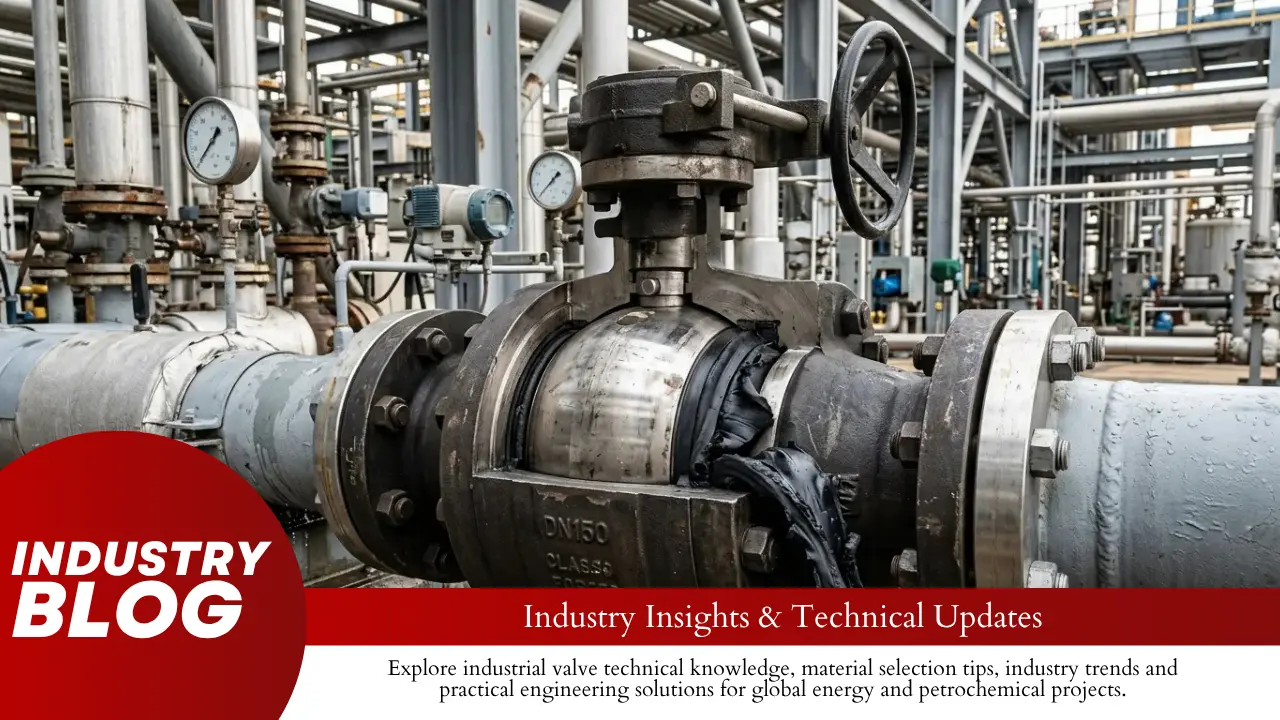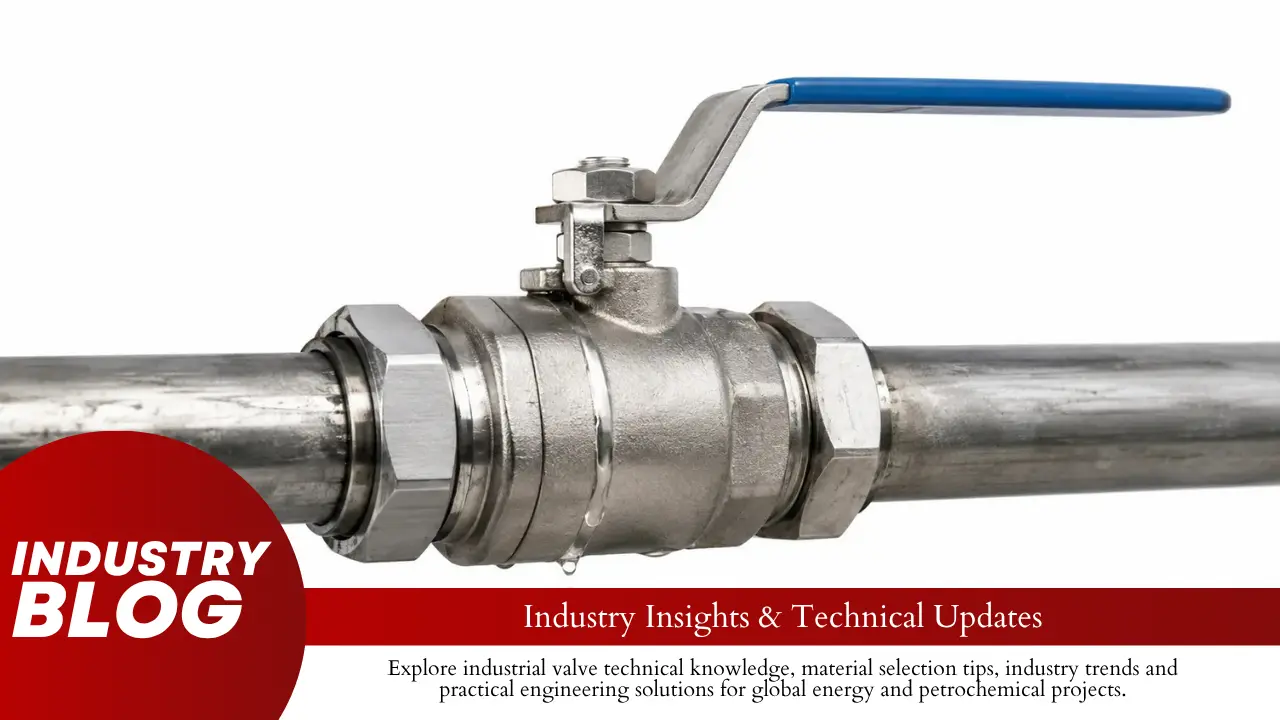
To get an accurate quote for a custom API 6D ball valve, provide the size, quantity, pressure class, design pressure, temperature range, fluid composition, body and trim materials, bore type, end connection, seat design, operator, testing scope, documents, and delivery date.
Size, pressure class, and body material are enough for a rough budget price. They are not enough for final valve selection. A 12-inch Class 600 carbon-steel valve for clean natural gas may use soft seats and a manual gearbox. A valve of the same size handling wet sour gas may need different stem materials, decompression-resistant seals, extra inspection, fugitive-emission testing, and a powered actuator.
| RFQ Item | Common Project Examples |
|---|---|
| Valve size | NPS 2–48 / DN 50–1200 |
| Pressure class | ASME Class 150, 300, 600, 900, 1500, or 2500 |
| Order quantity | 1 prototype or 2–50 production valves |
| Example temperature range | −29°C to 120°C |
| Example differential pressure | 0–100 bar |
| Operator | Lever, gearbox, pneumatic, hydraulic, gas-over-oil, or electric |
These values are common project examples, not universal design limits. Actual size, pressure, temperature, bore, torque, and material limits depend on the selected valve design and project specification.
For a basic introduction to pipeline valve construction, see this guide to API 6D ball valves.
Confirm the Standards
State the exact API 6D edition, addenda, errata, and project specification in the request for quotation. Do not write only “latest API 6D,” because the standard may change after the supplier submits its price.
API Specification 6D, 25th Edition, was published in November 2021. Addendum 3 was issued on March 5, 2025.[1]
A clear RFQ statement is:
Design and manufacture in accordance with API Specification 6D, 25th Edition, November 2021, including the addenda and errata specifically listed in this purchase specification.
ISO 14313:2025 supplements API 6D, 25th Edition. It covers axial, ball, check, gate, and plug valves in ASME Classes 150, 300, 600, 900, 1500, and 2500.[2]
Include ISO 14313 only when required by the project, end user, national rules, or pipeline design basis.
When several documents apply, state which one takes priority. For example:
In case of conflict, the purchase order, project valve specification, approved valve data sheet, API 6D, and other referenced standards shall apply in that order. The supplier shall report every conflict or deviation before production.
Do not allow the supplier to resolve technical conflicts without written approval. A small difference in seat arrangement, material grade, testing, or valve length can affect installation and safety.
For a summary of pressure ratings, connections, and material options, review these API 6D ball valve specifications.
Check the API Monogram
“Designed to API 6D” and “API 6D Monogrammed” do not mean the same thing.
The API Monogram Program licenses qualified manufacturers to apply the registered API mark to products made under the applicable API specification and quality requirements.[3]
If the Monogram is required, write:
The valve shall be manufactured, tested, marked, and documented at a facility holding a valid API 6D Monogram license for the offered product.
Check the actual manufacturing site, not only the company name. API provides a directory for checking current licenses and registered factory locations.[4]
Verify:
- Legal company name
- Manufacturing-site address
- License number
- License status
- Licensed product scope
- Whether the quoted factory matches the licensed factory
An ISO 9001 certificate, distributor letter, API Spec Q1 certificate, or expired API license does not replace a valid API 6D Monogram license when the purchase order requires Monogrammed valves.
State the Size and Quantity
Provide the nominal size in NPS, DN, or both. Do not provide only the pipe outside diameter.
| Item | Size | Class | End Type | Operator | Quantity |
|---|---|---|---|---|---|
| 1 | NPS 4 / DN 100 | 300 | Raised-face flange | Lever | 8 |
| 2 | NPS 8 / DN 200 | 600 | Ring-type-joint flange | Gearbox | 4 |
| 3 | NPS 16 / DN 400 | 900 | Butt welded | Pneumatic actuator | 2 |
Use separate line items when the valves have different materials, bores, body designs, seat arrangements, end connections, operators, coatings, or testing requirements.
Quantity affects the unit price because a custom order may require:
- Engineering calculations
- Drawing preparation
- Machining programs
- Special fixtures
- Inspection procedures
- Document preparation
A one-valve order carries all these setup costs on one unit. A ten-valve order spreads some of the engineering and setup cost across the full quantity.
For large valves, also provide:
- Maximum permitted weight
- Available installation space
- Required operator position
- Maximum height above the pipe centerline
- Lifting restrictions
- Required support points
- Maintenance clearance
Ask the supplier to state the bare-valve weight, operator weight, total assembled weight, shipping dimensions, lifting points, and center of gravity where needed.
Give the Pressure and Temperature
Pressure class is not a direct pressure value. Class 600 does not mean that the valve is rated to only 600 psi.
The allowable pressure depends on the body material, temperature, design standard, and end connection. ASME B16.34 covers pressure-temperature ratings, materials, examination, testing, and marking for applicable flanged, threaded, and welding-end valves.[5]
Provide:
- ASME pressure class
- Design pressure
- Normal operating pressure
- Maximum operating pressure
- Maximum differential pressure during opening
- Maximum differential pressure during closing
- Minimum and maximum design temperature
- Minimum and maximum operating temperature
- Minimum and maximum ambient temperature
| Parameter | Example |
|---|---|
| Valve size | NPS 12 / DN 300 |
| Pressure class | ASME Class 600 |
| Design pressure | 100 bar |
| Normal operating pressure | 70 bar |
| Maximum opening differential | 70 bar |
| Maximum closing differential | 100 bar |
| Design temperature | −29°C to 120°C |
| Normal operating temperature | 40°C |
These figures are examples only. The manufacturer must check the pressure rating against the selected body material, seats, seals, bolting, and end connections.
Differential pressure is important for operating torque. A valve may normally have similar pressure on both sides. During emergency isolation, one side may remain fully pressurized while the other side falls close to zero.
Also report temporary conditions that may be more severe than normal operation:
- Emergency shutdown
- Pressure surge
- Gas blowdown
- Rapid decompression
- Cold start-up
- Steam cleaning
- Heating of trapped liquid
Describe the Fluid
“Oil,” “gas,” and “water” are not detailed enough for final valve selection. Provide the actual fluid and the highest expected concentration of harmful components.
- Fluid name and full composition
- Gas, liquid, or two-phase condition
- Water content
- H2S content
- CO2 content
- Hydrogen content
- Chloride concentration
- Solids concentration and particle size
- Density and viscosity
- Cleaning and flushing chemicals
- Wax, scale, hydrate, crystal, or deposit risk
Provide maximum credible concentrations, not only normal average values. Fluid composition may change during start-up, shutdown, cleaning, or process upset.
Also state the operating frequency:
- Normally open isolation
- Emergency shutdown only
- Monthly exercising
- Several cycles per day
- Temporary throttling
- Continuous flow control
Do not use a standard isolation ball valve for continuous throttling unless the manufacturer has approved it for that duty. Partial opening can cause high velocity, noise, vibration, cavitation, and seat damage.
Specify Sour Service
Do not write only “NACE compliant.” Give the actual sour-service conditions.
ISO 15156-1:2020 gives general rules for selecting metallic materials used in H2S-containing oil and gas production and natural-gas treatment environments.[6]
ISO 15156-2:2020 covers carbon and low-alloy steels. ISO 15156-3:2020 covers corrosion-resistant alloys and other alloys, including stainless, duplex, and nickel-alloy materials.[7][8]
Provide:
- H2S concentration and partial pressure
- Presence of a water phase
- Chloride concentration
- pH
- Operating temperature
- Required hardness limits
- Weld and heat-affected-zone hardness limits
- Required HIC, SSC, or other qualification tests
ISO 15156 mainly addresses cracking resistance. It does not replace a full review of general corrosion, pitting, crevice corrosion, and erosion.
For refinery or downstream service, confirm that ISO 15156 is the correct material basis. Another project or company specification may apply.
Ask the supplier to submit a material table covering the body, ball, stem, trunnion, seat retainers, springs, bolting, welds, drains, vents, hard coatings, and overlays.
Specify Hydrogen Service
For hydrogen service, give the hydrogen concentration, pressure, temperature, moisture, pressure cycles, decompression rate, and required external-leakage limit.
API 6D Addendum 2 added specific requirements for hydrogen gas service, including requirements related to materials, seals, fire testing, fugitive emissions, and antistatic performance.[9]
Ask the supplier to review every possible leakage path:
- Stem packing
- Stem O-rings
- Body O-rings
- Body joints
- Seat seals
- Drain fittings
- Vent fittings
- Sealant fittings
“Gas tight” is not a measurable requirement. State the test gas, pressure, temperature, test duration, measurement method, and allowable leakage.
Specify Dirty Service
Sand, rust, scale, catalyst fines, crystals, and other solids can enter the seat pocket, scratch the ball, increase operating torque, block pressure-relief paths, and prevent full closure.
Provide:
- Normal and maximum solids concentration
- Normal and maximum particle size
- Particle hardness where known
- Whether solids settle in the line
- Valve operating frequency
- Line-cleaning method
Depending on the service, the manufacturer may propose protected seats, scraper-style seats, hard-coated balls, metal seats, cavity flushing, or larger drains.
Do not specify metal seats automatically. They may resist temperature and erosion better than soft seats, but they can require more torque and may have a higher permitted leakage rate.
Choose the Body Design
Side-entry valves normally use a two-piece or three-piece bolted body. Confirm the body-joint seals, bolting, fire-safe sealing, tightening method, and maintenance space.
Top-entry valves allow access through the top closure. They can be useful where removing the valve from the pipeline is difficult, but they are not automatically easy to repair in place. Ask which parts can be removed and how much lifting clearance is needed.
Fully welded valves remove the main bolted body joints and are often selected for buried gas pipelines. They reduce body-joint leakage paths but are harder to repair internally.
For buried valves, state:
- Burial depth
- Stem-extension height
- Coating system
- Holiday-testing requirement
- Cathodic-protection requirements
- Drain and vent extension positions
For more detail, see this comparison of split-body and welded-body ball valves.
Choose Floating or Trunnion Mounted
A floating-ball valve uses line pressure to push the ball toward the downstream seat. It is commonly used in smaller sizes where seat load and operating torque remain acceptable.
A trunnion-mounted valve mechanically supports the ball while the seats move toward it. This design is common in larger sizes, higher pressure classes, automated service, buried installation, and valves requiring controlled cavity-pressure behavior.
“Trunnion mounted” does not explain the seat function. Request a drawing showing:
- Pressure acting on each seat
- Pressure acting inside the body cavity
- Seat spring direction
- Cavity-pressure relief direction
- Whether the valve is directional
Use this floating versus trunnion ball valve comparison to review the main cost and design differences.
For a closer look at the internal parts, review how a trunnion ball valve works.
Choose Full or Reduced Bore
A full-opening valve is normally required when cleaning pigs or in-line inspection tools must pass through the pipeline.
Do not accept only “full bore” or “full port” in the quotation. Ask for:
- Minimum clear bore in millimeters
- Ball bore
- Seat-ring opening
- Body transition
- Weld-end or flange bore
- Maximum internal step
A cleaning pig may pass through a valve that is unsuitable for a larger intelligent inspection tool. Give the supplier the actual pig dimensions.
A reduced-bore valve can be smaller, lighter, and less expensive, but it creates more pressure loss and is normally unsuitable for pigging.
| Data | Supplier Entry |
|---|---|
| Minimum clear bore | ___ mm |
| Cv | ___ |
| Kv | ___ |
| Pressure drop at normal flow | ___ bar |
| Pressure drop at maximum flow | ___ bar |
| Maximum internal step | ___ mm |
See this full-bore versus reduced-bore guide for more information about pressure loss, pigging, and cost.
Select the Materials
Do not specify only “carbon steel,” “stainless steel,” or “alloy trim.” State the exact standard and grade for the important components.
| Part | Information to Request |
|---|---|
| Body and connectors | Material grade, product form, heat treatment, impact testing, and corrosion allowance |
| Ball and stem | Base material, coating, hardness, and surface finish |
| Seat retainers and trunnions | Material, hardness, heat treatment, and sour-service limits |
| Bolting and springs | Material grade, coating, temperature range, and corrosion protection |
| Overlay or cladding | Alloy, covered surfaces, finished thickness, examination, and PMI |
Carbon steel is commonly used for general oil and gas service, but check low-temperature toughness, water, CO2, H2S, internal corrosion, and external corrosion.
Low-temperature service may require impact-tested body materials, bolting, seats, seals, actuator components, and gearbox lubricant.
For stainless, duplex, super-duplex, or nickel-alloy valves, define the exact grade, heat treatment, PMI, welding rules, corrosion testing, and repair limits.
If overlay or cladding is used, ask for a cross-sectional drawing showing every covered area. Do not rely on the phrase “all wetted parts in alloy.”
This guide explains how to select carbon steel, stainless steel, and duplex materials.
Choose the Seat Material
Soft seats are normally used when tight shutoff is needed in clean or moderately dirty service. Common options include PTFE-based compounds, reinforced PTFE, nylon-based materials, and PEEK.
Do not approve only “PTFE seat.” Ask for:
- Exact seat compound
- Pressure-temperature limit
- Fluid compatibility
- Rapid-gas-decompression resistance
- Required leakage acceptance
Metal seats may be needed for high temperature, abrasive solids, erosion, or frequent operation.
For metal seats, specify:
- Ball and seat base materials
- Hard-facing or coating material
- Coating process
- Minimum coating thickness
- Minimum hardness
- Surface finish
- Permitted leakage rate
A hard-coated ball does not guarantee good performance if the seat material, surface finish, coating thickness, or contact load is wrong.
Review the available forged soft-seated ball valves and forged metal-seated ball valves.
Choose the Seal Materials
The valve contains more seals than the two main seats. Check:
- Stem packing
- Stem O-rings
- Body O-rings
- Body gaskets
- Seat O-rings
- Drain and vent seals
- Sealant fittings
- Actuator seals
Ask for exact compound codes rather than broad names such as NBR, FKM, or “standard elastomer.” Compounds in the same material family may have different temperature, chemical, and decompression resistance.
For each seal, confirm:
- Fluid compatibility
- Minimum and maximum temperature
- Maximum pressure
- Rapid-gas-decompression resistance
- Shelf life
- Replacement availability
Emergency sealant injection can provide temporary control after seal damage, but it does not replace a correctly selected primary sealing system.
Define DBB or DIB
Do not use DBB or DIB without stating the required pressure and test conditions.
In practical terms, a Double Block and Bleed valve uses two seating surfaces to block pressure while the body cavity can be vented or bled.
A Double Isolation and Bleed arrangement requires a specified seat to provide independent isolation under defined pressure directions.
For each condition, state:
- Which end is pressurized
- Which end is at low or zero pressure
- Whether the body cavity is pressurized or vented
- Which seat must seal
- Permitted leakage
- How trapped cavity pressure is relieved
Ask the supplier for a simple seat-function drawing. A quotation that says only “DBB valve” or “DIB valve” is not detailed enough for approval.
Heating can increase the pressure of liquid trapped in the body cavity. The valve must have a defined relief path or an external cavity-relief device.
Select the End Connections
For flanged valves, state the flange standard, pressure class, facing, material, surface finish, bore, and ring number where applicable.
ASME B16.5 covers flanges and flanged fittings from NPS 1/2 through NPS 24 within its stated class and size limits.[10]
ASME B16.47 covers large-diameter steel flanges from NPS 26 through NPS 60 in the pressure classes included within that standard.[11]
Confirm whether the price includes:
- Companion flanges
- Gaskets or ring joints
- Stud bolts and nuts
- Insulation kits
- Flange protectors
For butt-weld ends, provide the pipe outside diameter, wall thickness, material, bevel, internal bore, and permitted mismatch.
Nominal valve size and pressure class do not fully define the weld end. Ask for an approved weld-end drawing and instructions for protecting the valve seats and seals from field-welding heat.
See this comparison of flanged and welded-end ball valves.
Size the Operator
For manual valves, state the maximum permitted handwheel force, opening direction, number of turns, lock requirement, gearbox position, and environmental protection.
For powered valves, provide:
- Pneumatic, hydraulic, gas-over-oil, or electric power
- Minimum and maximum supply pressure
- Voltage and frequency
- Opening and closing time
- Fail-open, fail-closed, or fail-in-place action
- Maximum differential pressure
- Ambient-temperature range
- Hazardous-area requirement
- Ingress-protection requirement
- Manual override
- Control accessories
Require a torque sheet showing breakaway, running, and closing torque. It should also show actuator output at minimum and maximum supply, the selected safety factor, and the maximum allowable torque of the stem, coupling, bracket, and gearbox.
| Torque Point | Valve Requirement | Actuator Output |
|---|---|---|
| Break to open | 5,200 N·m | 7,000 N·m |
| Running | 3,100 N·m | 6,200 N·m |
| End to close | 4,800 N·m | 6,800 N·m |
| Maximum allowable stem torque | 9,000 N·m | Not applicable |
A larger actuator is not always safer. Excessive output can damage the stem, keys, coupling, mounting bracket, gearbox, or valve stops.
Where API 6DX is specified, the actuator, mounting kit, coupling, and valve drive train should be reviewed as one system.
Define the Tests
Do not write “full testing” or “100% NDE.” State the method, component, examination extent, pressure, duration, and acceptance criteria.
| Test | Information to State |
|---|---|
| Shell hydrostatic test | Pressure, medium, duration, temperature, and acceptance |
| Seat test | Pressure direction, cavity condition, duration, and leakage limit |
| Gas test | Gas, pressure, duration, measurement method, and safety controls |
| Functional test | Number of cycles, pressure condition, and operator arrangement |
| Torque test | Pressure, fluid, direction, temperature, and torque points |
| PMI and hardness | Parts, test locations, method, and acceptance |
| PT, MT, UT, or RT | Parts, manufacturing stage, extent, and acceptance standard |
State which tests are purchaser hold points, witness points, document-review points, or normal factory inspections.
| Test Record Item | Example Entry |
|---|---|
| Test pressure | 150 bar |
| Test duration | 15 minutes |
| Test medium | Clean water |
| Ambient temperature | 22°C |
| Pressure-gauge range | 0–250 bar |
| Gauge calibration | Valid on test date |
| Result | No visible external leakage |
The figures above are examples only. The correct pressure, duration, leakage acceptance, and instrumentation must follow the selected standard, valve size, pressure class, and project specification.
High-pressure gas tests need stricter safety controls because compressed gas stores much more energy than water at the same test pressure.
See this guide to API 6D shell, seat, and functional testing.
Check Fire Testing
“Fire-safe design” does not prove that the offered valve has passed a recognized fire test.
ISO 10497:2022 covers fire type testing for soft- and metal-seated isolation valves. It evaluates through-seat leakage, external leakage, cavity-pressure relief, and operability.[12]
Ask for:
- Test standard and edition
- Certificate and complete test report
- Tested size and pressure class
- Body design and material
- Seat design
- Qualification-extension rule
Ask the manufacturer to identify the rule that allows the tested valve to qualify the offered size, class, material, seat, and body design.
ISO 10497 does not cover fire testing of powered pneumatic, hydraulic, or electric actuators. If the actuator must work during a fire, review its fire protection separately.
Check Fugitive Emissions
For fugitive-emission control, define the test standard, leakage class, temperature class, number of operating cycles, test gas, and production-test requirement.
ISO 15848-1 covers type qualification of valve stem seals and body joints. ISO 15848-2 covers production acceptance testing of manufactured valves.[13][14]
A type test qualifies a defined valve design range. A production acceptance test checks valves made for an order or production batch.
“Low-emission packing” describes one component. It does not prove that the complete valve meets a defined leakage class.
Request the Documents
State the document requirements before the supplier gives the final price.
Documents required before production may include:
- Completed valve data sheet
- General arrangement drawing
- Cross-sectional drawing
- Bill of materials
- Bore drawing
- Seat-function drawing
- Valve torque calculation
- Actuator-sizing calculation
- Inspection and test plan
- Welding, NDE, testing, and coating procedures
The final record book may include:
- Material certificates
- Heat-treatment records
- PMI and hardness reports
- Impact, ferrite, and corrosion-test reports
- NDE reports
- Pressure and gas-test reports
- Fire and fugitive-emission certificates
- Certificate of conformity
- API license copy and marking drawing where required
- Installation and maintenance manuals
- Recommended spare-parts list
Require traceability from the finished valve serial number to the material heat number, certificates, heat treatment, NDE, PMI, and final test reports.
Understand the Price
| Change | Typical Cost Effect | Main Reason |
|---|---|---|
| Reduced bore to full opening | Medium | Larger ball, body cavity, seats, stem, and operator |
| Carbon steel to stainless steel | Medium to high | Higher material cost, PMI, and manufacturing controls |
| Soft seat to metal seat | High | Hard coating, grinding, lapping, and additional leakage testing |
| Manual gearbox to powered actuator | Medium to high | Actuator, controls, switches, mounting kit, and sizing work |
| Standard hydrotest to high-pressure gas test | Medium | Extra equipment, procedures, safety controls, and inspection time |
| Basic documents to full record book | Low to medium | More engineering review, certificates, reports, and traceability work |
| Normal delivery to urgent delivery | Project dependent | Priority material, overtime, special testing, or premium freight |
The cost levels above are general comparisons, not fixed price increases.
Ask the supplier to separate:
- Base valve
- Gearbox or actuator
- Optional testing
- Third-party inspection
- Commissioning spares
- Operating spares
- Export packing
- Freight
Compare the Quotes
| Check | Required Evidence | Warning Sign |
|---|---|---|
| Standard | Exact API 6D edition and addenda | “Latest standard” or “generally compliant” |
| Factory | Named manufacturing site and license status | Only a sales-office address |
| Materials | Complete material grades and seal compounds | “Carbon-steel body with stainless trim” |
| Bore | Minimum clear bore and flow coefficient | “Full port” without dimensions |
| Isolation | Seat-function and cavity-pressure diagrams | DBB or DIB without test conditions |
| Actuator | Torque calculation and drive-train limits | Actuator model without a calculation |
| Tests | Methods, pressures, duration, and acceptance | “Standard factory testing” |
| Delivery | Clear lead-time starting point | No distinction between order date and drawing approval |
Require a numbered deviation and exclusion list. A blank field should not be treated as compliance.
Complete RFQ Example
| Parameter | Example RFQ Requirement |
|---|---|
| Valve type | Trunnion-mounted API 6D ball valve |
| Size | NPS 12 / DN 300 |
| Pressure class | ASME Class 600 |
| Quantity | 4 valves |
| Design pressure | 100 bar |
| Normal operating pressure | 70 bar |
| Maximum differential pressure | 100 bar |
| Design temperature | −29°C to 120°C |
| Fluid | Natural gas containing 2% CO2 |
| Body material | ASTM A105 |
| Bore | Full opening and piggable |
| End connection | RTJ flanged |
| Operator | Pneumatic fail-close actuator |
| Closing time | 30 seconds |
| Installation | Above ground |
| Required tests | Shell, seat, low-pressure gas, functional, and torque tests |
| Documents | Drawings, bill of materials, torque calculation, test reports, and final record book |
This example shows the level of detail needed for a useful technical quote. It is not a standard specification for every NPS 12 Class 600 valve.
API 6D Ball Valve RFQ Template
Use “supplier to propose” only for manufacturer design choices. Do not use it for process conditions, safety requirements, pipe interfaces, or applicable standards.
- Project:
- End user and installation location:
- Quantity:
- Required delivery date and Incoterm:
- API 6D edition and addenda:
- ISO 14313 required:
- API Monogram required:
- Valve size and pressure class:
- Design and operating pressure:
- Maximum opening and closing differential pressure:
- Minimum and maximum temperature:
- Fluid name and composition:
- H2S, CO2, hydrogen, water, chlorides, and solids:
- Full opening or reduced bore:
- Minimum clear bore and pig details:
- Floating or trunnion mounted:
- Side entry, top entry, or fully welded:
- Body, ball, stem, seat, seal, and bolting materials:
- DBB or DIB test conditions:
- Cavity-pressure relief method:
- Flanged or butt-welded ends:
- Pipe outside diameter and wall thickness:
- Operator type and fail position:
- Power supply, stroke time, and accessories:
- Pressure, gas, functional, torque, and NDE tests:
- Fire and fugitive-emission requirements:
- Third-party inspection and witness points:
- Required drawings, certificates, reports, and manuals:
- Commissioning and operating spares:
- Quotation validity, warranty, deviations, and exclusions:
Conclusion
A useful API 6D ball valve RFQ should contain at least 20–30 clear data points, not just size, class, and body material. Include the maximum differential pressure, design temperature, minimum bore, fluid composition, exact seat and seal compounds, DBB or DIB test conditions, end dimensions, operator torque, test scope, and document list. For example, an NPS 12 Class 600 valve may need to close against 100 bar differential pressure, but its actual torque and actuator size must come from the manufacturer. Send the same completed data sheet to every bidder, compare all exclusions, and verify the factory’s API license before ordering. Submit project details through the Carilo Valve contact page.