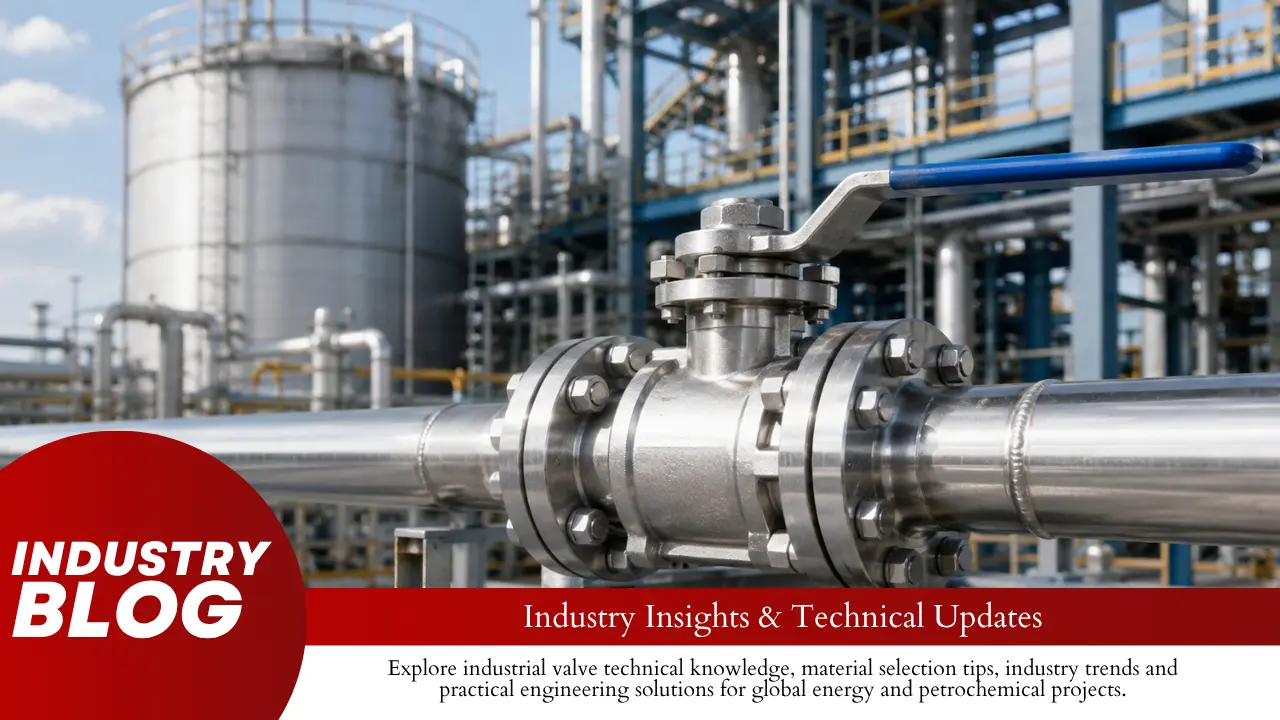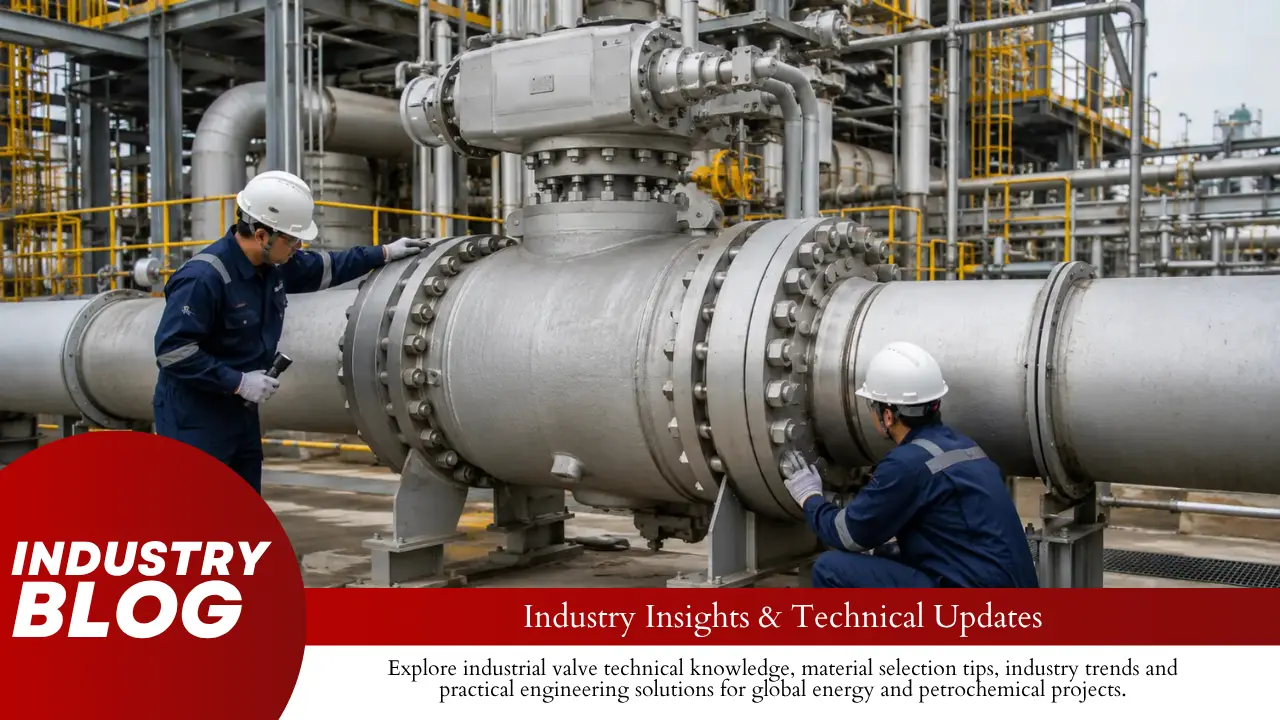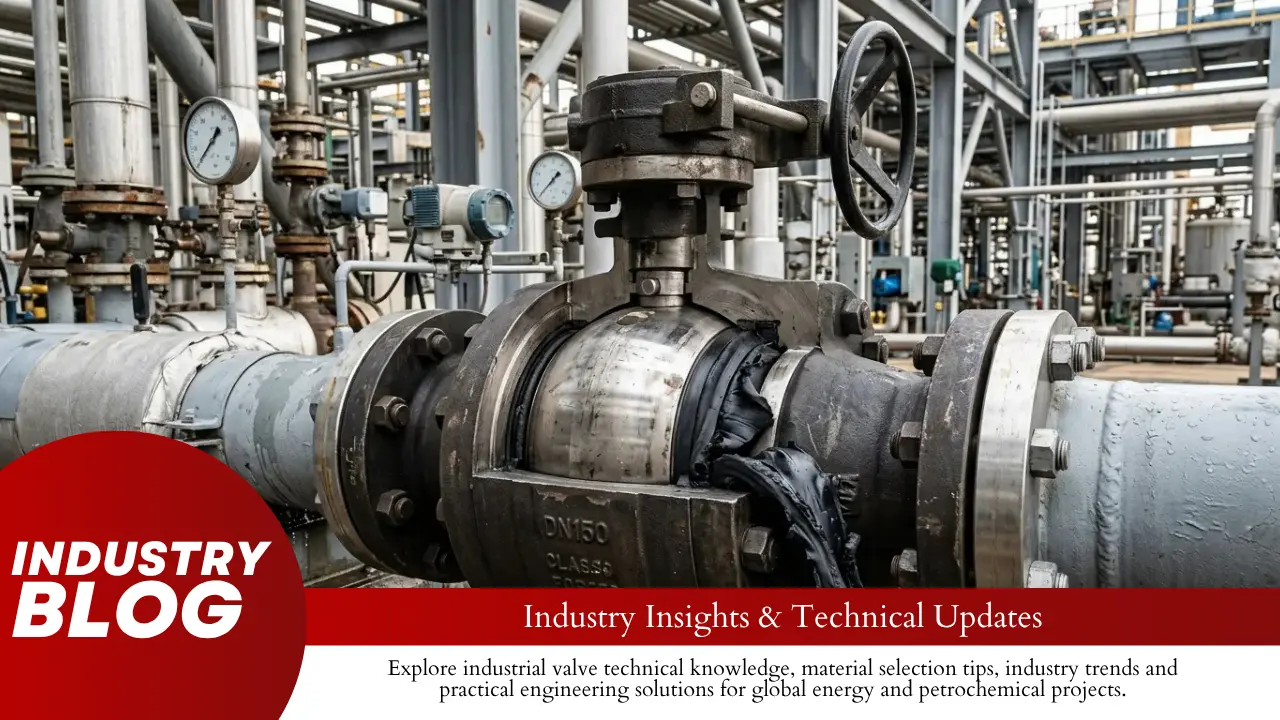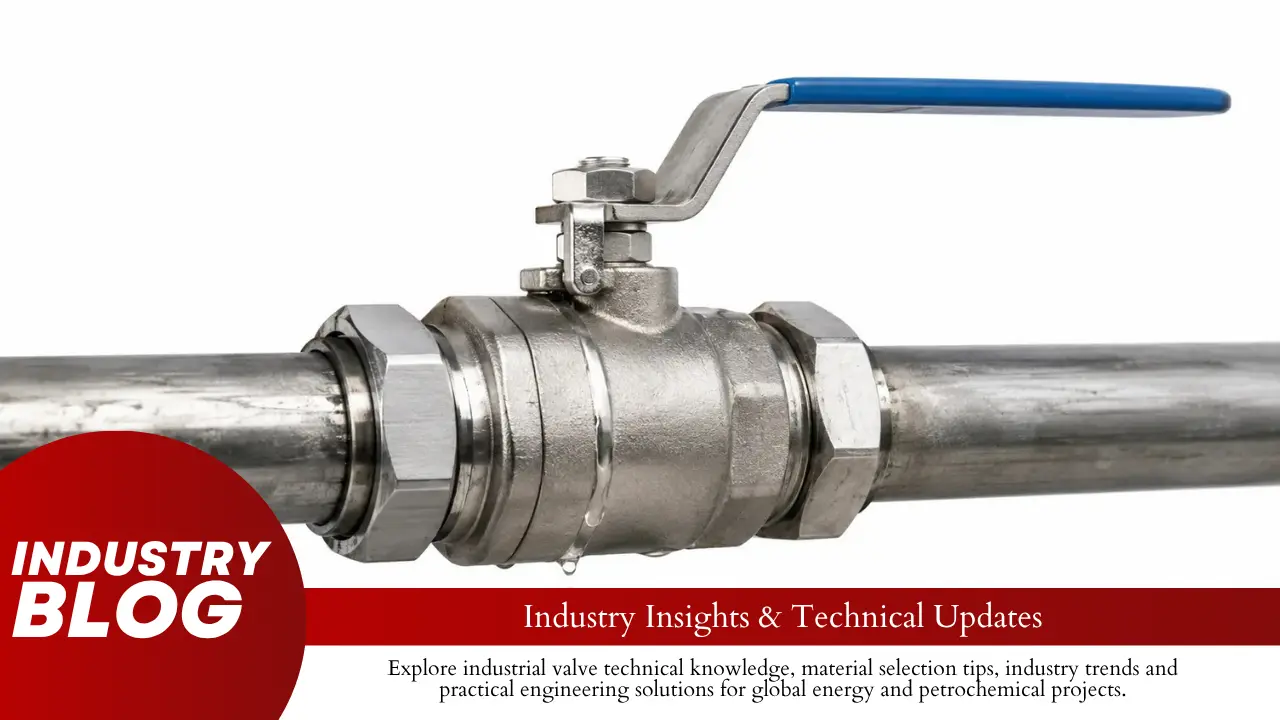
Floating ball valves and trunnion-mounted ball valves can both be used in industrial ball-valve service, but they should not be compared by headline valve price alone. In the NPS 2-8 and ASME Class 150-600 range, the practical cost difference depends on size, pressure class, bore design, body material, seat material, end connection, fire-safe requirement, DBB/DIB requirement, testing scope, and whether a gearbox or actuator is required.
A floating ball valve uses a ball that is held mainly by the valve seats. Under line pressure, the ball can move slightly toward the downstream seat to create shutoff. A trunnion-mounted ball valve uses mechanical support at the top and bottom of the ball, so the ball is supported by trunnions or bearing surfaces while the seats move toward the ball. This difference is the main reason floating designs are usually cheaper in small low-pressure sizes, while trunnion designs are often preferred for larger sizes, higher pressure, and automated isolation service[1].
For pipeline valves in oil and gas service, API 6D is commonly used to define requirements for valve design, manufacturing, assembly, testing, documentation, and marking. API 6D is a product specification for pipeline valves; it should not be used as a substitute for project-specific pressure-temperature ratings, seat leakage requirements, actuator sizing, material compatibility, or sour-service material selection[2].
Floating ball valves are usually strongest on first cost in NPS 2-4 Class 150 service. Trunnion-mounted ball valves become more attractive as size, pressure, torque, automation, DBB/DIB isolation, and maintenance risk increase.
| Selection Area | Main Cost Driver | Practical Meaning |
|---|---|---|
| NPS 2-4, Class 150 | Simple floating-ball structure, lower part count, lower torque demand | Floating-ball valves are usually the lowest acquisition-cost option |
| NPS 2-4, Class 300 | Higher differential pressure increases seat load and operating torque | Floating-ball valves may still be suitable, but vendor torque data should be checked |
| NPS 6-8, Class 150 | Ball size, stem torque, gearbox cost, and actuator margin become more important | Compare installed package cost, not bare valve price alone |
| NPS 6-8, Class 300-600 | High differential pressure, higher breakaway torque, and higher isolation duty | Trunnion-mounted valves are usually the safer default |
| Fire-safe, sour service, DBB/DIB, or high-alloy service | Testing, material, documentation, and compliance costs rise | Total life-cycle cost matters more than basic valve structure |
Price Comparison
NPS 2-4 Class 150
In small-bore Class 150 service, floating ball valves normally have the clearest acquisition-cost advantage. The design has fewer support components than a trunnion-mounted valve, and the manufacturing route is usually simpler when the valve uses a standard soft-seat configuration.
This cost advantage is strongest when the valve is manual, the pressure drop is moderate, the medium is clean, the temperature is within the seat material limit, and the project does not require DBB, DIB, special cavity relief, or high-cycle automation.
| Cost Item | Floating Ball Valve | Trunnion Ball Valve | Cost Impact |
|---|---|---|---|
| Ball support | Ball is supported mainly by the seats | Ball is mechanically supported by trunnions or bearing surfaces | Trunnion structure adds machining and assembly cost |
| Seat system | Commonly uses simpler soft-seat construction | Commonly uses spring-energized seat assemblies | Trunnion seat assemblies add parts and inspection steps |
| Manual operation | Usually practical in small Class 150 sizes | Usually practical but more expensive as a bare valve | Floating design usually wins on first cost |
| Isolation function | Standard shutoff unless a special design is ordered | DBB, DIB-1, or DIB-2 may be specified | Isolation features increase cost but improve safety function |
ASME Class numbers are pressure-temperature classes, not fixed pressure values. For example, ASME B16.5 flange ratings for carbon steel at 100°F commonly show Class 150 at about 285 psig, Class 300 at about 740 psig, and Class 600 at about 1480 psig. The allowable pressure changes with material group and temperature, so a valve datasheet should always state the applicable pressure-temperature basis instead of treating Class 150, Class 300, or Class 600 as a single pressure value[3].
For valves, ASME B16.34 is also frequently relevant because it covers pressure-temperature ratings, materials, dimensions, testing, and marking for many valve constructions. Soft seats and non-metallic components may impose lower practical limits than the metal pressure-containing body rating, so seat material limits must be checked separately[4].
NPS 6-8 Class 150
When the size increases to NPS 6-8, the cost comparison changes. A floating ball valve may still be cheaper as a bare valve, but the operating torque can force the project to add a gearbox, larger actuator, stronger mounting hardware, or a higher service factor. These added items can narrow or erase the first-cost advantage.
| Cost Item | Why It Changes at NPS 6-8 | Procurement Check |
|---|---|---|
| Bare valve price | Floating construction may still cost less than trunnion construction | Compare the same NPS, class, bore, body material, seat material, and end connection |
| Gearbox | Manual torque may exceed the site’s acceptable handwheel or lever effort | Check breakaway torque at maximum differential pressure |
| Actuator | Actuator size depends on breakaway torque plus service factor | Use the selected manufacturer’s torque table |
| Stem and mounting interface | Larger torque may require a stronger stem, bracket, coupling, or ISO mounting pad | Confirm actuator interface and safety factor before purchase |
| Maintenance access | Large valves are more expensive to remove from the pipeline | Compare top-entry, side-entry, split-body, and welded-body construction |
Published manufacturer torque data show why this size range needs specific verification. One soft-seated floating ball valve torque chart lists NPS 4 Class 150 at 125 N·m, NPS 4 Class 300 at 280 N·m, and NPS 4 Class 600 at 770 N·m. These values are manufacturer-specific, but the engineering pattern is important: torque rises quickly with size and pressure class[5].
For actuator selection, torque tables should be treated as the starting point, not the final actuator size. Actuator sizing guides commonly state that safety factors are not always built into published valve torque values, and that application factors must be considered for actual service conditions[6].
For NPS 6-8 valves, the correct comparison is installed package cost: valve, gearbox, actuator, mounting kit, service factor, testing, and maintenance access.
Class 300-600 Service
From Class 300 upward, floating ball valve selection becomes more sensitive to differential pressure, seat material, operating frequency, and actuator sizing. The floating ball can still be suitable in selected Class 300 or Class 600 applications when the manufacturer provides a qualified design, but the selection must be checked against published torque data, seat limits, pressure-temperature rating, leakage requirement, and service factor.
Trunnion-mounted ball valves are commonly preferred for larger and higher-pressure applications because the ball is mechanically supported. This reduces pressure-driven ball movement and helps make operating torque more predictable, especially when the valve is automated or operated frequently[1].
| Condition | Floating Ball Valve Risk | Trunnion Ball Valve Advantage |
|---|---|---|
| High differential pressure | Higher downstream seat load and higher breakaway torque | Supported ball reduces pressure-induced movement |
| Frequent operation | Seat wear and torque increase can affect operation | Seat loading is more controlled by the trunnion seat design |
| Automated isolation | Larger actuator may be needed | Lower and more predictable torque can reduce actuator oversizing |
| Pipeline isolation | Standard floating design may not meet DBB or DIB requirements | DBB, DIB-1, or DIB-2 can be specified when required |
Material Grade Impact
Material upgrades reduce the reliability of any simple price-gap rule. When the body, ball, stem, trim, or pressure-containing parts move from WCB carbon steel to CF8M stainless steel or duplex stainless steel, material cost becomes a larger share of the finished valve cost. In high-alloy service, the structural savings of a floating design may be less important than alloy cost, corrosion resistance, testing, and documentation.
| Material | Typical Role | Cost and Selection Effect | Verification Point |
|---|---|---|---|
| ASTM A216 WCB | Carbon steel castings for valves, flanges, fittings, and other pressure-containing parts | Usually the lowest base-material cost among the materials listed here | Confirm pressure-temperature rating, corrosion allowance, and service temperature[7] |
| ASTM A351 CF8M | Cast 316-type austenitic stainless steel for pressure-containing parts | Higher cost because of chromium, nickel, and molybdenum content | Typical CF8M composition includes 18-21% Cr, 9-12% Ni, and 2-3% Mo[8] |
| CD4MCu / ASTM A890 Grade 1A | Cast duplex stainless steel | Higher alloy and foundry-control cost than WCB and common austenitic stainless grades | Typical composition includes about 24.5-26.5% Cr, 4.8-6.0% Ni, 1.8-2.3% Mo, and 2.8-3.3% Cu[9] |
For WCB Class 150 small-bore valves, floating ball valves often keep a clear first-cost advantage. For CF8M, duplex stainless steel, or sour-service material packages, the total cost should include material test reports, PMI, NDE, hardness control, corrosion suitability, seat compatibility, and project documentation. In these cases, the valve structure is only one part of the cost decision.
Sealing and Leakage Performance
Floating Ball Sealing
A floating ball valve seals by allowing line pressure to push the ball against the downstream seat. This mechanism is simple and effective in many low-pressure and moderate-pressure applications, especially when the valve is small, the medium is clean, and the soft seat is compatible with the temperature and fluid.
The limitation is that higher pressure and larger seat area can increase contact load, friction, and breakaway torque. This does not make floating ball valves unsuitable by default, but it does mean that the manufacturer’s torque data and seat limits must be checked for the actual differential pressure.
Trunnion-Mounted Sealing
A trunnion-mounted valve supports the ball mechanically. The seats move toward the ball, usually with spring assistance and pressure energizing. This design is commonly selected for larger valves, higher differential pressure, automated isolation, buried pipelines, and pipeline applications where torque predictability and isolation function are important.
| Performance Area | Floating Ball Valve | Trunnion-Mounted Ball Valve |
|---|---|---|
| Low-pressure shutoff | Good when seat preload and line pressure are suitable | Good when the seat design is properly specified |
| High-pressure shutoff | Downstream seat load and torque increase | Supported ball improves torque stability |
| Large-bore manual operation | May require gearbox or actuator | Often easier to operate for the same size and pressure class |
| Automated operation | Actuator sizing is more sensitive to pressure and service factor | Torque is usually more predictable for actuator sizing |
ISO 5208 and API 598 Leakage Grades
Leakage grade should not be confused with valve structure. ISO 5208 defines leakage rates for valve pressure testing. Rate A is generally treated as the tightest rate, with no visually detectable leakage during the specified test duration, while lower grades allow measured leakage depending on the standard and test conditions[10].
API 598 is commonly used for valve inspection and pressure testing. For resilient-seated valves, API 598 closure testing is commonly interpreted as zero visible leakage under the specified test conditions, while metal-seated valves may have allowable measured leakage[11].
Neither ISO 5208 nor API 598 should be used to claim DBB or DIB performance. Leakage class describes seat tightness under a test method. DBB and DIB describe isolation and cavity-bleed functionality under API 6D terminology.
DBB, DIB-1, and DIB-2
API 6D terminology separates DBB, DIB-1, and DIB-2. A DBB valve has two seating surfaces that, in the closed position, provide sealing against pressure from both ends with a means of bleeding the cavity between the seats. DIB valves provide double-isolation behavior, and DIB-1 and DIB-2 should be specified when the project needs stronger isolation behavior than standard DBB provides[12].
A common mistake is to describe DBB as equivalent to ISO 5208 Rate A, Rate B, or Rate C. That is incorrect. DBB/DIB is an isolation-function requirement; ISO 5208 and API 598 are leakage-test references. If both are needed, both must be stated clearly on the valve datasheet.
Specify leakage class, test standard, and DBB/DIB requirement separately. Do not use leakage grade as a substitute for isolation-function wording.
Operating Torque
Operating torque is often the point where a low bare-valve price becomes less attractive. The torque that matters most for actuator sizing is usually breakaway torque, because the actuator must unseat the ball before rotation becomes easier.
| Example Floating Ball Valve Torque Data | Published Torque Value | Selection Meaning |
|---|---|---|
| NPS 2 Class 150 | 25 N·m | Manual operation is usually practical |
| NPS 4 Class 150 | 125 N·m | Manual operation may need a longer lever, gearbox, or site-specific approval |
| NPS 4 Class 300 | 280 N·m | Gearbox or actuator sizing should be checked |
| NPS 4 Class 600 | 770 N·m | Geared or actuated operation is usually expected |
The values above come from one manufacturer’s soft-seated floating ball valve torque chart and should not be copied to other brands without confirmation. Torque changes with bore design, seat material, pressure, temperature, fluid cleanliness, lubrication, trim coating, stem packing, and service age[5].
Actuator suppliers also warn that published torque values may not include safety factors. Application factors should be added for dry gas, dirty service, slurry, viscous fluid, polymerizing media, infrequent operation, low temperature, or other conditions that increase friction[6].
For trunnion-mounted ball valves, manufacturer torque data also need service factors. Some trunnion torque references state that breakaway torque values are based on clean liquid or gas at ambient temperature and do not include service or safety factors. Running torque and reseat torque may be lower than breakaway torque, but actuator sizing should still begin with the selected manufacturer’s breakaway value[13].
Maintenance and Downtime
Maintenance convenience depends on construction type, not only on whether the valve is floating or trunnion-mounted. A top-entry ball valve allows access to internal components from the top of the valve, so seats and internal parts may be serviced without removing the entire valve from the pipeline. Side-entry, split-body, and welded-body designs have different maintenance requirements and should be evaluated separately[14].
| Maintenance Factor | Correct Interpretation |
|---|---|
| Seat replacement | Depends on top-entry, side-entry, split-body, or welded-body construction |
| Spare parts | Trunnion valves often require more seat, spring, bearing, and seal items |
| Pipeline downtime | Top-entry construction can reduce removal work, but valve type alone does not guarantee faster repair |
| Inventory cost | Should be calculated from the actual installed valve population and spare-parts kit |
| Critical isolation | DBB/DIB function, cavity relief, and seat-test evidence may matter more than basic maintenance cost |
For critical lines, buried service, offshore modules, and systems where valve removal is expensive, a higher initial valve cost can be justified when the selected design provides better isolation, lower torque, easier maintenance access, or stronger documentation.
Fire-Safe and Sour-Service Requirements
API 607 Fire-Safe Testing
Fire-safe capability should be specified directly. API 607 is a fire test standard used for quarter-turn valves and valves with non-metallic seating. API fire test references commonly describe a 30-minute burn period under controlled fire exposure, followed by leakage checks before, during, and after the test sequence[15].
A valve should not be described as fire-safe only because it is floating-ball or trunnion-mounted. Fire-safe status depends on the tested design, seat and seal arrangement, pressure class, size range, and certificate scope.
NACE MR0175 / ISO 15156 Sour Service
For sour oil and gas service, material selection should follow NACE MR0175 / ISO 15156 when applicable. The standard uses H₂S partial pressure as an important screening factor, but final material suitability also depends on pH, temperature, chloride content, elemental sulfur, material hardness, strength level, cold work, and the specific cracking mechanism being controlled[16].
It is not enough to state that a trunnion valve or floating ball valve is suitable for sour service. The purchase specification should identify the sour-service standard, material grade, hardness limit, bolting material, trim material, coating or overlay requirement, and documentation package.
Selection Recommendations
Choose Floating Ball Valves for Small-Bore Low-Pressure Service
Floating ball valves are usually the best first option for NPS 2-4 Class 150 service when the medium is clean, the valve is manually operated, the temperature is within the soft-seat limit, the leakage requirement can be met by the selected seat design, and DBB/DIB isolation is not required.
| Good Fit for Floating Ball Valves | Reason |
|---|---|
| NPS 2-4 Class 150 utility lines | Low acquisition cost and simple construction |
| Clean water, air, compatible chemicals, and non-abrasive hydrocarbons | Soft seats can provide tight shutoff when compatible with the medium |
| Manual operation with low to moderate differential pressure | Torque is usually manageable when size and pressure are controlled |
| Projects with many small valves | Lower unit cost can reduce total procurement spend |
Choose Trunnion-Mounted Valves for Higher Pressure, Larger Size, or Automation
Trunnion-mounted ball valves should usually be evaluated first for NPS 6-8 Class 300-600 service, actuated isolation, high-cycle operation, buried pipelines, critical shutdown valves, and applications requiring DBB, DIB-1, or DIB-2.
| Good Fit for Trunnion-Mounted Valves | Reason |
|---|---|
| NPS 6-8 Class 300-600 | Lower and more predictable torque in larger sizes |
| Automated isolation valves | Actuator sizing can be more stable |
| Pipeline isolation with cavity bleed requirement | DBB, DIB-1, or DIB-2 can be specified under API 6D terminology |
| High-cycle operation | Supported ball and spring-energized seats can improve operating consistency |
| Buried, offshore, or critical service | Isolation function, torque stability, and maintenance planning become more valuable |
Use Installed Life-Cycle Cost Instead of Bare Valve Price
The lowest bare-valve price is not always the lowest installed cost. For small Class 150 manual valves, floating-ball construction often remains the economical choice. For larger sizes, higher pressure, actuation, sour service, fire-safe service, high-alloy materials, and DBB/DIB isolation, the purchase decision should include the full installed package.
| Procurement Question | Why It Matters |
|---|---|
| Is the comparison based on the same NPS, class, bore, material, seat, and end connection? | Different configurations can make price comparisons misleading |
| Has breakaway torque been checked at maximum differential pressure? | Torque controls gearbox and actuator cost |
| Does the torque value include service factor? | Published torque values often need application factors |
| Is the leakage requirement ISO 5208, API 598, API 6D, or project-specific? | Leakage testing and acceptance criteria must be stated clearly |
| Is DBB, DIB-1, or DIB-2 required? | Isolation function must be specified directly |
| Is the valve top-entry, side-entry, split-body, or welded-body? | Maintenance cost depends on construction type |
| Is NACE MR0175 / ISO 15156 required? | Sour-service suitability depends on material, hardness, and environment |
| Is API 607 fire-safe certification required? | Fire-safe performance depends on tested design and certificate scope |
Floating ball valves usually provide the best first-cost value in small, low-pressure service. Trunnion-mounted ball valves usually provide better life-cycle value when size, pressure, torque, automation, isolation function, or compliance risk increases.
References
- AS-Schneider, “Flow control operations: Floating versus trunnion-mounted ball valves”
- American Petroleum Institute, “API Specification 6D: 25th Edition”
- Midstream Calculator, “ASME B16.5 Pressure-Temperature Ratings”
- Wermac, “Valve pressure classes ASME B16.34”
- Shinjo Valve, “Torque Chart of Floating Ball Valve Soft Seated, Class 150/300/400/600LB”
- Bray, “Actuator Selection Guide: Ball Valves”
- ASTM International, “ASTM A216/A216M: Carbon Steel Castings for Pressure-Containing Parts”
- Gravity Cast India, “Material: ASTM A351 CF8M”
- MakeItFrom, “ACI-ASTM CD4MCu / ASTM A890 Grade 1A Cast Stainless Steel”
- Valvias, “ISO 5208 Pressure Testing of Valves: Leakage Rating”
- ValveHax, “API 598 Allowable Leakage Reference Table”
- Global Supply Line, “API 6D Standard: Double-Block-and-Bleed Ball Valves”
- Balon, “Trunnion Ball Valve Actuator Torque Data”
- Aalberts integrated piping systems, “Using Top Entry Ball Valves for Seamless Maintenance and In-Line Repairs”
- Valve Magazine, “The Past, Present and Future of Fire Testing”
- NACE MR0175 / ISO 15156, “Petroleum and natural gas industries — Materials for use in H₂S-containing environments”