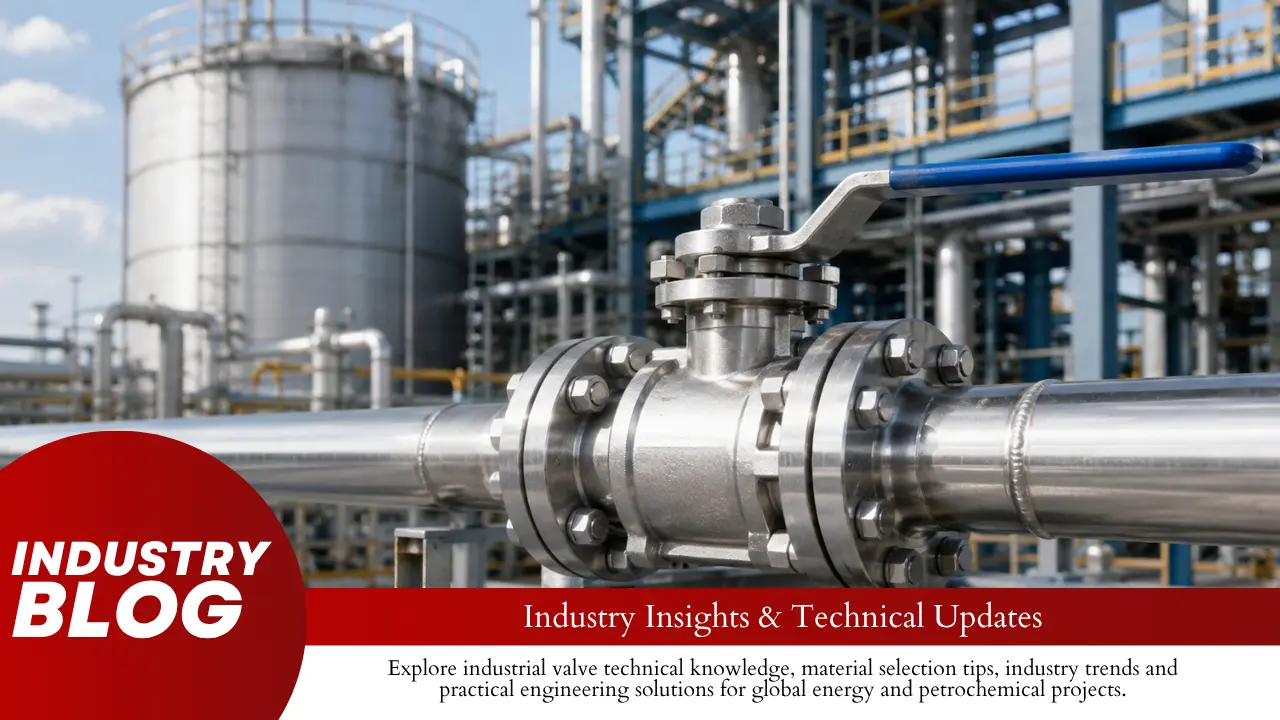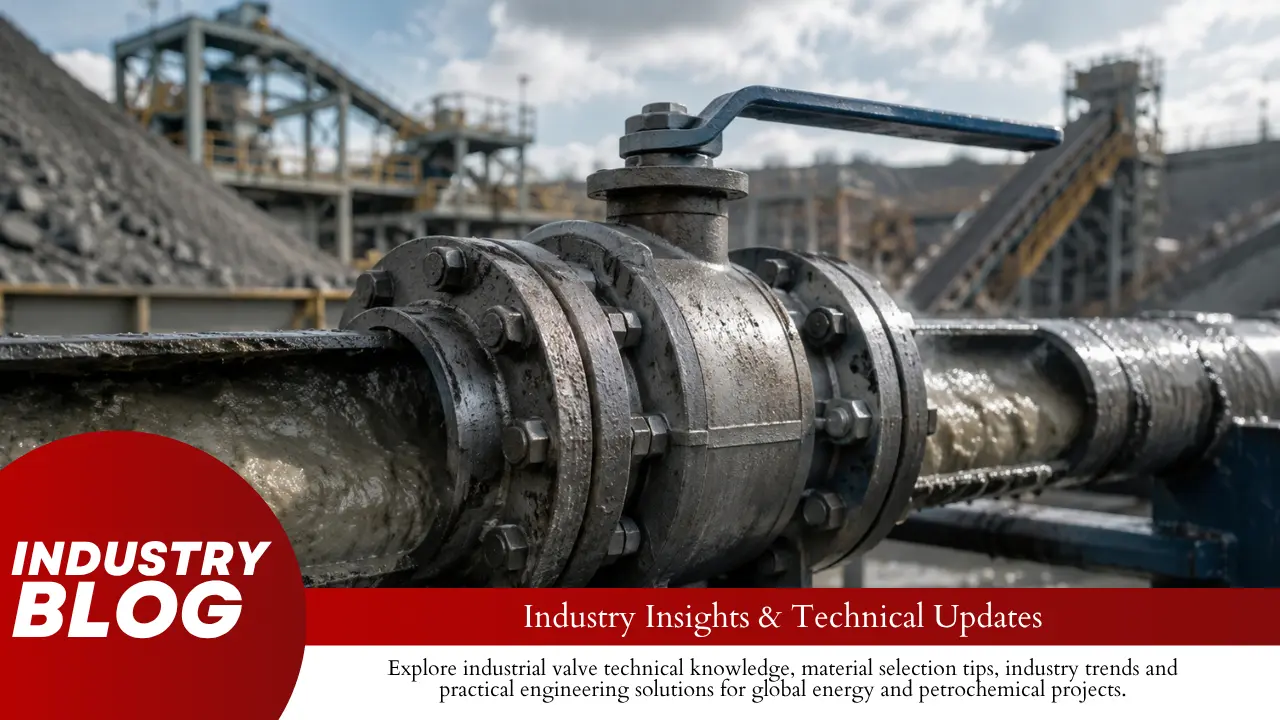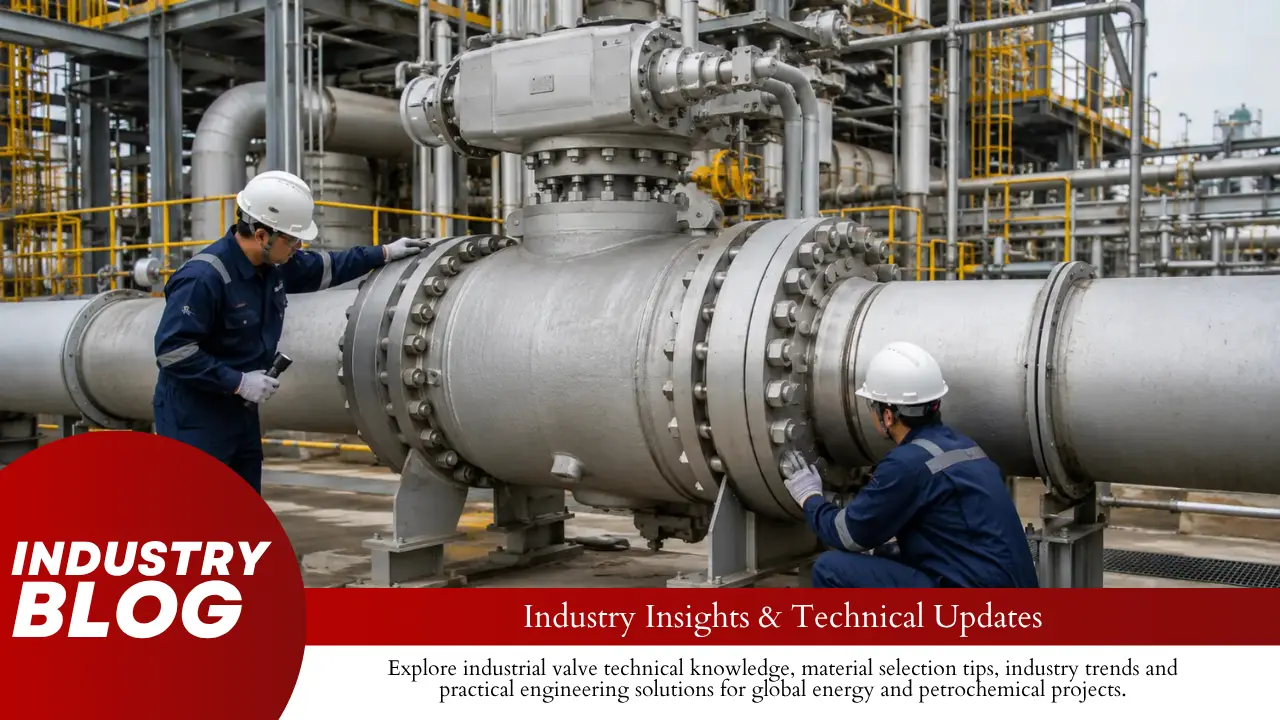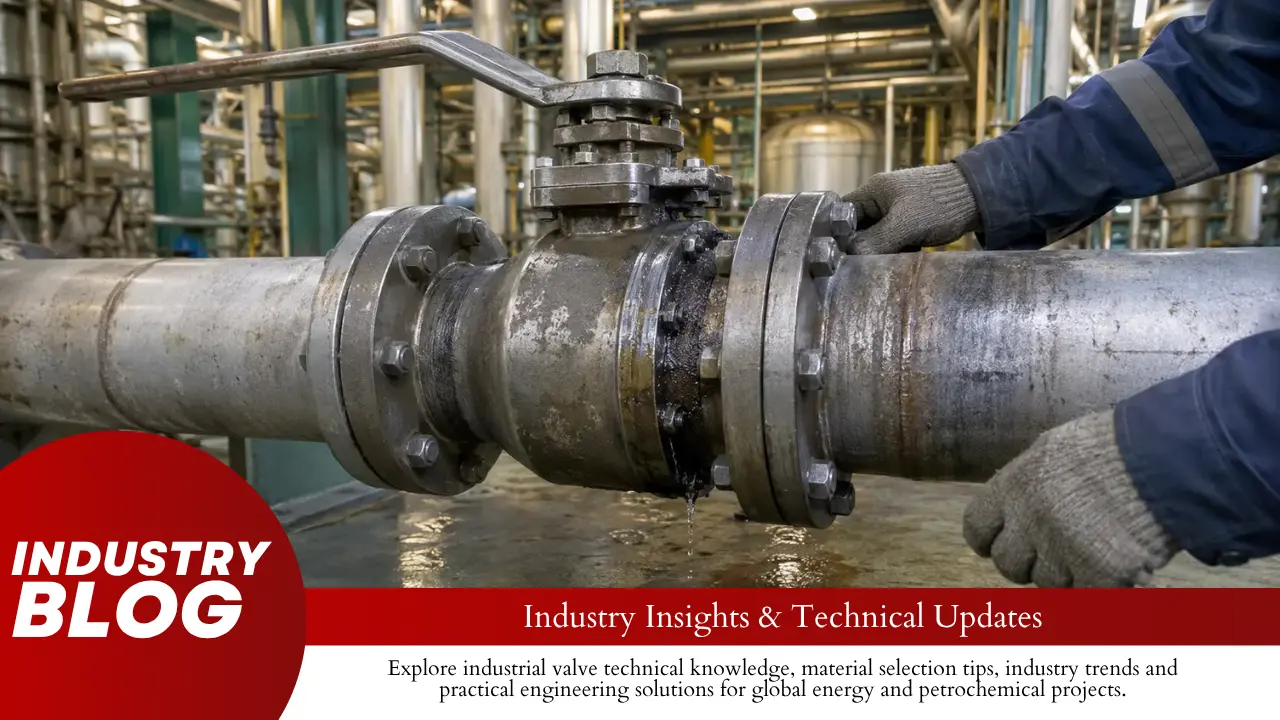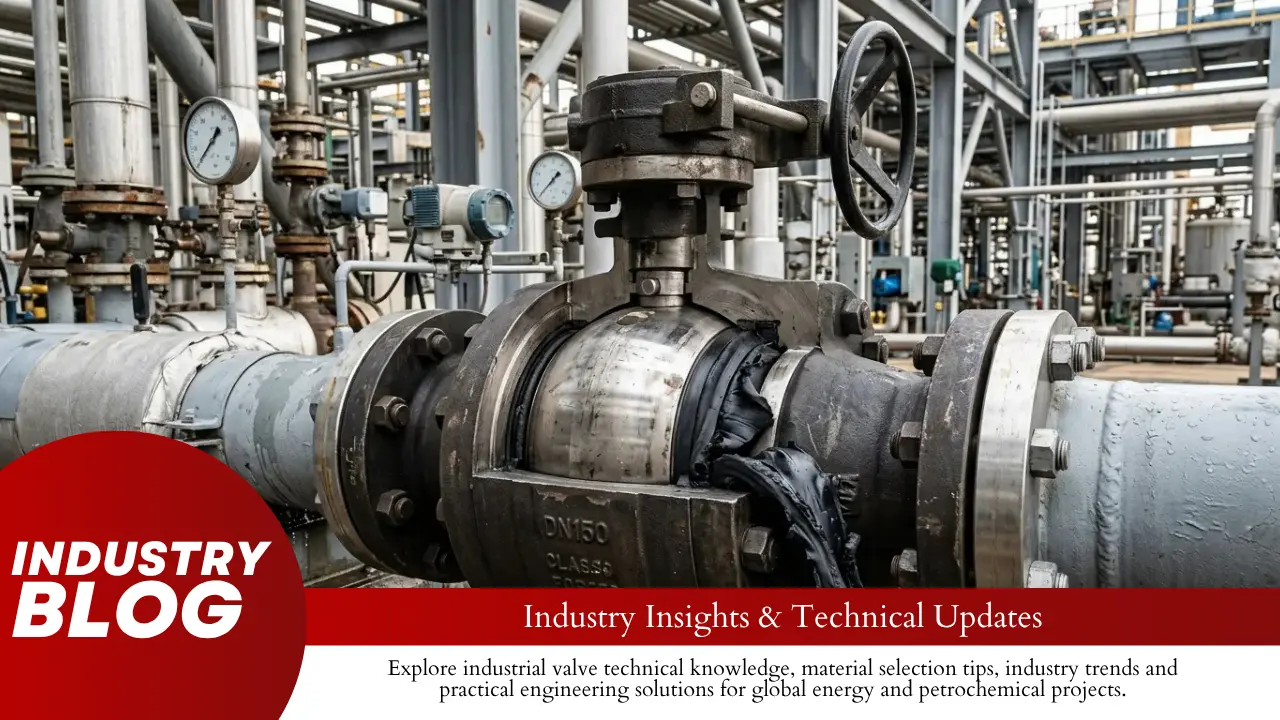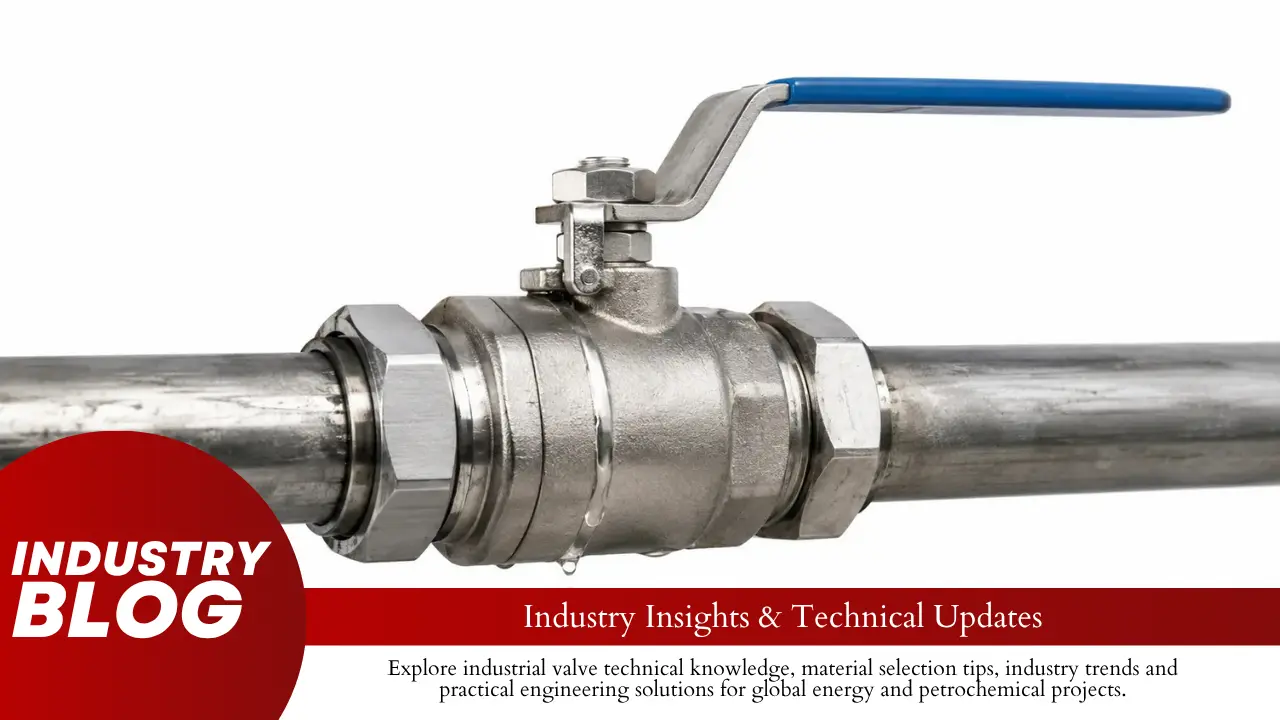
Service life differences across metal-seated ball valves come down to the hard-facing process used on the ball and seat sealing surfaces.
HVOF tungsten carbide is usually a thin thermal-spray coating in the 100-300 μm range, while Stellite weld overlay and Ni60 spray-fuse layers are much thicker before final machining and lapping.
Drawing on 12 projects our team has tracked over the past 18 months, initial prices for tungsten carbide HVOF spray, Stellite cobalt-based weld overlay, and nickel-based Ni60 self-fluxing alloy run 2x to 4x apart, yet total-cost-of-ownership rankings can flip once service life and maintenance frequency are factored in[1].
The lowest initial hard-facing price is not always the lowest total cost once maintenance interval, shutdown risk, and rework are included.
This price comparison is most useful when the buyer already knows the medium, temperature, solids content, valve size, pressure class, leakage requirement, and expected maintenance window.
If you are selecting a hard-facing process for sandy black-water lines, superheated steam, or Cl⁻ containing water injection valves, this price comparison will help you size the hard-facing cost per valve and match the coating choice with the service condition[2].
| Hard-Facing Option | Typical Price Position | Main Strength | Main Limitation | Best-Fit Service |
|---|---|---|---|---|
| Tungsten Carbide HVOF / WC-CoCr | Highest | Highest hardness and strong erosion resistance | Higher cost and sensitivity to sustained high-temperature degradation | Sand, black-water, ash-water, coal-slurry, and other particle-laden services |
| Stellite 6 Weld Overlay | Middle | Hot-hardness retention, toughness, galling resistance, and thermal stability | Lower hardness than tungsten carbide and sensitive to dilution/cooling control | Superheated steam, hot oil, hydrocracker feed, FCC hot slurry, and thermal-cycling service |
| Ni60 NiCrBSi Spray-Fuse | Lowest | Low cost, simple process, and useful corrosion resistance in suitable media | Not suitable for severe erosion, strong oxidizing chloride media, or long-term high-temperature duty | Low-to-medium temperature brine, H₂S/CO₂ reinjection water, weak acid/alkali, and small-bore valves |
Tungsten Carbide (HVOF Spray)
HVOF Spray Price
Tungsten carbide HVOF is the highest unit-area price among the three hard-facing options for metal-seated ball valves.
A single sealing face package on a 4-inch valve, covering the ball plus two seats and about 0.01 m² of hard-faced sealing area, typically prices in at USD 280-420, with coating thickness 200-300 μm[3].
This 0.01 m² figure refers to the hard-faced sealing zones rather than the full outer surface area of the ball.
In a 2024 quote package for a sandy black-water service, the WC-CoCr HVOF price came in 2.1x the Stellite 6 weld overlay and 3.0x the Ni60 spray-fuse process.
- WC-CoCr powder accounts for 38-45% of the total cost.
- The remaining cost is split across HVOF gun depreciation, process gas consumption, powder carrier gas, process setup, masking, booth operation, and matching-lapping labor.
- Typical gun life in our tracked quote packages is 250-300 hours.
- Booth and utility cost usually runs 8-12% of line operating expense.
Surface preparation before spraying and final lapping after spraying are both important cost items.
For high-grade metal-to-metal sealing, the final lapped sealing surface may need to reach Ra 0.05 μm, which adds another USD 60-90 per piece in many small and medium valve quotations.
- Spray distance: 200-300 mm.
- Combustion/flame temperature range used in quote assumptions: 2800-3200°C.
- Powder size: 15-45 μm.
- Spray booth environment: 20-25°C with 40-60% humidity.
This mirrors the lapping shop environment rules under the China vs Italy vs India ball valve manufacturer price comparison document, which covers manufacturing depth at different regional suppliers[3].
HVOF spray direction tolerance is typically held to ±5° or tighter.
Bore areas of 50-200 mm diameter and ball groove cavities usually require 3-5 spray passes at varying angles, which is a process-design cost often under-estimated in early inquiries.
- When the quote sheet only lists a per-piece hard-facing price without specifying spray-pass count, the actual delivered thickness uniformity usually shows 8-15% variation.
- In our experience on the 12 projects tracked in the past 18 months, customer-site rework averages another USD 80-160 per valve.
- The line item most often missed is process gas and carrier gas consumption, especially when multiple spray passes are needed for groove cavities and small bore areas.
Third-party laboratory data in one tested sample showed HVOF WC-CoCr porosity around 2.3% by image analysis.
Better-controlled HVOF and HVAF coating systems can reach much lower porosity, and HVAF variants can reduce oxidation and carbide degradation because of the different combustion and particle-heating conditions[4].
This is why the HVAF premium can be 15-25% even at the same powder grade.
| HVOF Cost Item | Why It Matters |
|---|---|
| WC-CoCr powder | Usually the largest material cost item, accounting for 38-45% of the total. |
| Spray pass count | Affects coating thickness uniformity, curved-surface coverage, and rework risk. |
| Process gas and utility cost | Often missed in early quote comparisons. |
| Final lapping | Directly affects leakage performance and metal-to-metal sealing repeatability. |
| Porosity and thickness inspection | Shows whether the delivered coating matches the specification. |
Service Life
With correct grade selection and matched lapping, HVOF tungsten carbide coatings deliver 2-4 years in particle-laden service.
This range should be read together with the actual media velocity, solids content, particle size, temperature, pressure drop, valve cycling frequency, and leakage requirement.
Our team tracked an HVOF metal-seated ball valve on a sandy water circulation line at a Fujian LNG receiving terminal in 2025; the first sample showing sealing-face pitting larger than 0.5 mm diameter appeared at 28 months of continuous run time[4].
The literature reference data show that HVAF-sprayed WC-CoCr can achieve very low porosity and high coating quality when powder size, spray parameters, and substrate conditions are controlled properly[4].
In our team’s 6-seat wear test running 18 months with 5% sand grit, 0.2-0.5 mm particle size, 5 m/s media velocity, and 60°C, the test data line up with this general trend.
For high-temperature service selection, the API 6D ball valve Chinese manufacturer quality comparison lists a maximum service temperature of -29°C to 350°C, with short peak temperature up to 400°C, which can be used as a quick filter when temperature data is missing.
HVOF failure usually starts with pitting, then develops into coating spalling if the sealing face keeps running in particle-laden service.
- Once a pitting pit exceeds 0.5 mm in diameter on the sealing face, replacement should be scheduled.
- The pit acts as a particle-embed site and accelerates adjacent spalling.
- This judgment flow has been repeated on 3 of the 6 HVOF spares we have tracked, so it can be used as a field reference.
In our experience, when pitting pit depth exceeds 0.15 mm, the sealing face needs to be re-lapped or the valve needs to be replaced.
The reason is that the lapped Ra value rises above 0.2 μm, and the leakage result may no longer meet the project’s specified metal-seat shutoff target.
API 598, ISO 5208, and ANSI/FCI 70-2 should not be mixed as if they were one leakage-rating system.
ISO 5208 specifies examinations and pressure tests for metallic industrial valves and verifies the degree of valve closure tightness[2].
ANSI/FCI 70-2 Class V and Class VI language is commonly used for control-valve seat leakage discussions, while general on-off industrial valves are often specified under API 598, ISO 5208, or a project-specific valve product standard.
Public research reports and field wear records indicate HVOF-sprayed WC-CoCr in 5% sand-laden water at 5 m/s media velocity can lose approximately 0.04-0.06 mm coating thickness per 1,000 hours of run time in severe erosion service.
This sets the inspection interval at 8-12 months for continuous duty and 18-24 months for cyclic duty.
The 28-month service life figure we tracked at the Fujian LNG terminal lines up with the 0.05 mm/1,000 hr wear-rate model within 5%.
The next planned replacement for the original six valves is scheduled in 2027 based on the same wear-rate model.
Suitable Service
HVOF tungsten carbide is the “price ceiling + performance ceiling” combination of the three hard-facing processes.
It fits three representative services:
- Solid-particle black-water, ash-water, and coal-slurry lines at media velocities of 3-8 m/s.
- High-pressure sand-laden gas-liquid two-phase flow at wellhead control valves.
- Ash conveying and FGD slurry circulation in power plants.
Published industrial valve testing standards and coating research both show why the coating process and the seat test requirement must be specified together[2].
For procurement documents, the phrase “zero leakage” should still be matched with a clear test standard, test pressure, test medium, test duration, and acceptance criterion.
It should not be mixed directly with ANSI/FCI 70-2 Class V or Class VI language unless the valve is being specified under a control-valve leakage framework.
The temperature ceiling is the key constraint.
WC-CoCr coatings can suffer phase degradation, hardness loss, oxidation, and WC decarburization/W2C formation when the coating system is exposed to unfavorable high-temperature processing or sustained high-temperature service[3].
For that reason, sustained service above about 500°C should be avoided unless the coating supplier confirms the powder grade, spray process, bond strength, oxidation behavior, and actual service history.
If project data is missing service parameters, check the CARILO cast soft-seated ball valve specifications temperature range to see whether the standard service temperature of 350°C and short peak 400°C covers your service.
You can require the supplier to mark spray-pass count and coating-thickness uniformity tolerance as acceptance items in the purchase list.
In our experience, when the inquiry sheet only states “HVOF tungsten carbide coating” without specifying thickness, porosity, and hardness range, the supplier usually defaults to a 150-200 μm coating with no porosity test.
- Practical coating thickness: 200-300 μm.
- Porosity target: below 1.5% when the project requires high-grade erosion resistance.
- Hardness target: above 1,100 HV0.3 for high-quality WC-CoCr coatings.
- These three numbers belong in the data sheet attached to the factory test report.
Public research reports and field records indicate that HVOF WC-CoCr in coal slurry service, with 40-60% solid content by mass, particle size 1-3 mm, and velocity 4-6 m/s, can deliver 12,000-18,000 hours of service life when the main failure mode is fine-particle erosion rather than thermal fatigue or corrosion.
This is about 2-3x the life of Stellite 6 overlay in the same service but with a 1.8-2.2x price premium.
The high-temperature risk is consistent across lab tests and field experience.
Any sustained service temperature above 500°C should be reviewed for Stellite 6, Stellite 12, Inconel 625, or another high-temperature overlay instead of simply choosing a higher grade of tungsten carbide.
Stellite Cobalt-Based Weld Overlay
Weld Overlay Cost
Stellite 6 is the highest-volume cobalt-chromium-tungsten grade in industrial use.
It is applied to valve sealing surfaces mainly through plasma transferred arc, PTA, GTAW weld overlay, or oxy-acetylene weld overlay.
ASM Alloy Digest identifies Kennametal Stellite 6 as a cobalt-chromium-tungsten-carbon hardfacing alloy and describes it as one of the most widely used wear-resistant cobalt-based alloys[1].
Typical published data for Stellite 6 include Co base, Cr 27-32 wt%, W 3-6 wt%, C 0.9-1.4 wt%, density around 8.44 g/cm³, melting range around 1282-1410°C, and hardness around 36-45 HRC or 380-490 HV[1].
In our team’s 2024-2025 quotes, the Stellite 6 weld-overlay plus lapping total on a 4-inch ball plus two seats typically falls in the USD 150-220 per piece range.
This is about 45-55% of the HVOF WC-CoCr price.
- Stellite alloy powder: 22-30% of the hard-facing cost.
- Other cost items: GTAW/PTA machine depreciation, welder qualification, and preheat/slow-cool cycle.
- Overlay hardness is sensitive to dilution, heat input, cooling rate, and final machining allowance.
The overlay is built up in 2-3 layers to 4-6 mm total thickness, then turned and lapped to final size.
Stellite 6 base-material dilution must be controlled tightly.
A 30% or higher base-material mix can noticeably reduce the corrosion resistance and wear behavior of the overlay, and that process-control cost is passed through to per-piece pricing on small-volume orders.
The relationship to base material carbon content, usually ≤0.25% with no preheat in many ordinary cases, is documented in the CARILO forged cryogenic ball valve specifications, where the same body-chemistry constraint governs low-temperature body selection.
For Stellite 6, the alloy name alone is not enough. Overlay thickness, dilution control, and cooling control decide the final value of the hard-facing process.
- Procurement should require the supplier to list alloy grade.
- Procurement should require the supplier to list overlay thickness.
- Procurement should require the supplier to list the slow-cool curve on the inquiry sheet.
In our experience, when only the alloy grade is listed without the overlay thickness and slow-cool rate, the delivered overlay is usually 30-50% thinner than the datasheet figure.
This happens because the supplier optimizes the per-piece price by reducing the second and third weld layers.
Third-party laboratory data show that overlay hardness can drop when cooling control is poor, and the wear rate can increase on ASTM G65 abrasive tests.
Procurement teams that insist on the full 3-item data set typically save 8-12% on the per-piece hard-facing cost across an annual 200-valve order.
| Stellite 6 Item | Recommended Procurement Check |
|---|---|
| Alloy grade | Confirm Stellite 6 or ERCoCr-A/ECoCr-A equivalent. |
| Overlay thickness | Confirm built-up thickness and final machined thickness. |
| Cooling rate | Confirm the slow-cool curve and heat-input control. |
| Dilution | Control base-metal dilution to protect hardness and corrosion resistance. |
| Lapping | Confirm final sealing surface finish and leakage test result. |
High-Temperature Advantage
Stellite 6’s key selling point is hot-hardness retention.
Its hardness range is commonly listed around 36-45 HRC, or 380-490 HV, and it retains useful hot-wear performance in many services around 500°C[1].
By comparison, HVOF-sprayed WC-CoCr can suffer phase degradation, oxidation, and hardness loss when the coating system is pushed into sustained high-temperature service[3].
At 350°C continuous duty, Stellite 6 overlay wear life is usually more stable than HVOF coating when heat, thermal cycling, hot oil film breakdown, or adhesive wear is the main damage mode.
That is why process licensors’ datasheets for superheated steam, 300-500°C hot service, hot oil lines, and hydrocracker feed valves often specify Stellite overlay.
In a 2025 measurement on a refinery FCC hot slurry valve, a Stellite 6 overlay face showed no visible wear after 14 months at 380°C continuous duty.
A comparable HVOF-coated part pulled from the same service showed local thermal fatigue micro-cracks.
Stellite 6 is also commonly associated with cobalt-based hardfacing consumables such as ERCoCr-A and ECoCr-A.
Writing the required weld consumable standard, overlay thickness, and hardness range on the purchase list avoids supplier grade substitutions.
If you are comparing Stellite 6 vs Inconel 625 overlay high-temperature performance, the flanged vs welded-end ball valves for petrochemical pipelines document also covers overlay-grade selection boundary conditions for downstream sealing[1].
In our experience, Stellite 6 should be treated as a strong 300-500°C hot-wear overlay, while service around 500-540°C should be confirmed against the actual medium, thermal cycling frequency, oxidation risk, and supplier history.
We have seen overlay faces start to show subsurface oxidation at 480-500°C after 6-8 months of continuous duty in hot oil service.
For service temperature sustained above 500°C, the safer route is to confirm Stellite 6 against the project condition or review Stellite 12, Inconel 625, or another high-temperature overlay.
For sustained hot-wear service around 500°C, Stellite 6 is usually safer than tungsten carbide on a price-vs-life basis, but 500-540°C should be confirmed by the supplier and project data.
Hardness Comparison
HVOF tungsten carbide coating typical hardness range is 1100-1400 HV0.3, about 70-72 HRC.
This is clearly above Stellite 6 overlay at about 380-490 HV, or 36-45 HRC[1][3].
That hardness gap pushes many procurement teams toward tungsten carbide.
However, metal-seal wear mechanism is not “the harder the better”; higher hardness usually means higher brittleness, and the matched-lapping process is also harder to drive down to Ra ≤0.05 μm ±0.005 μm tolerance on the sealing face.
Stellite 6’s hardness range fits the lapping process window and consistently supports tight metal-to-metal sealing when the overlay thickness, dilution, and lapping quality are controlled.
Under hard-particle erosion service, Stellite 6 overlay’s higher toughness reserve can make it more impact-spalling-resistant than high-hardness tungsten carbide.
However, in fine hard-particle erosion at lower temperature, HVOF tungsten carbide usually remains the stronger choice.
If procurement needs high-pressure sealing-face lapping process repeatability, see the electric vs pneumatic actuated ball valves total cost of ownership document for a benchmark on seat surface finish and process control.
- At the same pressure class, Stellite 6 overlay single-piece hard-facing cost is usually only 50% of HVOF.
- Lapping tolerance is wider than tungsten carbide.
- The hot-wear and thermal-cycling advantage is clear in many services.
- Erosion-service life can be close to HVOF in high-temperature, moderate-erosion, or impact-spalling services.
That is why Stellite 6 is the mainstream choice in industrial valves.
In our experience, the procurement trap in this comparison is to read the peak hardness number and assume the higher one wins.
In practice, the lapped sealing face final Ra value, usually 0.05-0.08 μm, is the binding constraint, and that constraint fits the Stellite 6 hardness window almost perfectly.
Third-party laboratory data show that lapping a 70 HRC tungsten carbide coating to Ra 0.05 μm typically requires 3-5x more lapping passes than lapping a 40 HRC Stellite 6 overlay.
The lapping abrasive cost runs 2-3x higher per piece.
For high-cycle service, more than 50,000 cycles per year, the cumulative impact-spalling resistance of Stellite 6 also tends to outlast the higher-hardness HVOF coating by 15-25% in field measurements.
Nickel-Based Alloy (NiCrBSi Self-Fluxing)
Ni60 Price
Nickel-based Ni60 self-fluxing alloy, a NiCrBSi alloy system, is the lowest-priced of the three hard-facing processes.
Typical Ni60 powder is a Ni-Cr-B-Si self-fluxing alloy, and the exact Cr, B, Si, C, and Fe content varies by supplier grade and powder standard.
A 4-inch ball plus two seats Ni60 spray-fuse plus lapping total typically lands in the USD 90-140 per piece range.
This is about 60% of Stellite 6 weld overlay and 28-32% of HVOF tungsten carbide.
The process is usually oxy-acetylene flame spray-fuse or induction remelt.
The workflow is simple, no HVOF or PTA equipment needed, and it is friendly to small and medium valve manufacturers.
Ni60 spray-fuse layer hardness typically lands around 58-62 HRC, about 647-734 HV, depending on powder chemistry, remelting temperature, dilution, and cooling rate[5].
This is below HVOF coating but close to the upper end of Stellite 6, with boron- and silicon-related phases helping the self-fluxing and hardening behavior[5].
Note that Ni60 above 600°C long-term duty can show phase oxidation, softening, and loss of wear reserve.
For service above 600°C, Ni60 is not recommended; the upgrade should be reviewed among Stellite 12, Inconel 625, or other high-temperature overlays depending on corrosion and wear mode.
The single-piece price advantage of Ni60 is most pronounced on 1/2″ to 4″ small-bore valves.
In this size range, powder utilization is high, spray-fuse time is short, and the single-piece premium is well below HVOF.
That is why many small and medium Chinese valve manufacturers use Ni60 as their standard hard-facing.
For a small-bore comparison, the floating vs trunnion ball valve cost and selection comparison references Ni60 spray-fuse in its small-bore process notes[5].
- Recommended spray-fuse layer thickness per pass: 1.5-2.5 mm.
- Recommended remelt temperature window: commonly around 1,050-1,100°C depending on supplier grade.
- Undershooting the remelt temperature can cause porosity above 5%.
- Overshooting can burn out boron- and silicon-related phases and drop hardness by 8-12 HRC.
The 12 projects our team has tracked show Ni60 spray-fuse has the lowest re-work rate of the three processes, about 1.5% vs 3-4% for HVOF and 2.5% for Stellite overlay.
This is largely because the workflow is closer to conventional flame spray than to vacuum-grade thermal spray.
Procurement teams that buy small-bore valves, NPS 1/2″ to NPS 4″, in volume usually get a 20-30% better total cost with Ni60 vs Stellite 6 once the per-piece price difference is multiplied by annual volume.
| Ni60 Cost Driver | Effect on Price and Quality |
|---|---|
| Simple spray-fuse workflow | Keeps equipment and labor cost lower than HVOF and PTA overlay. |
| Small-bore valve size | Improves powder utilization and lowers per-piece cost. |
| Remelt temperature | Controls porosity, hardness, and boron-silicon phase stability. |
| Layer thickness | Too thin reduces wear reserve; too thick increases machining and distortion risk. |
Corrosion Resistance Bonus
Ni60 self-fluxing alloy contains chromium, which can form a chromium-rich oxide film on the spray-fuse surface under suitable conditions.
This gives more stable performance than Stellite 6 in some weak acid, weak alkali, brine, and chloride-containing water services.
In a 2024-tracked offshore water injection valve project, the medium was H₂S/CO₂-containing reinjection water at 80-120°C.
The original Stellite 6 overlay design showed sealing-face pitting after 9 months; switching to Ni60 spray-fuse, the same location ran 18 months with no visible corrosion.
Cl⁻-containing brine, seawater-related water service, and some H₂S/CO₂ reinjection water can be suitable for Ni60 when the pH, chloride level, oxidizing condition, and temperature remain within the coating’s practical envelope.
Wet chlorine, low-pH chloride acid, acidified fracturing fluid, and strongly oxidizing chloride media require a separate corrosion review before Ni60 is selected.
In water treatment, desalination, and offshore platform service, Ni60 paired with a carbon-steel body and sacrificial anode protection can reduce total cost compared with a 316L stainless steel integral body valve in some projects.
This depends on corrosion allowance, anode maintenance, chloride level, oxygen content, coating defects, and end-user material rules.
If the medium is saline or weakly acidic, the carbon steel vs stainless steel vs duplex ball valves material cost and performance document gives a reference for the body-material side.
The mechanism is usually explained by chromium-rich oxide formation on the Ni-Cr-B-Si matrix, but the actual corrosion resistance depends strongly on chloride level, pH, temperature, coating pores, remelting quality, and crevice conditions[5].
In our experience, the corrosion-rate gap between Ni60 and Stellite 6 in H₂S/CO₂ reinjection water is roughly 3-5x in favor of Ni60 over 18 months of continuous duty.
The gap widens further when chloride concentration rises above 50,000 ppm.
Third-party laboratory data show that Ni-based self-fluxing remelted coatings can maintain strong wear and corrosion resistance when remelting quality and coating density are properly controlled[5].
For offshore platform water injection and acidified fracturing service, Ni60 paired with a carbon-steel body and sacrificial anode protection can land at 60-70% of the total cost of a 316L or duplex integral-body valve over a 5-year life-cycle in some projects.
Ni60 is not a universal corrosion solution, but it can be a strong low-cost option when chloride, H₂S, CO₂, temperature, and pH stay inside a suitable range.
Selection Summary
Combining the four dimensions of price, temperature, hardness, and corrosion resistance across the three processes, the field selection guidance drawn from the 12 projects our team has tracked over the past 18 months is shown below.
| Service Condition | Recommended Hard-Facing Process | Reason |
|---|---|---|
| Temperature below 300°C + heavy erosion, such as sand, coal slurry, and ash | HVOF tungsten carbide, ideally HVAF variant if budget allows | Best erosion resistance and highest hardness among the three options |
| Temperature 300-500°C + moderate erosion, such as superheated steam, hot oil, and hydrocracker feed | Stellite 6 weld overlay | Better hot-hardness retention, toughness, and thermal stability |
| Temperature around 500-540°C + hot-wear service | Confirm Stellite 6 with supplier data, or review Stellite 12 / Inconel 625 / other high-temperature overlays | Stellite 6 can retain useful hot-wear performance near 500°C, but higher sustained temperatures require project confirmation |
| Temperature below 200°C + corrosion, such as Cl⁻, H₂S, CO₂, and chloride-containing water service | Ni60 spray-fuse, paired with 316L or duplex body if needed | Lower cost and useful corrosion resistance in suitable media |
The three price tiers scale roughly 1 : 1.7 : 3.0, meaning Ni60 : Stellite 6 : HVOF WC-CoCr.
The full life-cycle cost must still be considered.
HVOF’s higher initial price is usually amortized by the longer replacement interval, especially for continuous processes with annual runtime above 6,000 hours.
For a more detailed process comparison, see the API 607 vs API 6FA fire-safe ball valve testing standards document or the CARILO ball valve technical article list (12 media parameters) for a configured selection table.
When the purchase list lands, write the hard-facing process into the “Sealing Face Hard-Facing Process” section of the technical specification, typically 5-8% of the spec’s total length.
Require the supplier to attach hardness readings, HV or HRC, and metallographic inspection results to the factory test report.
These two data sets let you judge within the 1-year warranty window whether the delivered process actually matches the specification.
In our experience, the single most useful line item to add is a cross-section micrograph at 100x magnification showing the coating-to-substrate interface.
It reveals spray porosity, decarburization, dilution, lack of fusion, and coating thickness in one image.
Procurement teams that add this line item often see fewer field failures over a 3-year window because the supplier cannot hide process shortcuts under a micrograph.
For projects with a 1,000-valve annual volume, this line item typically pays for itself within the first 6 months of operation.
The inspection cost runs roughly USD 80-120 per valve cross-section.
For high-spec 4-inch metal-seated ball valves, this is usually a small share of the total valve cost, but the percentage will be higher on low-pressure or small-bore orders.
- Do not select Ni60 only because it has the lowest initial price if the service is heavy slurry or severe erosion.
- Do not select HVOF only because it has the highest hardness if the service is sustained high temperature or thermal cycling.
- Do not select Stellite 6 only because it is common if chloride, H₂S, CO₂, or wet corrosion is the main failure risk.
- Do not accept a purchase specification that only says “hard-faced ball and seats” without thickness, hardness, inspection, and leakage-test requirements.