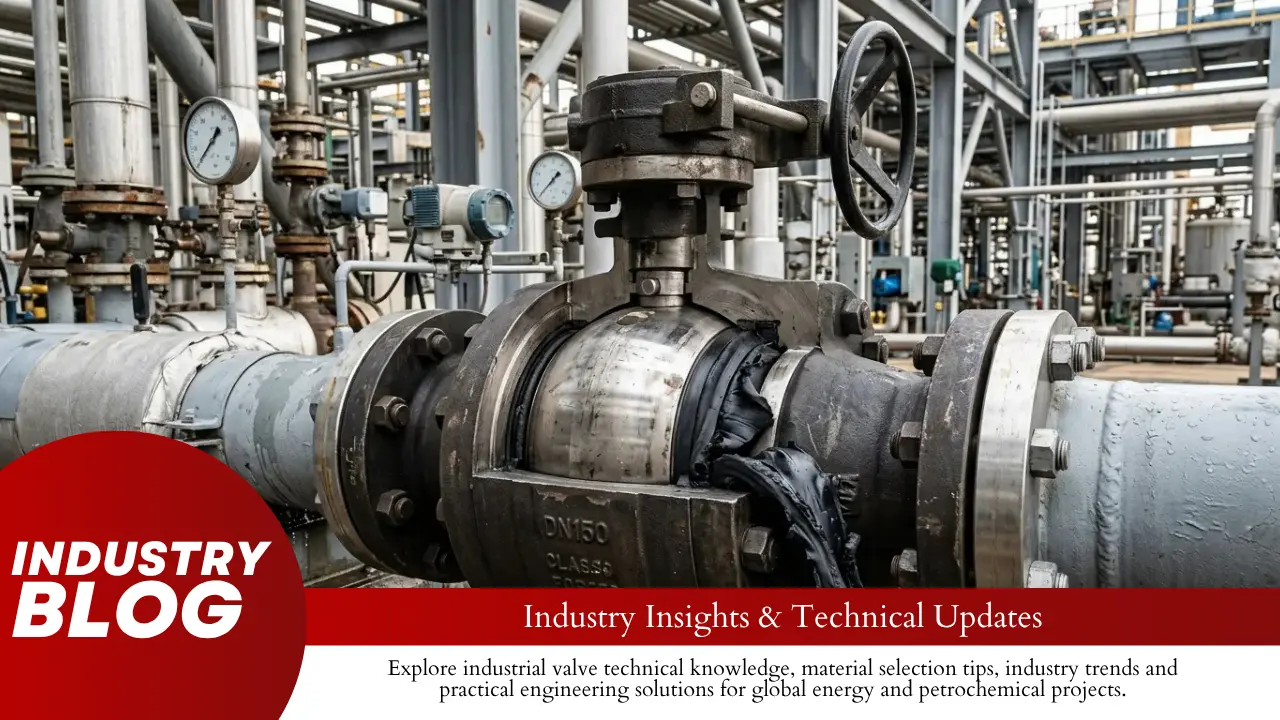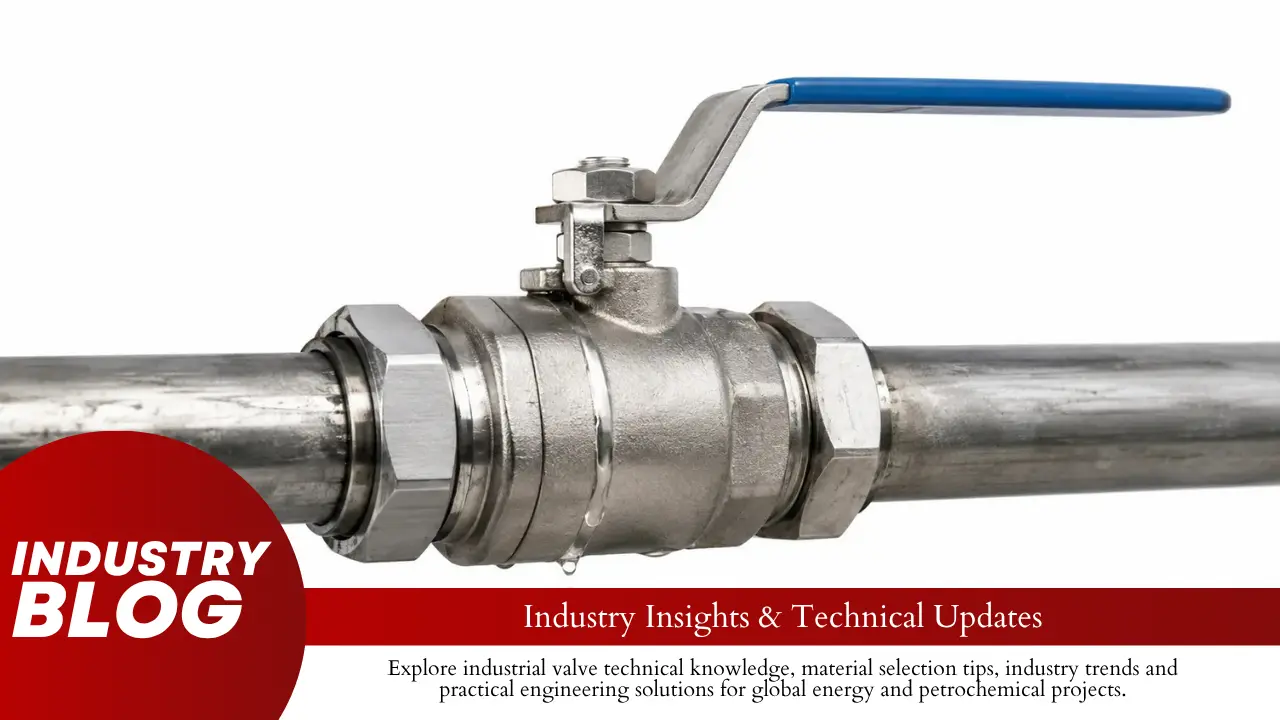
From a Malaysian buyer’s perspective, the 3 most critical things when selecting Fire-Safe ball valves are these:
- Clarify the scope difference between API 607 and API 6FA standards.
- Verify that the 4 design elements are all in place: graphite seal, anti-static, blow-out proof, and cavity relief.
- Check the test report, third-party witness, and past track record.
In the 12 Fire-Safe ball valve failure or dispute cases we reviewed in the past 5 years, 9 were not caused by obvious valve body quality issues. They were caused by wrong standard selection, report mismatch, old certificates being reused for different valve specifications, or buyers accepting incomplete test evidence.
For oil and gas, petrochemical, LNG, offshore, and high-risk chemical service, Fire-Safe ball valve selection should be checked against recognized standards and project specifications before price comparison. API standards are widely used in oil and gas valve procurement, inspection, and certification[1].
For buyers, the safest principle is simple:
Check evidence, check site, check report.
A practical Fire-Safe selection process should confirm whether the valve design, fire test report, delivered valve specification, third-party witness record, and supplier track record all match the same project requirement.
| Buyer Check Area | Main Items | Common Risk |
|---|---|---|
| Standard selection | API 607, API 6FA, API 6FD, ISO 10497 | Wrong standard accepted for the valve type |
| Fire-Safe design | Graphite seal, anti-static, blow-out proof, cavity relief | Catalog claim exists, but design evidence is incomplete |
| Supplier verification | Test report, third-party witness, track record | Report does not match the delivered valve |
Standard Comparison
API 607 Scope
API 607 is the fire test standard for quarter-turn valves and valves equipped with nonmetallic seats. The current common reference is API 607 8th edition, published in 2022[2].
In many purchasing cases, API 607 reports are commonly seen across Class 150 to Class 600 and common DN ranges such as DN15 to DN600. However, the actual qualified range must be checked in the fire test report, not assumed from the standard title alone.
In our experience, the test core of API 607 is the “dual seal” principle. After fire exposure, the soft seal may lose sealing ability, and the remaining Fire-Safe sealing structure, such as graphite packing, graphite gasket, or metal-assisted sealing contact, must help control leakage.
The leakage should meet the allowable through-seat leakage and external leakage limits stated in the applicable fire test standard and the project specification. Buyers should not simply use Class IV or Class V wording unless the project document clearly defines that leakage class.
Many old reports may lack current report items, so buyers should be careful when accepting old-version test reports. The key is not only the report date, but whether the tested valve design is still the same as the current production valve.
The vast majority of Fire-Safe soft-seated ball valves rely on API 607 for compliance. This standard is widely adopted in Middle East, Southeast Asia, and North Africa projects.
For specific soft-seated ball valve product forms, see the Carilo Valves Forged Soft-Seated Ball Valve Topic. Detailed Fire-Safe Floating Ball Valve API 607 Anti-Static Petrochemical Pipeline Application also has the complete standard citation list.
Our Brunei refinery expansion project used API 607 soft-seated ball valves across 3 tender sections. The project duration was 18 months, and it is currently in 2 years of operation with no Fire-Safe failure.
A practical tip from our team: when the project requires both soft-seated and metal-seated Fire-Safe ball valves in the same line, the soft-seated ones are usually API 607 only. The metal-seated ones are typically API 607 plus API 6FA dual-cert, and this split reduces the per-valve certification cost by 15-20 percent on average compared to a single-spec full dual-cert approach.
- Ask whether the report is for the same valve type.
- Ask whether the report covers the same seat material.
- Ask whether the report covers the same DN and pressure class.
- Ask whether the tested valve design is the same as the delivered valve design.
- Ask whether the report edition is accepted by the project specification.
API 6FA and 6FD
API 6FA and API 6FD are API fire test standards, but they are not interchangeable.
| Standard | Correct Scope | Buyer Note |
|---|---|---|
| API 6FA | Fire test for API 6A and API 6D valves | Commonly required for critical oil and gas valve projects |
| API 6FD | Fire test for API 6A and API 6D check valves | Do not treat it as a substitute for API 6FA on ball valves |
API 6FA establishes requirements for testing and evaluating the pressure-containing performance of API 6A and API 6D valves when exposed to fire. The current common reference is API 6FA 5th edition, published in 2020[3].
API 6FD applies to fire testing of API 6A and API 6D check valves[4]. It is not a general small-bore instrument valve standard, and it should not be used to replace API 6FA for ball valves unless the project specification clearly allows it.
In our experience, clients often confuse API 6FA with API 6FD. Some buyers think 6FD is a subset of 6FA, but they are independent standards for different valve types.
Clients should clearly state “test per API 6FA” or “test per API 6FD” in the contract to avoid makers substituting the wrong standard. Detailed API 607 Fire Test Process and Quality Control also has 6FA/6FD comparison data points.
Detailed API 607 Fire Test Required Documents and Certification Requirements also covers the specific documentation list for 6FA testing.
In the bid we helped an Indonesian client prepare in 2024, we explicitly required API 6FA plus API 607 dual certification. Absence of either was disqualifying.
Another practical note from our audits: API 6FA test cost typically ranges from USD 15000 to USD 40000 per valve size, depending on valve size, pressure class, laboratory location, witness scope, and document package requirement.
With a full size matrix such as DN50, DN100, DN150, DN200, DN300, DN400, and DN600, the test program may require 5-7 separate tests. The upfront test investment is significant.
Many small makers only test 1-2 sizes and then claim “size extension” to cover other DN ranges. This should not be accepted unless the extension is supported by the applicable standard, report rules, and project approval.
- Confirm whether the project requires API 6FA, API 6FD, API 607, or ISO 10497.
- Confirm whether the valve is a ball valve, check valve, or another valve type.
- Confirm whether the fire test report is for the same DN, Class, body material, and seat design.
- Confirm whether any size extension is accepted by the purchaser or EPC.
Which Standard is Stricter
API 607, API 6FA, and API 6FD are not in a simple “stricter versus less strict” relationship. They apply to different valve types and project scenarios.
API 607 is mainly used for Fire-Safe testing of quarter-turn valves and valves equipped with nonmetallic seats. API 6FA is a fire test standard for API 6A and API 6D valves. API 6FD is used for API 6A and API 6D check valves.
In our experience, a stricter standard combination for many Class 600 and above critical Fire-Safe projects is API 607 8th edition plus API 6FA 5th edition. This combination is commonly required before acceptance in critical service projects, but the final requirement should always follow the project specification and end-user approval.
Clients should write in the contract “ball valve designed and tested per API 607 8th edition, fire test executed per API 6FA 5th edition where required by the project” as two separate clauses when the project requires this combination.
Note also the relationship between BS 6755 Part 2 and ISO 10497. BS 6755 Part 2 is still referenced in some legacy projects, while ISO 10497:2022 is the current international Fire-Safe type-test standard for soft- and metal-seated isolation valves with one or more obturators[5].
ISO 10497 also specifies assessment items such as through-seat leakage, external leakage, cavity overpressure relief of double-seated valves, and operability. However, whether ISO 10497 can be accepted instead of API 6FA depends on the project specification, valve type, test scope, and end-user approval.
Detailed Soft-Seated vs Metal-Seated Ball Valve Comparison also has engineering data points for the two-standard combination, as a reference for standard selection.
Detailed API 6D Ball Valve Actuator Selection Guide also covers the actuator configuration reference for Fire-Safe scenarios. We recommend considering the actuator level simultaneously during standard selection, as this often gets missed.
One more practical note: when the project allows both API 607 and ISO 10497, the smart choice is to accept the maker’s existing project-accepted ISO 10497 report and supplement it with API 607 compliance evidence if required. This can reduce unnecessary dual certification overhead, but only when the EPC or end user formally accepts the equivalence.
The better question is not “which standard is stricter”, but “which standard is correct for this valve type, project specification, and service condition”.
Design Elements
Graphite Seal Fire Protection
The graphite seal is the “second line of defense” for Fire-Safe ball valves. After the soft seal is burned away or damaged by fire, the graphite sealing structure continues to support leakage control.
Common graphite materials are flexible graphite, such as flexible graphite paper or roll, and expanded graphite. Typical density is 1.0-1.5 g/cm³, working temperature is often stated around -200°C to 650°C, and short-term temperature resistance can exceed 1000°C depending on graphite grade, atmosphere, and exposure time.
In our experience, the design key for graphite seals lies in 3 places:
- The pre-tightening force of the graphite ring, typically 15-25 percent compression.
- The effective contact area between graphite and the sealing surface, which must be sufficient to maintain sealing stress after fire exposure.
- The thickness of the graphite ring, commonly 2-4 mm depending on valve size and structure.
Clients should specify the working temperature range, density, and compression ratio of the graphite seal in the contract. This helps avoid makers substituting cheap low-density graphite.
Graphite below 0.8 g/cm³ may have weak compression recovery and cannot reliably maintain sealing after fire. For metal-sealed high-temperature scenarios, see the Carilo Forged Metal-Seated Ball Valve Topic.
Detailed API 607 Fire Test Design Optimization and Leakage Control also covers graphite seal engineering data points, as a reference for design selection.
Detailed Soft-Seated vs Metal-Seated Temperature Limit Selection also has graphite ring engineering data points, useful when selecting the graphite ring supplier.
In our 2024 Middle East refinery project, we required graphite density 1.2 g/cm³+ with batch test report. Non-conforming batches were rejected and replaced, and this requirement was written directly into procurement specification clause 5.2.
For valve body, pressure-temperature rating, material, nondestructive examination, testing, and marking requirements, ASME B16.34 is a common reference standard for flanged, threaded, and welding-end valves[6].
Another practical note from our experience: graphite density below 1.0 g/cm³ often has weaker compression recovery and may not maintain the seal after the soft seal burns away. We have seen at least 3 cases where makers used 0.8-0.9 g/cm³ low-density graphite as a cheap substitute, and the post-fire leakage was far higher than the project acceptance limit.
The density check is one of the most cost-effective screening criteria.
- Check graphite density.
- Check graphite compression ratio.
- Check graphite batch report.
- Check where graphite is used in the valve structure.
- Check whether the production batch matches the tested sample.
Anti-Static and Blow-Out Proof
The anti-static design is to eliminate the static electricity accumulation caused by friction between the ball and the seat. This helps reduce the risk of electrostatic spark in flammable service.
The blow-out proof design is to prevent the stem from blowing out under high pressure or fire, avoiding medium jetting.
Anti-static commonly uses springs, conductive pieces, or other metal contact paths to maintain electrical continuity between ball, stem, and body. The common acceptance value is that electrical resistance should not exceed 10 Ω, unless the project specification requires a stricter value.
Blow-out proof relies on a stem retention structure, such as an internally loaded stem, stem shoulder, inverted notch, or stem bottom step. API 6D is a key reference standard for pipeline and piping valves used in petroleum and natural gas industries[7].
In our experience, the anti-static test must look at 2 indicators:
- The ball-stem-body resistance value, commonly not exceeding 10 Ω, or a stricter project-specified value.
- The contact continuity between the stem and the ball after open-close cycles.
Blow-out proof must be checked by structure and drawing, not only by catalog wording. Practical review points include the retained stem structure, stem shoulder dimension, packing arrangement, and assembly inspection record.
Stem inverted notch depth of 3-5 mm and stem bottom step diameter 1-2 mm larger than the stem diameter may appear in some project designs, but these values depend on valve size, pressure class, and stem diameter. They should not be treated as universal standard dimensions.
Clients should write in the contract “anti-static resistance not exceeding 10 Ω, or stricter project requirement if specified, and blow-out proof stem structure to be verified by sectional drawing and inspection record”.
Fire-Safe testing also requires post-fire operability to be verified, which is a hard indicator of Fire-Safe ball valve operability.
For the core components of ball valve design, see the Carilo Valves High-Pressure API 6D Standard Ball Valve Topic. Detailed Fire-Safe Floating Ball Valve API 607 Anti-Static Oil and Gas Pipeline also has engineering data points for the anti-static design, as a comparison reference.
In our 2023 Saudi Arabia natural gas project, we required anti-static resistance ≤ 0.5 Ω, which was stricter than common project requirements. The resistance value after 500 open-close cycles still had to be ≤ 0.5 Ω, verifying the long-term reliability of stem anti-static.
This requirement caught 4 of 7 makers we screened out.
Do not only ask whether the valve is anti-static; ask for the actual resistance value and the test condition.
Cavity Relief
Cavity relief is to prevent the cavity pressure from abnormally rising after the ball valve closes. If not controlled, this can cause seal failure or body rupture.
The common solutions are 2 types:
- Self-relieving seats, where the seat automatically opens to relieve pressure when the cavity is over-pressurized.
- External relief valves or relief holes.
In our experience, Class 600 and above high-pressure Fire-Safe projects should normally use self-relieving seats or external relief valves. Class 600 and below may use a single relief hole depending on the project specification and service condition.
Clients should define the cavity relief logic in the contract, including relief direction, relief pressure basis, and whether an external relief valve is required. If the project uses a limit such as 1.33 times design pressure, this value should be clearly stated in the project specification and reviewed against the PSV hierarchy.
The relief pressure setting is the core parameter. If it is too high, it may cause over-pressure; if it is too low, it may cause false opening.
ISO 10497:2022 includes cavity overpressure relief of double-seated valves as one of the fire type-test assessment items[8].
DBB and DIB valves must have a clearly defined cavity pressure relief path. The relief direction should be verified according to the seat design and project specification.
For DBB double block ball valve design, see the DBB and DIB Ball Valve Distinction Topic.
In our 2024 Qatar offshore platform project, DBB ball valves had to be equipped with self-relieving seats. The relief pressure was set at 12.5 MPa, which was reviewed against the 8 MPa working pressure and the project PSV hierarchy, to ensure the cavity would not over-pressure rupture in a fire accident.
This setting passed joint review by 6 international EPCI contractors.
Another practical note from the same project: the relief pressure setting must be coordinated with the upstream and downstream PSV pressure safety valve settings.
A typical error we have seen is the ball valve relief set too close to the upstream PSV setting. This may cause the ball valve relief path to open before the PSV logic works as intended, so the relief pressure hierarchy must be reviewed by a process safety engineer.
| Item | What Buyers Should Check |
|---|---|
| Relief method | Self-relieving seat, relief hole, or external relief valve |
| Relief direction | Upstream, downstream, or both directions depending on DBB/DIB design |
| Set pressure | Must match project design pressure, working pressure, and PSV logic |
| Review responsibility | Valve engineer and process safety engineer should both review it |
Supplier Selection
Check the Test Report
The Fire-Safe ball valve test report is the core evidence for compliance verification. The common reports fall into 3 categories:
- API 607 fire test report or API 607 compliance certificate based on fire test evidence.
- API 6FA fire test report, issued by a third-party laboratory or recognized test body.
- ISO 10497 equivalent test report, common in international projects.
When reviewing the report, clients must look at 4 fields:
- Test valve specification, including DN, Class, and body material.
- Test body name, such as SGS, BV, TÜV, DNV, or Exida.
- Test date and project or client acceptance period; many buyers use 5 years as an internal review window, but report acceptance depends on project specification, design change status, and end-user approval.
- Through-seat leakage and external leakage before and after fire[9].
In our experience, many Fire-Safe ball valve disputes come from “report specification not matching the actual delivered specification”. For example, the report says DN100 Class 300, but the actual delivery is DN150 Class 600.
This kind of mismatched report can be rejected by the EPC or end user and may create serious contractual compliance risk.
Clients should write in the contract “test report corresponds one-to-one with each batch of delivered valves, each batch with independent test report, no cross-specification reuse unless formally accepted by the project specification”.
Detailed API 6D Forged Ball Valve Full Bore and Reduced Bore Fire-Safe Design also has complete test report templates, as a reference for report review.
Detailed Oil and Gas Pipeline High-Pressure Fire-Safe Ball Valve Application also covers engineering data points for the report must-have items.
In our Vietnam project, we required each batch test report to be signed by both the test engineer and the third-party witness. Absence of either was non-conforming, and this clause was written directly into procurement specification clause 12.4.
One more practical note from our experience: the API 6FA report usually covers several separate fire tests for different sizes and pressure classes.
Clients should request the full report set rather than just the size they are buying. The report also validates the maker’s overall fire test capability, and a maker that only submits one size report often cannot actually fire-test other sizes on demand.
| Report Field | Why It Matters |
|---|---|
| DN and Class | Confirms whether the tested valve matches the ordered valve |
| Body material | Prevents misuse of reports across different material groups |
| Seat and seal material | Confirms whether the Fire-Safe structure is the same |
| Leakage data | Shows whether the valve actually passed before and after fire |
| Witness signature | Supports report independence and authenticity |
Third-Party Witness
Third-party witness of Fire-Safe ball valves is the key link to verify test authenticity and independence.
The witness scope typically includes on-site supervision of the fire test, cold-state cycle test, and seal performance test. Witness personnel are dispatched by third-party bodies such as TÜV, BV, SGS, and DNV, who issue an independent witness report.
In our experience, clients should write in the contract “test witnessed on-site by SGS or designated body, witness fee borne by the maker, witness report combined with test report for archiving”.
The witness fee is typically 30-50 percent of the test fee, about USD 3000-8000 per session.
Also note 2 details:
- The witness scope must cover the pre-fire cold-state cycle, fire temperature and pressure curve, and post-fire cooling cycle. Witnessing only the fire moment is not enough, and typically the witness is on-site 5-7 days.
- The witness personnel’s qualification should match the inspection scope. For NDE-related witness work, ISO 9712 or ASNT SNT-TC-1A qualification is commonly referenced in project inspection requirements[10].
Detailed API 6D Ball Valve FAT Full Witness Test Checklist also has the complete witness process, as a comparison reference.
In our 2025 Indonesia FPSO project, we required BV witness to be on-site for 7 days, from billet incoming inspection all the way to shipment. This took the witness scope to the extreme.
The 7-day witness fee of about USD 12000 was borne by the maker, which was expensive but significantly reduced Fire-Safe documentation and inspection risk.
Another practical tip from our team: when the project budget cannot afford a full-time witness, an alternative is a 2-day witness focused only on the fire test itself. This includes pre-fire setup, fire exposure, and post-fire inspection.
This typically costs USD 4000-6000 and covers a large part of the witness value. The remaining items, including cold-state cycle and material traceability, can be done by the maker’s own QC with a notarized declaration if accepted by the project.
For critical Fire-Safe projects, the witness report should be archived together with the full fire test report.
Track Record Reference
The Fire-Safe ball valve track record is the core evidence for judging a maker’s practical experience. Clients should look at 3 categories of track record:
- Same-type project record, such as oil and gas, petrochemical, LNG, or offshore.
- Same-spec record, such as same DN, Class, and body material.
- Same-standard record, such as API 607 plus API 6FA dual certification.
In our experience, a capable Fire-Safe maker for critical service should have, in the past 5 years, ≥ 10 oil and gas project supply records, ≥ 5 Class 600 and above high-pressure projects, and ≥ 3 third-party witnessed fire test records.
Average annual supply of 200+ units is also a practical threshold we use for critical project screening.
When looking at track record, clients should ask 4 questions:
- How many Fire-Safe ball valves were supplied in the past 3 years?
- What is the maximum bore and highest pressure class?
- Are there Class 1500 and above project cases?
- Can you provide 3 customer contact references from the past 12 months?
If the other party cannot answer or can only give a “big customer list” but refuses contact information, the track record is basically judged to be inflated.
Detailed API 6D Ball Valve Trunnion Mounted and Full Port Design also has engineering data points for Fire-Safe applications, as a reference for track record.
Detailed Tehran Oil Refinery Midstream Project Discussion also has engineering data points for real project track records, as a reference for supplier selection.
In our 2023 supplier screening for a Middle East client, the track record threshold was “20+ oil and gas Fire-Safe projects in 5 years plus 5+ third-party witnessed cases”. Failing the threshold was a direct disqualification, and this was a hard filter condition in their procurement process.
For petroleum and natural gas industry manufacturers, API Specification Q1 is a recognized quality management system reference that buyers may use when evaluating supplier quality capability[11].
| Supplier Evidence | What It Proves |
|---|---|
| Oil and gas project record | Industry application experience |
| Same DN and Class record | Technical similarity to the current order |
| Third-party witnessed fire test | Independent verification capability |
| Customer reference | Real project acceptance and service feedback |
In summary, the verification for selecting Fire-Safe ball valves comes down to check the evidence, check the site, and check the report.
Buyers need to confirm the applicable standard, real Fire-Safe design elements, full fire test report, third-party witness record, and supplier track record before placing an order.
Every step matters. Skipping any one step may cause report rejection, FAT delay, return cost, site nonconformity, or serious safety risk at a fire accident site in the Middle East, the North Sea, or Southeast Asia.
In our reviewed overseas cases, buyers who insisted on a complete checklist had far fewer early-stage failures and document disputes than buyers who skipped several verification items.
Recommend starting with a 20-30 unit small-batch trial order, verify the full workflow before scaling up the order, and the contract should specify “if the first batch is found within 30 days to not comply with API 607 design or API 6FA test, the maker bears freight + return and exchange + delay loss”.
This is the most stable Fire-Safe maker selection path we have summarized over the past 5 years. It is also the standard action for overseas projects to avoid 6-figure losses.
The more Fire-Safe projects you walk through, the more you appreciate the value of this checklist.
This checklist is an indispensable verification tool for Fire-Safe ball valve procurement.