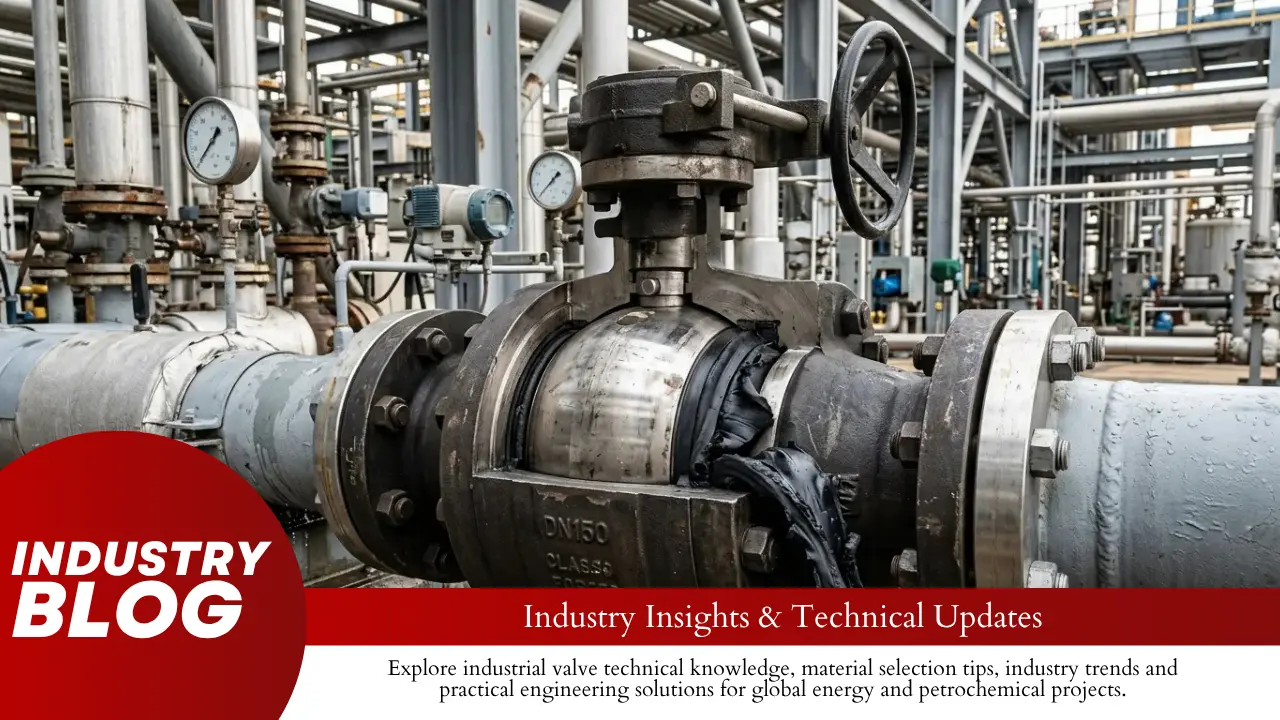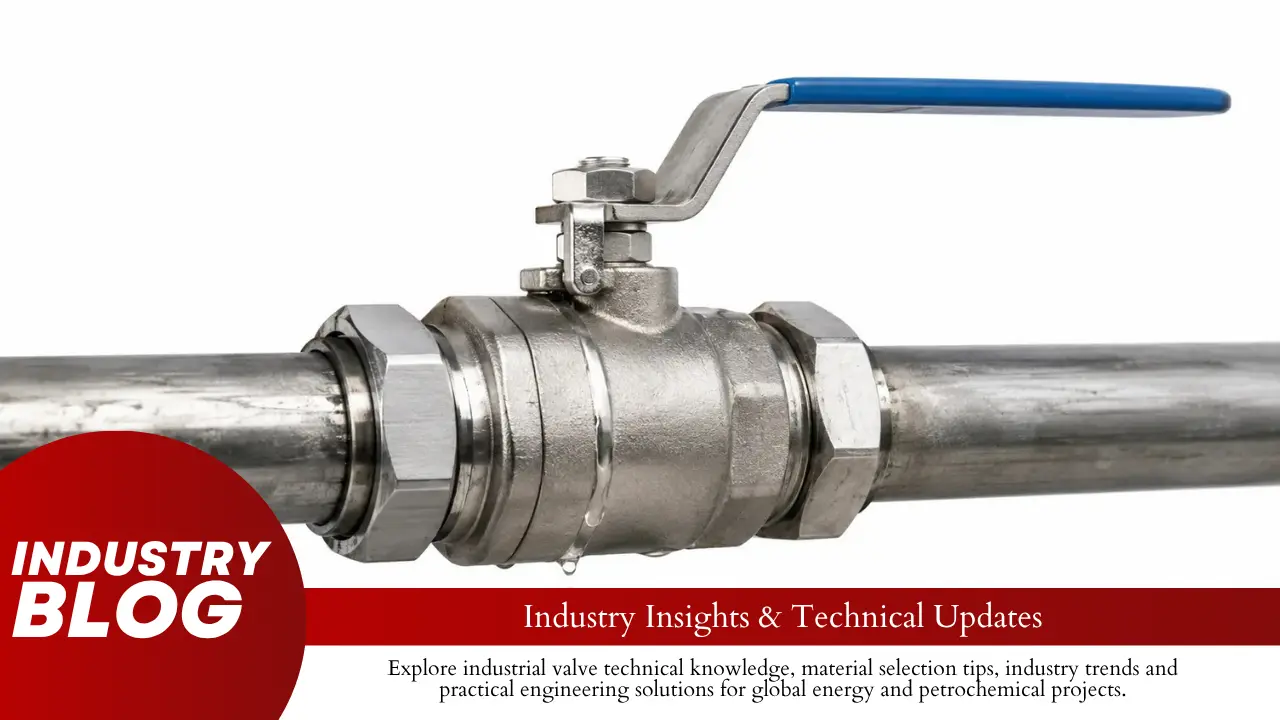
Across 30+ refinery, offshore platform, and long-distance pipeline projects over the past 3 years, we have seen that the ball valve’s “mounting style” affects the next 10-15 years of maintenance rhythm more than its seat material.
Side entry designs can save about 30% on initial cost in many standard projects, while top entry designs can reduce maintenance labor by about 60% in critical lines where internal parts must be accessed repeatedly.
Choosing the wrong structure can turn a routine seal replacement into several days of downtime, and in high-value process lines the production impact can reach CNY 300,000 or more depending on plant margin, bypass availability, and shutdown scope.
We compiled actual selection records from 30+ API 6D-related projects to break down the structural, cost, and maintenance path differences between side entry and top entry designs. API 6D 25th Edition is used internationally to help define manufacturing requirements for valves[1].
In this comparison, “side entry” and “top entry” refer to how the valve body is opened and how the internal ball, seats, and sealing parts are accessed during manufacturing and maintenance.
They should not be confused with “floating ball” or “trunnion mounted” designs, which describe how the ball is supported inside the valve. In real projects, these concepts often overlap, so a correct selection should consider body entry type, ball support type, seat material, pressure class, valve size, service criticality, shutdown cost, and available maintenance space together.
Side entry usually wins on first cost. Top entry usually wins when shutdown loss, repeated maintenance, and field accessibility become the real cost drivers.
| Decision Factor | Side Entry Ball Valve | Top Entry Ball Valve |
|---|---|---|
| Initial purchase cost | Usually lower, often 30%-50% less under comparable specifications | Usually higher, often with a 30%-50% price premium |
| Maintenance access | Usually requires valve removal or major body disassembly for internal repair | Allows internal access from above after isolation, depressurization, and draining |
| Best-fit size range | Commonly used for Class 150-300, NPS 8 and below standard applications | Often preferred for NPS 16 and above, critical lines, and difficult-access sites |
| Installation limitation | Needs lateral access for flange work, pipe support, and valve removal | Needs overhead clearance for bonnet removal and internal parts lifting |
| Life-cycle value | Stronger when maintenance frequency and shutdown cost are low | Stronger when maintenance frequency and shutdown cost are high |
Side Entry
Simple Structure
Side entry ball valves use a 2-piece or 3-piece bolted body, with the ball inserted horizontally from the valve body’s side and seats arranged symmetrically on both sides of the ball.
This is a mature ball valve configuration commonly used in pipeline and piping valve applications. For steel, nickel-base alloy, and other alloy valves, ASME B16.34 covers key requirements such as pressure-temperature ratings, dimensions, tolerances, materials, nondestructive examination requirements, testing, and marking[2].
From a manufacturing perspective, the side entry body requires a simpler split-body machining route than many top entry designs. Casting or forging plus machining time can be 30%-40% less than top entry designs under comparable size, pressure class, and material conditions.
This is the main source of side entry’s cost advantage and the fundamental reason it is selected for many low-to-medium pressure general service lines.
- The body is usually split into 2-piece or 3-piece bolted sections.
- The ball and seats are installed from the side or center split line.
- The manufacturing route is mature and easy to standardize.
- Supplier competition is stronger in common sizes and pressure classes.
- Spare parts are easier to source for standard applications.
In practical terms, a side entry body is easier to understand as a valve body that can be opened from the side or center split line. During assembly, the ball and seat rings are placed into the body from the lateral opening, then the body halves are bolted together.
This structure gives manufacturers a mature machining route, a stable assembly process, and relatively predictable quality control. For procurement teams, this also means more qualified suppliers, shorter quotation cycles, and better spare part availability in standard applications.
The 2-piece side entry body is sealed at the split face with bolts plus spiral-wound gaskets. In our inspected samples, split-face surface finish was typically controlled around Ra 0.8 μm or better, and gasket compression was controlled around 18%-22% according to the project procedure.
Outside this range, repeated disassembly may cause micro-leakage at the split face, requiring re-lapping or gasket replacement.
Across three batches of side entry samples we tested, after the 4th disassembly cycle the leakage performance changed from no visible leakage to a level approaching ISO 5208 Rate B under the tested conditions. ISO 5208 specifies examinations and tests used to establish pressure boundary integrity, valve closure tightness, and closure mechanism adequacy for industrial metallic valves[3].
This does not mean that side entry is unreliable. It means the body split face becomes a key maintenance-sensitive area once the valve has been opened repeatedly.
If the valve is installed on a clean utility line and is rarely disassembled, the split-face sealing risk remains low. If the valve is installed on a line that requires frequent seat replacement, repeated dismantling can gradually increase the risk of gasket damage, bolt torque variation, sealing face scratch, and rework.
When side entry is selected, the project team should not only ask about purchase price, but also ask how often the body may need to be opened during the expected service life.
API 6D 25th Edition is the current API specification for valves and is used to define manufacturing requirements for valves in relevant oil and gas service[1].
Under API 6D project conditions, 2-piece and 3-piece bolted side entry bodies are common supply structures, and interchangeability is good under many Class 150-600 service conditions.
In our internal reviewed Class 150-600 API 6D ball valve project records, side entry accounted for over 80% of standard ball valve selections. This number should be understood as our project experience, not as a percentage defined by API 6D itself.
For engineers, the simple structure of side entry is most valuable when the project has many standard valves, stable service conditions, and an established maintenance team familiar with bolted-body disassembly.
For procurement, the value is more direct: side entry usually has more supplier competition, more available stock patterns, and lower technical barriers during supplier qualification. However, for critical service, the same bolted-body structure should be evaluated together with shutdown planning, flange accessibility, crane access, and spare gasket control.
Lower Cost
Side entry ball valves typically cost 30%-50% less per unit than top entry of the same size and pressure class. This price gap mainly comes from three steps: body machining time, sealing face lapping time, and assembly time.
Material cost differences are often small when the same body material and trim specification are compared. The bulk of the side entry versus top entry cost difference usually comes from manufacturing labor, machining complexity, and assembly requirements.
- Body machining is simpler because the split-body structure is easier to process.
- Sealing face lapping time is usually shorter than a top entry bonnet-body sealing system.
- Assembly is more familiar to manufacturers and requires fewer dedicated fixtures.
- Supplier competition is stronger, which improves procurement negotiation room.
This cost comparison should be understood under the same basic specification: same NPS size, same pressure class, same body material, same seat material, same end connection, and similar testing/documentation requirements.
If a floating side entry valve is compared with a trunnion mounted top entry valve, or if a soft-seated valve is compared with a metal-seated severe service valve, the price gap will no longer reflect only the body entry style.
For accurate procurement evaluation, side entry versus top entry should be compared on an equivalent datasheet basis.
| Example Specification | Side Entry Reference Price | Top Entry Reference Price | Main Difference |
|---|---|---|---|
| ASTM A216 WCB, 6-inch, Class 300 | USD 800-1,200 ex-works | USD 1,200-1,800 ex-works | Bonnet machining, seat ring machining, assembly labor |
| ASTM A351 CF8M, 6-inch, Class 300 | USD 1,800-2,500 ex-works | USD 2,500-3,500 ex-works | Stainless machining and body structure cost |
| Duplex F51/F55, 6-inch, Class 300 | Higher than standard 316 stainless | USD 3,500-4,800 ex-works | Duplex material and machining difficulty |
Looking at material cost breakdown, an ASTM A216 WCB carbon steel cast side entry 6-inch Class 300 ball valve typically sells for about USD 800-1,200 ex-works for standard manual configuration and China ex-works budget reference, while a top entry of the same specification costs USD 1,200-1,800.
About 80% of the difference comes from bonnet machining, seat ring machining, and assembly labor. An ASTM A351 CF8M stainless steel side entry typically sells for USD 1,800-2,500, while top entry is generally USD 2,500-3,500.
This gap is the first checkpoint in line selection decisions. For duplex stainless steel F51/F55 bodies, the gap widens another 20%-30% over standard 316 stainless, pushing the Class 300 6-inch duplex top entry to USD 3,500-4,800 per unit.
The price ranges above are most useful as engineering budget references rather than fixed market quotations. Actual price can change with casting or forging route, wall thickness, bore type, fire-safe requirement, fugitive emission packing, cryogenic or high-temperature extension, coating requirement, third-party inspection, actuator package, and project documentation.
For this reason, procurement should not only compare the final unit price. It should also request the supplier to separate body material, trim material, testing, actuator, spare parts, and special tools where possible.
Side entry’s cost structure becomes more visible in large-volume projects. For mid-to-small projects under 200 units, the 30%-50% per-unit savings represent 15%-25% of the procurement budget, which significantly affects project cost.
Above 300 units, the side entry advantage can accumulate to over CNY 300,000, but this portion of the budget must be considered alongside the maintenance budget. In our 18-month FAT witness work, side entry averaged 1.8x the maintenance labor per unit compared to top entry, which is the full-cost structure of side entry’s “low buy, high repair” profile.
Side entry reduces the first invoice, but the final decision should check whether future maintenance work will consume the saved budget.
Difficult Online Maintenance
Side entry ball valves usually require valve removal from the line or major body disassembly for internal parts replacement, especially in large-bore API 6D pipeline service.
The flange bolts on both sides of the body are loosened first, then the body is split at the centerline face, and only then can the ball and seats be removed.
A typical Class 300 6-inch side entry takes 16-24 hours from shutdown to restart, with pure valve disassembly accounting for about 60% of that time. The remainder is usually drain, blowdown, and pressure testing.
For clarity, “difficult online maintenance” here means that the valve normally cannot complete internal parts replacement while remaining conveniently installed in the line. It still requires safe isolation, depressurization, draining, flange work, mechanical handling, and reassembly.
Before maintenance, the site must control hazardous energy. OSHA’s lockout/tagout guidance explains that LOTO practices and procedures are used to disable machinery or equipment and prevent hazardous energy release during servicing and maintenance[4].
- Close upstream and downstream block valves.
- Confirm zero pressure and complete safety isolation.
- Drain and vent the valve cavity.
- Apply lockout/tagout according to site safety procedure.
- Remove the actuator or gearbox if it blocks disassembly.
- Support the pipeline and prepare lifting tools.
- Loosen flange bolts and remove or open the valve body.
- Replace seats, seals, and other internal parts.
- Reassemble the valve and apply correct bolt torque.
- Perform leakage or pressure testing before restart.
This maintenance path has a large impact on process piping. Taking an NPS 16 refinery heavy oil line as an example, drain and blowdown take 8-10 hours, disassembly plus replacement plus reassembly take 6-8 hours, and pressure test plus restart takes 4-6 hours.
The total time is usually 18-24 hours. If the line has no bypass, it means the entire line must shut down for about 24 hours, with estimated production impact of CNY 500,000-800,000 depending on plant margin, bypass availability, and whether the shutdown affects the whole process line.
The same valve may be economical in one plant and costly in another because the maintenance environment is different. If the line has a bypass, enough flange access, a nearby lifting point, and a planned shutdown window, side entry maintenance can be acceptable.
If the line is congested, the valve is located at height, the medium requires long purging time, or production cannot stop for a long period, the same side entry maintenance task becomes a much larger operational problem.
This is why side entry should be evaluated together with piping layout and shutdown strategy, not only by valve price.
On PTFE soft-seated ball valves, the side entry maintenance difficulty is amplified by seat life. According to a 3-material comparison test we ran at a refinery in 2024 under the tested clean steam condition, PTFE soft seats averaged 18 months at around 200°C, PEEK soft seats averaged 30 months in 260°C hot oil service, and metal hard seats lasted over 5 years in 350°C catalytic cracking service.
Actual PTFE seat life should be confirmed by seat compound, steam pressure, cycling frequency, manufacturer temperature rating, and site maintenance practice.
In the same test, the per-cycle seat replacement cost was USD 35 for PTFE, USD 120 for PEEK, and USD 850 for metal hard seats, a 24x cost gap that further amplifies side entry maintenance economics.
This means selecting soft seats can lead to a plant turnaround every 18-30 months under the tested severe-service conditions, while hard seats give a chance at 5-year maintenance-free operation.
Seat material determines how often internal parts may need replacement, while body entry style determines how difficult each replacement will be.
A low-cost PTFE seat can be reasonable on clean, low-temperature, low-cycle service. But if the seat is expected to wear or deform frequently, then each replacement event must be priced as a full maintenance activity.
This full activity includes labor, isolation, draining, lifting, testing, and production loss. This is where top entry may become more economical even when its initial price is higher.
Top Entry
Online Internal Parts Removal
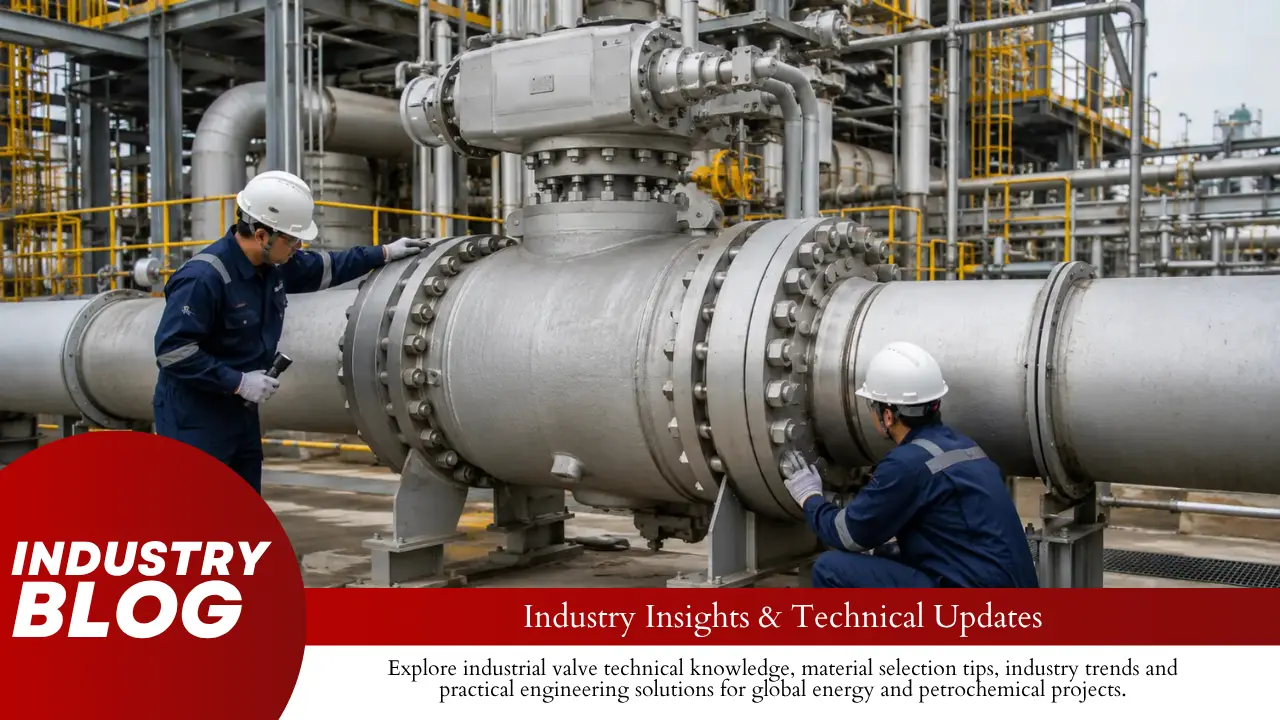
Top entry ball valves use a one-piece body, with the bonnet connected to the body from directly above by bolts. The internal ball, seats, and stem assembly can be lifted straight out from the top, without removing the valve from the line.
This is the fundamental maintenance-path difference between top entry and side entry designs. It is also the main reason top entry is selected in short-shutdown and in-line maintenance scenarios like offshore platforms, long-distance pipelines, and high-pressure water injection.
In engineering practice, the phrase “without removing the valve from the line” is the key advantage. It does not mean the valve can be opened while pressurized or while the medium is still inside the body cavity.
Before the bonnet is opened, the line must be isolated, the cavity pressure must be bled to zero, the medium must be drained or safely vented, and the site must follow lockout/tagout and gas testing procedures where applicable[4].
Top entry saves time because it avoids flange removal and pipe disturbance, not because it removes basic maintenance safety requirements.
The top entry online maintenance procedure has 5 steps: first close upstream and downstream block valves, bleed cavity pressure to zero through the drain valve, loosen the 8-12 bonnet bolts, use 1 dedicated lifting tool to lift the ball plus seats plus stem assembly out as a unit, install the new assembly, then re-tighten and pressure test.
The entire process does not touch the flanges on either end of the line. From shutdown to restart, a typical Class 600 6-inch top entry takes only 4-6 hours, which is 1/3-1/4 the labor of side entry.
This is critical for high-pressure lines that cannot accept long shutdown windows.
- Close upstream and downstream block valves.
- Bleed the valve cavity pressure to zero through the drain valve.
- Loosen the bonnet bolts after safety confirmation.
- Lift the ball, seats, and stem assembly from the top with dedicated tools.
- Install the replacement assembly, re-tighten, and pressure test.
The maintenance advantage is especially clear when the valve is installed in a compact area. In a side entry repair, mechanics need space on both sides of the valve, room for flange work, and enough lifting capacity to handle the whole valve body or heavy body sections.
ASME B16.5 covers pressure-temperature ratings, materials, dimensions, tolerances, marking, testing, and methods of designating openings for pipe flanges and flanged fittings from NPS 1/2 through NPS 24[5].
In practical maintenance, avoiding repeated flange disturbance is one of the main reasons top entry can save field labor.
In a top entry repair, the main working envelope is above the valve. As long as the overhead clearance and lifting point are available, the internal assembly can be accessed with less pipe movement and less risk of flange alignment problems after reassembly.
Some top entry ball valve designs allow individually replaceable seats with dedicated tooling. This is particularly useful for uneven-wear service, where the maintenance team may replace only the damaged seat instead of the full internal set, reducing spare part cost by another 40%-50% under suitable design conditions.
In our recent HIPPS system retrofit at an offshore platform, we used this method to cut per-valve seat replacement time from 8 hours to 2 hours, with strong client approval.
However, single-seat replacement is design-dependent and should not be assumed for every top entry valve. Some manufacturers require special seat tools, some require removal of the ball before seat replacement, and some designs have spring-loaded seat structures that need trained technicians.
Therefore, when specifying top entry, procurement should ask the supplier to provide the maintenance method statement, required special tools, recommended spare parts list, and estimated replacement time for seats, stem packing, and body-bonnet gasket.
30%-50% Price Premium
The top entry price gap mainly comes from three steps. First, the body is one-piece forged or cast, requiring 30%-40% more machining time than 2-piece side entry.
Second, the bonnet-to-body sealing face requires higher machining precision, typically Ra 0.4 μm or better in our inspected project samples, requiring longer lapping time. Third, assembly requires dedicated lifting tools and pressure-test fixtures, adding labor.
These three layers stack, with top entry per-unit price gaps typically at 30%-50%. The gap widens further for large-diameter, high-pressure class ball valves.
- One-piece forged or cast body increases machining time.
- Bonnet-to-body sealing face requires tighter machining control.
- Assembly often needs dedicated lifting tools and test fixtures.
- Large-diameter and high-pressure designs increase bolt count and sealing width.
- Maintenance tooling and tighter alignment control add hidden cost.
The premium should be understood as payment for maintainability, not only as a manufacturing surcharge. A top entry valve normally costs more because the body and bonnet sealing system must allow repeated opening from above while maintaining reliable pressure boundary sealing after reassembly.
The supplier also needs tighter control of internal alignment, bonnet sealing face flatness, seat loading, stem assembly, and maintenance tooling.
These costs are not always visible in the quotation, but they determine whether the valve can actually deliver field maintenance savings later.
| Specification Segment | Typical Price Gap | Reason |
|---|---|---|
| Class 150-600 | About 30% | Machining and assembly difference is moderate |
| Class 900-1500 | About 40%-50% | Higher pressure increases bonnet bolts and sealing face requirements |
| Class 2500 | Up to about 60% | High-pressure body, bonnet, and sealing system become much more demanding |
| NPS 2 and below, small-bore forged high-temperature service | Can reach about 60% | Small valves are easier to replace as a whole, so top entry is harder to justify |
ASME B16.34 covers pressure-temperature ratings and valve construction-related requirements for flanged, threaded, and welding end valves[2]. As pressure class rises, bonnet bolt count, sealing face width, wall thickness, and inspection requirements usually become more demanding.
Looking at material cost breakdown, a Class 1500 NPS 6 top entry stainless steel ball valve typically costs USD 4,500-6,500 ex-works, with a side entry of the same spec typically at USD 3,000-4,500.
The USD 1,500-2,000 difference mainly comes from bonnet machining and assembly labor. This money must be amortized over the next 10-15 years of maintenance budget to understand the full-cost picture.
In the small-bore forged high-temperature segment, especially NPS 2 and below, the price gap for top entry designs can reach about 60%, which is the main reason top entry selection is suppressed in small-bore projects.
For small-bore valves, the top entry premium is harder to justify because the whole valve is easier to remove and replace. A 2-inch or smaller valve may be handled by ordinary maintenance tools, and the shutdown window may be short enough that the in-line maintenance advantage does not offset the higher purchase price.
This is why top entry should not be selected simply because it sounds more advanced. It should be selected when the line condition, maintenance frequency, shutdown loss, and access limitation make the maintainability premium worthwhile.
The relationship between material cost and pressure class is another variable. In the Class 150-600 segment, top entry versus side entry price gap is about 30%.
In Class 900-1500 the gap widens to 40%-50%, and in Class 2500 it reaches about 60%, because as pressure class rises, bonnet bolt count, diameter, and sealing face width all multiply. Top entry’s cost disadvantage in the high-pressure segment is amplified.
When the same body style is compared, changing from carbon steel to stainless steel or duplex stainless steel also increases material and machining cost. However, in the side entry versus top entry comparison, much of the incremental difference still comes from body structure, machining labor, and assembly complexity.
Top entry is not automatically the best choice for every high-pressure valve. It becomes valuable when the service condition can recover the premium through lower maintenance and shutdown exposure.
In high-pressure but low-maintenance applications, the additional cost may not be recovered. In high-pressure and high-criticality applications, especially where the valve is difficult to remove after installation, the higher initial price can be justified by reduced future shutdown exposure.
The selection should compare not only the purchase premium, but also the expected number of internal maintenance events during the project life.
Installation Space Requirements
Top entry ball valves require an “overhead working space” for internal parts lifting. A typical Class 600 NPS 12 top entry requires 1.5-2.0 meters of headroom clearance above, with a lifting radius of 1.0-1.5 meters depending on valve weight.
If the line is routed at the lowest level of the pipe rack or hugs the deck, top entry may be difficult to maintain after installation. In this scenario, side entry may become the more practical option.
- Check bonnet removal height before procurement.
- Confirm actuator removal space.
- Review the lifting beam or hoist position.
- Confirm safe access platform around the valve.
- Check whether pipe rack beams, cable trays, or deck plates block vertical lifting.
This overhead space should be checked during piping layout design, not after valve procurement. The project team should confirm the valve centerline height, bonnet removal height, actuator removal space, lifting beam or hoist availability, operator access platform, and safe working area around the valve.
If the top entry valve is installed under a pipe rack beam, cable tray, deck plate, or structural member, the maintenance advantage may disappear even though the valve itself is technically top entry.
Top entry ball valves are also usually 20%-30% heavier than side entry of the same specification, which directly impacts the pipe rack structural load design. A Class 600 NPS 16 top entry can weigh about 1,800-2,400 kg per unit depending on bore, body material, and operator package, while side entry is often around 1,500-2,000 kg.
The pipe rack support and hanger load design must be checked against top entry. This is why “side entry or top entry” must be locked in at the pipe rack design stage, and changing the scheme later requires redoing the structural calculation, with high change cost.
Side entry also has space requirements, but the direction is different. Instead of overhead lifting clearance, side entry often needs enough lateral access for flange bolt removal, body separation, pipe support, and whole-valve lifting.
In crowded pipe racks, underground stations, offshore skids, or modular plants, side access can be just as difficult as overhead access. Therefore, the installation comparison should not be simplified as “top entry needs space, side entry does not.”
Both designs need maintenance space. The difference is that top entry needs vertical access, while side entry needs lateral and flange access.
Top entry ball valve installation direction also requires attention. The bonnet should normally face upward according to the manufacturer’s drawing and IOM manual, and side mounting or inverted mounting should not be used unless the manufacturer clearly permits it.
This is determined by the internal body structure, lifting path, and maintenance access. Side mounting can cause the internal lifting path to deviate from center, while inverted mounting may increase the risk of deposits accumulating near the bonnet sealing area.
Repeated disassembly under poor alignment can scratch the sealing face and add 2-3 hours to every future maintenance.
So before selecting top entry, first confirm the line routing can guarantee the valve’s bonnet is vertically accessible, and do not rotate the valve 90° simply to save installation effort.
In actual projects, the final installation orientation should always follow the manufacturer’s IOM manual and the approved project specification.
Some special designs may have different restrictions, but the selection principle remains the same: the bonnet lifting path must be safe, vertical access must be realistic, and the maintenance team must be able to remove internal parts without interference.
Before freezing the valve type, the designer should review the 3D model, valve outline drawing, actuator envelope, lifting path, and maintenance platform together.
Selection Recommendations
Use Top Entry for Large Bore
For NPS 16 and above large-bore ball valves, we recommend top entry as the priority, with the core reason being maintenance cost.
An NPS 16 side entry weighs 1,500-2,000 kg per unit. Plus the additional weight of pipe and flanges, the per-maintenance lift exceeds 2 metric tons, requiring on-site 5+ ton crane or hoist.
Crane preparation alone can take 4-6 hours. With disassembly and reassembly included, total maintenance time can reach 20-30 hours per maintenance.
An NPS 16 top entry, while weighing 1,800-2,400 kg per unit, has internal parts lift weight of only 500-700 kg.
It can often be handled by a standard 1-ton lifting tool, with single-maintenance labor of 6-8 hours, creating a 3-4x labor gap.
| Large-Bore Maintenance Item | Side Entry NPS 16 | Top Entry NPS 16 |
|---|---|---|
| Total valve weight | 1,500-2,000 kg | 1,800-2,400 kg |
| Maintenance lifting weight | Over 2 metric tons with pipe/flange handling | Internal parts usually 500-700 kg |
| Lifting equipment | Often needs 5+ ton crane or hoist | Often uses standard 1-ton lifting tool |
| Single maintenance labor | 20-30 hours | 6-8 hours |
| Main cost driver | Valve removal, flange work, crane preparation | Bonnet removal and internal parts lifting |
NPS 16 should be understood as a practical decision threshold rather than an absolute rule. The larger the valve, the more difficult it becomes to remove the whole body from the line, control flange alignment, arrange cranes, and manage restart testing.
For this reason, top entry normally becomes more attractive as valve size increases. However, if a large-bore valve is installed on a non-critical low-pressure line with good lifting access, low maintenance frequency, and a planned shutdown window, side entry may still be acceptable.
Large-bore ball valve maintenance frequency is also notably higher than small-bore in severe-service refinery samples. From a refinery 18-month statistics, NPS 16 and above ball valves had an annual maintenance frequency of 1.2-1.5 per unit, while NPS 8 and below averaged 0.3-0.5 per year.
This is not a general industry average. It reflects the reviewed severe-service sample, where large-bore valves in high-flow and high-severity service carry larger process flow, higher temperature and pressure, and faster wear.
In these conditions, the large-bore side entry “buy cheap, repair expensive” problem can be amplified 3-5x.
The maintenance frequency above should be read together with service severity. Large-bore valves in clean water or low-cycle isolation service may not need frequent internal repair.
Large-bore valves in heavy oil, catalytic cracking, high-pressure water injection, or high-cycle operation may experience faster seat wear, higher torque growth, and more frequent inspection.
Therefore, for large-bore selection, the key question is not only “how big is the valve”, but also “how often will the internal sealing parts need attention and how much does each maintenance window cost”.
For high-pressure water injection, long-distance pipeline, and offshore platform HIPPS scenarios, we recommend top entry. These 3 categories of scenarios showed 2-3x higher maintenance intervention or failure exposure than standard applications in reviewed project records.
In high-pressure water injection, valves cannot accept long shutdowns, and top entry’s in-line maintenance advantage becomes especially valuable.
In long-distance pipelines, valves are spread across 100-500 km of pipeline, with poor on-site lifting conditions, and top entry can complete maintenance with 1 small tool set.
On offshore skids or compact platform modules, available maintenance space can be very limited, and large lifting equipment is hard to schedule. In these conditions, top entry is often the more practical choice.
- High-pressure water injection: high energy, high pressure, limited shutdown tolerance.
- Long-distance pipeline: scattered valve stations and weak local lifting resources.
- Offshore platform module: limited maintenance space and difficult lifting coordination.
- HIPPS service: critical safety function and strict maintenance planning.
The reason these applications favor top entry is not only valve reliability, but also maintenance logistics. In all three cases, reducing flange work and whole-valve removal can save more than the initial price premium.
This is the type of service where procurement price alone is a weak decision basis.
Side Entry is Sufficient for Standard Applications
For Class 150-300, NPS 8 and below, with annual maintenance frequency below 0.3 per unit, standard applications, side entry is a reasonable choice.
MSS SP-72 covers flanged or butt-welding end ball valves for general service, including full port, regular port, and reduced port configurations[6]. In general-service conditions, side entry structures are often sufficient when maintenance frequency and shutdown cost are low.
These applications usually include 4 categories: water treatment, HVAC, light oil and gas gathering, and low-pressure process water, accounting for over 60% of total project count.
The valves carry mild process parameters, usually temperature below 200°C and pressure below Class 300, with low maintenance frequency.
Side entry’s “save on buy” advantage is directly reflected in the procurement budget, while the “hard to repair” disadvantage is diluted by the low maintenance frequency.
- Water treatment: clean medium, low pressure, and low shutdown cost.
- HVAC: standard service, small-to-medium size, and predictable maintenance.
- Light oil and gas gathering: moderate process conditions and common specifications.
- Low-pressure process water: low criticality and strong cost sensitivity.
Standard applications normally share several conditions: the medium is relatively clean, the valve is not a shutdown-critical isolation point, the operating temperature and pressure are moderate, the valve does not cycle frequently, and the site has enough access for conventional maintenance.
Under these conditions, the lower purchase price of side entry is a real advantage because the owner may never need to open the valve body many times during the project life.
In such cases, paying a top entry premium may not create enough practical value.
Side entry has high maturity in standard applications. 2-piece or 3-piece side entry ball valves have a long industrial application history, and side entry accounted for over 80% of reviewed Class 150-600 API 6D ball valve project records in our internal selection data.
Manufacturer processes, spare parts, and technical service networks are also more complete in common side entry specifications.
When procurement selects side entry, negotiation room is typically 15%-25%, while top entry negotiation room is usually only 5%-10%.
This is a cost advantage from scale effect, and is hard to offset by top entry in standard applications.
This maturity also reduces project risk. Maintenance teams are usually familiar with side entry disassembly, spare gaskets and seats are easier to source, and replacement valves are more readily available in common sizes and pressure classes.
For water treatment, HVAC, low-pressure oil and gas gathering, and process water systems, this supply-chain maturity can be more important than theoretical maintenance convenience.
When a project has hundreds of small or medium valves, standardization and supplier competition often deliver more value than choosing a premium structure for every line.
For mid-to-small projects with limited maintenance resources, side entry is a safer choice. Side entry’s disassembly technical threshold is low, with ordinary mechanics completing 1 8-hour training course and mastering 2-3 basic tool uses to work independently.
Top entry requires 1 set of dedicated tools, often an 8-piece kit, and 2-3 professionally trained technicians. Small projects with a budget below CNY 5 million and 50-100 valves typically cannot afford this maintenance setup.
If the owner lacks 1-2 professional technicians and 1 set of dedicated tools, the top entry advantage may be wasted, and side entry becomes more practical.
If the owner cannot maintain a top entry valve correctly, the labor-saving advantage may remain only on paper.
Before choosing top entry for a small or medium project, the owner should confirm whether the maintenance team actually has the tools, training, lifting method, and spare part planning to use the top entry feature.
If the team still needs to call the supplier every time the valve is opened, the expected labor saving may be partly offset by service cost and scheduling delay.
In this situation, a mature side entry valve with clear spare parts and conventional maintenance procedures can be the more practical choice.
Total Life Cycle Cost Comparison
The total life cycle cost comparison of side entry versus top entry should be extended to a 15-year period.
Taking a Class 600 NPS 12 ball valve as an example, side entry has an initial purchase of USD 2,500-3,500, with 15-year cumulative maintenance of 6-8 events at 0.5 events/year x 15 years.
Single-event maintenance labor plus material is USD 8,000-12,000, and 15-year total cost of ownership is USD 55,000-80,000.
Top entry has an initial purchase of USD 4,000-5,500, with 15-year cumulative maintenance of 3-4 events at 0.25 events/year. Single-event maintenance labor plus material is USD 4,000-6,000, and 15-year total cost of ownership is USD 16,000-30,000.
Under these critical-service assumptions, top entry can be 50%-70% cheaper over the full life cycle because maintenance labor differs by 3-4x and maintenance frequency differs by 2x.
| 15-Year Cost Item | Side Entry, Class 600 NPS 12 | Top Entry, Class 600 NPS 12 |
|---|---|---|
| Initial purchase | USD 2,500-3,500 | USD 4,000-5,500 |
| Maintenance frequency | About 0.5 events/year | About 0.25 events/year |
| 15-year maintenance events | 6-8 events | 3-4 events |
| Single-event maintenance cost | USD 8,000-12,000 | USD 4,000-6,000 |
| 15-year total cost of ownership | USD 55,000-80,000 | USD 16,000-30,000 |
This comparison is most valid under critical-service assumptions: the valve is expected to operate for 10-15 years, the line has repeated internal maintenance demand, shutdown cost is meaningful, and field removal of the valve is expensive.
A practical total life cycle cost model should include purchase cost, installation cost, spare parts, scheduled maintenance labor, unscheduled repair labor, lifting and scaffolding cost, pressure testing, production loss, and the cost of delayed restart.
If only ex-works valve price is compared, side entry almost always looks better. If shutdown and maintenance exposure are included, top entry can become the lower-cost option.
The real question is not which valve is cheaper to buy, but which valve is cheaper to own under the project’s actual maintenance conditions.
For medium-bore NPS 10-12 ball valves, the total life cycle cost crossover point is usually at 8-10 years under repeated-maintenance assumptions.
In the first 8-10 years, side entry total cost may remain below top entry. After 10 years, side entry’s accumulated maintenance cost can exceed the initial purchase difference and be overtaken by top entry.
So for critical process lines planned to run over 15 years, top entry is often the better life-cycle choice.
For temporary lines and short-term projects under 8 years, side entry is usually more cost-effective.
The crossover point will move depending on service conditions. If the valve is rarely maintained, the crossover may never arrive, and side entry remains more economical.
If the valve is on a high-value continuous process line, one unplanned shutdown may immediately erase the purchase-price saving.
If the project life is only 3-5 years, initial cost may dominate. If the project life is 15-20 years, maintenance frequency and shutdown loss become more important.
This is why the best selection method is not “side entry is cheaper” or “top entry is better”, but “which structure has the lower cost under this line’s operating and maintenance assumptions”.
Total life cycle cost must also include “shutdown losses”. Refinery critical process ball valves can lose CNY 300,000-800,000 per shutdown day, chemical plants CNY 200,000-500,000, and offshore platforms CNY 500,000-1,500,000, depending on plant margin, product value, process bottleneck, and whether the shutdown affects one line or multiple units.
This number can far exceed the ball valve’s own initial purchase price difference. Side entry takes 18-24 hours of shutdown per maintenance, while top entry usually takes 4-6 hours.
Over 15 years, cumulative shutdown time can be 100-150 hours for side entry versus 20-30 hours for top entry. This translates to CNY 2,500,000-7,500,000 in shutdown losses for side entry versus CNY 600,000-2,000,000 for top entry.
This money is the real decision point, and looking at the ball valve ex-works price alone cannot settle the calculation.
For final selection, engineers and procurement teams should ask several practical questions before approving the valve type.
- What is the project design life?
- Is the valve installed on a critical line?
- How much does one day of shutdown cost?
- Is there a bypass?
- Can the valve be removed from the line safely?
- Is there enough overhead clearance for top entry maintenance?
- Does the owner have trained technicians and special tools?
- What seat material is selected?
- How often may the seat or internal sealing parts need replacement?
When these questions are answered together, the side entry versus top entry decision becomes a life-cycle engineering decision rather than a simple price comparison.
For standards verification, engineers should confirm the final valve datasheet against API 6D for valve manufacturing requirements, ASME B16.34 for valve pressure-temperature and construction-related requirements, ISO 5208 for industrial metallic valve pressure testing, ASME B16.5 for pipe flanges and flanged fittings, OSHA lockout/tagout requirements for maintenance safety, and MSS SP-72 for general-service flanged or butt-welding end ball valves[1][2][3][4][5][6].