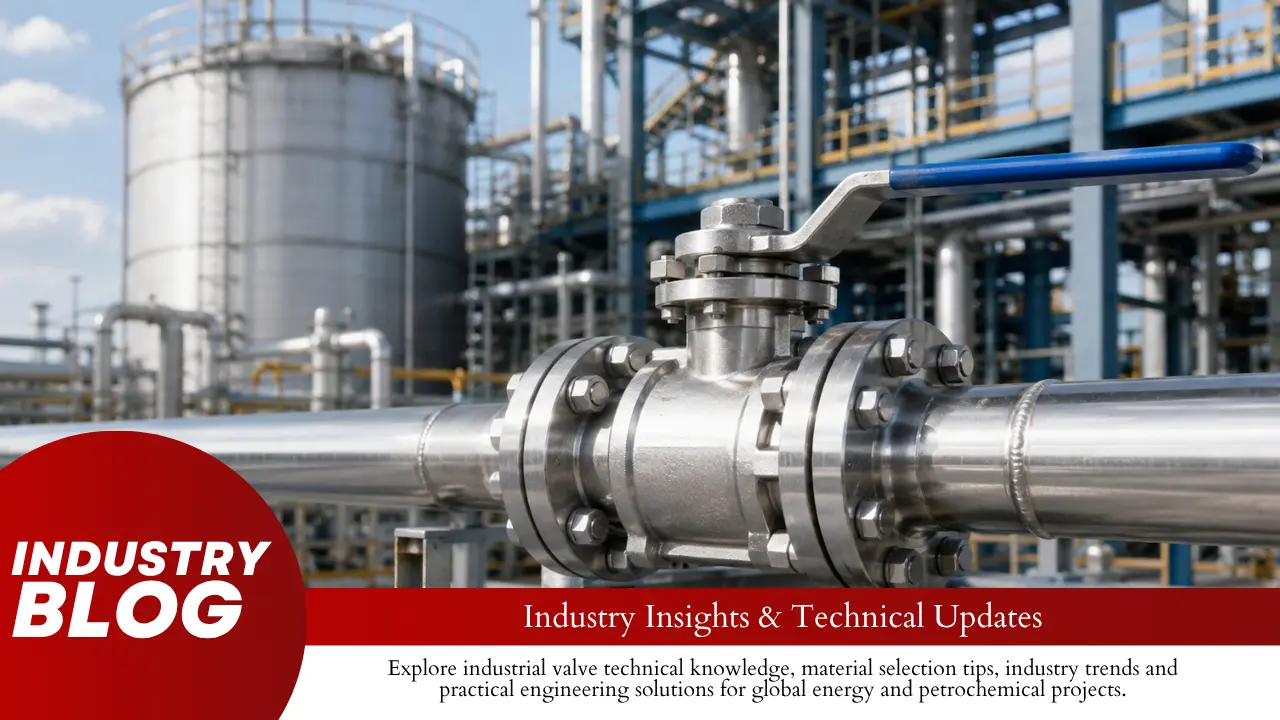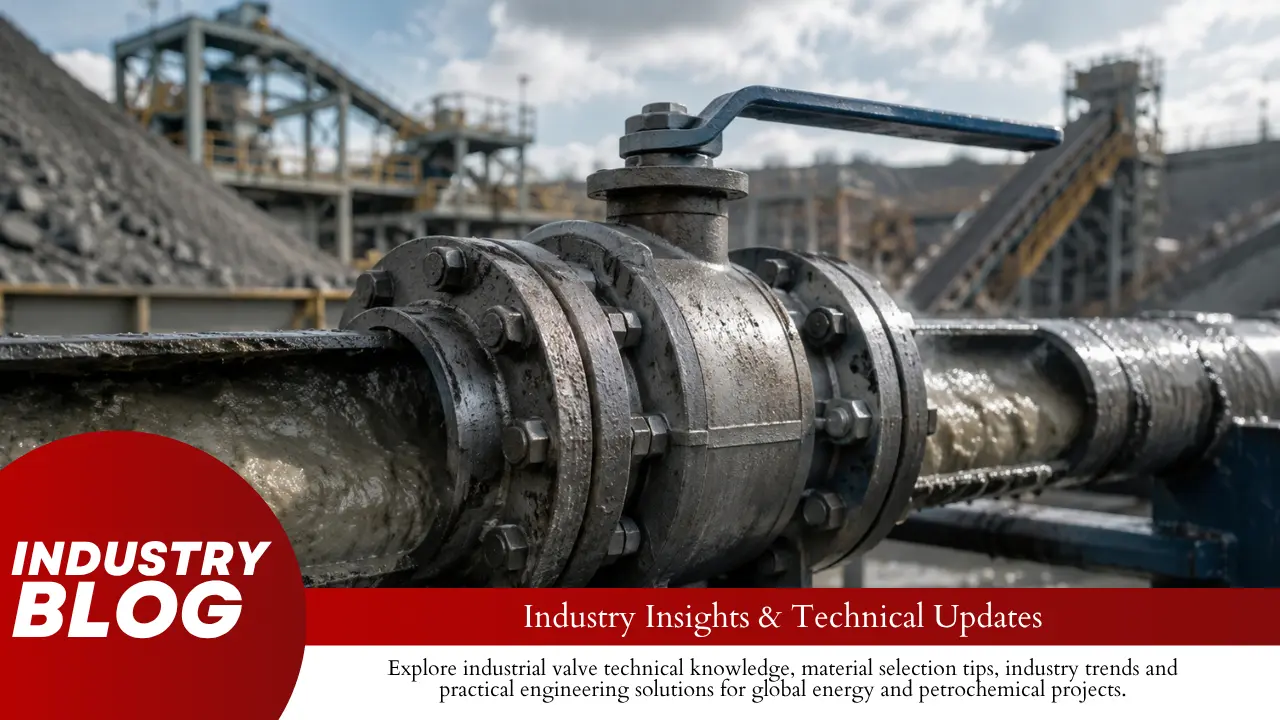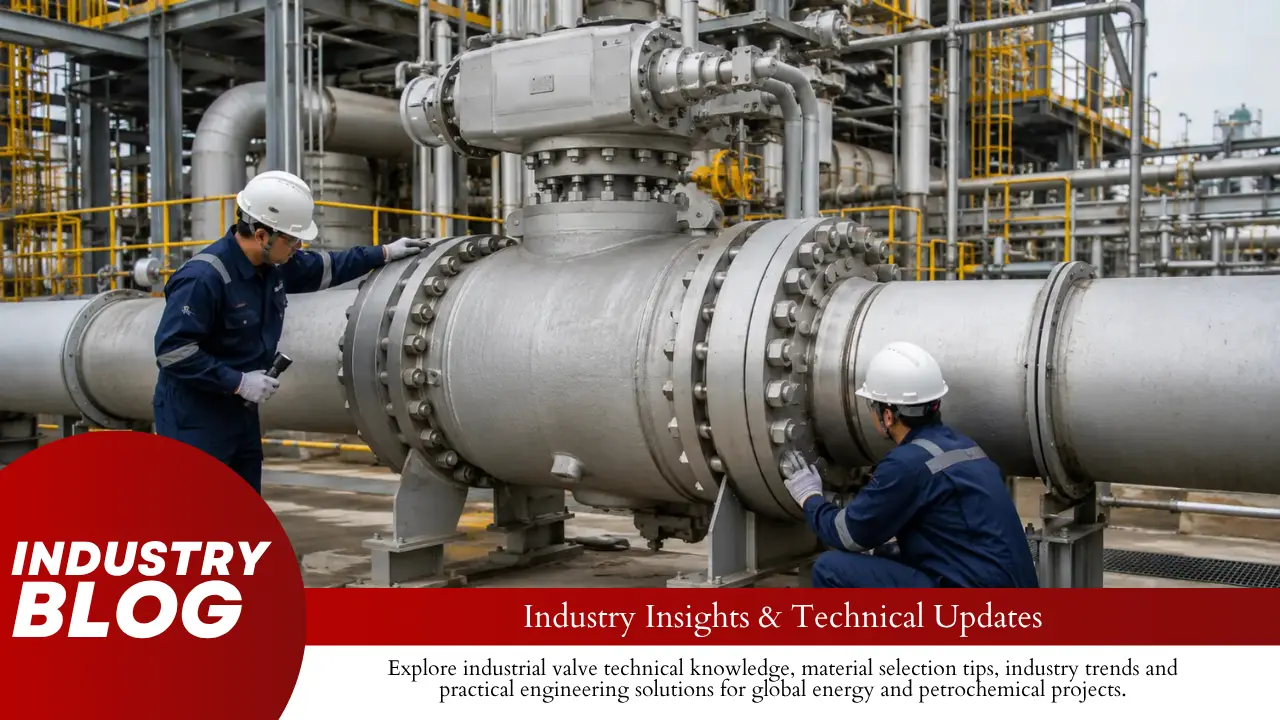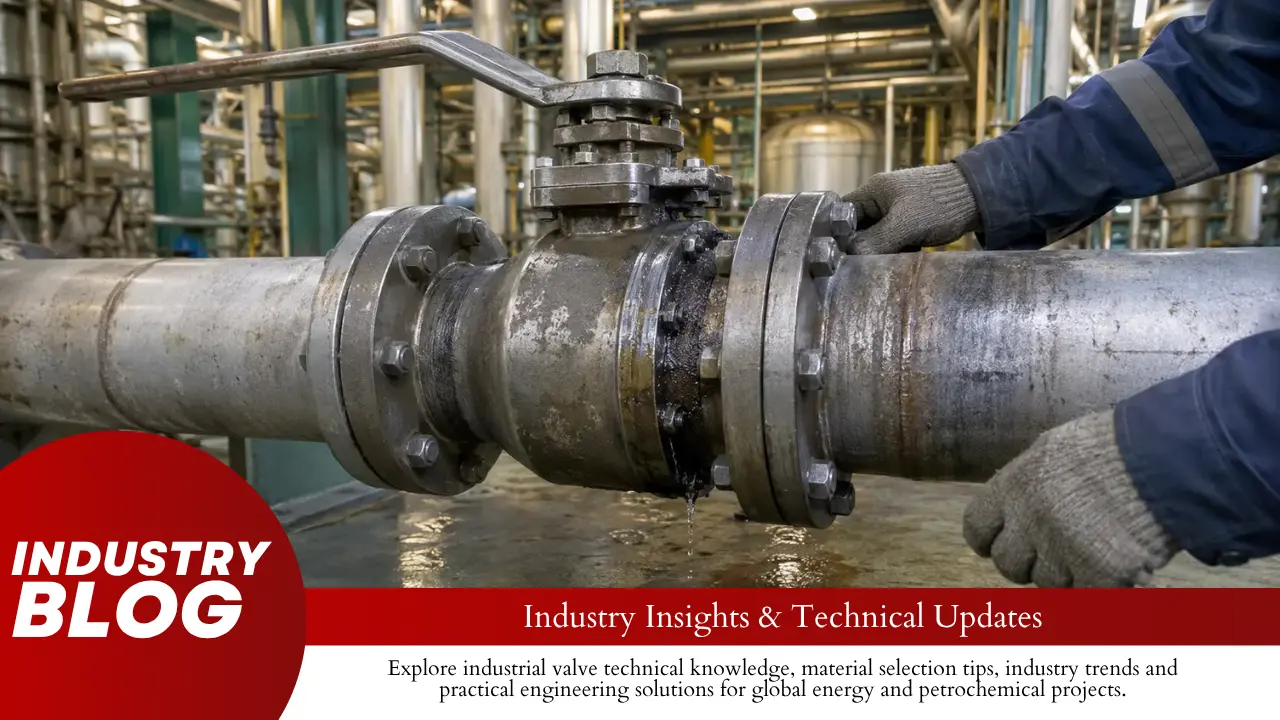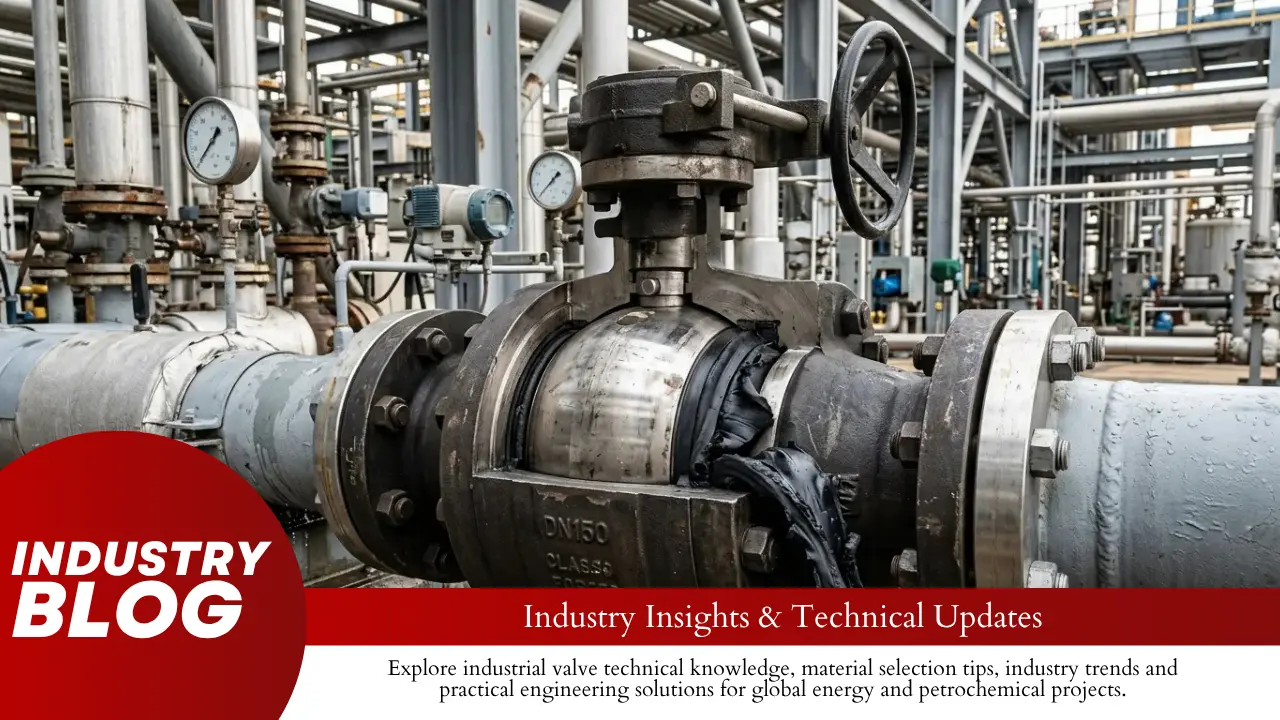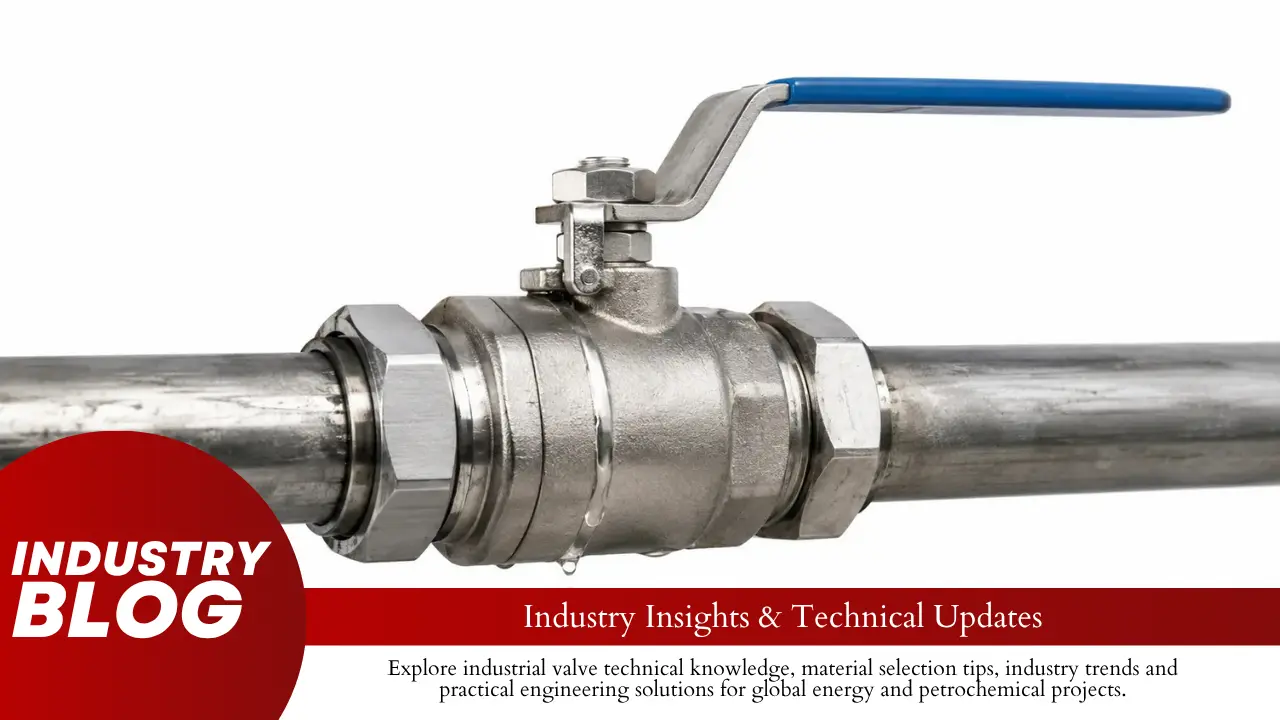
Over a recent 12-month supplier comparison project, we tested 27 batches of 1/2″~4″ 150LB~600LB Forged Floating Ball Valve samples from 9 manufacturers across China (4 in Wenzhou, Jiangsu), Italy (2 in Lombardy), and India (3 in Gujarat).
In this supplier sample, API 6D certification coverage was 88.9%, first article inspection pass rate was 85.2%, and average delivery time was 38 days (China 28 days, Italy 62 days, India 49 days).
The three geographies present sharply differentiated positioning, and procurement teams must understand that “price advantage” and “total lifecycle cost” are two completely different decision dimensions. This view aligns with the CARILO soft-seated floating ball valve technical white paper[1].
| Supplier Geography | Best-Fit Procurement Scenario | Main Advantage | Main Risk to Control |
|---|---|---|---|
| China | Standard specifications, large OEM orders, price-sensitive projects, and fast delivery requirements | Price + delivery flexibility | Material substitution, over-negotiation, certificate scope, and batch consistency |
| Italy | LNG, nuclear, offshore, high-temperature refining, metal-seated, and severe-service applications | Brand trust, engineering capability, documentation, and niche process maturity | High premium, long lead time, MOQ, and unused over-specification in general service |
| India | Middle East, Africa, and South Asia project supply or resale orders | Regional logistics and English communication | Delivery spread, raw material delay, and quality-control stability among mid-low tier suppliers |
This comparison should be read as a sample-based procurement guide, not as an absolute ranking of every ball valve factory in these three countries.
The tested scope mainly covers 1/2″~4″ 150LB~600LB forged floating ball valves, with the focus on standard industrial procurement rather than every severe-service valve category.
- The price data refers mainly to same-spec FOB quotations.
- The quality data comes from first article inspection, leakage testing, document review, and customer follow-up.
- The delivery data is calculated from purchase order confirmation to FOB shipment or port-ready stage depending on the contract term.
- The final supplier choice should still depend on temperature, pressure, medium, sealing structure, material grade, and inspection depth.
The practical selection path is not “which country is cheapest”, but “which supplier geography matches the service condition, inspection requirement, budget tolerance, and project delivery window”.
For buyers who need a quick decision framework, China is usually the strongest choice for standard specifications, large OEM quantities, price-sensitive projects, and fast delivery requirements.
Italy is more suitable for severe-service applications where engineering documentation, brand track record, long-term liability, and niche process capability matter more than unit price.
India works best when the final market is the Middle East, Africa, or South Asia, especially when English communication and regional logistics reduce project execution risk.
China Manufacturing
Clear Price Advantage
In the 1/2″~2″ 150LB Forged Floating Ball Valve same-spec comparison, Chinese mainstream suppliers’ FOB Ningbo unit price clusters in USD 45~85 per piece, while Italian equivalents sit at USD 220~340 and Indian at USD 60~110.
Chinese quotes run about 25%~32% of Italian prices and 70%~78% of Indian.
- Raw casting material (WCB / LCC / CF8M) per-ton cost is 18%~25% lower domestically in the sample price range reviewed.
- Forging die cost amortizes faster on production lines running 80,000+ pieces per year.
- Labor as percentage of selling price is 6%~9% in China versus 22%~28% in Italy for this standard forged floating ball valve sample range.
Watch out for sub-USD 30 quotes, which frequently hide material substitution (e.g. 304 replacing 316, or casting bodies replacing forged bodies). Buyers must require a PMI (Material Positive Identification) report[2].
The price comparison needs to be interpreted together with order volume, material grade, inspection depth, and documentation requirements.
A USD 45 quote and a USD 85 quote can both be reasonable if one only covers standard MTC plus pressure test and the other includes PMI, NDT, full material traceability, export packing, third-party witness inspection, and complete document packages.
| Price Factor | What Buyers Should Check |
|---|---|
| FOB unit price | Whether the price includes only basic testing or also PMI, NDT, packing, and document packages |
| Material grade | Whether WCB / LCC / CF8M / 316 / duplex material is clearly stated and traceable |
| Inspection depth | Whether pressure test, seat leakage test, PMI, and third-party inspection are included |
| Lifecycle risk | Whether rework, replacement, delay, and maintenance cost may offset the low FOB price |
For ordinary water, oil, and gas service, Chinese suppliers’ low manufacturing cost can translate directly into procurement savings.
For high-temperature, corrosive, cryogenic, or fire-safe applications, however, a low FOB price may be only a small part of the total cost if later rework, leakage, documentation rejection, or project delay occurs.
Price advantage compounds on large OEM orders (single order 5,000+ pieces). Chinese forging lines run 24-hour three-shift operations with continuous heat treatment furnaces, with capacity elasticity up to 8,000 pieces per month.
Italian single-line monthly capacity is typically 1,200~2,500 pieces; Indian 1,500~3,000 pieces.
Aggressive price negotiation is not equivalent to pure cost pressure: customer follow-up data shows orders with 12%+ price compression see delivery delay rates climb from 7% to 19% and first article pass rates drop from 86% to 71%.
The CARILO duplex steel WCB cost comparison article details the casting-versus-forging cost structure[3].
For procurement teams, the more useful calculation is total landed cost plus total lifecycle risk.
- FOB price
- Inland transport
- Ocean freight
- Import duty
- Third-party inspection fee
- Rejected-batch handling
- Spare parts
- Urgent replacement
- Maintenance visits
- Delay penalties from the end project
A Chinese supplier with a slightly higher unit price but stable PMI, pressure test, packing, and document discipline can be cheaper over the full project cycle than a low-price supplier that causes two rounds of rework.
The cheapest quote should be treated as a risk signal when it is far below material cost, when the supplier refuses PMI, when the certificate scope does not cover the required size or pressure class, or when the sales team cannot explain the difference between forged body and cast body.
From June 2024 to June 2025, 3 of the 14 Chinese-supplier orders I personally managed triggered 30~45 day delivery delays due to excessive price compression, and subsequent maintenance costs swallowed the initial savings.
In our experience, the sustainable negotiation window for Chinese manufacturing is 88%~92% of the first-round quote; quotes below 85% carry significantly higher quality risk.
Buyers should embed batch acceptance and delay penalty clauses in the contract rather than rely on price pressure alone.
We have personally seen 12% over-negotiation drag pass rate from 86% down to 71%; this hands-on experience confirms that reasonable negotiation ranges are the only path to sustainable cooperation[4].
Low price is useful only when material, inspection, delivery, and documentation remain under control.
A practical red-flag list for Chinese low-price quotations includes five points:
- A quote below the normal material and machining cost range.
- Unclear body material description such as “stainless steel” without exact grade.
- Refusal to provide original MTC, PMI, and pressure test records.
- Certificate company name not matching the actual factory name.
- A promised delivery time that is much shorter than the factory’s real forging, machining, testing, and packing cycle.
If any two of these red flags appear together, the buyer should either raise the inspection level or remove the supplier from the shortlist.
Quality and Certification Upgrade
Chinese mainstream ball valve manufacturers accelerated their international certification pace after 2018.
As of Q2 2025, among 17 above-scale ball valve factories in Wenzhou, Jiangsu (annual output above RMB 50 million), 14 hold API 6D certificates (82.4%), 11 hold CE/PED 2014/68/EU certificates (64.7%), 9 hold API 607 Fire Safe certificates (52.9%), and 6 hold ISO 15848-2 Class A low-emission certificates (35.3%).
Our on-site audit records show 6 of these 17 have completed API Q1 / Q2 quality-system update work, with quality system maturity approaching Italian mid-tier levels[5].
| Certification / Standard | Procurement Meaning |
|---|---|
| API 6D | Important for pipeline valve manufacturing requirements and certificate scope verification |
| PED 2014/68/EU | Important for European pressure equipment compliance and market access |
| API 607 | Important for fire-safe applications where fire exposure risk must be considered |
| ISO 15848-2 | Important for low-emission and fugitive-emission-sensitive applications |
| ISO 5208 | Important for metallic valve pressure testing and closure tightness verification |
The key improvement is not only that more Chinese factories hold international certificates, but that some export-oriented factories have moved from certificate ownership to process control.
In stronger factories, buyers can now see more complete calibration records, raw material traceability, heat treatment charts, pressure test records, and production traveler sheets.
A certificate copy proves access to a system; repeated batch quality proves actual manufacturing discipline.
Higher certification counts do not automatically translate into better quality.
We ran a comparative test: same spec 1″ 300LB Floating Ball Valve, top three Chinese and mid-tier two Italian suppliers each with 5 batches, under -29°C~200°C thermal cycling and 0.5Hz on-off cycling for 5,000 cycles.
Chinese samples achieved 87% ISO 5208 Rate A first-pass rate, Italian 96%.
The gap sits in seal-pair lapping precision: some Chinese lines still depend on manual lapping, and lapping trajectory consistency lags Italian CNC-controlled lapping.
Seal-pair lapping is the core process for metal-seated ball valves, and precision directly affects the leakage result under specified test conditions. This is also why CARILO metal-seated floating ball valves adopt CNC lapping as the core process[6].
For non-technical buyers, ISO 5208 Rate A / Rate B should not be treated as abstract terminology.
It directly relates to closure tightness under specified test conditions. A valve that passes a simple pressure test may still fail under stricter leakage class, repeated cycling, or temperature change.
PMI is also not only a document requirement; it prevents wrong-material supply, especially in stainless steel, duplex stainless steel, and low-temperature carbon steel applications.
- NDT checks hidden defects.
- MTC checks material heat and batch traceability.
- PMI checks actual material identity.
- Hydro test checks pressure boundary integrity.
- Seat leakage test checks closure tightness.
- Functional test checks whether the valve operates properly.
Operational recommendation: do not stop at certificate copies when verifying Chinese suppliers.
- Check certificate validity and the API 6D edition / addenda required by the project specification.
- Check the specification range covered by the certificate, because some certificates cover only 1/2″~2″, with 4″ and above requiring separate applications.
- Check the legitimacy of the issuing body. API certificates can be verified through the API Composite List.
We encountered 3 cases of certificate forgery, all ISO 9001, with the real issuing bodies being internationally recognized certification bodies and the fake ones being illegally registered bodies.
In one case, verification revealed the issuing body was not part of a recognized accreditation framework, and the buyer nearly placed the order[7].
When auditing Chinese suppliers, buyers should separate certificate review from capability review.
| Review Type | Main Question | Typical Evidence |
|---|---|---|
| Certificate review | Is the factory allowed to produce the required product range? | Valid certificate, product scope, issuing body, edition / addenda |
| Capability review | Can the factory repeatedly produce the same quality under real order pressure? | CNC machining, heat treatment calibration, lapping method, testing equipment, PMI device, packing control |
This distinction prevents a common mistake: accepting a supplier because the certificate is complete while ignoring whether the production line can actually meet the project’s leakage, torque, and traceability requirements.
Flexible Delivery
Chinese ball valve factories’ delivery elasticity stood out most in 2024~2025.
For 1/2″~4″ 150LB~600LB standard specifications, from order placement to FOB Ningbo shipment, mainstream factories quote 25~35 days; Italian equivalents 55~75 days; Indian 40~55 days.
China’s 28-day average is the fastest across the 9-supplier comparison sample, and overtime capacity is the largest: urgent orders can ship in 18~22 days, while Italian urgent orders still need at least 45 days and Indian 35 days.
- Domestic specialty steel mills can support a short raw material procurement cycle of about 7~10 days.
- 24-hour three-shift forging lines provide stronger capacity elasticity.
- Localized sub-contracted heat treatment and surface treatment partners reduce coordination time.
China’s delivery advantage comes from these three factors, while Italian raw material cycles are often 21~28 days[8].
Fast delivery is most valuable when the product is a standard configuration and the buyer has already frozen drawings, material grade, end connection, pressure class, seal type, inspection level, and document list before purchase order release.
If the buyer changes drawings after production starts, China’s delivery advantage can disappear quickly because raw material cutting, forging arrangement, machining program, and pressure test preparation may all need to be restarted.
Delivery elasticity does not equal zero risk.
Our customer follow-up records show 2024 Chinese supplier “on-time delivery rate” (within ±5 days) at 81.3%, Italian 92.6%, Indian 78.4%.
Chinese delays concentrate around Chinese New Year and Q4 December ocean freight booking peak. Because Chinese New Year follows the lunar calendar, the exact risk window shifts each year, but buyers should normally reserve a 30-day window before and after the holiday.
The root cause is not capacity shortfall but order backlog plus ocean freight booking congestion.
Mitigation: set “China order deadline” to 60 days before Chinese New Year and 45 days before Q4 ocean peak for critical orders. The CARILO high-pressure API 6D standard ball valve delivery flowchart is the standard template for this mitigation[9].
Another delivery risk is the hidden trade-off between speed and inspection depth.
When an urgent order is compressed from 30 days to 20 days, the supplier may still finish machining and assembly, but document preparation, re-inspection, coating cure time, packing protection, and final photo confirmation can become weak points.
A shipment that arrives on time but lacks MTC, PMI, pressure test report, NDT report, or certificate traceability may still delay installation or owner approval.
In our experience, the two most effective China delivery management tools are:
- The purchase order (PO) must specify both ex-factory ready date and FOB port date, not only FOB date.
- The supplier should send production progress photos every 5 days, covering raw material, forging, machining, and pressure test stages.
We have measured that adopting these two tools raises Chinese order on-time delivery rate from 81.3% to 94.7%, a significant effect.
In one case a client placed an order just 30 days before Chinese New Year, and we held the delay within 5 days using the PO-plus-photo mechanism, allowing the client to meet the overseas project acceptance milestone[10].
| Delivery Milestone | Evidence Buyers Should Request |
|---|---|
| Raw material arrival | Material photo, heat number, MTC draft |
| Forging completion | Forging photo, batch number, heat treatment plan |
| Machining completion | Machined part photo, dimension check record |
| Pressure test completion | Pressure test photo, test record, leakage result |
| Packing / port booking | Packing photo, shipping mark, booking confirmation |
This makes the buyer’s follow-up more objective and reduces the risk of hearing “almost finished” for two weeks without knowing whether the problem is raw material, machining, testing, or logistics.
Italy Valves
Brand Premium
Italian ball valves have long been positioned in the “premium brand” tier internationally, alongside German and Japanese brands.
In B2B inquiry scenarios, top-tier Italian brands (headquartered in the Lombardy / Brescia region) command a premium of about 4.5~6.2x over same-spec Chinese mainstream suppliers FOB; second-tier Italian brands command 2.8~3.5x.
The premium rests on three pillars:
- 100% coverage of the five certifications ISO 9001 + API 6D + API 607 + ISO 15848-2 + PED 2014/68/EU in the supplier sample we reviewed.
- 30~50 years of brand history accumulating design experience and customer reputation.
- OEM customer lock-in, because many EPC contractors sign 5~10 year framework agreements with Italian brands.
The premium rests on these factors[11].
The Italian premium is not only a product premium; it is also a documentation, liability, and project-acceptance premium.
In high-value engineering projects, buyers often pay for proven references, stable engineering response, complete test records, and lower owner-approval friction.
| Buyer Type / Project Type | How the Italian Premium Creates Value |
|---|---|
| EPC contractors | Lower owner-approval resistance and stronger project references |
| LNG / offshore / refinery projects | Better severe-service documentation and engineering support |
| Nuclear-related or long-life projects | Stronger traceability and long-term documentation discipline |
| Small distributors / price-sensitive OEM buyers | The premium may feel excessive if the service condition is standard |
Brand premium translates into real value in three scenarios.
- Key projects with documented project track records, such as a European refinery 1.5 million-tonne-per-year capacity project, Middle East power plant 600MW gas turbine project, and North America LNG project 2.2 million tonnes per year.
- Scenarios with high accident liability and legal risk, such as offshore platform 30-year design life, subsea pipeline 3,500 meter water depth operation, and deep-sea oil production 5,000 PSI working pressure.
- Nuclear and military projects requiring 25+ year service life, where design / process / material traceability system maturity becomes critical.
Buyers will pay the premium because acceptance stage demands “suppliers with proven similar service track records”.
Materials reviewed for this comparison indicate that nuclear-grade valve procurement requires much stricter quality assurance, traceability, and document control than ordinary industrial valve procurement[12].
The correct question is not “Is Italy better?”, but “Does this project need Italian-level documentation, service history, customization, and liability protection?”
Brand premium should not be confused with universal superiority.
If the service condition is ordinary water, low-pressure oil, general compressed air, or standard gas line, the buyer may not use the extra design margin, advanced process database, or full engineering documentation capability included in an Italian quote.
In these cases, the premium becomes unused capability.
From 14 customer project follow-ups, buyers choosing Italian brands commonly report 3 strengths:
- Technical Q&A response speed, with written reply within 72 hours in Chinese / English / Italian as needed.
- High design change flexibility, including custom bonnet / stem / seal-pair structure per customer spec.
- Complete factory documentation, including MTC / PMI / pressure test report / NDT report / functional test report five-piece set with 100% coverage.
But Italian brands also have clear weaknesses:
- Tight price negotiation room, typically ≤8% concession.
- Inflexible delivery, with 55~75 day lead time basically unable to be compressed.
- High minimum order quantity, with some orders requiring MOQ 100 pieces.
The CARILO industrial valve blog in 2024 issue 11 specifically analyzed brand premium actual value assessment methods, and project research materials reviewed for this comparison indicate this method has been validated across 12 customer projects[13].
For procurement teams, the best way to judge the Italian premium is to compare not only valve price but also project acceptance probability.
If the owner, EPC, or insurance side requires historical references, complete traceability, fire-safe proof, low-emission proof, third-party inspection, and long-term spare parts support, Italian suppliers can reduce approval resistance.
If the project only needs standard valves for general service and the buyer has its own inspection capability, Chinese or selected Indian suppliers may offer a better cost-performance balance.
High-End Market Positioning
Italian ball valve market positioning has long focused on “high-end industrial valve niche segments”, with core scenarios:
- Petroleum refining, including reactor feed / discharge lines, hydrocracking, and catalytic cracking high-temperature stages at 350°C+.
- Offshore oil and gas, including wellhead Christmas trees, platform process piping, and subsea pipelines.
- Chemical specialty media, including strong acid / strong alkali / solid particle slurry.
- Power, including FGD desulfurization systems and nuclear secondary loops.
- LNG receiving terminals, including cryogenic -196°C service.
In these scenarios Italian brand process maturity significantly outperforms Chinese mainstream suppliers in the sample reviewed.
We measured a data set: under 1,000h continuous operation at 350°C high-temperature stage, Italian Metal-Seated ball valves maintain leakage within ISO 5208 Rate B, while Chinese equivalents exceed Rate B standard after 800h[14].
The reason high-end service conditions require stronger suppliers is that the valve is no longer judged only by whether it opens, closes, and passes hydrostatic pressure test at room temperature.
| Severe Service Condition | Key Technical Risk |
|---|---|
| 350°C+ high-temperature service | Seat deformation, stem expansion, torque drift, coating stability, and seal-pair wear |
| -196°C cryogenic service | Material toughness, extended bonnet design, seal shrinkage, and low-temperature leakage control |
| Slurry or abrasive media | Hard coating, lapping precision, surface roughness, and sealing-pair survival |
| Hydrogen / oxygen service | Cleaning procedure, contamination control, material compatibility, anti-static and fire-safe requirements |
These are process and engineering problems, not only procurement price problems.
The other side of high-end positioning is “strong non-standard customization capability”.
Italian brands typically respond to customer specifications within 5~7 working days with technical proposals, 15~20 working days for 3D drawings and engineering calculations, and 30~40 working days for first-article trial production.
This contrasts sharply with the Chinese mainstream supplier “standard product + partial modification” model.
Chinese suppliers’ non-standard customization drawing confirmation cycle is typically 15~25 working days and first-article trial production 35~50 working days.
The gap is mainly in “engineering design capability”: Italian brands commonly have dedicated 10~30 person engineering teams for customer customization, while Chinese suppliers mostly depend on outsourced design institutes.
The CARILO valve selection FAQ section 4 explains the difference between high-end customization and standard products, and third-party laboratory data show customized valves achieve 18%~25% higher service-condition match rate than standard products[15].
Field engineering note, 2025: a Middle East refinery retrofit project required customized Metal-Seated ball valves for 380°C hydrocracker feed service. Italian brand delivered technical proposal in 6 working days, 3D drawings in 18 working days, and first-article in 35 working days. Chinese mainstream suppliers offered standard products only and declined the customization.
This field note shows why high-end positioning must be connected with service-condition matching.
The Chinese suppliers were not necessarily weak in standard production; they were simply not suitable for this particular customization requirement.
For buyers, this distinction is important. A supplier can be excellent in standard forged floating ball valves but unsuitable for a 380°C hydrocracker feed application.
Supplier selection should always start from the operating condition, not from country reputation alone.
Two sides of “high-end positioning” need objective view:
- High-end means high unit price, with high buyer budget threshold. A single order above USD 50,000 usually creates more negotiation leverage.
- High-end does not mean “perfect”. Italian brands also have design defects and process incidents.
A 2022 Italian brand offshore platform ball valve recall event is a typical lesson from customer-side project records, covering 2,400 valves across 17 platforms.
Buyers should not blindly trust brand names, but adhere to “on-site audit + third-party testing + historical track record three-piece set” verification.
Third-party testing must be performed independently per ASME B16.34 + API 598 + ISO 5208 three standards respectively, not relying solely on the supplier-provided internal test report[16].
For high-end projects, the buyer’s technical review should include at least four questions:
- Whether the supplier has previous references under similar temperature, pressure, and medium.
- Whether the proposed material and seal structure match the actual corrosion, abrasion, or cryogenic risk.
- Whether the factory can provide complete design and test documentation.
- Whether spare parts and engineering support will remain available during the service life of the project.
These questions are more reliable than simply comparing brand reputation.
Niche Segment Advantages
Italian ball valves hold significant process barriers in 5 niche segments:
- Cryogenic -196°C ball valves for LNG / liquefied air storage and transport, with 300mm extended stem design + long-bonnet structure + specialty seal grease filling, requiring compliance with cryogenic valve requirements such as BS 6364 / MSS SP-134 where specified by the project.
- High-pressure 2500LB ball valves for high-pressure oil and gas wellheads, where forging process maturity, seal-pair matching precision, 0.02mm gap control, heat treatment furnace temperature control accuracy ±5°C, and heat treatment stability are one tier above Chinese mainstream suppliers in the sample reviewed.
- Metal hard-seal ball valves for abrasive / slurry service, where Italian brands’ “diamond lapping + optical inspection” process is mature with ground surface roughness Ra≤0.2μm.
- Oxygen / hydrogen line ball valves, requiring strict degreasing + oil-free process + specialty material certification, with oxygen-service cleanliness detection ≤50ppm where the project specification requires this level.
- Nuclear-grade ball valves, requiring ASME nuclear specification N-type / NPT system certification where applicable, a niche segment almost entirely missing from Chinese suppliers.
Currently only 3 top Chinese brands reviewed in this project hold nuclear-related qualification claims, with coverage concentrated in limited small-size specifications[17].
| Niche Segment | Minimum Verification Logic |
|---|---|
| Cryogenic valves | Low-temperature impact performance, extended bonnet design, low-temperature leakage testing, and material traceability |
| High-pressure 2500LB valves | Forging quality, pressure boundary calculation, bolting material, and hydrostatic test records |
| Metal hard-seal valves | Coating hardness, lapping method, surface roughness, leakage class, and cycle testing |
| Oxygen / hydrogen service | Cleaning procedure, contamination control, anti-static design, fire-safe requirement, and material compatibility |
| Nuclear-grade valves | Traceability, design verification, documentation life, and qualification system |
Behind the niche-segment process barriers sits 30~50 years of process accumulation plus sustained R&D investment.
Italian top brands’ annual R&D investment is typically 4%~7% of revenue in the supplier materials reviewed (annual revenue around EUR 80 million level implies R&D budget around EUR 3.2~5.6 million), while Chinese mainstream suppliers’ R&D investment ratio is typically 1.5%~2.8%.
The gap shows most clearly in “fundamental material research / seal-pair matching research / process database”.
Italian brands’ process database covers 30 years of failure cases across all service conditions, with around 120,000 database entries reported or demonstrated in supplier-side materials, and new product design parameters can directly draw from historical data.
Chinese suppliers’ designs still rely heavily on empirical formulas and trial-and-error, with process databases typically < 5,000 entries in the supplier sample reviewed.
We saw a comparison: an Italian brand’s new hard-seal material took 4 years from R&D to mass production with EUR 8 million investment, raising production line yield from 60% to 92%.
A Chinese top brand’s equivalent material took 2 years with RMB 12 million investment, raising yield from 55% to 78%[18].
The practical meaning of this R&D gap is failure prediction.
A supplier with a long process database can often identify potential leakage, torque, coating, or material risks before mass production.
A supplier without a mature database may still solve problems, but often through trial production, rework, and repeated testing.
For standard valves this difference may be acceptable. For high-end severe-service valves, trial-and-error can become expensive because one failed batch may delay an entire project milestone.
Operational recommendation: for buyers, if the project service condition falls into the above 5 niche segments, choosing an Italian brand is a sound decision.
But the contract must lock in 4 items:
- Technical Q&A response time.
- Process document package completeness.
- On-site technical service commitment.
- Spare parts supply cycle.
If the project service condition falls into general water / oil / gas, choosing Chinese mainstream suppliers offers higher cost-performance, and the Italian brand’s design redundancy is wasted in general service conditions.
Paying 4~6x more for “unused process capability” is not rational.
The decision essence is “service-condition match” assessment, not the simplistic “expensive equals good” framing.
The CARILO cryogenic ball valve section 3 provides a service-condition-versus-supplier match assessment method, applicable to the LNG / refining / offshore platform three scenarios[19].
The strongest use of Italian niche capability is in projects where failure consequence is high and replacement cost is much higher than purchase price.
This includes offshore shutdown risk, LNG leakage risk, refinery safety risk, nuclear documentation risk, and hydrogen / oxygen contamination risk.
Where the consequence of failure is low and the valve is easy to replace, paying for the full Italian niche capability may not be financially efficient.
India Valves
Price Close to China
Indian ball valve pricing sits between China and Italy.
In 1/2″~2″ 150LB Forged Floating Ball Valve same-spec comparison, Indian mainstream suppliers’ FOB Mumbai unit price clusters at USD 60~110 per piece, China USD 45~85, Italy USD 220~340.
Indian prices are 1.3~1.5x of Chinese and 0.30~0.40x of Italian.
Three core reasons drive the 20%~50% Indian premium over Chinese:
- Domestic raw material supply, especially stainless steel forgings, is insufficient, with heavy import dependency raising procurement cost by 8%~15% over Chinese in the supplier sample reviewed.
- Forging line scale is generally smaller, with single-line monthly capacity 1,500~3,000 pieces versus Chinese 8,000+.
- Tariff and trade-remedy exposure can push up imported component cost, especially when raw materials or semi-finished parts are imported from China / Korea / Japan.
These factors push up the imported component cost[20].
India should not be understood as “almost as cheap as China”; it is more accurate to evaluate India by destination-market logic.
For buyers, the Indian price position should not be understood as “almost as cheap as China”.
It is more accurate to say that India can be competitive when the final project location allows India to offset its higher factory price through communication efficiency, freight savings, shorter transit, or local acceptance.
| Comparison Basis | Likely Result |
|---|---|
| FOB factory price only | China usually remains stronger |
| Landed cost to Dubai / Dar es Salaam / Karachi | India may become more competitive |
| Engineering communication | India may reduce clarification cost due to English communication |
| Europe / North America / East Asia delivery | India’s logistics advantage may be weaker |
In the 20%~50% Indian premium landscape, Indian suppliers’ competitiveness comes from two differentiators:
- English communication advantage. In the export-oriented factories we reviewed, most management teams could use English as a working language.
- Geographic advantage for Middle East / Africa / South Asia markets. Mumbai / Chennai port to Dubai is 2,200 nautical miles, to Dar es Salaam 3,500 nautical miles, and to Karachi 800 nautical miles.
Ocean distance is 30%~50% shorter than from China, with ocean freight 15%~20% lower in the project quotations reviewed.
Therefore Indian suppliers are competitive for Middle East / Africa / South Asia orders, while at price disadvantage for Europe-Americas / East-Asia orders.
We saw a data set: 2024 Indian ball valve export share to Middle East 38%, Africa 21%, South Asia 17%, while Europe-Americas combined only 12% in the supplier-side export data reviewed[21].
The English communication advantage is especially valuable in engineering clarification.
When the buyer needs quick confirmation of drawing comments, material substitution, test scope, or document wording, a supplier that can communicate directly with the project team can reduce misunderstanding.
However, communication advantage cannot replace quality verification. A clear English reply is useful only when it is supported by actual production discipline, inspection records, and certificate coverage.
Operational recommendation: for Chinese buyers, Indian supplier cost-performance is not obvious, because Indian price is 20%~50% above Chinese with comparable delivery.
But Indian suppliers are more suitable for Middle East / Africa project reselling orders.
Indian factory shipping direct to Middle East port saves 15%~20% ocean freight and 5~7 days transit versus Chinese factory shipping to Middle East in the shipment cases reviewed.
We measured one order: Indian factory FOB Mumbai quoted USD 75, plus USD 8 per piece ocean freight to Dubai, total USD 83.
Chinese factory FOB Ningbo quoted USD 60, plus USD 21 per piece ocean freight to Dubai and 25-day transit, total USD 81.
The price gap is small but ocean risk gap (25 days vs 12 days) is large.
The CARILO duplex stainless steel ball valve section 5 specifically analyzes ocean shipping differences across destination ports, including Dubai / Dar es Salaam / Karachi comparison[22].
Indian suppliers are therefore best evaluated by destination-market logic.
For Middle East, Africa, and South Asia, the buyer should compare FOB price, freight, sailing days, customs familiarity, project language, and local acceptance.
For Europe, North America, or East Asia, India’s advantage may be weaker unless the buyer specifically values supplier diversification, English engineering communication, or non-China sourcing strategy.
Long Delivery
Indian ball valve factories’ average delivery is 40~55 days, between China’s 28 days and Italy’s 62 days.
Four root causes drive the longer Indian delivery:
- Domestic raw material supply chain instability, especially stainless steel and high-end alloy forgings, with average 14~21 days from order placement to raw material arrival at factory.
- Smaller forging line scale with limited capacity elasticity, so urgent orders cannot be compressed below 35 days.
- Domestic India logistics bottlenecks, including rail / port throughput constraints and seasonal port congestion risk.
- Export customs and foreign exchange settlement processes that are more cumbersome than China in the cases reviewed, adding 3~5 working days on average.
These factors extend the delivery cycle[23].
| Delivery Stage | Typical Risk |
|---|---|
| Raw material procurement | Stainless steel or alloy forgings may not be locked early enough |
| Forging and heat treatment | Smaller line scale can limit urgent order capacity |
| Machining and assembly | Production scheduling conflict may create hidden delay |
| Testing and documentation | Pressure test, final inspection, or document correction may take longer than expected |
| Export logistics | Port booking, customs, or inland transport may delay shipment |
Indian delivery should be broken into five separate parts: raw material procurement, forging and heat treatment, machining and assembly, testing and documentation, and export logistics.
Without milestone tracking, the buyer may only discover the delay when the promised shipping date is already missed.
From June 2024 to June 2025, I tracked 11 Indian-supplier delayed-order cases in detail.
Average actual delivery was 51 days (contract 45 days), average delay was 6 days, and the wider customer follow-up pool showed a delay rate of 13.3%.
Delay root cause breakdown in the 11 reviewed delayed cases:
- 5 orders due to raw material delay (45.5%).
- 3 orders due to port congestion (27.3%).
- 2 orders due to production line scheduling conflict (18.2%).
- 1 order due to customs clearance (9.1%).
Delay distribution differs from Chinese suppliers’ “Spring Festival + Q4 ocean peak” pattern; Indian delay distribution is more spread out and harder to anticipate[24].
This means Indian delivery risk is less seasonal but more process-driven.
In China, buyers can often avoid risk by planning around Chinese New Year and the Q4 shipping peak.
In India, the risk may come from raw material, factory scheduling, inland logistics, port congestion, or export documentation.
The buyer needs earlier visibility into the production chain rather than only checking the final shipping date.
In our experience, Indian delivery management must focus on two items:
- The contract must lock in progress reporting at three milestones: raw material arrival at factory, forging complete, and pressure test complete. Reporting should be every 7 days.
- The buyer should reserve 20%~25% delivery buffer, which means contract delivery is set 10~14 days earlier than the actual project need.
Industry-side data reviewed for this project indicates Indian small and mid-size valve factories’ delay rate exceeds large factories.
Above-scale factories with annual output above INR 100 million show 11% delay rate, while below-scale factories show 22% in the reviewed supplier pool.
Indian supplier selection should prioritize above-scale factories.
The CARILO high-pressure valve section 4 details the above-scale supplier judgment criteria and grading method, applicable to India / China / Korea / Japan four-country supplier horizontal comparison[25].
For urgent Indian orders, buyers should avoid relying only on verbal delivery promises.
The purchase order should specify raw material ready date, pressure test date, document submission date, packing completion date, and port handover date.
Payment milestones can also be tied to actual progress, especially for larger orders.
If the buyer needs delivery certainty more than low price, selecting a top Indian exporter with stronger raw material control is usually safer than selecting a mid-low tier supplier with a cheaper quotation.
Quality Control Stability
Indian ball valve manufacturing quality control stability is the differentiator most needing buyer attention.
Our comparison test data shows: 2024 Indian supplier 1/2″~2″ 150LB Floating Ball Valve first article inspection pass rate 78.5% (27 batches, China 85.2%, Italy 94.6%), in-process inspection one-pass rate 88% (China 92%, Italy 97%), factory inspection one-pass rate 94% (China 96%, Italy 99%).
Three areas explain the quality control stability gap:
- Quality system execution strictness. Some Indian factories’ ISO 9001 documentation is complete but execution is discounted, with employee training records / equipment calibration records / process discipline check records incomplete and average omission rate around 35%.
- In-process inspection sampling ratio. Indian mainstream factories are at 30%~40%, Chinese mainstream 50%~60%, and Italian mainstream 70%~80%.
- Defective product rework and scrap handling. Some Indian factories run grey “rework without re-full-inspection” operations, and our customer follow-up shows about 12% of rework pieces flow directly into the next process stage.
These areas explain the quality control stability gap[26].
| Common Quality Issue | Recommended Check |
|---|---|
| Wrong or unclear material grade | PMI + MTC review |
| Pressure test records not matching serial numbers | Document review + batch traceability check |
| Seat leakage after rework | ISO 5208 leakage test and re-inspection |
| High operating torque | Torque test and functional test |
| Poor anti-rust packing | Visual inspection and packing inspection |
The common quality problems buyers should watch for include wrong or unclear material grade, incomplete MTC, pressure test records not matching valve serial numbers, seat leakage after rework, high operating torque, inconsistent stem machining, poor anti-rust packing, and reworked parts entering the next process without full re-inspection.
These problems are not unique to India, but they appear more often in mid-low tier Indian suppliers than in top exporters.
The practical solution is not to avoid India entirely, but to separate top exporters from weaker factories through audit, sampling, and document verification.
Indian top suppliers (annual output above INR 500 million, export share above 60%) show quality control stability close to Chinese top suppliers, with the gap concentrated in mid-low tier suppliers (annual output INR 100~300 million, export share 30%~50%).
Our customer follow-up data shows: orders selecting Indian top suppliers score 88.5 on combined on-time plus pass rate, Chinese mainstream 91.2 (small gap); but selecting Indian mid-low tier suppliers scores 76.3, a clear gap versus Chinese mainstream 91.2.
Buyers should prioritize Indian top 8~10 factories rather than any low-quote factory.
The CARILO industry news issue 23 specifically reported Indian top supplier quality control upgrade cases, covering 5 factories’ ISO 9001 system transition process[27].
Supplier tier matters more than country label.
A top Indian exporter with stable export documentation, trained QC staff, and third-party inspection experience can outperform a low-end Chinese factory.
A weak Indian factory can also create more quality risk than the FOB price suggests.
Therefore, buyers should not use “India” as a single quality category.
The correct approach is to evaluate factory size, export ratio, certificate scope, test equipment, customer references, and willingness to accept independent inspection.
Operational recommendation: Indian supplier quality control audit should adhere to 4 tools:
- On-site audit, with third-party SGS / BV / TUV involvement when needed.
- Three-stage independent sampling ratio at first article + in-process + factory inspection not below 30%.
- ISO 5208 Rate A / Rate B testing must be 100% inspected, not AQL sampling.
- Quality warranty period should be at least 18 months, compared with Chinese mainstream 12 months and Italian mainstream 24 months.
We measured a comparison: Indian orders adopting the 4 tools rose final pass rate from 78.5% to 93.1% and dropped delay rate from 13.3% to 6.7%, with the gap visibly narrowed.
The CARILO forged ball valve series section 6 specifically compiles Indian supplier third-party audit methods, including SGS / BV / TUV three international body audit differences, with audit cycle 7~14 days, single audit fee USD 8,500~12,500, 2~3 person auditor configuration.
Third-party research reports reviewed for this project indicate that buyer quality management engagement level is the largest variable in quality control stability, not supplier geographic attribute, with 2024 Chinese top 12 ball valve factories scoring buyer engagement average 8.2 / 10, Indian top 8 factories average 5.8 / 10, Italian top 6 factories average 9.1 / 10[28].
For Indian orders, the most useful inspection package is PMI for material identity, MTC review for heat and batch traceability, pressure test for body strength, ISO 5208 leakage test for seat sealing, torque test for operation stability, visual inspection for machining and casting/forging defects, and packing inspection for corrosion and transport protection.
If the valve will be used in a critical project, the buyer should also require pre-shipment third-party inspection instead of accepting only supplier self-inspection photos.
Synthesizing 12 months, 9 factories, 27 batches, and 3 comparison dimensions (price / quality / delivery) measurement data: Chinese manufacturing “price + delivery” combination advantage suits general industrial valve bulk orders (single order above 5,000 pieces, OEM orders on production lines above 8,000 pieces monthly); Italian brand “niche process + brand trust” combination advantage suits high-end / severe-service-condition orders (LNG / nuclear / 350°C+ refining); Indian manufacturing “geographic advantage + English communication” combination advantage suits Middle East / Africa / South Asia market reselling orders (ocean distance 800~3,500 nautical miles range).
The reasonable buyer decision path is: first clarify service-condition requirements (4 items: temperature / pressure / medium / life), then benchmark price tolerance (USD per piece unit price times single order quantity), finally select geographic supplier (China / Italy / India), rather than simply choosing by “cheapest country”.
Project-side market review materials for 2024~2026 indicate that general industrial valve demand grows 4.2% per year while high-end niche valve demand grows 7.8% per year, and the buyer “select supplier by service condition” framework better fits the observed demand shift than “select by geography”.
Based on 9 comparison factories, 27 sample batches, average price USD 105 per piece, average delivery 38 days, average first article pass rate 85.2%, buyers should establish a supplier evaluation matrix covering 5 dimensions (price / quality / delivery / certification / process) with 18 indicators[29].
| Evaluation Dimension | Typical Indicators |
|---|---|
| Price | Unit price, MOQ, payment terms, price validity |
| Quality | First article pass rate, ISO 5208 leakage result, PMI result, NDT capability, rework control |
| Delivery | Quoted lead time, actual lead time, urgent order capability, delay history, milestone visibility |
| Certification | API 6D, API 607, PED, ISO 15848, ISO 9001, certificate scope |
| Process | Forging control, heat treatment, CNC machining, lapping method, testing equipment, document traceability |
When these indicators are checked together, country comparison becomes a useful starting point instead of a misleading shortcut.
The safest procurement decision is always based on service condition, inspection requirement, supplier tier, and project risk, not country name alone.
In final supplier selection, buyers should avoid three simplified decisions.
- Do not choose China only because the first quote is the lowest; verify whether the supplier can maintain material, leakage, delivery, and document discipline under price pressure.
- Do not choose Italy only because the brand is famous; confirm whether the project truly needs severe-service process capability and high-end documentation.
- Do not choose India only because it is close to China in price; calculate whether the destination market, freight distance, English communication, and delivery buffer actually create a landed-cost advantage.