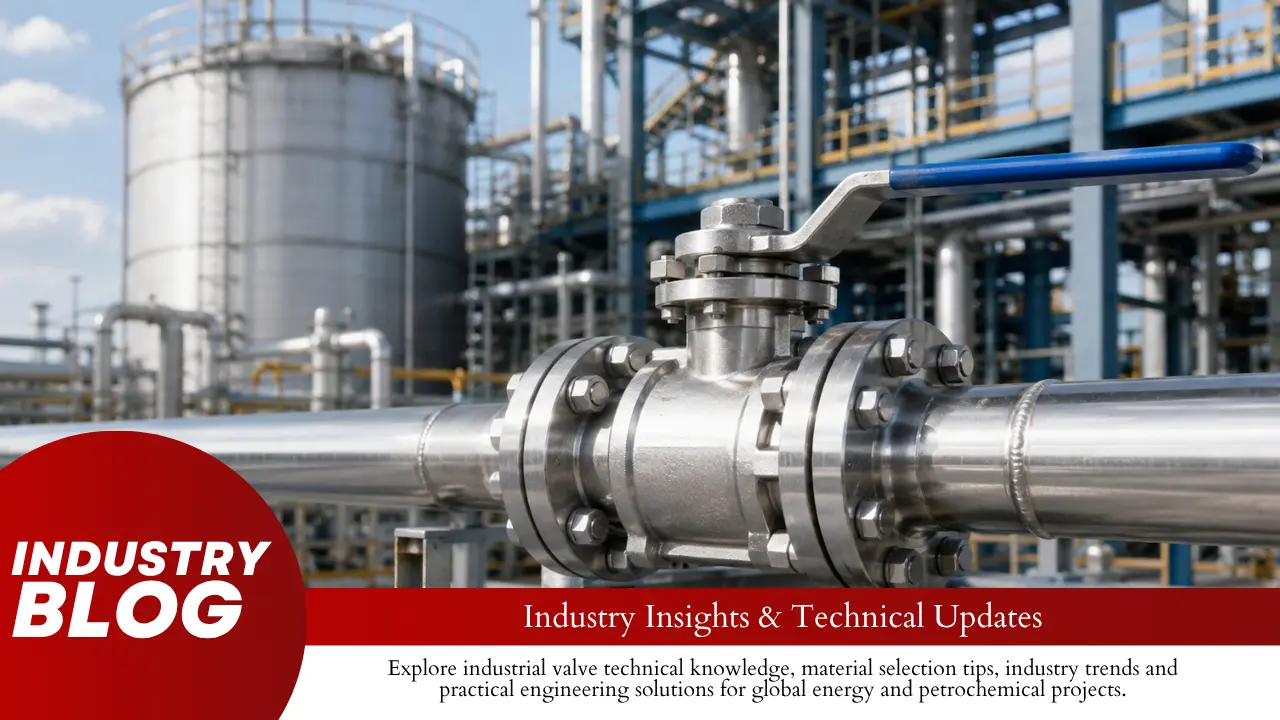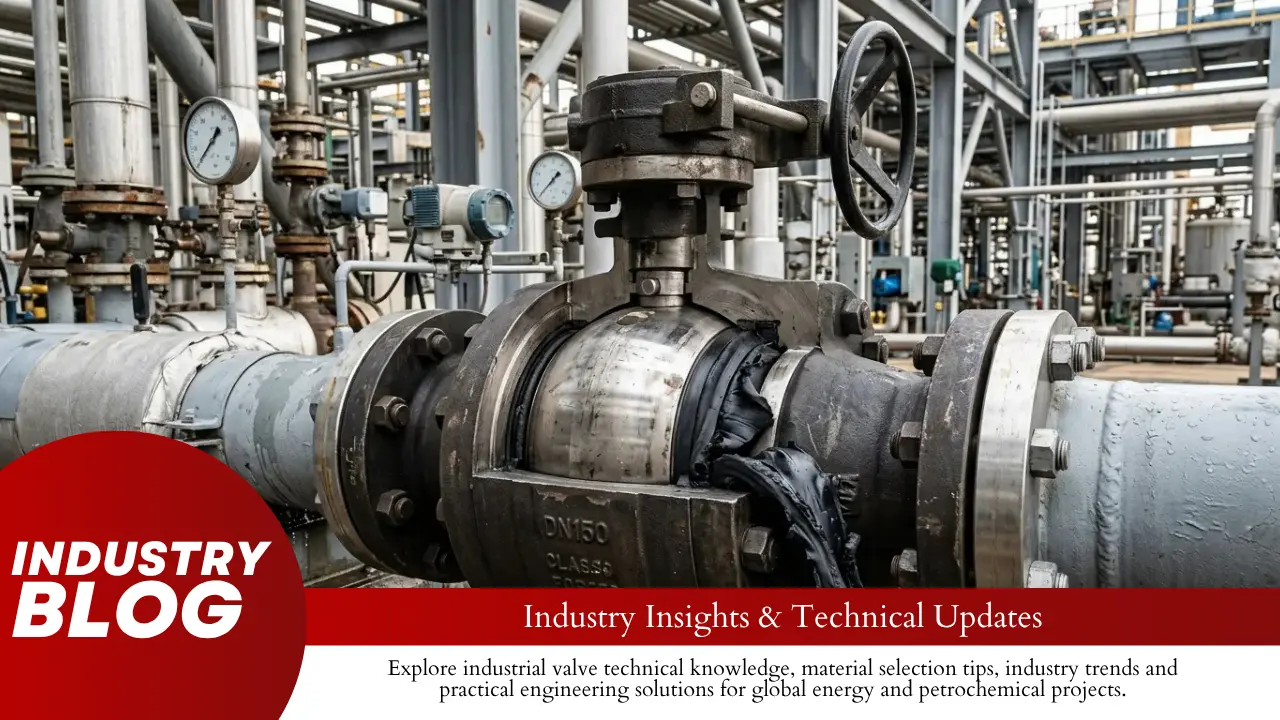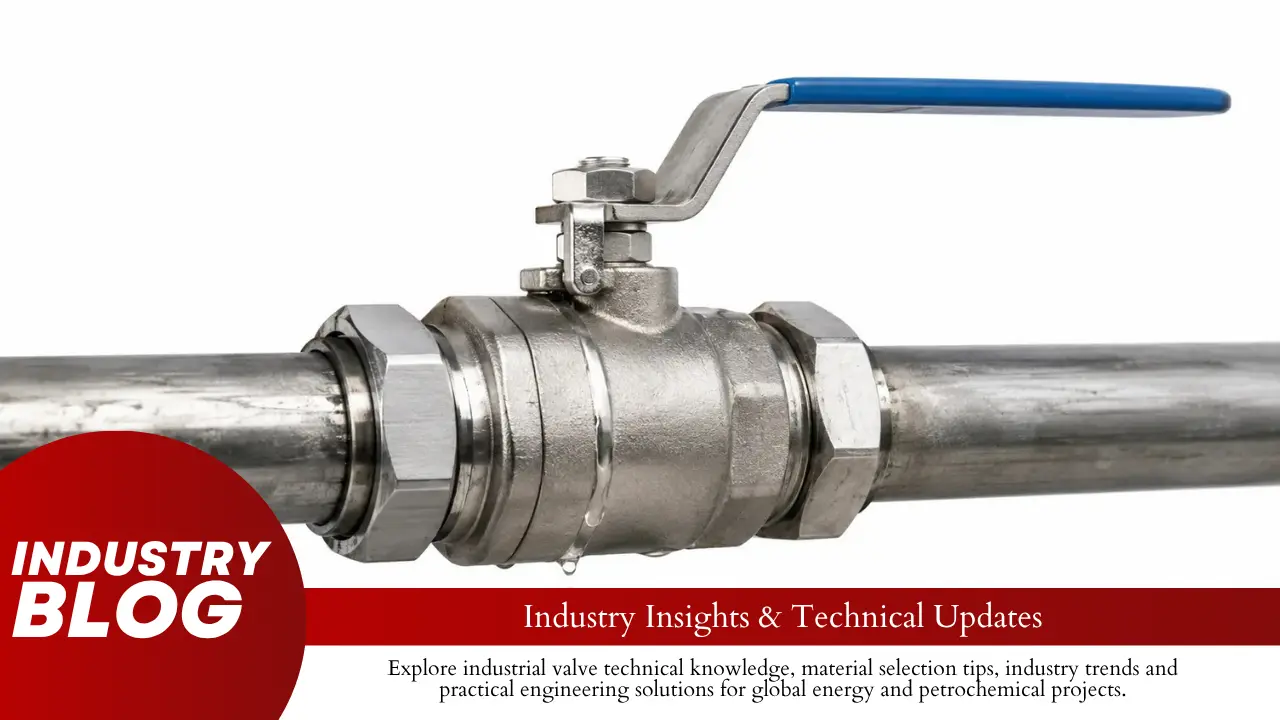
The body material is only one part of the selection. The ball, stem, seats, O-rings, body gasket and packing must also match the amine concentration, H₂S and CO₂ content, temperature, pressure, chlorides, hydrocarbons and solids.
A 30 wt% MEA solution is a common process reference, while MDEA systems may use higher concentrations such as 40–50 wt%. These figures describe the fluid, not a material limit. A 40 wt% MDEA stream can be mild in one plant and highly corrosive in another because of temperature, acid-gas loading, chlorides, oxygen and heat-stable salts. The U.S. Department of Energy’s NETL handbook uses approximately 30 wt% MEA as a commercial process reference.[1]
What to Check First
Do not approve a valve from the words “amine service” alone. Check at least three operating conditions: normal operation, the worst expected upset and cleaning or steam-out.
| Information | Why It Matters |
|---|---|
| Amine type and concentration | MEA, DEA, MDEA, DGA and formulated blends may operate at different concentrations and temperatures. |
| Lean or rich amine | Rich amine normally carries more H₂S, CO₂, hydrocarbons and corrosion products. |
| Normal and maximum temperature | Temperature affects corrosion, cracking, seat creep, packing friction and elastomer life. |
| Pressure and maximum differential pressure | High differential pressure can deform seats, extrude seals and increase operating torque. |
| H₂S and CO₂ content | Wet H₂S can introduce sulfide stress cracking and hydrogen damage. |
| Water phase | Wet-H₂S cracking needs an aqueous phase. Water may also remain in the valve cavity after draining. |
| Chlorides | Hot chlorides can cause pitting, crevice corrosion and chloride stress corrosion cracking in 316L. |
| Heat-stable salts | They can increase corrosion and collect in low-flow areas. |
| Hydrocarbon carryover | Oil, condensate and compressor lubricant can damage elastomers that perform well in water-based amine. |
| Iron sulfide and other solids | Particles can scratch the ball, block seat movement and raise torque. |
| Steam-out and cleaning fluids | The valve may see a higher temperature or a different chemical during cleaning. |
| Depressurization rate | Fast pressure release can damage gas-saturated elastomer seals. |
Plant history is also useful. Check whether nearby piping, vessels or older valves have shown carbon steel cracking, 316L pitting, swollen O-rings, stem leakage or rising operating torque.
Example Operating Data
The following examples show how process data should be presented. They are not universal material limits.
| Example Service | Illustrative Data | Main Checks |
|---|---|---|
| Clean lean MDEA | 40 wt% MDEA, 65°C normal, 85°C upset, 40 bar design pressure, 10 bar maximum differential pressure | Wet H₂S, chlorides, seat pressure rating and elastomer compatibility |
| Rich sour MDEA | 45 wt% MDEA, 90°C normal, 110°C upset, 60 bar design pressure, 40 bar maximum differential pressure | SSC, HIC, weld history, rapid gas decompression and iron sulfide |
| Chloride-contaminated amine | 40 wt% amine, 85°C, 25 bar, chloride trend rising from 50 to 300 mg/L | 316L pitting, deposits, cooling-water leakage and duplex suitability |
| Dirty rich amine | 45 wt% amine, 80°C, visible iron sulfide, weekly operation, 30 bar differential pressure | Ball coating, seat wear, drain blockage, flushing and actuator torque |
The chloride figures above show a worsening trend, not a safe or unsafe boundary. Chloride damage also depends on temperature, oxygen, deposits, pH, tensile stress and the stainless steel’s manufacturing condition.
Damage Mechanisms
Amine-service valves can fail through several mechanisms. One material upgrade will not prevent all of them.
Amine stress corrosion cracking: This mainly affects carbon steel under tensile stress. Cracks are often found beside non-PWHT welds, casting repair welds, attachment welds and heavily cold-worked areas. A valve may have little wall loss but still contain a serious crack.
Sulfide stress cracking: Wet H₂S can crack susceptible metallic parts when hardness, strength or tensile stress is too high. The body, stem, springs, retaining rings, internal fasteners and weld heat-affected zones all need review.
Hydrogen-induced cracking: Hydrogen entering carbon steel can cause HIC, stepwise cracking or blistering. Steel cleanliness, inclusions, product form and local chemistry matter. A single hardness reading does not prove HIC resistance.
General and local corrosion: Acid-gas loading, temperature, oxygen, heat-stable salts and poor filtration can increase metal loss. Seat pockets, drain holes and stagnant body cavities may corrode faster than the main pipeline.
Chloride attack: Chlorides from makeup water, cooling-water leaks or process contamination can attack stainless steel. Deposits and stagnant liquid make seat pockets and body joints more vulnerable.
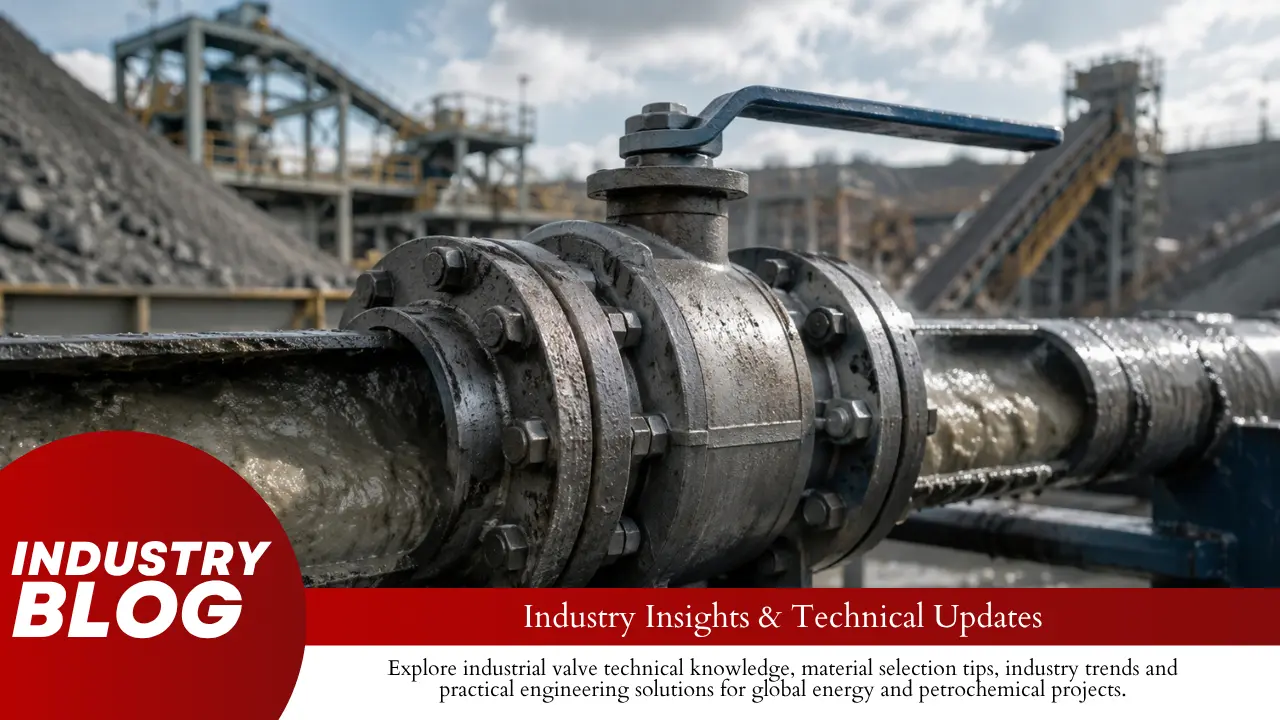
Particle damage: Iron sulfide and other solids can become trapped between the ball and seat. This may cause scratches, internal leakage or a sharp rise in operating torque.
API RP 945, 4th Edition, was published on September 26, 2022. It covers methods used to avoid environmental cracking of carbon steel equipment in amine units, including material, fabrication, inspection and repair controls.[2]
NACE and ISO Limits
“NACE compliant” is not a complete valve specification. The purchase order must state the standard, edition, affected parts and required material condition.
ANSI/NACE MR0103/ISO 17945 is normally used for sour petroleum-refining and related processing environments. AMPP lists ANSI/NACE MR0103/ISO 17945-2023 as the current AMPP publication.[3]
ISO publishes ISO 17945:2015. The standard covers resistance to sulfide stress cracking in sour refining environments and includes valve bodies and parts whose failure could affect pressure containment or valve operation. It does not provide valve design rules and does not cover every form of wet-H₂S cracking, corrosion or other failure.[4]
ANSI/NACE MR0175/ISO 15156 is mainly used for oil and gas production and natural-gas sweetening plants. ISO 15156-1:2020 states that it is not necessarily suitable for refining or downstream equipment, so it should not automatically replace MR0103 in a refinery amine unit.[5]
ISO 15156-3:2020 covers cracking-resistant corrosion-resistant alloys used in H₂S-containing oil and gas production and gas-treatment equipment. It addresses cracking resistance, not general or localized corrosion, and is not automatically a refinery material standard.[6]
A maximum of 22 HRC is often used for certain carbon and low-alloy steel conditions in sour service. It is not a universal limit for every valve body, stem, spring, bolt, weld or alloy. Use the value stated for the exact material, product form and heat-treatment condition in the applicable standard.
AMPP TM0284 provides a test method for evaluating pipeline and pressure-vessel steels for hydrogen-induced cracking. It evaluates HIC only and does not prove resistance to SSC, pitting or general corrosion.[7]
Do not apply a plate HIC test result automatically to a cast or forged valve body. The qualification must match the product form, heat, test position and acceptance criteria required by the project.
Body Materials
| Material | Where It Can Work | Main Limits |
|---|---|---|
| Controlled carbon steel | Many clean or moderately corrosive refinery amine streams | Weld repairs, residual stress, hardness, HIC and local corrosion need control |
| 316L stainless steel | Service where carbon steel amine SCC is a concern and chlorides remain controlled | Hot chlorides can cause pitting, crevice corrosion and chloride SCC |
| Duplex 2205 | Hotter chloride-bearing amine and service with a history of 316L pitting | Heat treatment, weld quality and microstructure must be controlled |
| Super duplex | More severe chloride and pitting conditions | Higher cost and stricter welding and heat-treatment requirements |
| Alloy 625 | Severe sour, chloride-bearing or mixed-contaminant service | Cost, galling, weld-overlay dilution and machining need review |
| Alloy C-276 | Known aggressive mixtures supported by fluid analysis or testing | It should not be used as an automatic answer for unknown contamination |
The side-entry ball valve material guide can be used to compare carbon steel, stainless steel and duplex body options. Amine and sour-service requirements still need to be added to the project specification.
Carbon Steel Controls
Carbon steel can provide reliable service when its manufacturing history is known. The ASTM grade alone is not enough.
Review at least these nine items:
- Base-metal heat treatment
- Pressure-retaining welds
- Casting repair welds
- Attachment and seal welds
- Required PWHT
- Hardness results and test locations
- Nondestructive examination
- Work performed after final heat treatment
- Material and serial-number traceability
PWHT: Postweld heat treatment reduces welding residual stress and tempers hard areas created by welding. It is important where required by API RP 945, the owner’s specification, the service conditions or the weld-repair history. It should not be described as mandatory for every forged valve that contains no relevant pressure-retaining weld.
Weld repairs: A small repair near a seat pocket, flange neck or wall transition may be more serious than a larger repair in a low-stress area. A useful repair package contains at least four records: the repair map, qualified welding procedure, PWHT chart and final NDE report.
Later work: Welding, flame straightening, mechanical straightening and heavy cold work after PWHT can reintroduce stress. Ordinary finish machining should not be treated as equivalent to welding unless it produces major local deformation.
Forged and cast bodies: A forging is not automatically free of risk, and a casting is not automatically unsuitable. The better choice depends on size, pressure class, repairs, heat treatment, inspection and traceability.
316L and Duplex Steel
316L is often used for balls, stems, seat carriers and complete valve bodies because it avoids the common carbon steel form of amine SCC. It also offers better general corrosion resistance than carbon steel.
Do not use 316L as a universal upgrade. It needs closer review when:
- Chlorides collect in the valve cavity
- Wet deposits remain during shutdown
- Cooling water can leak into the process
- The valve operates at elevated temperature
- Crevices cannot be flushed
- Nearby 316L equipment has already suffered pitting
Duplex 2205 offers a larger margin against chloride pitting and chloride SCC than 316L. It is often considered after a plant has found that 316L does not provide enough resistance.
Duplex performance depends on its final microstructure. Incorrect solution heat treatment, excessive welding heat input or poor repair work can produce harmful phases and lower corrosion resistance.
ISO 17781:2017 specifies quality-control tests for the microstructure of duplex stainless steel components and fabrication welds.[8]
For duplex valve bodies and welds, request the heat-treatment record, welding procedure, ferrite or microstructure results, repair history and positive material identification.
Nickel Alloys
Alloy 625 may be used for the ball, stem, seat carrier, weld overlay or complete valve when carbon steel and stainless steel do not provide enough resistance.
A partial upgrade can leave another weak part. An Alloy 625 ball does not protect a carbon steel drain plug, spring, seat carrier or retaining ring.
For Alloy 625 weld overlay, state at least six controls:
- Minimum thickness after final machining
- Maximum iron dilution
- Required number of layers
- Surface and bond examination
- Repair procedure
- PMI scope
A thin coating does not make an unsuitable base material compliant with a sour-service standard. The base metal still carries the load and may be exposed through pores, edges or local damage.
Alloy C-276 may be considered for known mixtures containing severe chlorides, organic acids or degradation products. If the contaminant is unknown, take a fluid sample and identify it before selecting the alloy.
Ball and Stem Materials
The ball must have a smooth, corrosion-resistant surface. Pits, coating pores and scratches can damage the seat and create internal leakage.
Common ball options include:
- Solid 316 or 316L stainless steel
- Solid duplex stainless steel
- Solid nickel alloy
- Electroless nickel-plated carbon steel
- Tungsten-carbide or chromium-carbide coating
A coating specification should state the base material, coating type, minimum thickness, porosity, adhesion, finished surface roughness, edge coverage and repair limits.
The stem must resist torque, packing load and the process fluid. Check its grade, heat treatment, hardness, cold-work condition, surface finish and torsional strength. High strength alone does not make a stem suitable for wet-H₂S service.
Material combinations can also affect performance. Similar nickel-alloy surfaces may gall, and a hard PEEK seat running against a hard-coated ball may need more actuator torque.
The valve torque curve guide explains why break torque, run torque and reseating torque must be checked separately.
Seat Materials
The seat must resist the chemical environment and the mechanical load. A material that survives immersion may still creep, extrude or wear under pressure.
| Seat | Advantages | Limits |
|---|---|---|
| Virgin PTFE | Broad chemical resistance, low friction and tight shutoff | Lower strength, creep, cold flow and particle damage |
| RPTFE | Better creep and deformation resistance than virgin PTFE | The filler changes wear, friction and chemical performance |
| PEEK | Higher strength and better extrusion resistance | Higher torque, less ability to conform around scratches and limited tolerance of severe abrasive solids |
| Metal seat | Better for high temperature, erosion and severe particles | Higher torque and normally more permitted leakage than a soft seat |
“RPTFE” is not a complete specification. Glass-filled, carbon-filled and other reinforced grades can behave differently. State the exact compound or supplier grade.
PEEK can handle higher seat loads and limited particle contamination better than PTFE, but severe iron sulfide, sand or hard debris may still damage it. A qualified metal-seated design should be evaluated when abrasive solids are persistent.
For clean amine within the approved pressure-temperature range, a forged soft-seated floating ball valve can provide tight shutoff in smaller sizes. CARILO lists this range from 1/2 inch to 8 inches depending on pressure class, with Class 150 through Class 2500 options.
For larger pipeline duties, a forged soft-seated trunnion ball valve reduces ball movement and seat load. The listed product range is 2–42 inches and Class 150–2500, but the final allowable range depends on body, seat, seal, temperature and project requirements.
For persistent abrasive solids or service above the soft-seat design range, review a forged metal-seated ball valve. State the leakage class, coating, lapping method and actuator torque in the purchase specification.
O-Rings and Body Gaskets
Do not group every nonmetallic part under the word “seal.” A body O-ring, body-joint gasket, stem packing and ball seat perform different jobs.
EPDM: Some EPDM compounds work in water-based alkaline fluids, but hydrocarbon oil, condensate or compressor lubricant can make them unsuitable.
FKM: FKM handles many hydrocarbons but is not automatically suitable for hot amine. Some compounds can harden, swell or lose elasticity.
HNBR: HNBR offers good mechanical strength, but performance depends on the exact compound, temperature, acid-gas pressure and hydrocarbon content.
FFKM: FFKM provides broad chemical resistance, but different grades can have different amine resistance, compression set and rapid-gas-decompression performance.
Every elastomer should be approved by exact compound, not just by polymer family.
A useful elastomer report should compare at least five properties before and after exposure:
- Volume change
- Hardness change
- Tensile-strength retention
- Elongation retention
- Compression set
The report should also state the amine concentration, H₂S and CO₂ pressure, hydrocarbon content, temperature, exposure time and any cracking or blistering.
ISO 23936-2:2011 gives requirements and procedures for qualifying elastomers used in oil and gas production equipment. It supplements the design code and is not a refinery-specific approval for every amine valve.[9]
Stem Packing
PTFE packing provides low friction and broad chemical resistance. Graphite packing tolerates higher temperature and is often used in fire-safe designs, but it normally creates more stem friction.
The packing must be assessed as part of the complete valve. Stem diameter, surface finish, packing-chamber dimensions, gland load, temperature and cycling all affect leakage.
API 641, 2nd Edition, was published in October 2023 for quarter-turn valve fugitive-emission type testing. API 607, 8th Edition, was published in October 2022 for fire testing of quarter-turn valves and valves fitted with nonmetallic seats.[10]
Changing from PTFE packing to graphite may increase the required actuator output. Use torque data for the packing supplied with the valve.
Body Cavity and Seat Design
Trunnion-mounted ball valves contain a cavity around the ball and seat rings. Liquid, gas and particles can remain there after the main line drains.
The cavity may become more corrosive than the flowing pipeline because:
- Chlorides and heat-stable salts can concentrate
- Iron sulfide settles in low points
- Deposits create crevices
- Trapped liquid expands when heated
- Drain and vent passages can become blocked
- O-rings remain exposed for long periods
Single-piston-effect seats can release excess cavity pressure back into the pipeline. Double-piston-effect seats provide pressure-assisted sealing from both sides but may need a separate cavity-relief device.
Check the seat arrangement, relief direction, drain size, vent size and flushing access. The drain plugs, vent plugs and injection fittings must meet the same material requirements as the other pressure-exposed parts.
Typical Service Choices
Clean lean MDEA: For an illustrative 40 wt% MDEA stream operating at 65°C, with an 85°C upset temperature and a 10 bar maximum differential pressure, a controlled carbon steel body, 316 stainless steel ball and stem, qualified RPTFE seats and compound-specific static seals may be a reasonable starting point. Confirm wet H₂S, chlorides and hydrocarbon carryover before approval.
Hot rich sour amine: For an illustrative 45 wt% MDEA stream operating near 90°C, with a 110°C upset temperature and a 40 bar differential pressure, review MR0103 requirements, carbon steel weld repairs, required PWHT, hardness, HIC requirements, body-cavity deposits and rapid-gas-decompression resistance. Duplex or Alloy 625 trim may be justified by the fluid analysis and plant history.
Hot chloride-contaminated amine: At 85°C, a chloride trend rising from 50 to 300 mg/L deserves investigation even though these figures are not universal material boundaries. 316L may not provide enough resistance when deposits, oxygen and tensile stress are also present. Duplex, super duplex or Alloy 625 can be considered after the contamination source is identified.
Amine containing iron sulfide: Do not upgrade the body alloy only because solids are present. Focus on ball coating, seat material, drain size, flushing access, filtration and valve operating method. A valve operating once per week may accumulate deposits differently from one cycling several times per day.
Incomplete fluid data: Do not select Alloy 625, C-276 or FFKM only to cover unknown conditions. Obtain the chloride level, heat-stable salts, acid-gas pressure, hydrocarbon composition, upset temperature and maximum pressure drop first.
Purchase Checks
The final valve datasheet should identify every important metallic and nonmetallic part. At minimum, trace six major component groups: body, closure, ball, stem, seat carriers and pressure-exposed plugs.
- Body and closure grade
- Ball and stem grade
- Seat and seat-carrier material
- Springs, retaining rings and internal fasteners
- Drain, vent and injection-fitting materials
- Heat-treatment condition
- Hardness limits and test locations
- PWHT and weld-repair requirements
- Exact seat compound
- Exact O-ring compound
- Body-gasket construction
- Stem-packing construction
- Rapid-gas-decompression requirement
- Fire-safe and fugitive-emission requirements
Request the following records where applicable:
- Material certificates and heat numbers
- Heat-treatment and PWHT charts
- Welding procedures and welder qualifications
- Casting repair map
- Hardness report
- PMI report
- NDE report
- Shell and seat test reports
- Functional and torque test results
- Final bill of materials
Factory Inspection
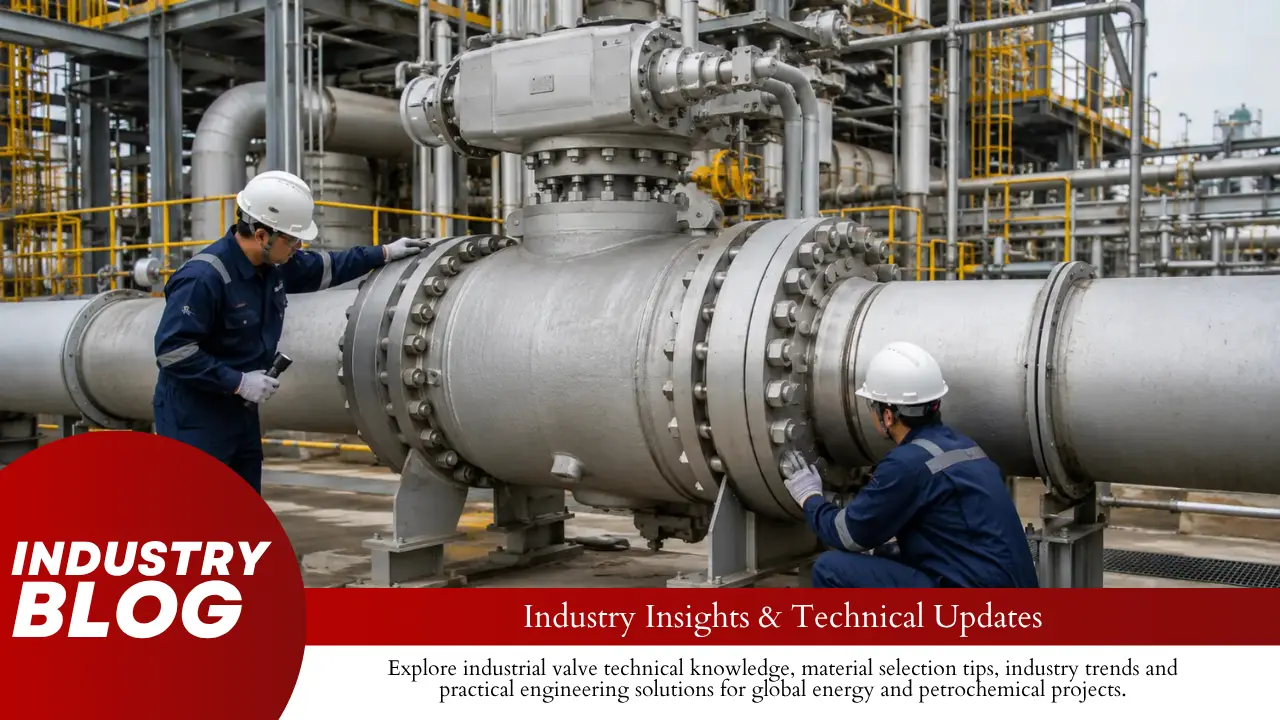
Material traceability: Match the body, closure, ball, stem, seat carriers and pressure-exposed parts to their certificates and heat numbers.
Hardness: Check where the readings were taken. A low value on an external flange does not prove that an internal repair weld has no hard zone.
PMI: Positive material identification checks alloy chemistry. It does not prove correct heat treatment, hardness, duplex microstructure, HIC resistance or PWHT.
NDE: Magnetic-particle testing can find surface and near-surface cracks in ferromagnetic carbon steel. Liquid-penetrant testing can find surface-opening defects in stainless steel and nickel alloys. Ultrasonic or radiographic coverage depends on the valve geometry and expected defect type.
Pressure testing: A shell test checks pressure containment under the test conditions. A seat test checks shutoff. Neither test proves long-term resistance to SCC, corrosion or seal swelling.
Torque testing: Record at least three values: break-to-open torque, running torque and end-to-close or reseating torque. Confirm that the actuator covers all three values at the minimum available air, hydraulic or electrical supply.
The API 6D ball valve testing guide explains shell, seat and functional checks that can be included in the inspection and test plan.
Failure Clues
| Field Problem | Possible Causes |
|---|---|
| Valve does not shut off | Ball pitting, trapped solids, seat creep, damaged PEEK, blocked seat cavity or incorrect actuator travel |
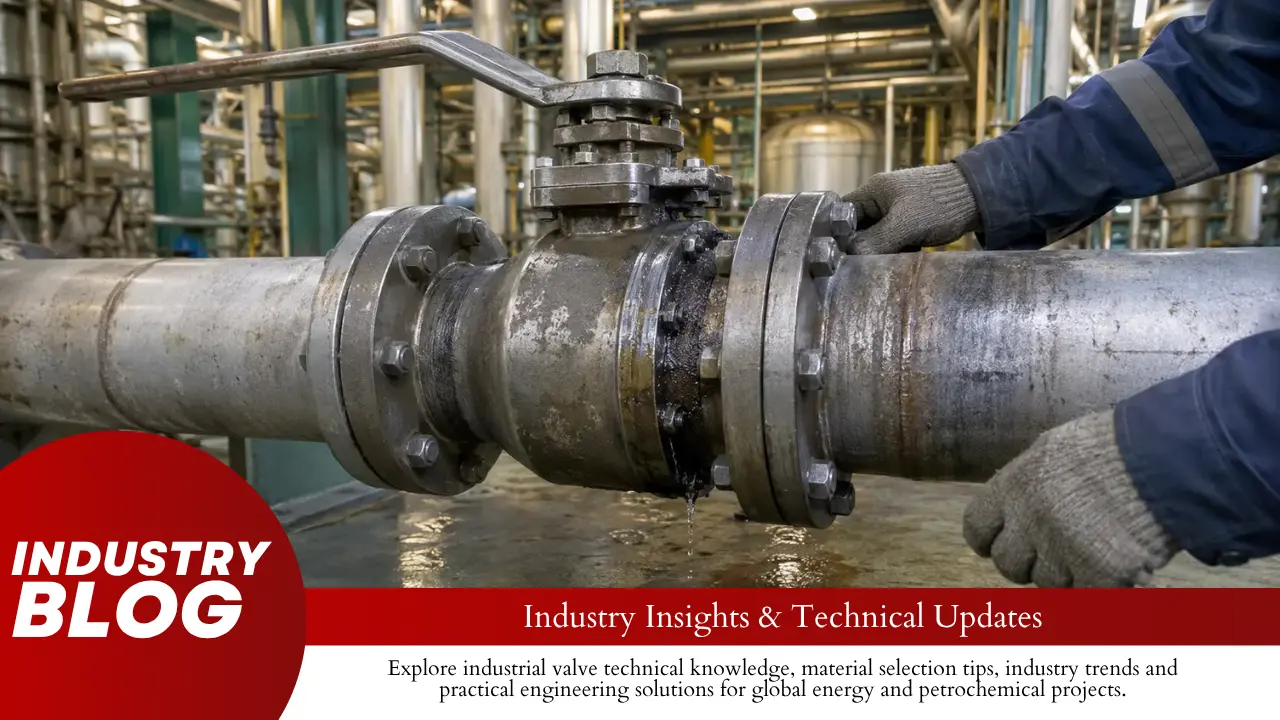
| Stem leakage | Packing damage, stem corrosion, loss of gland load, stem misalignment or thermal cycling |
| Operating torque increases | Elastomer swelling, solids behind the seat, coating damage, high packing friction or abnormal cavity pressure |
| Body or weld cracking | High residual stress, hard heat-affected zone, untreated repair weld, amine SCC or wet-H₂S cracking |
Identify the leak path before replacing parts. The ball valve leakage troubleshooting guide separates stem leakage, body-joint leakage and internal seat leakage.
Conclusion
Carbon steel can work in amine service when weld repairs, PWHT, hardness and corrosion are controlled. The commonly used 22 HRC value applies only to specified carbon and low-alloy steel conditions, not every valve part. Check at least three operating states and trace six major component groups before approval. Use 316L only where hot chlorides and deposits remain acceptable; consider duplex or nickel alloy when plant data shows 316L is inadequate. Specify the exact RPTFE, PEEK, FKM or FFKM grade, then verify material certificates, four weld-repair records, five elastomer properties and three torque values before shipment.