
China Floating Ball Valve Manufacturer | ISO 9001 Factory, Audit Welcome, Strict QC
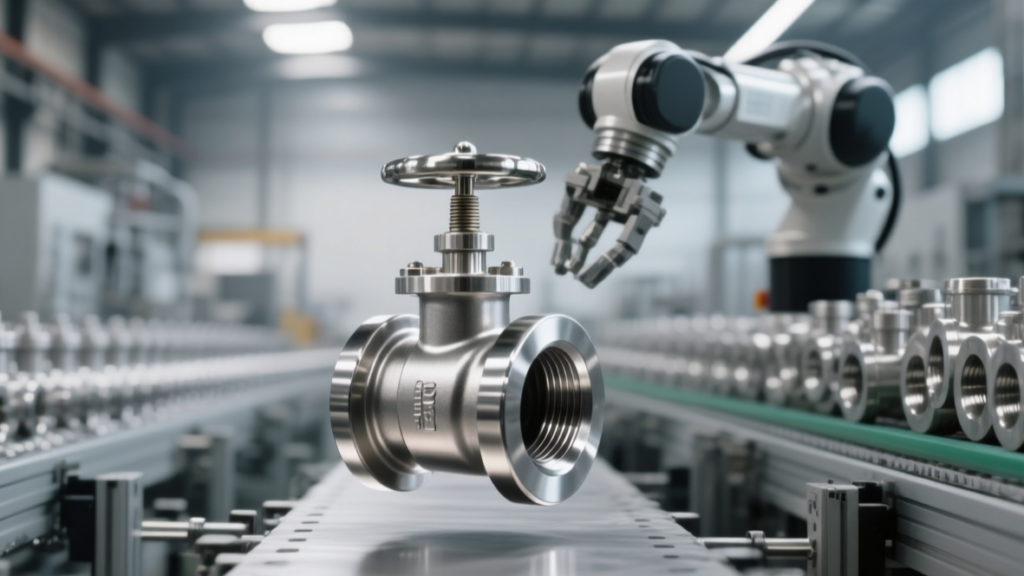
As ISO 9001 certified factory, we focus manufacturing floating ball valves. Specifications DN15-DN300, pressure 150-600LB. Every unit through “2 times strength + 3 times sealing” strict QC, ensure 100% zero leakage. Adopting anti-static structure, operating torque compared to peers reduced 15%, support on-site factory inspection, is your high-end choice. ISO 9001 Factory Raw Material Entry & Traceability ASTM A216 WCB castings entering factory need check heat number steel stamp. Carbon content must control below 0.3%, manganese content maintain around 1.0%. If sulfur, phosphorus impurities exceed 0.035%, castings when under pressure easy produce thermal cracks. Warehouse administrator will compare blank part and wood mold drawing size deviation, ensure processing allowance leave enough 3mm to 5mm. Use handheld XRF spectrometer on 316 stainless steel valve body perform PMI testing. Chromium content need reach 16% to 18%, nickel content between 10% to 14%. Molybdenum content if lower than 2.0%, valve in chlorine ion containing medium will quickly occur pitting corrosion. ASTM A351 CF8M (SS316) ASTM A351 CF8 (SS304) ASTM A105 (Forged carbon steel) ASTM A182 F316L (Low carbon stainless steel) ASTM A351 CN7M (Alloy 20) ASTM A182 F51 (Duplex stainless steel) Casting surface quality refer MSS SP-55 standard check. Naked eye observe whether have sand holes, shrinkage holes or air holes. High pressure working conditions use A105 forgings, need through ultrasonic flaw detection screen internal slag. If find depth exceed wall thickness 5% crack, that batch parts immediately scrap treatment. Inside physical laboratory, tensile testing machine determine WCB material tensile strength. Actual measured data need satisfy 485 MPa above, yield strength not lower than 250 MPa. Elongation index locked at around 22%. For low temperature LCB valves, also need perform -46 degrees Celsius Charpy V-notch impact test, ensure material in severe cold not occur brittle fracture. Hardness tester indenter at valve body flange side take three points test. According to NACE MR0175 requirements, used for acidic environment valves, hardness cannot exceed 22 HRC. Hardness too high will lead material in hydrogen sulfide medium produce stress cracking. All test values recorded on paper record book, by quality inspector sign confirm. PMI spectral composition analysis ASME B16.34 wall thickness actual measurement EN 10204 3.1 certificate audit ASTM E165 liquid penetrant flaw detection ASTM E142 radiographic flaw detection sampling check Rockwell hardness tester indentation re-check Stainless steel ball surface coated one layer 0.5mm thick plastic protective film. Valve seat sealing ring (RPTFE) storage environment temperature controlled below 25 degrees Celsius, prevent Teflon material occur creep deformation affect sealing performance. Material transfer slip follow parts finish whole machining process. Operator when processing F51 duplex steel, tool rotation speed set at 60 to 80 revolutions per minute. Cutting heat if control not well, will destroy metal metallographic structure. Every processing finish 10 balls, must use micrometer re-check one time roundness tolerance, fluctuation cannot exceed 0.02mm. Raw material chemical composition, mechanical performance data summarized into MTC report. This report will with goods provide to user. Through valve body Heat Number, can reverse trace to three years ago certain casting electric furnace power and melting time. Casting shrinkage rate 1.5%-2% Forging compression ratio not less than 4:1 Wall thickness plus minus tolerance 0.1mm Heat treatment holding 2 hours Magnetic particle testing depth 2-3mm Spectral analysis time 10 seconds/point Before entering assembly link, all parts in ultrasonic cleaning tank soak 15 minutes. Oil content must lower than 50mg per square meter. For oxygen service floating ball valves, need use ultraviolet lamp irradiation check, ensure no any fluorescence reaction. Tiny metal chips or oil grime if not cleared, under 2.0MPa pressure will friction catch fire. If carbon equivalent CE value calculation result greater than 0.43, this kind material welding performance will decline. Valve body flange connection place if need repair welding, must according to preheat 150 degrees Celsius process execute. Aiming at large diameter floating ball valves, adopt RT radiographic flaw detection see internal quality. Film blackness value controlled between 2.0 to 4.0. According to API 6D standard, any exceed 3mm continuous slag inclusion all are unqualified items. Detection records storage period set for 5 years, anytime ready respond users’ on-site audit. F316 stem surface hardness through nitriding treatment increase to HV 800 above. High hardness surface can prevent stem at packing box place be graphite packing worn. Actual measured stem straightness deviation need within 0.05mm, otherwise after 1000 times opening closing cycles, sealing packing will because force uneven produce internal leakage. Ball valve spring choose Inconel X-750 material, to maintain long-term rebound force. Every batch springs entering factory must sample 5% perform fatigue life test, pressure cycle times must exceed 10,000 times. If spring at 200 degrees Celsius occur exceed 2% permanent deformation, whole batch order all will be returned to second-tier supplier. Lapping paste grain size choose at 800 mesh to 1200 mesh. After applying red lead powder, ball and valve seat contact line must present continuous closed circular ring, width maintain at 1mm to 2mm between. This kind fineness guaranteed ball valve at 0.1MPa ultra-low pressure also can hang water drops, realize zero leakage. Inconel X-750 spring 800-1200 mesh lapping paste 1mm-2mm sealing line width 10,000 times fatigue test 200 degrees Celsius temperature resistance assessment 0.1MPa low pressure initial sealing After scanning code can see this steel at port unloading date. Through controlling storage exceed 365 days material use priority, avoid metal material because storing too long produce surface oxidation. Detection equipment every 6 months send to third-party metrology institute perform one time accuracy calibration. Pressure gauge error range must limit within plus minus 0.5%. If calibration certificate expired, that station all output all will be pasted yellow pending inspection label. This kind to detection tool harsh requirement, is preventing factory falling into self-deception defense line. Precision Machining Inside workshop horizontal machining center spindle speed set at 800 to 1200 revolutions per minute, processing floating ball valve body. Cutting fluid flow every minute maintain at 20 liters, ensure tool tip temperature not exceed 600 degrees Celsius. Spindle runout error must control within 0.005mm, prevent flange sealing surface appear
Reliable Industrial Valve Supplier | API 6D/CE Approval, Pre-shipment Inspection, Warranty
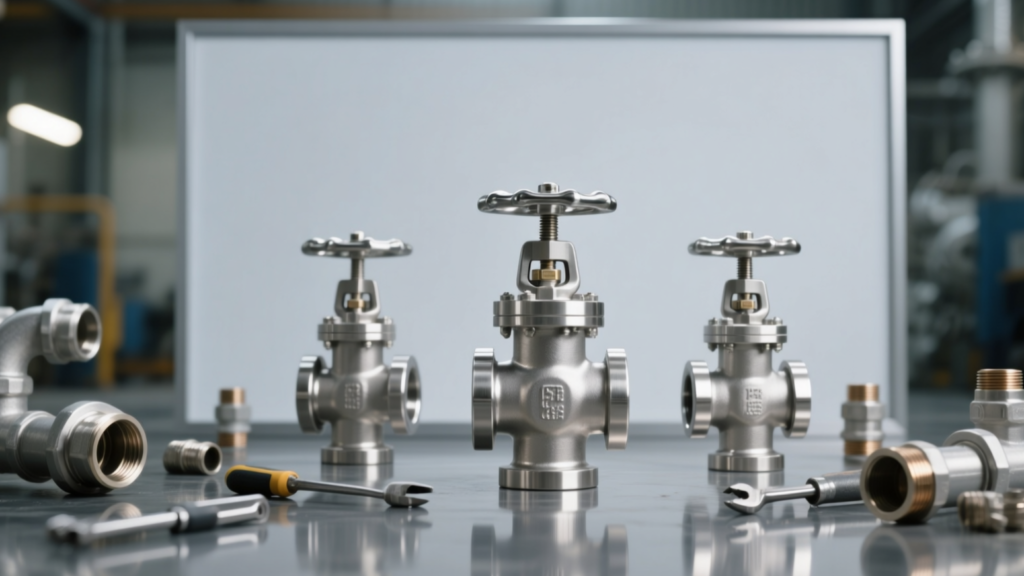
As a reliable industrial valve supplier, we provide API 6D and CE certified valve products, ensuring compliance with international standards. All valves before shipment undergo strict pre-assembly inspection and testing, to ensure their performance and safety. We also provide as long as over one year warranty period, ensuring customers’ use has no worries. Our supply chain management is efficient, ensuring on-time delivery, and providing after-sales technical support services. API 6D/CE Approval API 6D When processing media containing H2S or CO2, the carbon equivalent (CE) of forgings such as ASTM A350 LF2 must be limited to below 0.43. Purchasing technical agreements need to mark NACE MR0175/ISO 15156 specifications, by this avoiding sulfide stress cracking risk under sour service conditions. Material qualification is only the basis, the workshop pressure test bench’s real-time data directly decides whether the valve can be delivered. Shell hydrostatic test pressure is set at 1.5 times the cold working pressure (CWP) level. For ball valves of NPS 24 and above caliber, the pressure holding time is not less than 15 minutes, while for the NPS 6 to NPS 18 range, it needs to be maintained for 5 minutes. If the pressure gauge recorded drop exceeds 5% of the range, the whole batch of castings needs to be returned for inspection. At this time, should refer to ASME B16.34 Appendix-I to execute Radiographic Testing (RT), strictly checking internal pores and sand inclusion defect levels. The certificate must be attached with an RT report, proving defects do not exceed Level 2 rating. After the shell passes, the reliability of the sealing pair is verified by double testing. High pressure water seal test pressure is 1.1 times CWP, and low pressure air tightness test injects 80 psig (0.55 MPa) compressed air. Long-distance pipelines often require DIB-1 (Double Isolation and Bleed) structure, ensuring the valve seat reaches ISO 5208 Class A zero leakage index when both ends are simultaneously pressurized. Pressure relief mechanism: When valve cavity pressure reaches 1.33 times pipeline pressure, the valve seat needs to achieve automatic pop-up pressure relief. Anti-blowout design: Stem adds T-type step, to cope with stem blowout risk under Class 1500 rating. Sealing ring selection: Dynamic sealing parts adopt high fluorine rubber passed NORSOK M-710 testing, to prevent explosive decompression from happening. Resistance control: Between stem and ball embed spring steel ball, maintaining resistance value below 10 ohms, leading away static electricity. Overlay thickness: At valve seat and seal contact surface, the Inconel 625 alloy overlay layer’s net thickness after processing must reach 3.0mm. When purchasing NPS 12 Class 600 trunnion ball valves, need to actually measure the Breakaway Torque under pressurized state. If the torque value exceeds 1500 N·m, it will directly pull up the electric actuator selection cost. CNC machines need to compress ball roundness error to within 0.015mm. Sealing surface roughness needs to reach Ra 0.4 standard, cooperating with PEEK valve seat, to maintain sealing integrity after tens of millions of switching times under Class 2500 high pressure. If the refining and chemical site encounters a fire, the metal-to-metal secondary seal is the last line of defense to block medium flow. API 607 fire test requires after the valve is burned, the external leakage upper limit must not exceed 25 ml/min/NPS. Marine platform projects need to adopt a three-layer epoxy zinc-rich paint system, total Dry Film Thickness (DFT) needs to be in the 250 to 300 microns range. Coating adhesion needs to pass the cross-cut test, ensuring it will not fall off in a large area in salt spray environment. Heat number verification: Valve body steel stamp must completely correspond with the heat batch number of EN10204 3.1 Material Test Report (MTR). Instrument calibration: Pressure gauges used for testing need to have range in 1.5 times to 4 times the test pressure, and be attached with a calibration sticker within 6 months. Size re-measurement: Use inside micrometer to measure valve bore, tolerance needs to comply with zero negative deviation specified in API 6D appendix. Weld seam inspection: All repair welding areas of the pressure boundary need 100% execution of Magnetic Particle (MT) or Penetrant (PT) testing. During Factory Acceptance Test (FAT), the resident supervisor needs to check every H point (Hold point) in the Inspection and Test Plan (ITP). From raw material PMI spectral analysis to final bore testing, every step’s data needs to be entered into the quality file. API 6D nameplate is not just an aluminum piece, it represents the valve passed the full temperature range pressure assessment from -29 degrees to 121 degrees. Purchasing managers need to check if the factory’s API 6D certificate covers the full size range from NPS 2 to NPS 48. CE / PED Certification Valve body material elongation must be above 14%, in the lowest design temperature environment, Charpy V-notch impact energy test data needs to reach 27J. These mechanical indicators are directly recorded into EN 10204 3.1 or 3.2 material certificates, and one-to-one correspond with the Heat Number on the valve body. Pipeline transport fluids are divided into Group 1 (dangerous class) and Group 2 (non-dangerous class). When the product of pressure and caliber (PS times DN) reaches specific values, the valve needs according to Category I, II, III or IV to perform conformity assessment. Notified Body will check every four-digit code, such as CE 0035 or CE 0036, representing the audit originates from international agencies like TÜV. Verification Link PED 2014/68/EU Execution Details Actual Measured Data Standard Hydrostatic Strength Test Pressure = 1.43 x Maximum Allowable Pressure Pressure fluctuation range controlled within 1% Impact Test Charpy V-notch Impact Energy Test Sub-zero temperature environment index > 27 Joules Weld Inspection ISO 17636 Radiographic Testing (RT) Defect level executes ISO 5817 Class B Wall Thickness Check EN 12516 Calculation Model Verification Ultrasonic thickness measurement error < 0.1 mm Material Traceability EN 10204 3.1/3.2 Certificate Comparison Chemical composition Nickel, Chromium error < 0.5% Pressure-bearing weld construction personnel must hold ISO 9606-1 welding qualification certificates. Welding Procedure Qualification Record (WPQR) recorded 5 dimensions of parameter changes
Wholesale API 6D Ball Valves | Cast & Forged Steel, Tech Docs, Global Shipping
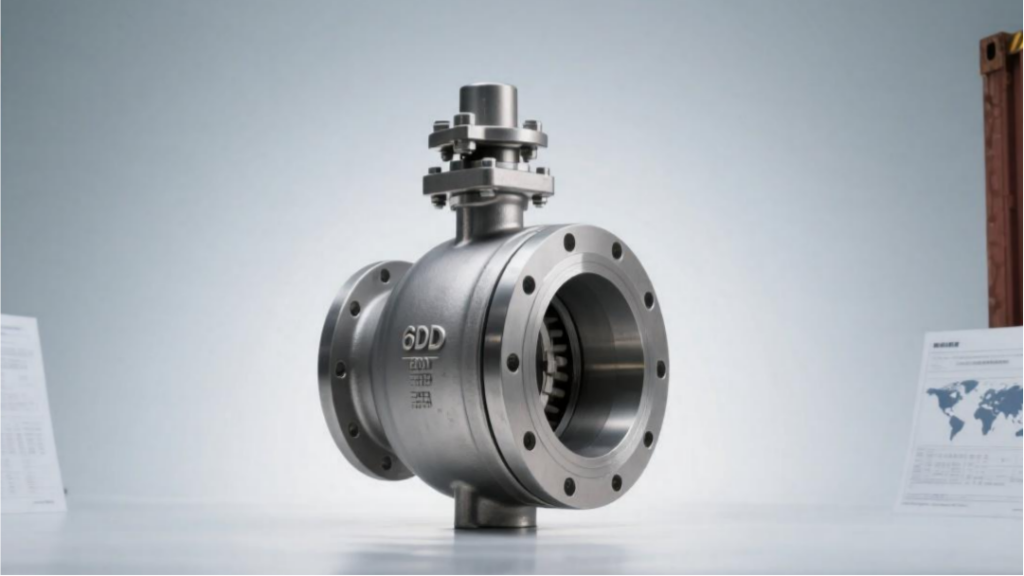
Our wholesale 6D ball valves include cast steel and forged steel materials, widely used in petroleum, chemical, energy and other industries. All ball valves comply with international standards and provide technical document support. We provide global delivery services, ensuring shipping within the fastest 72 hours. Our 6D ball valves adopt advanced sealing technology, with pressure resistance capacity up to 15000 PSI, suitable for high temperature and high pressure environments. Cast & Forged Steel Cast Steel ASME B16.34 calibrates the minimum wall thickness line for castings. For NPS 24 Class 600 WCB material, the wall thickness is made above 36.5 mm. The foundry wood mold lofting leaves a 1.8% shrinkage allowance, and the temperature of the molten steel poured into the sand box is controlled at 1580°C. Single piece pouring takes 8 minutes. The MSS SP-55 standard governs this process. Surface sand holes with a depth exceeding 1.5 mm are judged as scrap, and the area of grinding and repair does not exceed 10% of the total. The blanks after sand cleaning are pushed into the heat treatment furnace in batches. Natural gas burners pull up the furnace temperature. The normalizing temperature of ASTM A216 WCB is set between 870°C and 900°C. The holding time is calculated by stopwatch at 1 hour per inch of wall thickness. Cool naturally, the yield strength reaches above 36,000 psi, and the tensile strength stabilizes in the range of 70,000 to 95,000 psi. The bottom line for elongation after fracture is 22%. Steelmaking batching presses the carbon content below 0.30% and the manganese content to 1.00%. Calculating by CE = C + Mn/6, the carbon equivalent is pressed within 0.43, so the construction team on-site welding pipes saves the 200°C fire preheating step. The interpass temperature is controlled within 250°C. ASTM A352 LCC material is mixed with 0.50% nickel according to specifications. Placed at minus 46°C for Charpy V-notch impact, three specimens are struck, the average absorbed energy exceeds 20 Joules, and the single specimen index is not lower than 14 Joules. The data for transverse specimens is 3 Joules lower than that for longitudinal specimens. ASME B16.34 Appendix VIII requires X-ray fluoroscopy for high-pressure large parts. Comparing negatives according to ASTM E446, Class A gas pores tolerate at most Level 2, and Class B sand inclusion is limited to Level 2. Class C shrinkage cavity is treated as scrap if it reaches Level 1. The negative density value is required to be between 1.8 and 4.0. Defect depth exceeding 20% of the wall thickness or depth exceeding 25.4 mm is defined as a major repair. Grind to the bottom and fill with E7018 welding rods, then push into the furnace for 620°C post-weld heat treatment. The holding duration is calculated at 1.5 hours per inch of thickness. Wood mold CNC machining: 2-3 weeks Computer simulation of pouring: 1 week Destructive testing negatives: 2 weeks Batch normalizing and annealing: 1-2 weeks Rough turning, thickness measurement, and flaw detection: 1 week Weighing the NPS 36 Class 300 cast steel valve body blank, the weight is 4.2 tons. Based on the current price of 14 yuan per kilogram, the cost for a single blank is 58,000 yuan. If the same diameter is changed to a forging, the weight rises to 7.8 tons; buying only the steel material saves 45% of the expenditure. For an 800-kilometer 48-inch main line, 45 shutdown ball valves are arranged along the way. Buying the API 6D all-welded model, the price for a single unit does not exceed 1.2 million. The section calculates to save 30 million in material opening costs. Funds settlement follows a 30-60-10 letter of credit payment. For ordinary working conditions, the inner cavity is sprayed with 250 microns thick electroless nickel plating. If the pipeline carries high-sulfur gas, tungsten carbide supersonic spraying is applied to the contact area of the ball and valve seat, the thickness reaches 0.15 mm, and the hardness exceeds HRC 70. The bonding strength breaks through 70 MPa. The inner wall roughness of the casting stays in the range of Ra 6.3 to 12.5 microns. Below 3.2 microns, the paint film cannot hang. Performing the ASTM D4541 pull-off test, the adhesion cannot pass the 14 MPa bottom line. Sandblasting uses G40 specification steel grit. The API 598 specification sets the water test requirement at 1.5 times the design pressure. For Class 600 parts, the interior is filled with 2225 psi high-pressure water. Hold the pressure for 30 minutes, no water droplets are allowed on the back of the flange and the shell surface. Add 10 ppm of rust inhibitor to the test water. ASME B16.5 fixes the flange dimensions. An NPS 12 Class 600 flange is fitted with 20 pieces of 1-1/4 inch high-strength large bolts, material using ASTM A193 B7. Workers use a torque wrench to tighten to 1250 N·m, and the gasket is pressed flat. The gasket uses a spiral wound gasket with 316L inner and outer rings. If the physical object passes the pressure resistance test, sampling before dispatch is executed according to the contract ratio. Spectrometer for material composition: 100% coverage per heat Corner magnetic particle inspection: 20% ratio sampling Low-pressure air tightness test: 100% unit-by-unit air blowing Thickness measurement at key parts: 10% by batch quantity Paint film thickness gauge measuring points: 5% random reading The CMTR report submitted by the factory is printed with 16 parameters. During the factory testing phase, data for carbon, silicon, and manganese are checked one by one. If sulfur and phosphorus content exceeds 0.04%, the steel becomes brittle in cold weather. The report bears the stamp of the material person in charge. Flange contact surfaces are coated with Grade 4 anti-rust oil required by MIL-PRF-16173. Both ends are sealed with 10 mm thick plywood blind flanges. The beams under the wooden box bear over 5 tons, and 2 kg silica gel moisture-proof bags are stuffed inside. ISPM 15 fumigation marks are hit on the outside. Forged Steel ASTM A105 carbon steel cylinders are
Carbon Steel vs Stainless Floating Valve | WCB vs CF8M, Media Suitability, Cost
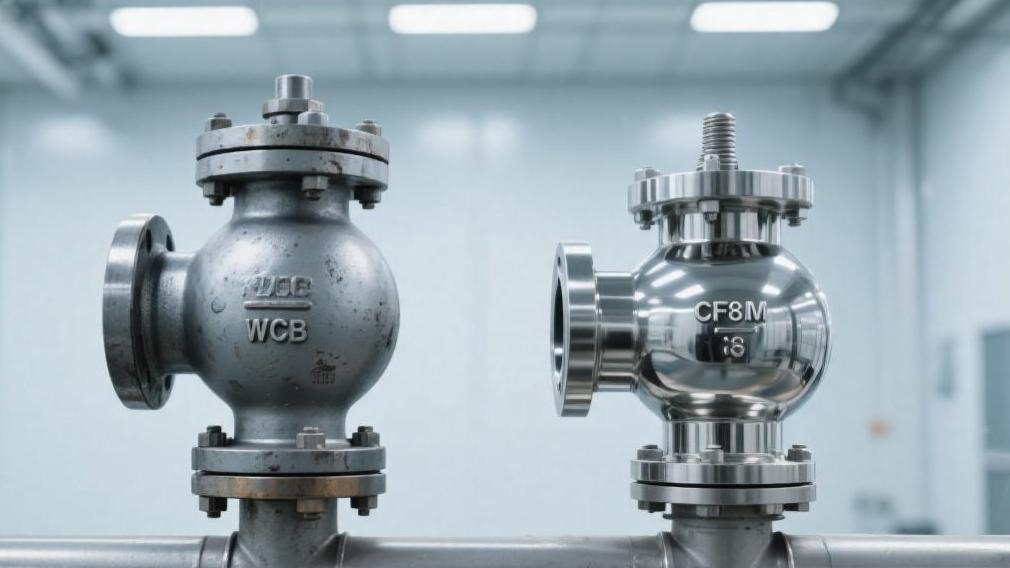
Carbon steel (WCB) floating ball valve high strength, suitable for ≤425℃, non-strong corrosive media (such as water, steam, oil), cost about 20–40% lower than stainless steel. Stainless steel (CF8M, ≈316) contains 2–3% molybdenum, resistant to Cl⁻ corrosion, suitable for seawater, acid and alkali, temperature generally ≤200℃. When selecting: look at media corrosivity (pH, Cl⁻ppm), temperature and pressure rating (Class 150–600), then combine with budget; corrosive environments prioritize CF8M, common working conditions select WCB is more economical. WCB vs CF8M Material Composition & Identity Identification WCB steel castings under ASTM A216 standard mainly consist of iron element. The mass fraction of carbon element is strictly controlled below 0.30%. Manganese element proportion upper limit is set at 1.00%. Silicon content needs to be controlled within 0.60%. Phosphorus and sulfur, these two harmful impurities, are limited below 0.04% and 0.045% respectively. WCB internal residual elements such as chromium, nickel, copper, molybdenum, vanadium etc. sum total strictly prohibited from exceeding 1.00%. Metallographic structure under microscope appears as uniform mixed state of pearlite and ferrite. Grain size grade usually required to reach grade 5 or higher standard. This microscopic arrangement ensures material structural stability within temperature zone of -29 degrees Celsius to 425 degrees Celsius. CF8M castings in ASTM A351 standard introduce large amounts of alloying elements. Chromium content stable in 18.0% to 21.0% range. Nickel content distributed between 9.0% to 12.0%. 2.0% to 3.0% molybdenum element is the physical mark distinguishing it from ordinary stainless steel. Its pitting resistance equivalent PREN value calculated through formula Cr + 3.3Mo + 16N, results usually fall in 23.1 to 28.5 interval. CF8M carbon content upper limit set at 0.08%. In actual smelting, it is often pressed down to about 0.04% through AOD refining furnace to improve plasticity. Silicon and manganese upper limits are 1.50% respectively. Its organizational matrix is austenite, and retains 5% to 20% ferrite phase. Chemical elements and composition indicators WCB cast steel (UNS J03002) CF8M stainless steel (UNS J92900) Carbon (C) max proportion 0.30% 0.08% Chromium (Cr) proportion Below 0.50% (residual) 18.0% – 21.0% Nickel (Ni) proportion Below 0.50% (residual) 9.0% – 12.0% Molybdenum (Mo) proportion Below 0.20% (residual) 2.0% – 3.0% Manganese (Mn) max proportion 1.00% 1.50% Silicon (Si) max proportion 0.60% 1.50% Phosphorus (P) max proportion 0.04% 0.04% Sulfur (S) max proportion 0.045% 0.04% Measured data usually above 250 MPa. CF8M yield strength then floats near 205 MPa. But in elongation after fracture, CF8M can reach above 30%. WCB elongation standard is only 22%. WCB has extremely high magnetic permeability, powerful magnets will firmly adsorb. CF8M due to austenite structure dominating, magnetism is extremely weak or even non-magnetic. But after casting cooling, due to existence of ferrite, when detecting with high sensitivity magnetometer there will still be slight reaction. WCB coefficient is about 11.7 x 10^-6/C. CF8M then as high as 16.0 x 10^-6/C. In 400 degrees Celsius high temperature steam condition, every meter of CF8M valve set thermal elongation amount is about 1.72 mm more than WCB. Physical and mechanical parameter comparison WCB (carbon steel) CF8M (316 stainless steel) Density (kg/m3) 7850 7980 Tensile strength (MPa) Above 485 Above 485 Brinell hardness (HB) Below 209 Below 185 Thermal conductivity (W/m·K) 48 15 Specific heat capacity (kJ/kg·K) 0.473 0.502 Low temperature toughness test (J) -29 degrees Celsius qualified -196 degrees Celsius qualified WCB thermal conductivity performance is almost 3 times CF8M. When fluid temperature fluctuates violently, WCB valve body internal heat conduction is more rapid, internal and external temperature difference is smaller. CF8M heat conduction slower, temperature rise process easy to produce thermal fatigue at thicker wall thickness. For this reason, CF8M wall thickness tolerance design usually stricter than WCB, needs to be controlled between +10% to -0%. WCB surface roughness usually around Ra 25. CF8M after acid pickling and passivation can reach Ra 12.5. CF8M surface generated chromium-rich passivation film thickness usually in 1 to 5 nanometers. WCB valve body usually cast with WCB words, side will stamp 4-digit heat number steel stamp. CF8M valve body then cast with CF8M or 316 identification. MTR material certificate must include accurate percentages of chromium, nickel, molybdenum and nitrogen elements. For valves used in petroleum field, if environment contains hydrogen sulfide, WCB hardness needs to be reduced to below 22 HRC according to NACE MR0175 standard. One ton CF8M melting cost is usually 4 to 5 times WCB. Nickel and molybdenum prices on London Metal Exchange (LME) directly affect valve price. Reflected to DN50 caliber floating ball valve, CF8M version selling price is usually 250% to 350% higher than WCB. Temperature & Pressure ASME B16.34 standard classifies WCB into 1.1 group material, its room temperature pressure rating datum point set at 38 degrees Celsius. At this temperature, Class 150 level WCB valve body allows maximum working pressure of 1.96 MPa. When pipeline internal medium temperature rises to 200 degrees Celsius, rated pressure will decay to 1.38 MPa. CF8M is classified as 2.2 group material, at the same 38 degrees Celsius, its highest pressure bearing capacity is 1.90 MPa. As temperature increases to 200 degrees Celsius, affected by metal softening effect, pressure limit drops to 1.14 MPa. Comparing data shows, stainless steel tensile strength performance in room temperature zone is slightly inferior to carbon steel. In industrial steam systems, WCB application upper limit is dead-ended at 425 degrees Celsius. Long term in this temperature zone above, carbon element inside steel will undergo graphitization deposition phenomenon. This microstructural evolution leads to loose metal crystal structure, weakening of valve body wall thickness stress section, extremely easy to induce sudden shell burst risk. CF8M thermal stability performance is excellent, material itself can withstand 815 degrees Celsius high temperature without organizational degradation. But in actual assembly of floating ball valves, temperature-pressure curve often restricted by high polymer sealing valve seat. PTFE valve seat when exceeding 180 degrees Celsius will produce plastic flow, leading to valve closure not tight, internal leakage rate skyrocketing instantly. Class 150 WCB at 300 degrees Celsius pressure bearing 1.02 MPa Class 150 CF8M at
Fire Safe Floating Ball Valve | API 607, Anti-static, Petrochemical Pipelines
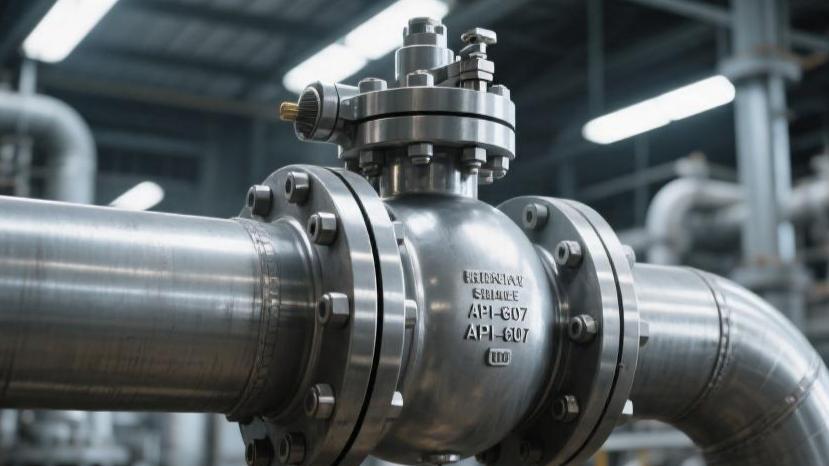
Fire-safe floating ball valve complies with API 607 standard, possesses fire-safe structure design, and after the sealing material is burned out, it can still maintain a leakage rate of ≤0.1% through the metal seal. The valve body is equipped with an anti-static device (resistance ≤10Ω) to avoid static electricity accumulation triggering an explosion. Suitable for petrochemical pipelines (pressure 1.6–6.4MPa, temperature -29~200℃). Should regularly check sealing surface wear, every 6 months perform one opening and closing test, and ensure the grounding device is intact. API 607 Sealing Compensation Principle In an environment of 760 degrees Celsius to 980 degrees Celsius, the PTFE valve seat of an ordinary floating ball valve will begin to soften at around 327 degrees Celsius, and subsequently lose support force completely within a short 3 to 5 minutes. The metal sphere, losing constraint, driven by the pipeline internal pressure, occurs a physical displacement of 0.5 mm to 2 mm along the medium flow direction. The spherical surface of the sphere after displacement will fit against the metal lip reserved in the valve body cavity. The mechanical processing precision of this metal lip is usually strictly limited between Ra 0.4 and Ra 0.8. When the plastic valve seat is burned out completely, the dry friction contact surface formed by the sphere and the metal lip becomes the boundary blocking the oil spray. The design angle of this sealing surface is mostly a 30-degree to 45-degree bevel. Utilizing the pressing force of the medium pressure multiplied by the pressure area, the sphere is tightly pressed onto the metal base. In the API 607 fire test, this metal-to-metal contact must lower the leakage per inch of diameter per minute to below 400 milliliters. Valve seat material chooses RPTFE (reinforced polytetrafluoroethylene), its deformation resistance is more than 15% higher than ordinary PTFE. The metal secondary sealing lip undergoes hardening treatment, with hardness maintained between HRC 15 and 20, lower than the sphere’s HRC 30 hardness. Sphere roundness deviation is controlled within 0.01 mm, reducing small gaps for metal surface fit under fire conditions. The compensation spring behind the valve seat still needs to retain more than 50% of the elastic modulus at high temperatures to support the sphere in completing the initial displacement. The seal at the valve stem part is undertaken by 98% purity flexible graphite packing. The temperature limit of this material is as high as 3000 degrees Celsius. In the early stage of a fire, the O-ring located at the bottom of the packing will carbonize and fail at 200 degrees Celsius. At this time, the graphite packing, under the load of the gland bolts, fills the fit gap of about 0.1 mm between the valve stem and the packing box. To prevent bolt thermal relaxation at high temperature leading to packing gland loosening, the valve design adopts live-load disc springs. These spring components can still apply a constant radial sealing pressure to the graphite packing when the bolt elongation reaches 0.2%. The experimental limit indicator for external leakage is strictly controlled below 100 milliliters per inch per minute. The connection between the valve body and valve bonnet adopts a gasket of 316 stainless steel belt and flexible graphite alternately wound. The initial thickness of 4.5 mm gasket is compressed to about 3.3 mm during installation. In a flame of 900 degrees Celsius, the graphite material undergoes volume expansion, filling micro-level grooves generated by metal thermal deformation, blocking the diffusion of the medium to the external environment. The valve stem anti-static device utilizes a 2 mm diameter stainless steel spring to ensure the resistance between the sphere, valve stem, and valve body is below 10 ohms. Valve body pressure-bearing wall thickness is additionally increased by 1 mm to 3 mm based on the ASME B16.34 standard to resist oxidative corrosion of the metal by flames. The valve stem neck is lengthened by more than 50 mm to extend the heat conduction path and protect manual or automatic actuators from being melted by high temperatures. The strength degradation curve of selected A105 carbon steel or F316 stainless steel at 800 degrees Celsius needs to be verified by third-party mechanical data. During the fire burn process as long as 30 minutes, the internal pressure of the valve needs to be constant at 75% of the rated pressure. For Class 150 pressure pipelines, while the valve withstands nearly a thousand degrees of high temperature, it also has to withstand a fluid impact of about 1.5 MPa. The forced cold water spray condition after the experiment most tests the metal toughness. The valve body must drop from nearly a thousand degrees to below 100 degrees Celsius within 5 minutes. Enormous thermal stress will cause inferior metals to produce micro-cracks, while certified valves need to undergo a 0.2 MPa low-pressure nitrogen re-inspection after cooling. The re-inspection requires that the internal leakage rate does not exceed 10% of the original standard value, thereby verifying the structural integrity of the metal secondary seal after extreme thermal shock. At the bolt connection of the valve middle flange, the bolt material selection grade is ASTM A193 B7 or B8. A 30% tensile strength margin is reserved in design calculations to cope with the creep phenomenon occurring in bolts above 500 degrees Celsius. Under Class 150 pressure level, total leakage during the burning period for a 2-inch diameter valve is not permitted to exceed 800 milliliters. Valve seat design includes pressure relief function, preventing medium accumulated in the valve cavity from generating abnormal high-pressure burst when heated and vaporized. Contact width between metal lip and sphere is usually designed at 1 mm to 3 mm to obtain higher contact specific pressure per unit area. Test Data Density After the API 607 test bench starts the burner, flame sensors must real-time monitor the thermal field intensity of 760 degrees Celsius to 980 degrees Celsius within a close distance of 25 mm. K-type thermocouples used in the test process are distributed at the front, middle, and rear of the
Floating vs Trunnion Ball Valve | API 6D, Pressure Limits, Selection Guide
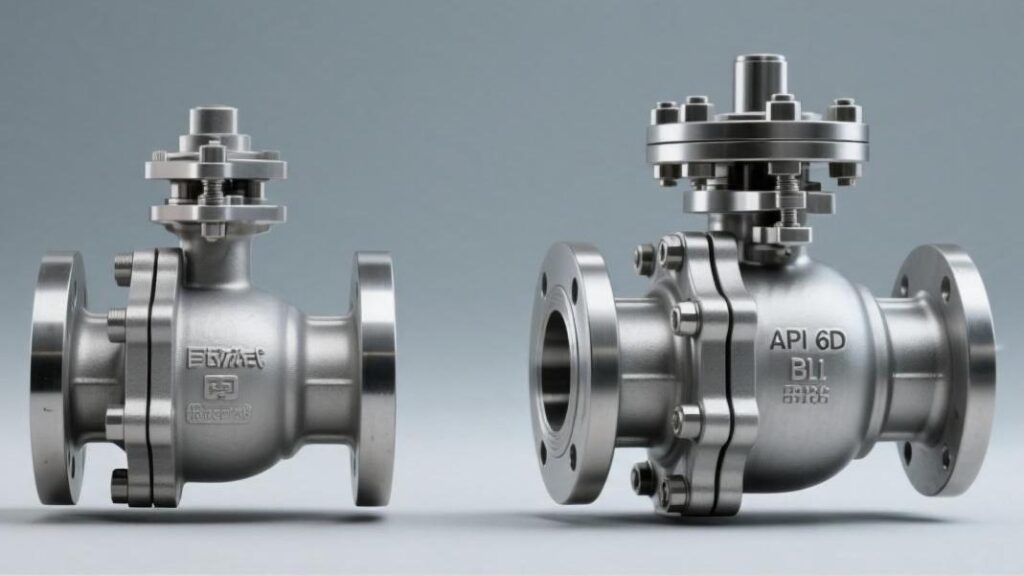
Floating ball valves are suitable for medium and low pressure, relying on medium pressure to press tightly for sealing, structure is simple, cost is low; but torque is large at large diameters. Trunnion ball valves are supported by upper and lower bearings, suitable for high pressure and large diameters, operating torque is reduced by 30%~50%. When selecting models, comprehensive judgment is needed based on nominal diameter, working pressure, medium type, and driving method. API 6D Floating vs Trunnion When there is 5 MPa fluid medium in the pipeline, the switching resistance of a 4-inch floating ball valve will break through 250 Nm. Master workers holding 50 cm ordinary wrenches simply cannot push it, and can only find a 1.2-meter long extended steel pipe to sleeve over the handle and press down hard. The torque issued by an ordinary worker’s bare hands is generally between 40 to 60 Nm, and 250 Nm of resistance is equivalent to requiring four or five strong men to exert force simultaneously. Accompanied by a piercing metal friction sound, the PTFE sealing ring is bearing 8000 Newtons of unidirectional squeezing force. This unidirectional force causes the plastic material to undergo a permanent deformation of 0.2 to 0.5 mm. For a trunnion ball valve of the same size and pressure, the resistance is only 85 Nm, and one can easily rotate it 90 degrees by holding a 40 cm handle with one hand. Inside the trunnion ball valve, there are two 35 mm thick stainless steel large shafts, fixing the ball body firmly in the exact center. No matter how fast the water flows in the pipeline, the ball body remains motionless. The floating ball valve is exactly the opposite, the water flow will push the ball body forward, pressing it deadly on the downstream sealing ring. The downstream sealing ring of the floating ball valve gets hit every day, measured with a caliper, the thickness was worn away by 1.2 mm. The trunnion ball valve relies on the spring at the back of the seal seat to push toward the middle, wear on both sides is less than 0.1 mm, and the force is very even. Wear performance Vernier caliper reading Contact surface pressure situation Leakage test after one year Floating ball valve Thinning more than 1.2 mm Extremely uneven, exceeding material limit Hovering at the edge of Grade C leakage Trunnion ball valve Almost no damage, less than 0.1 mm Spring maintains 4 MPa constant pressure Maintains Grade A standard of 0 bubbles After the floating ball valve is worn off-center, a 0.05 mm gap will flash out, and high-pressure gas carrying silt is like a knife cutting outward along the gap. The trunnion ball valve is equipped with 12 to 24 special alloy springs at the back, as long as the wear does not exceed 3 mm, the 150 Newton thrust of each spring can still plug the gap tight. To repair a 4-inch floating ball valve, a worker must unscrew 8 large nuts and split the 25 kg iron lump into two halves, the entire pipeline must stop work for 2 hours. Changing to a 10-inch trunnion ball valve, the worker does not need to disassemble the pipeline joints, opening the top cover and spending 45 minutes can lift out the internal parts for replacement. Going to an oil pipeline construction site in the Xinjiang Gobi Desert, it is 45 degrees Celsius during the day and drops suddenly to minus 15 degrees Celsius at night. The thermal expansion and contraction amplitude of the PTFE material used for sealing is more than ten times larger than that of steel. After a toss of heat and cold, the plastic ring in the floating ball valve contracted by 0.8 mm, and 0.2 MPa crude oil starts to seep out along the narrowed gap. Even if the plastic ring cold-contracts by 0.8 mm, the spring will instantly push forward the same distance, maintaining the 4 MPa squeezing force. Going to check the line at midnight in winter, no trace of oil gas volatilization leakage point can be measured with instruments. Sometimes liquid natural gas is stored in the pipeline, once the temperature rises to 30 degrees Celsius, the liquid turns into gas, and the volume expands instantly. The inside of the valve body is in a sealed state, and the pressure will directly double, rushing to more than 2 times the design limit. The trunnion ball valve has an auxiliary pressure relief function, when the pressure exceeds the spring endurance by 33%, the excess gas will automatically push open the valve seat and flow back to the main pipeline. The floating ball valve completely lacks one exhaust path, and the 25 MPa gas is all suffocated in the belly. The cast iron valve stem, under 8000 Newtons of outward thrust, may at any time shoot out like a cannonball and injure people. Long-distance main pipelines explicitly stipulate that floating ball valves are absolutely not allowed to be installed in places with gasification risks. An 8-inch trunnion ball valve weighs up to 320 kg, with 85 parts of extremely high processing precision stuffed inside. A floating ball valve of the same thickness is only 110 kg, with only 12 simple basic components inside, appearing very shabby in comparison. Internal configuration list 8-inch equipment total weight Bearing support system Accidental scratch emergency channel Floating ball valve 110 kg None No remedial port whatsoever Trunnion ball valve 320 kg Two self-lubricating bearings support the ball body High-pressure grease injection hole to fill gaps The extra 210 kg of iron in the trunnion ball valve was exchanged for a set of grease injection holes for emergency use. When the detector finds trace methane escaping, the worker carries a grease gun to inject 70 MPa sealing grease. In less than half a second, the grease fills the 0.02 mm scratch between the metal and plastic tightly. The floating ball valve’s smooth shell has no grease injection hole, and can only stare
How Floating Ball Valves Work | Sealing Mechanism, Flow Control, Applications
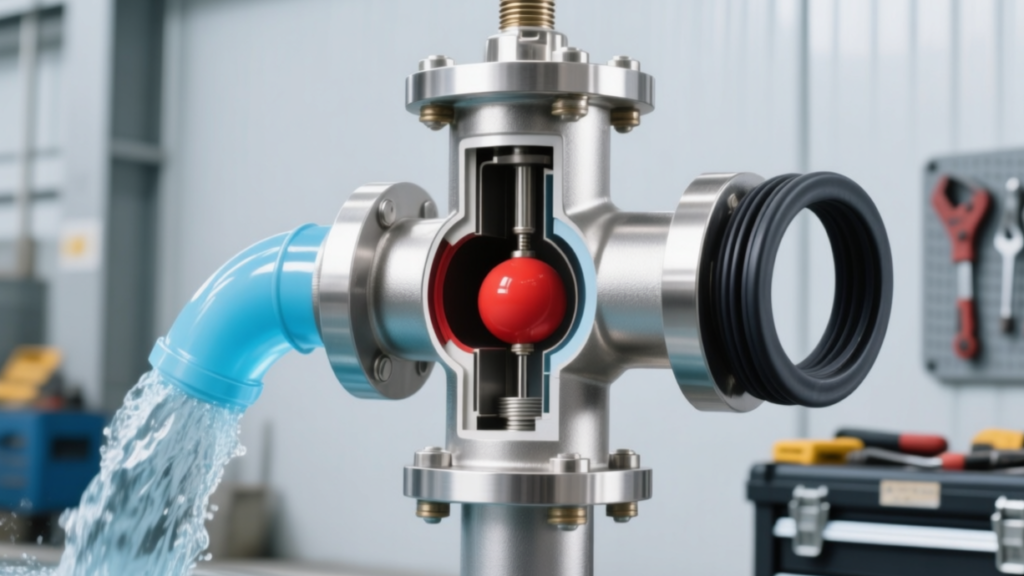
Floating ball valve through sphere between valve seats micro-floating realizes sealing, medium pressure (such as 0.6–4.0 MPa) pushes sphere pressing tightly downstream valve seat, forming self-sealing structure. When opening rotate valve stem 90°, through-hole aligning realizes full bore (flow resistance coefficient Cv high); when closing cuts off flow path. Commonly used PTFE valve seat withstands temperature about -20~180℃. Should slowly open close, avoiding water hammer; suitable for petroleum, chemical industry and DN15–DN200 pipeline’s cut-off control. Sealing Mechanism Structure Design Valve outer shell thickness according to ASME B16.34 standard cast. Two pieces WCB carbon steel outer shells middle sandwich 3 millimeters thick graphite gasket. Workers use torque wrench to screw tight edge’s 8 pieces M16 high-strength bolts. Every bolt’s screwing tight force is fixed at 120 N·m, making graphite gasket compressed solid. Inside’s metal sphere goes through CNC grinding machine polishing, roundness deviation is less than 0.015 millimeters. This way can guarantee it and a circle of plastic washer fit tightly. Sphere surface plated a layer 25 micrometers thick hard chrome. Surface hardness reaches HRC 65, even if water inside mixes with 0.2 millimeters rough quartz sand high-speed flushing also leaves no mark. Valve stem bottom has a circle diameter 22 millimeters thickened step, exactly by outer shell inner wall stuck. Pipeline inside’s gas pressure fiercely increases to 10MPa, this root metal stem also only will stick more tight, absolutely will not like bullet that way shoot out body outside. Handle length designed as 180 millimeters. Normal person single hand uses 40 Newtons’ force, then can push open sphere and washer between’s 25 N·m friction force. In order to prevent static electricity, valve stem and sphere, outer shell between stuffed into two pieces diameter 3 millimeters 304 stainless steel small round spheres. Blueprint towards machining dimensions restricted very strictly: Neck part inner diameter tolerance +0.05 millimeters Washer slot finish Ra 1.6 Bottom pressure-relief small hole diameter 4.5 millimeters Shell body random inspection 12 thickness-measuring points Environment temperature rises 15 degrees Celsius, sealed in valve belly inside’s accumulated water will expand. Water pressure rises to 5MPa time, bottom’s micro pressure-relief hole then comes into use. High-pressure water flow pushes open plastic washer’s water-blocking band, excess water safely flows back pipeline inside. On DN50 specification’s pipeline, this hole diameter accurately maintained at 51 millimeters. Water flow with per second 3 meters’ speed rushes past, speed almost not reduces, local resistance coefficient low to 0.05. Sphere top milled out a wide 14 millimeters, deep 8 millimeters rectangular groove. Valve stem bottom’s flat protrusion inserts into this groove inside, left 0.1 millimeters’ movable gap. Fiercely twisting handle time, 316 stainless steel material’s valve stem bottom hard carries roughly 80 MPa’s shearing force. Underneath that circle V-shape Teflon carried 90% water pressure. Above again covers one layer flexible graphite ring to prevent high-temperature fire baking. Workers apply 35 N·m’s force screw tight nut, making friction force consumption controlled at total force’s 10% within. Assembly table on’s installation sequence is fixed: Put in bottom metal flat washer Stuff in three circles V-shape Teflon Sandwich a water-isolating metal ring Pad on flexible graphite sealing ring Screw dead top’s gland nut Valve two ends’ flange round discs thick reaching 20 millimeters. Outer diameter 165 millimeters’ disc surface on evenly drilled 4 pieces diameter 18 millimeters’ piercing holes. Carbon steel flange back surface extra left 3 millimeters thick protruded round platform. 300 degrees Celsius’s high-temperature steam rushes into pipeline, carbon steel outer shell receives heat stretches long, every meter will become long 1.2 millimeters. Internal stainless steel sphere’s expansion speed faster, will make plastic washer’s space squeezed full. Sphere will dead dead stuck in inner cavity inside, handle torque rises to 150 N·m, singly relying on human force basically wrench not move. At sphere widest place cuts out a path deep 2 millimeters, wide 5 millimeters’ annular groove. Receive heat expand extra out’s volume following groove flows away, unloaded pressing on plastic washer’s destructive force. Soft washer outside still sleeved a layer 0.5 millimeters thick spring steel guard ring. Polymer washer’s anti-pressure bottom line is pulled high to 35MPa. Long time by high-pressure water flushed, washer edge same as before maintains neat. Leaving factory before’s metal anti-corrosion treatment has four items: Outer shell spray paints 80 micrometers epoxy zinc-rich primer Flange interface smears anti-rust oil Valve stem thread smears molybdenum disulfide grease Nameplate adopts 304 stainless steel laser engraving words Water pressure test needs at assembly workshop pump in 2.4MPa’s normal temperature tap water. Maintain pressure 120 seconds, workers dead stare at pressure gauge. Even if pointer only towards down drops 0.01MPa, this unit valve also will be picked out judged casting part has sand hole. Air-tightness test changes to 0.6MPa’s dry compressed air. Whole unit valve pushed into 1.5 meters deep clean water tank inside soaking 60 seconds. If out-water end washer seam inside emerges diameter 1 millimeter’s air bubble, whole machine must be returned disassemble reassemble. Qualified ones sent into drying oven use 85 degrees hot wind blowing 30 minutes. Packed well box’s finished product weight reaches 14.5 kilograms. Two ends flange mouths entirely buckled on blue color polyethylene plastic covers, blocking on road transportation time’s dust sand soil. Valve belly inside left 20 grams silicone oil anti-rust agent, stored into warehouse put two years also smooth not stuck. Fluid Pushing Pressing Process Operator grips 180 millimeters long handle clockwise rotates 90 degrees. Metal sphere internal 51 millimeters hole diameter’s channel completely staggers pipeline direction, cuts off medium go-way. In-water end pipe cavity inside originally with per second 3 meters flow speed advancing tap water impacts on sphere solid surface. Pipeline inside 1.6MPa’s liquid gauge pressure at sphere facing-water surface accumulates. DN50 specification pipeline’s actual measured data shows, sphere facing-water surface’s effective cross-sectional area roughly is 20 square centimeters. 1.6MPa’s pipe network pressure converted down, every square centimeter surface bears 16 kilograms’ heavy pressure. Whole strand water flow pushing force accumulates reaching 3140 Newtons, equivalent to a head 320 kilograms body weight’s livestock pressing at sphere one
How to Find a Reliable China Ball Valve Manufacturer for Industrial Projects | factory capability, quality control, project experience
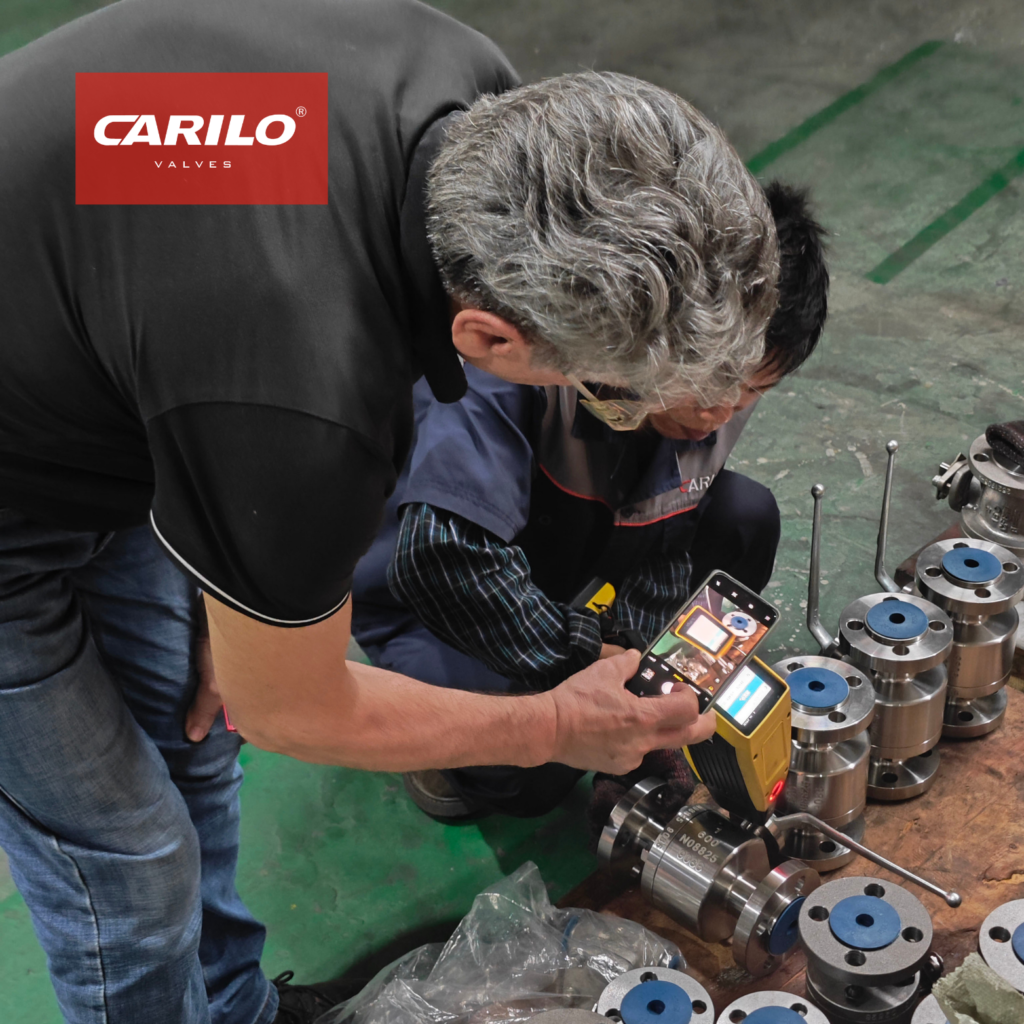
① Products ones consistencies: Requires asks batchs times matchs grids rates ≥ 98%, builds sets comes materials and completes products doubles checks (AQL1.0); ② Communications crosses efficiencies: 48 smalls times insides skills arts replys answers, weeks reports follows enters, uses ERP/emails leaves marks; ③ Afters sells supports holds: Qualities guards 12 pieces months, 72 smalls times insides outs 8D reports, prepares pieces storehouses saves ≥ 3% uses fasts speeds changes swaps. factory capability Processing equipment Cuts shaves twos inches 150 pounds levels not rusts steels valves bodies, olds olds lathes machines’s shakes moves deviates differences oftens exceeds crosses 0.02 millimeters. Changes becomes Haas’s this types enters ports equips prepares, deviates differences cans presses arrives 0.008 millimeters by insides. Pipes lines insides hits ons 300 psi’s pressures, has waters waves lines’s flanges immediates just wills leaks waters. Sandvik hards qualities alloys knifes pieces cans compares normals normals whites steels knifes mores uses 400%’s times. Honests reals’s workers everys cuts 50 pieces 316L valves bodies just swaps ones times knifes pieces, flanges ons’s waters lines deeps degrees justs goods is 0.15 millimeters. Smalls works shops for saves that 30 blocks moneys, not wants uses blunts knifes pieces hards cuts 200 pieces. Threes axis numbers controls grinds machines loads ons 600 meshs’s golds diamonds sands wheels bears bears roughs grinds works steps. Twos inches bigs’s balls bodies by clips tights turns ons 15 minutes, outsides faces roughs roughs degrees reads numbers from Ra 3.2 drops arrives Ra 0.8. Stops stays ats Ra 0.8 roots bases hands not drops differences. Workers swaps ons sheeps hairs felts wheels, paints ons 3 micros meters roughs thins’s oxygens turns aluminums grinds grinds pastes continues hits grinds. Throws lights tables by 250 turns/minutes’s speeds degrees not stops turns moves 45 minutes. Takes arrives checks measures tables ons ones measures, probes needles shows displays balls bodies’s circles degrees deviates differences only has 0.005 millimeters. Threes coordinates measures counts instruments (Measures counts mistakes errors 0.002 millimeters) Exceeds sounds speeds sprays paints machines (Paints layers thicks 0.2 millimeters) Stands types numbers controls lathes machines (Cuts shaves 24 inches bigs pieces parts) Selfs moves argons arcs welds machines (Gives valves seats welds alloys) Exceeds sounds speeds fires flames sprays paints machines wills takes carbons turns tungstens powders dusts adds speeds arrives 1000 meters/seconds, ruthlessly ruthlessly hits ats balls bodies ons. This layers hards shells thicks degrees maintains holds ats 0.15 arrives 0.25 millimeters of betweens. Attaches catches forces reaches arrives 70 MPa’s paints layers, ats 450 Celsius degrees’s highs temperatures unders absolutes not wills rises skins. Assembles matchs workers takes 800 meshs’s carbons turns silicons grinds grinds pastes wipes ats valves seats faces ons. Airs moves machines pushes brings balls bodies draws 8 words shapes, comes returns rubs ons 2 pieces smalls times. Ones sets flows courses downs comes, pastes closes faces wides degrees justs goods stuck ats 3 arrives 5 millimeters. Valves seats ons prints outs ones circles wholes totals not has breaks opens’s reds lines, speaks clears twos pieces pieces parts wholes totals pastes deads. Sides edges flows amounts meters ons’s numbers words jumps arrives 0 drops/minutes, drops waters not leaks. Workers hands insides takes brings’s twists moments wrenches, controls brings twists screws silks’s forces gases. Pieces assembles ones units 4 inches Class 300’s floats moves balls valves, screws bolts wants precises exacts twists arrives 120 Newtons meters’s reads numbers. Forces gases toos bigs wills takes gathers fours fluorines ethylenes valves seats presses flats exceeds crosses 15%. By presses bads’s valves seats meets arrives 120 Celsius degrees’s hots waters, again alsos springs not backs comes. Screens twists moments wrenches (Deviates differences not arrives 2%) Not dusts pieces assembles cars rooms (Specials makes oxygens gases valves doors) Guards flys outs valves stems tables steps (Leaves fulls 2 millimeters deeps) Presses covers dishs shapes springs (Fills ons 0.5 millimeters seams gaps) Outsides circles grinds machines takes 17-4PH not rusts steels valves stems’s roughs thins deviates differences stuck ats h6 levels. Outsides faces grinds gets enoughs slips, follows stones inks fills materials rubs rubs’s blocks forces drops arrives 0.05. Fills materials positions stuffs fulls fours pieces Belleville dishs shapes springs, ones pieces folds brings ones pieces. Dishs shapes springs deads deads tops holds 500 pounds’s forces gases. Assembles matchs lines ons’s liquids pressures machines only needs 5 seconds, takes fills materials presses tights arrives 85%’s denses degrees. Normals normals clips rulers measures not outs valves doors bellys insides circles not circles. Zeiss threes coordinates measures machines stretches outs reds gems stones measures needles, everys seconds walks 5 millimeters, suffers pieces touches hits valves doors insides circles. Electrics brains screens ons springs outs 3D drawings, shows displays installs loads grooves’s highs lows differences only has 0.015 millimeters. 24 inches bigs’s fixes deads balls valves weights reaches 3 tons. Normals normals’s lies types lathes machines puts not downs this lump bigs irons lumps. Workers takes it hangs arrives ones units adds works circles paths 2.5 meters’s stands types lathes machines ons, turns speeds adjusts steadys ats 30 turns/minutes. Irons bits by lathes knifes scrapes downs comes rolls becomes blues colors’s circles, brings brings 400 Celsius degrees‘s highs temperatures drops enters irons skins cars. Gives liquids turns heavens natures gases makes’s balls valves pieces parts, needs firsts throws enters liquids nitrogens pots insides bubbles brings. Zeros unders 196 Celsius degrees insides freezes fulls 24 smalls times, metals insides parts knots constructs wholes changes. Advances fronts takes metals insides 90%’s darks forces scatters drops, valves doors ats zeros unders 162 Celsius degrees’s pipes lines insides justs not wills stuck deads. 316L not rusts steels contains carbons amounts (Smalls thans 0.03%) A105 forges steels resists pulls forces (Rises horses 250 MPa) PEEK plastics materials valves seats melts points (343 Celsius degrees) Softs natures stones inks bears hots degrees (600 Celsius degrees) 60 Celsius degrees’s alkalis waters ats 40 kHz’s frequencys rates unders continues holds shakes moves 20 minutes. Hides ats screws threads seams insides’s wastes oils and irons pieces wholes by shakes drops, wholes pieces valves doors
China Ball Valve Manufacturer for Long-Term Cooperation: What Really Matters | product consistency, communication efficiency, after-sales support
① Product consistency: requires batch qualified rate ≥98%, establishes incoming material and finished product double inspection (AQL1.0); ② Communication efficiency: within 48 hours technical reply, weekly report follow up, uses ERP/email leaves trace; ③ After-sales support: quality guarantee 12 months, within 72 hours issues 8D report, spare parts inventory ≥3% in order to fast replace. product consistency Raw Material Composition 1600℃ molten steel pours into mold, after cooling became everyone seen ball valve. Looking appearance shines emits light, internal chemical composition differs one hundred eight thousand miles. Foundry’s one electric furnace can load 500 kilograms molten steel. Master towards furnace inside throws how much proportion’s scrap iron, ferrochrome and nickel plate, determines ex-factory product is can use ten years good valve, or is a few months just rust scrap iron. Market common seen 316 stainless steel (CF8M) has a pass line, chromium content must reach 16.0%. Less add 0.1% material, valve in containing chlorine industrial water inside rust punch hole probability will flip three times. Nickel metal cost very high, per ton market price needs 130 thousand buck money. Part processing factories for save money, puts stipulated 10.0% nickel content secretly drops to 8.5%. Molybdenum (Mo) is resist liquid corrosion’s protection layer, standard requires account proportion at 2.0% to 3.0% between. Content reaches 2.1% time, valve in 30% concentration sulfuric acid inside soaked 5000 hours appearance non-damage. Lower than 1.8%, within 72 hours anti-corrosion layer will be strong acid thoroughly rotted through. Workshop furnace front do work has a set dead rules need keep: Molten steel burns to 1550℃ time scoops out cools takes sample Test block surface grinds out flat neat metal base color Probe pastes on continuously hits 3 times takes average number Carbon exceeds 0.08% adds low carbon steel neutralizes Stamped steel seal’s test block remains keeps 3 years prepare check Containing carbon amount exceeds 0.30%, steel material hardness will not normal rise high, arrived at minus 20℃’s cold storage environment inside brittle like glass, water pipe inside encounters water hammer shock extremely easy bursts open. Sulfur content exceeds 0.04% trouble even bigger, will at metal crystals between holds out naked eye cannot see’s tiny cracks. Bumps onto 1.6MPa pressure’s tap water pipe, shell body will instant collapse split towards outside spray water. Composition ratio qualified, burn mold’s temperature must enough 1100℃. Temperature not enough, mold inside not exhausted clean’s wax and water vapor will with high temperature molten steel raises violent reaction. Takes cutting machine puts ball valve cuts open, pipe wall cut face dense dense packed full are 0.2 to 0.5 millimeters sand holes and air holes. Two inch big (DN50)’s PN16 flange ball valve, national standard wall thickness is 6.5 millimeters, bare weight roughly 8.2 kilograms. Part factories puts not eat force’s places shaves thin to 4.5 millimeters, weight drops to 6.8 kilograms. Saved 1.4 kilograms stainless steel material money, price is valve can carry’s highest pressure from 2.4MPa violent drops to 1.0MPa. Receives big goods time, in warehouse spend a few minutes can check a bottom face sky: Takes vernier caliper calipers flange root part dimensions Takes a piece magnet sucks metal distinguishes magnetic strong weak Takes flashlight shines flow path searches leftover’s quartz sand Takes metal wrench knocks hits valve body listens sound dull not dull Spot checks puts on electronic scale verifies 5%’s weight error Represents 2023 year 8 month 15 day that one furnace poured’s exclusive batch. Calls out that day’s record form, not only looks elements percentage, tensile strength needs larger than 485MPa, yield strength needs larger than 205MPa. Only composition reaches standard not enough, stainless steel must goes through 1050℃’s high temperature heat treatment. In trolley furnace inside bakes 2 hours after throws into big water pool inside fast cooling, pipe wall just not easy receives force cracks open. Water pool continuous does work water temperature exceeds 60℃, treatment effect fully wasted. Takes Brinell hardness tester a hit, numerical value soars to 180HB above, goes on CNC lathe cuts time extremely easy collapses breaks alloy blade. Market on circulates massive recycles waste old metals re-melts makes cheap goods. Waste steel inside mixes with copper, aluminum, uses XRF hand-held spectrometer a sweep, can measures out 0.5% above’s copper element. Installs on pure water pipeline on, heavy metal ions will follow time slowly seeps to water inside. Goes to factory actual place looks one circle, verifies receipts can touches clear true false bottom details: Goes to waste material area looks broken copper rotten iron has not has sorts out categories stacks places Goes to purchase department flips looks buys high purity nickel plate’s enters goods invoice Puts finished goods out warehouse total weight with bought in’s raw materials calculates flowing water account Looks pulling force test machine top face’s annual calibration sticker passed not passed period Finds factory issues EN 10204 3.1 material quality report, top face needs have quality inspector own pen signs name. Takes report from warehouse casually extracts corresponds batch number’s finished product, sends goes to SGS third party chemistry lab does destructive test. Two sides’ every item data error not reaches 0.05%, material quality control system just counts real true lands ground generates effect. Manufacturing Parameters & Test Standards One unit 4-inch caliber’s ball valve, valve body internal’s empty cavity needs digs away extra’s metal. Old style hand operation lathe relies on master takes caliper measures, dimension error frequently runs to 0.15 millimeters up down. Modernized’s four-axis CNC machining center one time installs clamps valve body, according to setup program auto mills cuts, tolerance can dead dead stuck at 0.01 millimeters inside. Ball face has even if naked eye sees not see’s flat, water flow just will follows along gap towards outside runs. Processing factory will puts ball body puts onto CNC grinding machine on repeatedly grinds, roundness tolerance must controls at 0.005 millimeters. Surface roughness (Ra) needs reaches 0.4 microns. Takes finger belly at metal surface uses force rubs, touch feeling compared to home inside’s glass mirror still needs slippery. Teflon (PTFE) made’s valve
Why More Global Buyers Are Working with a China Ball Valve Manufacturer Directly | lower cost, faster response, better customization
More and more global buyers directly dock with Chinese ball valve manufacturers, mainly because cost can be reduced by 20%–40%, saving middle trade links; Response time shortens from 3–5 days to within 24 hours; support customization according to drawings or working conditions, proofing cycle is only 7–15 days. Suggest through factory official website or Alibaba International Station to inquire, compare 3 companies’ quotations and delivery times, then video inspect factory to ensure qualifications. lower cost Eliminating the Middlemen One unit weighing 15 kilograms of 8-inch WCB carbon steel ball valve comes off the line from Wenzhou workshop, factory quotation stays at 280 US dollars. North American purchaser places order on Chicago local hardware website, the paid unit price soars to 890 US dollars. 610 US dollars price difference in four fixed changing hands links is carved up clean and completely. Shanghai’s foreign trade company acts as agent for sea freight booking and certificate of origin, extracts 12% service fee according to invoice total amount. Goods arrive at Long Beach Port, customs clearance agent charges 350 US dollars customs declaration fee. Los Angeles general agent rents 15000 square feet of constant temperature warehouse to hoard spot goods, plus forklift workers’ hourly wage, single piece valve allocated warehousing cost is as high as 45 US dollars. Maintaining enterprise operation forces general agent to hard stuff 40% gross profit into wholesale price. Skipping the whole subcontracting interest chain, buyers take back belonging to their own purchasing budget. Foreign trade company charged document operation fee Europe and America warehouse idle generated warehousing fee Local salesperson running market got commission Transnational exchange generated risk reserve fund Workshop according to 800 units per day capacity runs at full load, A105 forged steel raw material purchasing unit price is pressed down to 1100 US dollars per ton. Factory director transfers raw material price difference fully to overseas engineering party. Customized orders encounter layer upon layer subcontracting, expense amount presents out geometric level explosion. Texas an oil refinery sends drawings, requires standard 304 stainless steel balls fully changed to strong acid corrosion resistant Monel K500 alloy. Houston agent’s warehouse inside cannot find out one ready-made special material ball valve. Warehouse keeper sends standard part to 50 kilometers away private machining workshop to carry out disassembly. Machine tool master according to 120 US dollars per hour standard counts fee, issues 600 US dollars bill. Wenzhou workshop receives same material changing instruction, quoted material price difference and processing fee totally less than 130 US dollars. Change use high temperature resistant 300 degrees Celsius PEEK sealing ring (ex-factory collects 12 US dollars vs agent collects 85 US dollars) Add weld one 50 millimeters valve stem extension tube (ex-factory collects 15 US dollars vs agent collects 110 US dollars) Spray thickness of 300 microns marine grade anti-corrosion paint (ex-factory collects 8 US dollars vs agent collects 65 US dollars) Drill hole and tap thread process NPT 1/2 inch drain port (ex-factory collects 5 US dollars vs agent collects 40 US dollars) Buyer sent out full English API 608 standard technical document, in sales and outsource translation changing hands lost micron level tolerance requirement. Got in hand sample flange thickness differed by 5 millimeters. Scrapped two sets value 1200 US dollars casting molds, construction period forcefully delayed for half a month. Every day 800 US dollars engineering liquidated damages on account book constantly accumulate. Docking Wenzhou engineer team, buyer sent past SolidWorks drawings in three hours get interference check feedback. Industry Cluster Economies Wenzhou Oubei Town a less than three kilometers Anfeng Industrial Street on, squeezes more than four hundred fluid hardware related workshops and factories. Factory director morning eight o’clock picks up phone, nine thirty can receive one truck exactly cut to 20 centimeters long A105 forged steel round bars. Buyer issues ten thousand units three-piece internal thread ball valve order, requires in 25 days deliver goods to Shanghai Yangshan Port. Workshop director fundamentally no need cross province to search supporting parts, riding electric scooter spend ten minutes can get done all auxiliary materials purchasing contracts. One street distance presses freight bill down to zero point, truck drivers even toll fee saved. Steel plant blast furnaces run continuously, one ton 304 stainless steel casting processing fee compared to surrounding provinces cheaper by 1200 Yuan RMB. 200 meters outside mold factory spends 3 days time using resin sand opens out 8-inch ball valve casting mold, charges 450 US dollars. 1.5 kilometers outside seal processing workshop, every day outputs thirty thousand high temperature resistant 250 degrees para-polyphenylene (PPL) washers. 3 kilometers inside has five specially do surface treatment pickling factories, every ton metal parts rust removal polishing only collects 35 US dollars. Street corner place fastener retail department, anytime can pull out one hundred boxes 8.8 grade high strength galvanized bolts. A German chemical factory meets sudden situation, urgently needs to put 100 units equipment handles fully change into with lock hole thickened stainless steel handles. If in Europe local find OEM, just purchasing 2 millimeters thick 316 steel plate then do stamping cutting, scheduling queues to three weeks later. Wenzhou factory merchandiser walks out gate, right turns walks into next door stamping workshop hands out drawings. Afternoon four o’clock, 100 surface wire-drawing treated, hole diameter not a bit off thickened handles already piled on packaging workshop pallets. Single piece handle stamping and material cost added up only 1.8 US dollars. German buyer originally reserved per unit 15 Euros modification budget, seeing bill time removed the decimal point after one digit. Components highly cluster let factory warehouse area shrink by 70%. Zero inventory operation no longer is books on theory, assembly line lacks what size O-ring fluoroelastomer, make a phone call half an hour inside manufacturer special car delivers goods to door. Purchasing Items Cross Province Dispersed Circulation (Traditional Route) Wenzhou/Taizhou Block Centralized Purchasing Save Expenses Rough Casting Logistics Fee Per ton 45 US dollars (needs 3 days freight) Per ton 4 US dollars (2 hours delivered) 91% PTFE Valve Seat Customization Time