
Soft-Seated Trunnion-Mounted Ball Valves for Pipeline Isolation
Designed to API 6D for natural gas transmission, distribution and other pipeline isolation duties. The solid forged ball is supported by trunnion shafts, reducing operating torque and soft-seat wear. Standard DBB/SPE seats provide automatic cavity pressure relief, while DIB-1 and DIB-2 configurations are available when the project needs different isolation behavior.
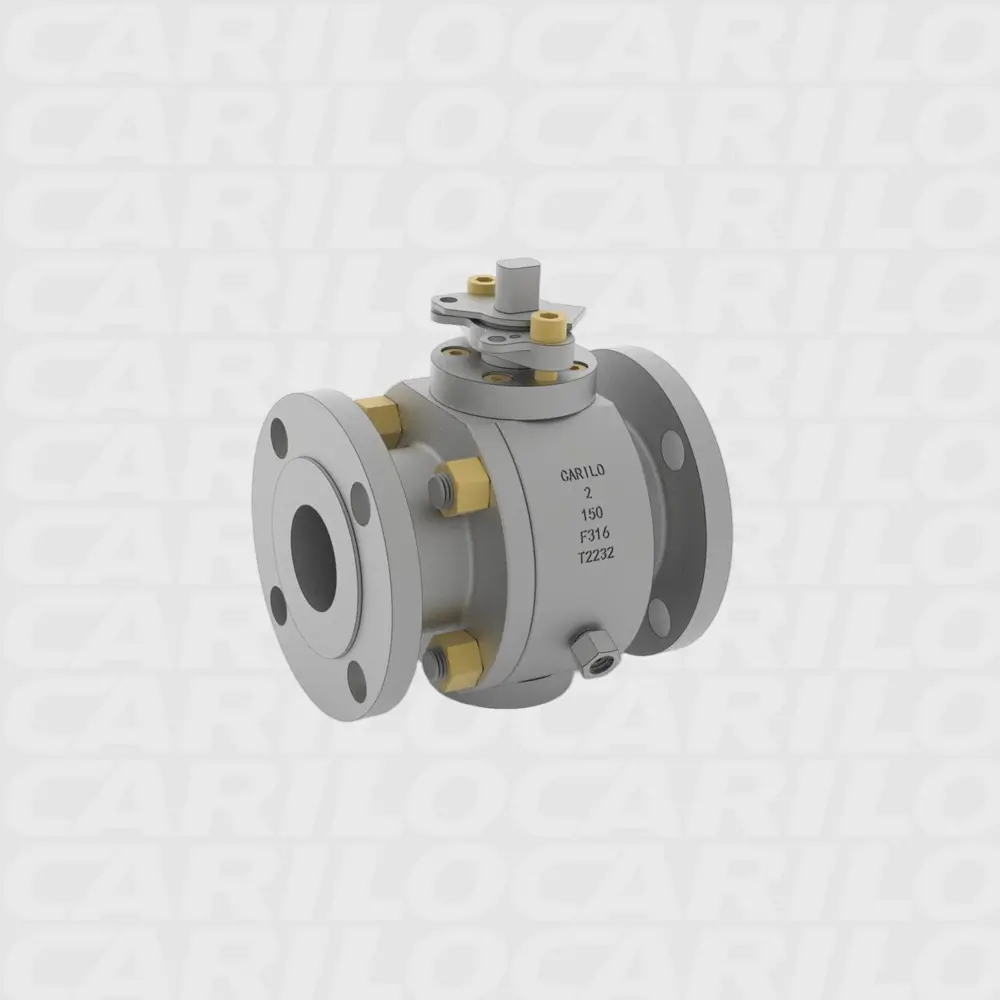
Lower Operating Torque, Less Soft-Seat Wear
The ball is supported by trunnion shafts, so line pressure loads are carried by the trunnion structure instead of forcing the ball into the downstream seat. This reduces operating torque and helps limit abrasion of the soft seats.
The solid forged ball is supported on trunnion shafts. The structure carries medium pressure loads and keeps operation practical across the specified size and pressure range.
Soft seats provide bubble-tight zero leakage in accordance with ISO 5208 Rate A. DBB, DIB-1 and DIB-2 seat configurations are available for different isolation and cavity-pressure requirements.
Safety and Sealing Features Built Into the Valve
The design combines trunnion support, cavity pressure control, stem safety, fire-safe construction and field-service features for pipeline isolation duties.
Trunnion-Mounted Solid Forged Ball
The ball is supported by upper and lower trunnion shafts. This structure carries medium pressure loads, reduces operating torque and minimizes abrasion of the soft seats.
Blowout-Proof Stem
Anti-blowout stem design is included as a standard valve safety feature.
Anti-Static Device
An anti-static device provides electrical continuity through the valve assembly.
Fire-Safe Design
Fire-safe design and fire testing are specified in accordance with API 607.
Cavity Pressure Relief
Standard SPE seats can automatically relieve excessive cavity pressure back to the pipeline.
Emergency Sealant Injection
Built-in emergency sealant injection is provided for field sealing support when required.
Low-Emission Stem Sealing
Low-emission stem sealing is specified with ISO 15848-2 fugitive-emission compliance.
Bolted Body Construction
Bolted 2-piece or 3-piece construction permits disassembly for field repair.
Optional Seat Sealing Designs
Delta ring seat and Lipseal configurations are available as optional seat-design choices.
Body, Seals and Field-Service Features
The product data specifies bolted body construction, combined elastomer/gasket sealing, optional seat-seal designs and field-service provisions.
2-Piece / 3-Piece
Bolted split-body construction supports disassembly for field repair and maintenance.
- Face-to-face per API 6D
- Full bore or reduced bore
O-Ring + Gasket Combination
The sealing system uses an O-ring and gasket combination. Delta ring and Lipseal seat designs are listed as options.
- Delta ring seat — optional
- Lipseal design — optional
Emergency Sealing & Thermal Relief
Emergency sealant injection and a body thermal relief valve are included in the stated safety-feature package.
- Emergency sealant injection
- Body thermal relief valve
DBB, DIB-1 or DIB-2
Choose the seat arrangement according to the required isolation behavior and how cavity pressure must be handled.
SPE Self-Relieving Seats
Single piston effect seats are the standard configuration. Pipeline pressure energizes the seat rings against the ball. If cavity pressure rises above the combined spring preload and pipeline pressure, the seat can separate slightly from the ball and automatically relieve the excess pressure back to the pipeline.
Double DPE Seats
Both double piston effect seats are pressure-energized from the upstream, downstream or cavity side, creating two independent sealing barriers. If one upstream seat fails, the downstream seat can still maintain shutoff. Because DPE seats do not self-relieve cavity pressure, an independent body relief valve is required unless otherwise agreed by the client.
One SPE + One DPE Seat
The hybrid arrangement combines one self-relieving SPE seat with one DPE seat. Excess cavity pressure can return to the pipeline through the SPE seat while the DPE seat remains tightly sealed, combining automatic cavity pressure relief with dual-isolation performance.
Related reading: why cavity pressure builds up inside a closed ball valve and how SPE/DPE seat orientation affects sealing behavior.
Pipeline, Storage, Offshore and Energy Applications
The specified application range covers hydrocarbon handling, pipeline isolation, storage, subsea service and newer energy media.
Onshore Operations
Separation, wastewater disposal, tank battery, recovery, SAGD and oil sands applications.
Pipeline Operations
Transmission, emergency shutdown, pigging, pump stations and compressor stations.
Liquid Tank Storage
Tank storage isolation, custody transfer, metering skids, and loading or unloading duties.
Offshore Operations
Hydrocarbon production, separation, processing, compression, storage, metering and export.
Subsea Operations
Fluid control and isolation for manifolds, flowlines and risers.
New Energy Media
Hydrogen, CCUS, renewable fuels and ammonia service are included in the stated application range.
Choose the Bore, Body and End Connection
The product range supports full or reduced bore, 2-piece or 3-piece bodies, and multiple pipeline end-connection standards.
Flow & Body Options
Configure the valve to suit the required pipeline bore and maintenance approach.
- Full bore or reduced bore
- 2-piece or 3-piece body
- Face-to-face per API 6D
- Bolted construction for field disassembly
End Connections
Select the connection type required by the piping specification.
- Flanged RF / RTJ — ASME B16.5 & B16.47
- Socket welded — ASME B16.11
- Butt welded — ASME B16.25
2"–42", 150LB–2500LB
The table below uses only the size, class, temperature, body, bore and connection data in the supplied product specification.
| Specification | Available Configuration | Reference |
|---|---|---|
| Size / Pressure | 2"–42" / 150LB–2500LB | Product specification |
| Port Bore | Full bore or reduced bore | Product specification |
| Temperature | -20°F to 392°F (-29°C to 200°C) | Product specification |
| Valve Design | Based on API 6D | API 6D |
| Face-to-Face | As per API 6D | API 6D |
| Body Design | 2-piece / 3-piece | Product specification |
| Flanged Ends | RF / RTJ | ASME B16.5 & B16.47 |
| Socket Welded | Socket weld ends | ASME B16.11 |
| Butt Welded | Butt weld ends | ASME B16.25 |
Manual, pneumatic and electric actuators can be installed via an ISO 5211 mounting flange.
Standard Inspection & Hydrostatic Testing
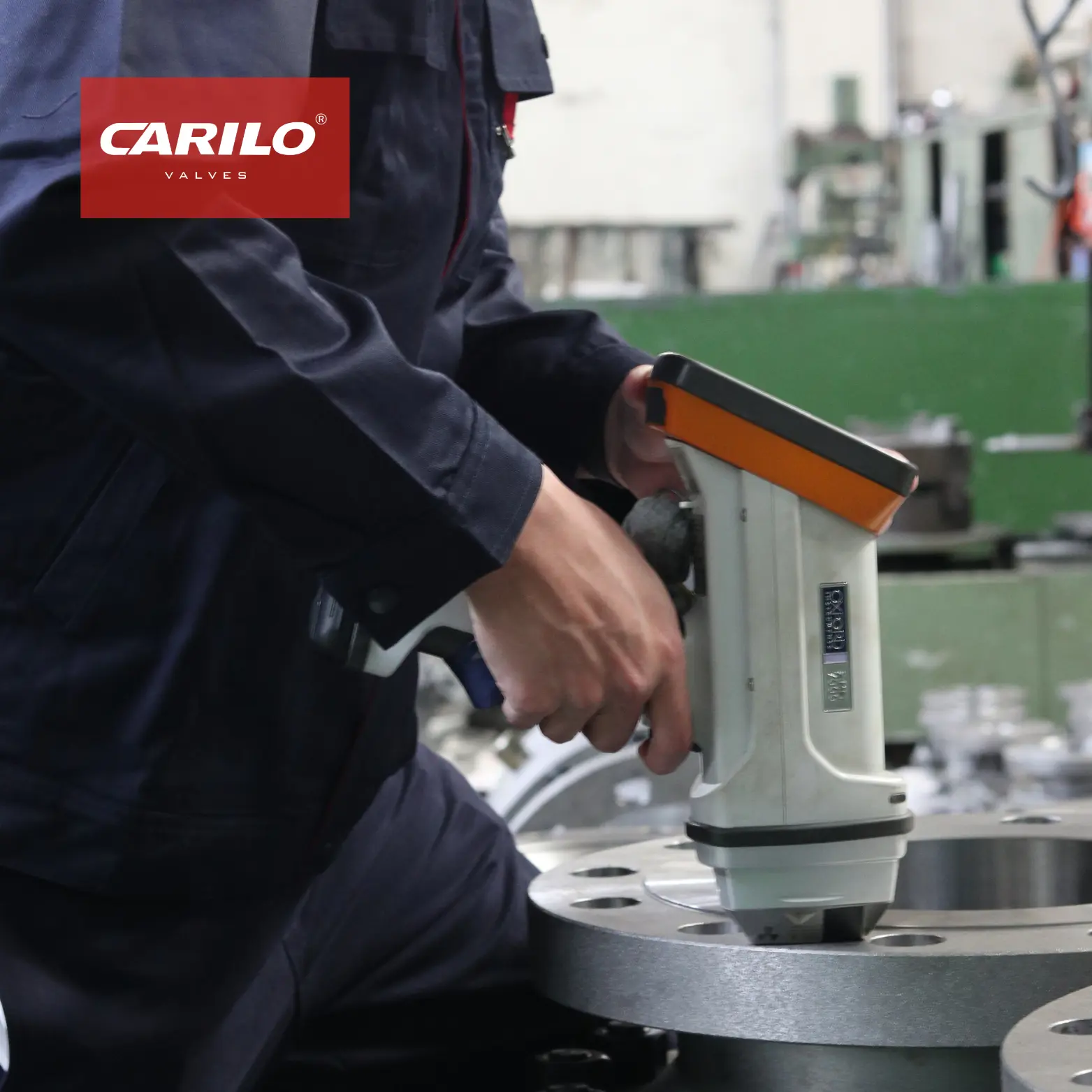
Our standard factory inspection includes visual inspection and PMI, followed by the required hydrostatic shell and seat tests. RT, MT or other NDT can be provided when the customer or project specification requires it.
- Visual Inspection — standard factory inspection of valve components and the finished valve before shipment.
- Positive Material Identification (PMI) — material grade verification performed as part of our standard factory inspection.
- High Pressure Hydrostatic Shell Test — Test Pressure = 1.5 × Design Pressure.
- High Pressure Hydrostatic Seat Test — Test Pressure = 1.1 × Design Pressure.
- NDT available when required — RT, MT or other specified NDT can be provided according to customer or project requirements.
- API 6D / ISO 5208 / API 598 — inspection and testing requirements listed for this valve range.
- ISO 5208 Rate A — bubble-tight zero-leakage shutoff for the soft-seated valve.

How We Build Your Valve
From your specification to a tested valve ready to ship, each order follows documented inspection, machining, assembly and testing steps.
Review Your Spec
We confirm size, pressure class, temperature, media, bore, end connection, seat configuration and operator before production.
Visual Inspection & PMI
Visual inspection and Positive Material Identification (PMI) are part of our standard factory inspection. RT and MT are carried out only when required by the customer or project specification.
Machine & Assemble
Critical components are machined to the approved drawings, then assembled with the specified soft-seat and stem sealing configuration.
Test & Ship
Each finished valve receives the specified hydrostatic shell and seat tests, then the inspection documents are prepared for shipment.
Design, Testing and Emission Requirements
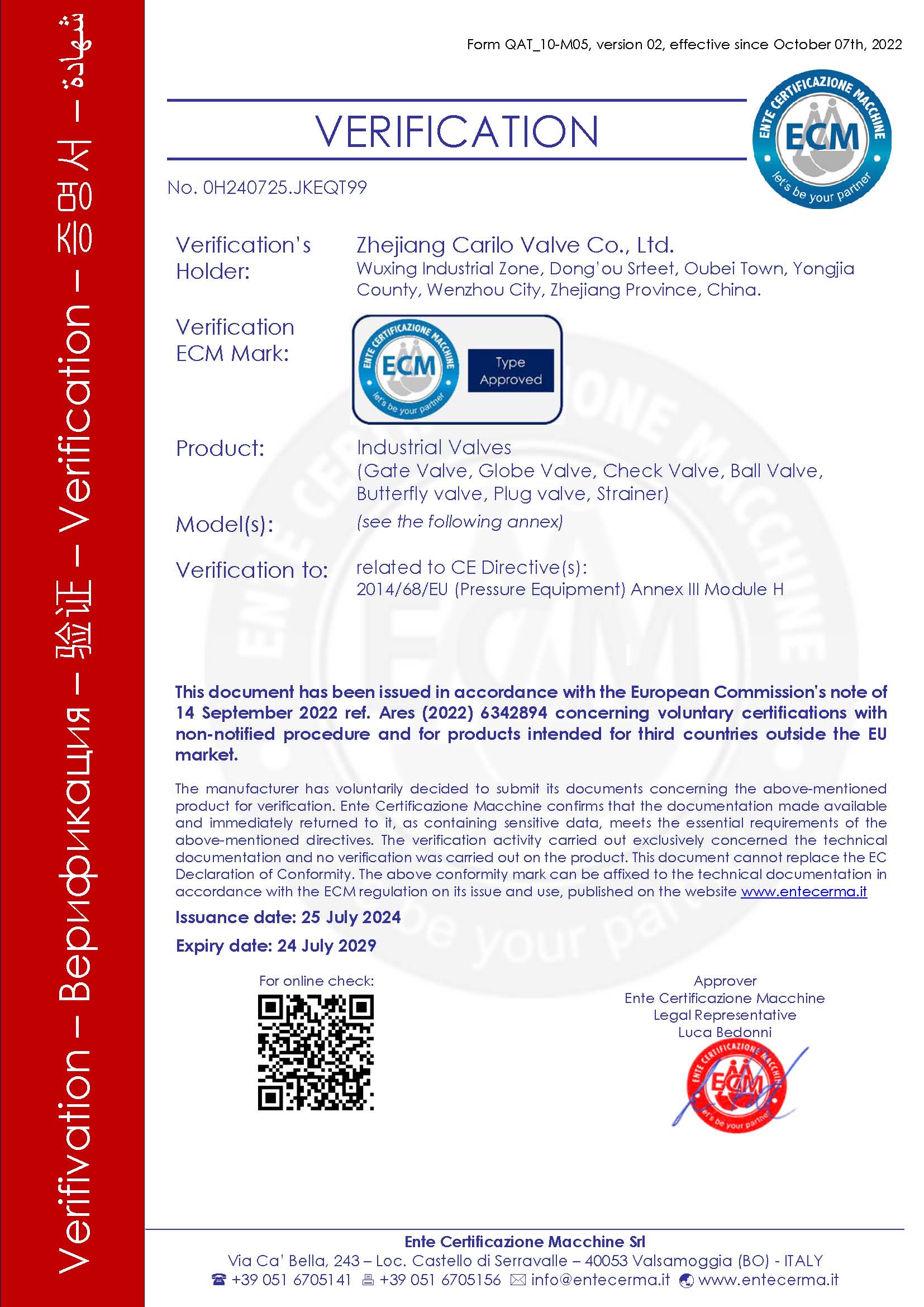
These are the standards and compliance references explicitly listed in the supplied product data.
Other CARILO Ball Valve Options
Use the soft-seated trunnion range when the stated size, pressure, temperature and isolation requirements match the project. Other valve lines are available for different service conditions.
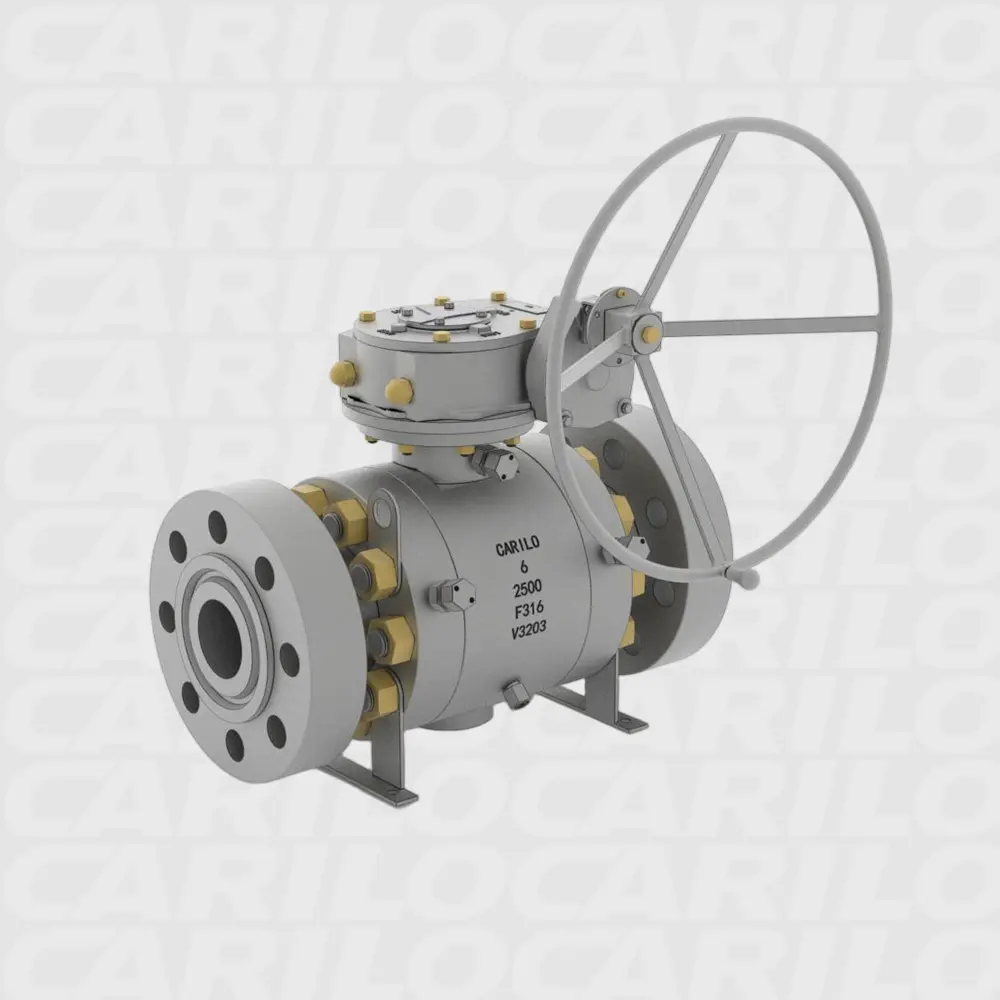
Forged Floating Metal-Seated Ball Valve
Forged floating design with metal-to-metal seats for heat, particles and frequent operation, rated up to 350°C.
View detailsForged Soft-Seated Trunnion Ball Valve
Supported-ball design for 2"–42", Class 150–2500, with SPE/SPE DBB, DPE/DPE DIB-1 or SPE/DPE DIB-2 seat arrangements.
View details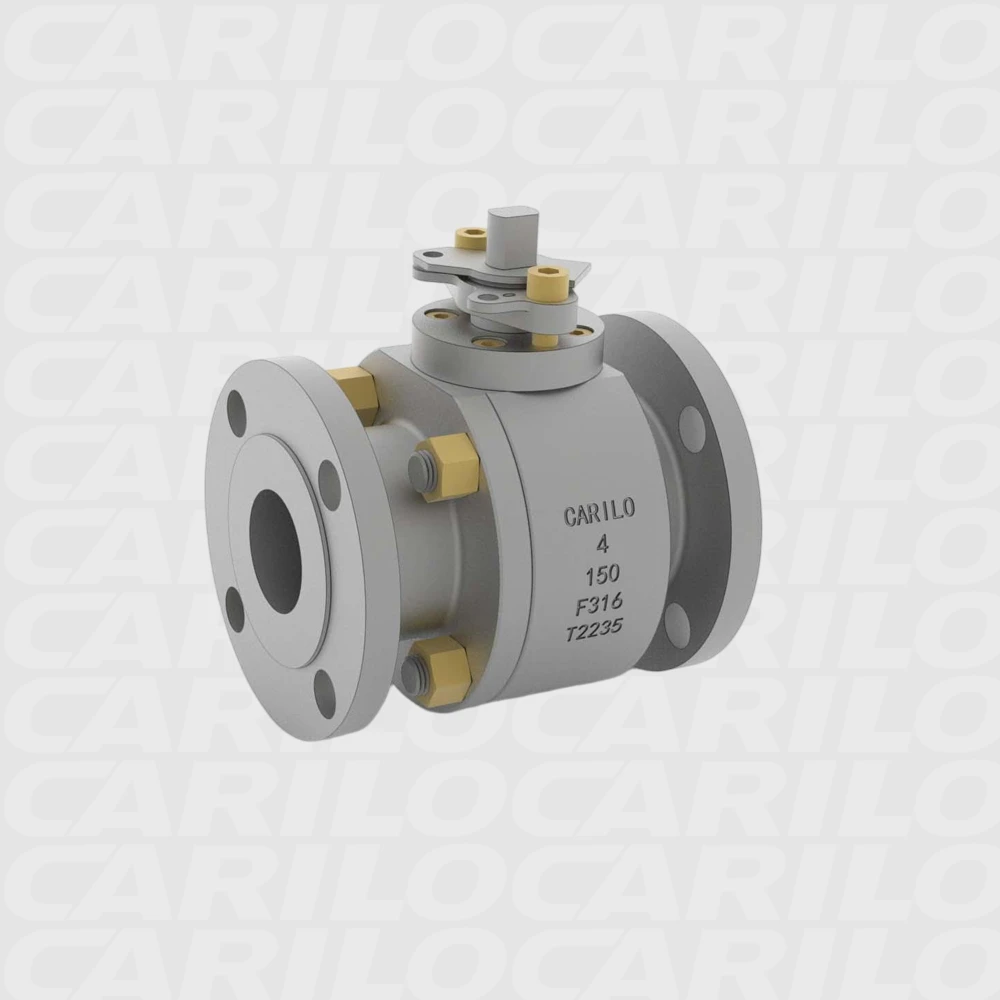
Forged Soft-Seated Floating Ball Valve
Compact floating-ball design for clean media, with ISO 5208 Rate A soft-seat shut-off and Class 150–2500 options.
View detailsSeat Pressure and Valve Selection Notes
These guides are directly relevant to cavity pressure, SPE/DPE seat behavior and pressure-class selection.
Ball Valve Factory Since 2000
Zhejiang Carilo Valve Co., Ltd. has been manufacturing industrial ball valves in Wenzhou since 2000. We focus on cast and forged floating, trunnion, cryogenic and DBB valve designs for oil & gas, petrochemical, refining and power applications. Our products are supplied to customers in Southeast Asia, the Middle East, Europe, Central Asia and North America. Want to know more? See how our factory works and how we support long-term partnerships.
Soft-Seated Trunnion Ball Valve Questions
What sizes and pressure classes are available?
The specified range is 2" to 42" in pressure classes from 150LB to 2500LB. Both full-bore and reduced-bore configurations are available.
What is the working temperature range?
The stated temperature range is -20°F to 392°F, equivalent to -29°C to 200°C.
What shutoff performance is specified?
The soft-seated valves are specified for bubble-tight zero leakage in accordance with ISO 5208 Rate A.
What seat configurations are available?
Standard configuration is DBB with SPE self-relieving seats. Optional DIB-1 uses two DPE seats for bidirectional double isolation. Optional DIB-2 combines one SPE seat and one DPE seat to provide automatic cavity pressure relief together with dual-isolation performance.
Does DIB-1 automatically relieve cavity pressure?
No. Double piston effect seats do not provide self-relieving cavity pressure function. An independent body relief valve must be equipped to vent cavity overpressure unless otherwise agreed by the client.
Which end connections are available?
Available connections include flanged RF or RTJ ends to ASME B16.5 and B16.47, socket-weld ends to ASME B16.11, and butt-weld ends to ASME B16.25.
Which operators can be supplied?
The specification lists lever, gear, bare shaft, pneumatic, electric and hydraulic operation. Manual, pneumatic and electric actuators can be installed through an ISO 5211 mounting flange.
Which testing and compliance standards are listed?
The supplied product data lists API 6D, ISO 5208 and API 598 inspection and testing, API 607 fire-safe testing, ISO 15848-2 fugitive-emission requirements, and PED 2014/68/UE.
Send These Operating Details
Provide the line conditions and required valve configuration so the correct soft-seated trunnion build can be selected.