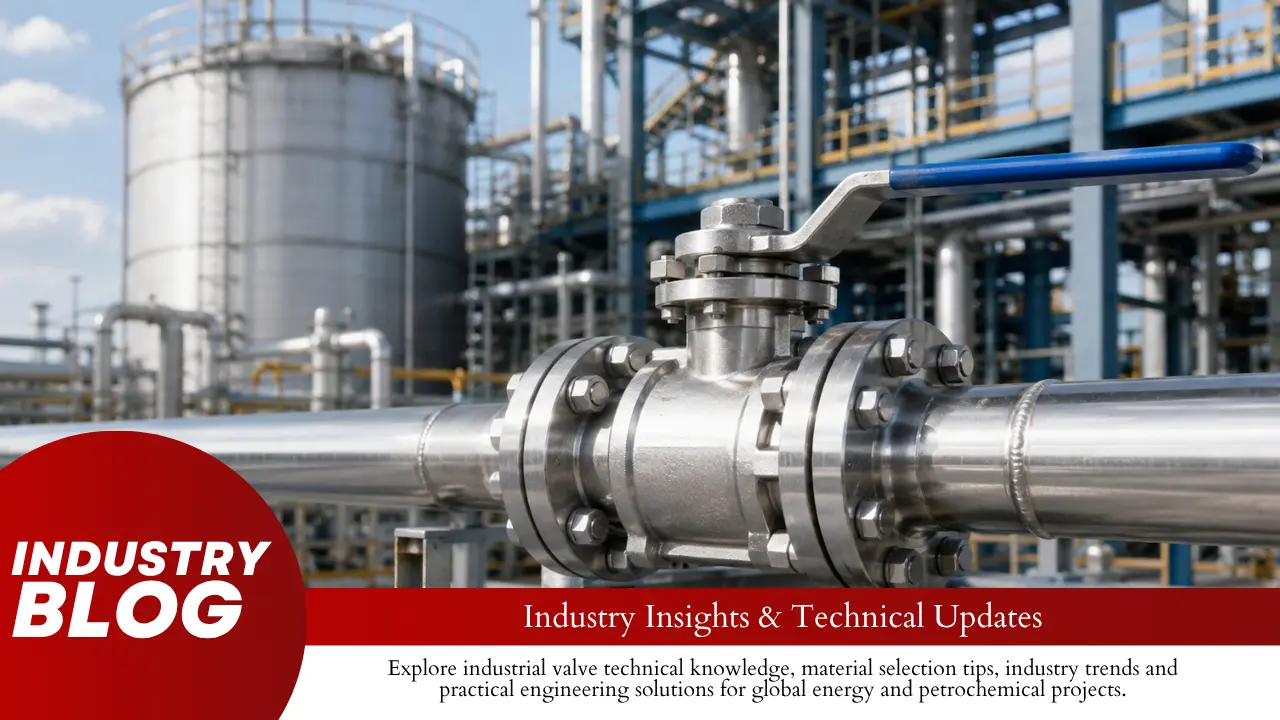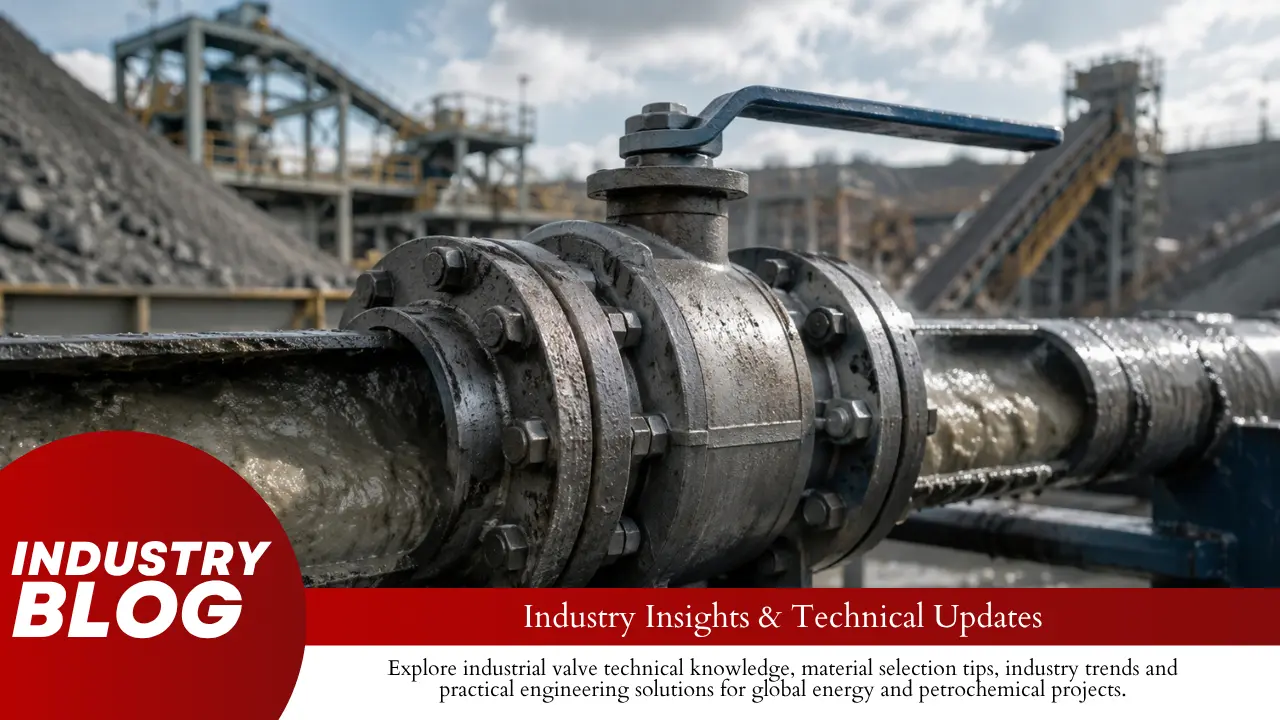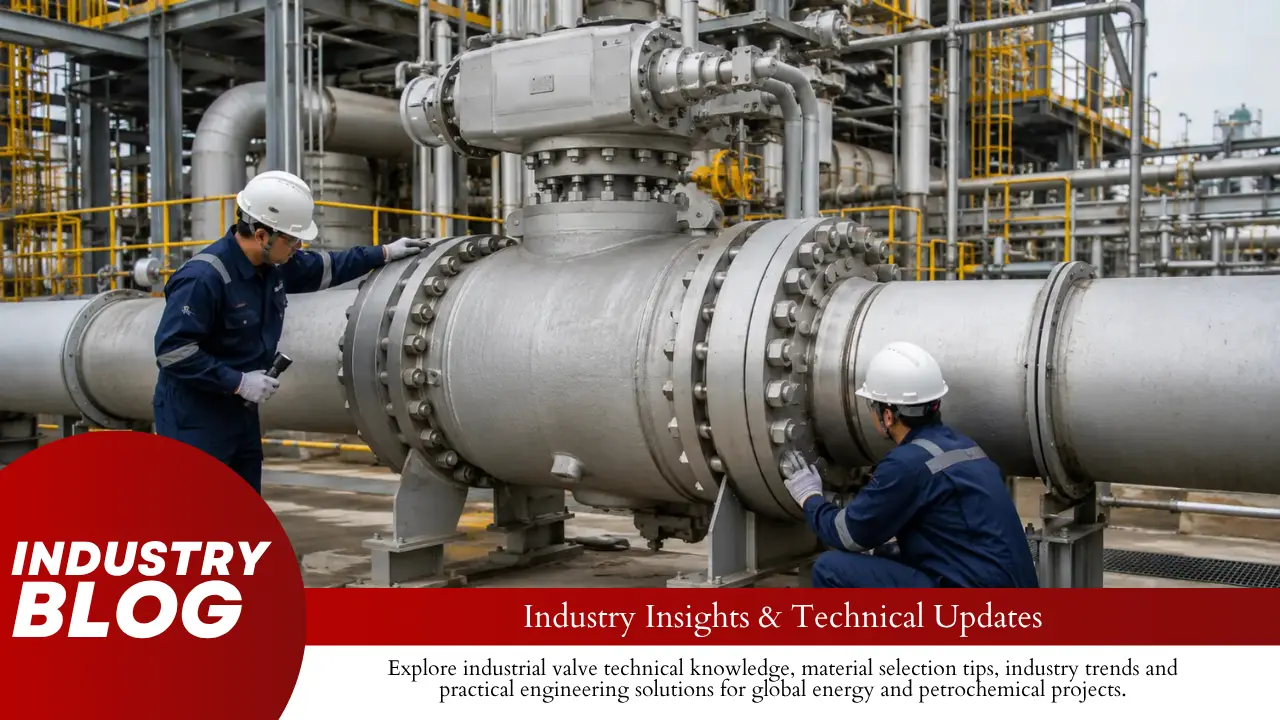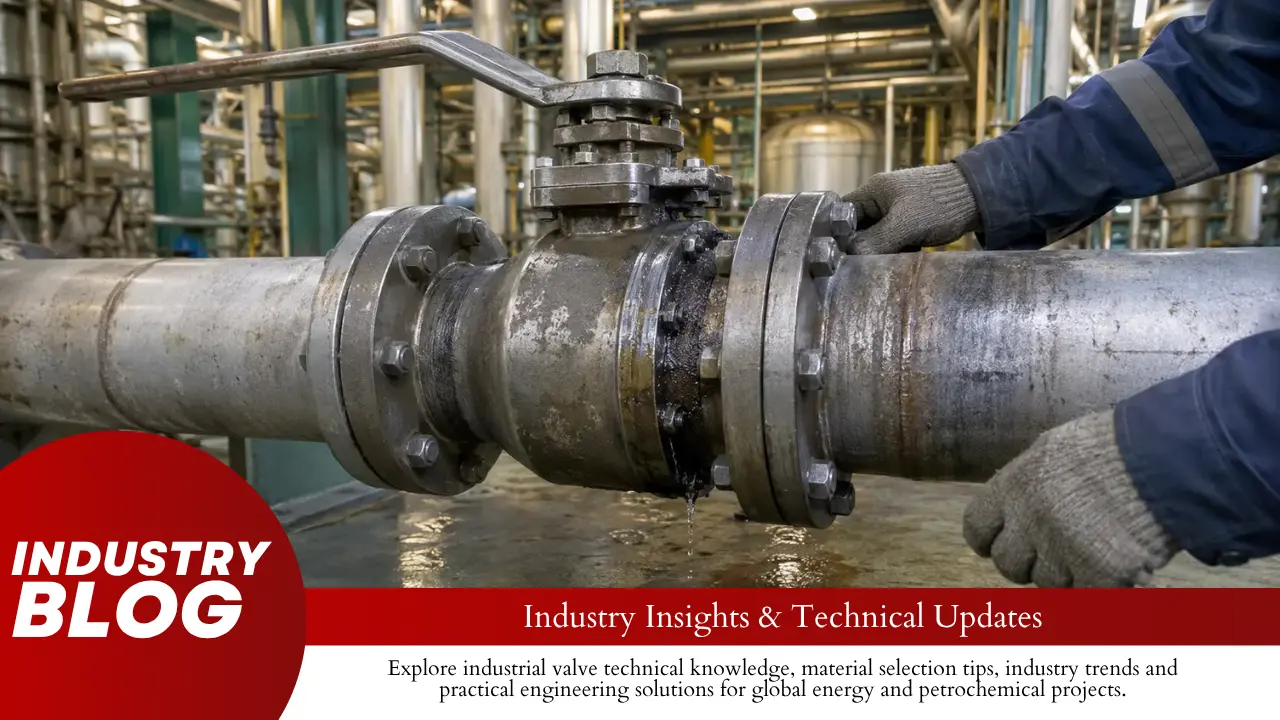
In 2024 we ran a side-by-side comparison of three ball valve seat materials for a refinery client. Side-by-side testing in real refinery service remains one of the most useful ways to check whether published material data, factory leakage tests, and actual seat life point in the same direction.
Lab-grade material data and field-grade valve performance can be very different once seat compression, pressure differential, ball rotation, thermal cycling, and media contamination are added.
| Seat Material | Test Service | Average Service Life | Seat Cost | Selection Meaning |
|---|---|---|---|---|
| PTFE | 200°C clean steam service | 18 months | About USD 35 | Best for clean media and tight shutoff at or below the qualified valve-seat temperature. |
| PEEK | 260°C heat-transfer oil service | 30 months | About USD 120 | Better for many 200 to 260°C services, moderate particles, and applications where PTFE creep is the limiting factor. |
| Stellite 6 hard-faced metal seat | 425°C crude service | 24 months without leakage beyond the project acceptance limit | About USD 280 | Necessary when heat, abrasion, coking, pressure drop, or thermal shock exceed polymer seat limits. |
Across our 12 internal sample batches, selecting the wrong seat material changed total project cost by more than 30% once replacement labor, downtime, spare seats, and actuator changes were included. Published standards remain the baseline for design review and acceptance testing, but the project specification must name the applicable edition and the exact leakage acceptance wording. API Spec 6D defines valve design, manufacturing, testing, documentation, and marking requirements for pipeline valves, while ISO 5208 defines pressure testing and valve closure tightness testing for metallic industrial valves. ASME B16.34 covers pressure-temperature ratings, dimensions, materials, testing, and marking for flanged, threaded, welding-end, wafer, and flangeless valves.[1][2][3]
Ball valve seat selection is most difficult in industrial on-off service, especially floating and trunnion mounted ball valves used in refinery, chemical, LNG, oilfield, and high-temperature process lines.
The real question is not how PTFE, PEEK, or a metal alloy behaves as a loose material sample. The real question is how the seat behaves after it is compressed into a valve body, loaded by pressure differential, rubbed by the ball, exposed to thermal cycling, and inspected under the leakage requirement written into the purchase specification.
The working data below comes from Carilo shop tests, customer site follow-ups, disassembly records, and service cases from 2022 to 2024. These internal service data points are used as engineering benchmarks, not universal guarantees.
Service life here means the period before a seat either developed measurable internal leakage beyond the project limit, showed wear deep enough to require seat replacement, or produced torque high enough to trigger actuator review.
The final result still depends on valve size, pressure class, media cleanliness, cycling frequency, seat geometry, spring load, actuator sizing, pressure-temperature rating, and the exact leakage standard selected by the buyer.
PTFE is usually the first choice for clean media at or below the qualified PTFE valve-seat temperature when tight shutoff is the main requirement.
- PEEK becomes more useful when PTFE creep, extrusion, heat, or moderate particle damage becomes the limiting factor.
- Metal seated valves become necessary when temperature, pressure drop, abrasion, coking, or thermal shock exceed what polymer seats can hold.
- The operator must confirm whether the accepted leakage requirement is ISO 5208, API 6D/API 598 project wording, ANSI/FCI 70-2, IEC 60534-4, or a project-specific test sheet.
PTFE Seats
Sealing Class
PTFE seats are the default choice for many soft seated ball valves because the material can conform to the ball surface and produce very tight shutoff under controlled test conditions.
In project documents, “Class VI” is often used as shorthand for very tight shutoff. That wording needs care. ANSI/FCI 70-2 establishes seat leakage classes for control valves, while ISO 5208 and API-type valve test requirements are more common for isolation valves and industrial metallic valves. The Fluid Controls Institute notes that ANSI/FCI 70-2 defines maximum allowable leakage under defined test conditions for control valves; it should not be used to predict leakage at other conditions or as a substitute for an isolation-valve test requirement.[4]
For buyers, the important step is to state the exact leakage acceptance criterion instead of only saying “zero leakage.”
A safer specification names the standard, edition, test medium, test pressure, holding time, valve size, allowable leakage, and whether the requirement applies to factory acceptance, cryogenic testing, fire-safe testing, or in-service inspection.
PTFE has broad chemical resistance, low friction, low thermal conductivity, a density around 2.15 to 2.20 g/cm³, and a melting point around 327°C. NIST polymer property compilations are a more appropriate source for baseline PTFE material data than valve standards or price references.[5]
In 2023 we shipped twelve DN50 PTFE seated ball valves to an LNG peak-shaving station. All twelve passed the factory leakage test specified by the buyer, and a six-month site follow-up showed no visible external leakage on any unit.
The factory leakage test is necessary but not sufficient. We have seen factory-passed valves leak internally at cryogenic temperature when actual LNG cold shock hits the valve. For cryogenic service, the low-temperature test requirement should be written separately from the normal room-temperature seat leakage requirement.
Internal leakage and external leakage must also be kept separate.
- Internal leakage means media passes across the closed ball and seat into the downstream line.
- External leakage means media escapes through the stem packing, body joint, end connection, or flange area.
- PTFE mainly helps the seat-to-ball internal seal.
- External leakage depends more on packing design, body gasket selection, bolting, flange loading, and installation quality.
That is why a valve can pass the seat leakage test but still need separate low-temperature, fugitive-emission, packing, or body-joint verification for the full valve package.
PTFE has a very low coefficient of friction compared with most engineering materials, and its low friction is one reason PTFE seats normally require less operating torque than metal seats. A peer-reviewed Macromolecules study describes PTFE as useful in tribological applications because of low friction, high melting temperature, and hydrophobic behavior, while also noting that neat PTFE is prone to high wear and that fillers can improve wear behavior by orders of magnitude.[6]
In one 2024 shop comparison, a DN100 PTFE seated ball valve under our specific valve geometry and test setup measured about 18 N·m of operating torque under a 40 bar differential. The same size with a dry Stellite 6 hard-faced metal seat needed 48 N·m. These torque values should not be treated as universal DN100 torque values because bore type, seat load, ball finish, lubrication, pressure class, and actuator safety factor change the result.
- Lower torque can allow a smaller actuator.
- A smaller actuator can reduce the total valve package cost.
- The trade-off is that a soft seat may creep, extrude, or lose uniform contact stress under high sustained differential pressure.
Above high pressure classes, pure virgin PTFE seats become less common. Reinforced PTFE, PEEK, or metal seated construction is often reviewed instead, especially when differential pressure and temperature act together.
Pressure differential changes the result more than many buyers expect. At low differential pressure, PTFE can seal with little torque because the soft seat conforms to the ball surface. At higher differential pressure, the same softness can become a weakness. The seat can extrude into the clearance, creep under sustained load, or lose uniform contact stress after repeated opening and closing.
Floating ball valves also load the downstream seat differently from trunnion mounted ball valves. The same PTFE grade can behave differently in the two valve structures.
For that reason, seat material selection should be checked together with valve type, pressure class, bore size, stem design, actuator safety factor, and the maximum operating differential pressure.
PTFE is best described as soft, chemically resistant, low-friction, and dimensionally sensitive under sustained compression. That combination means PTFE seats need controlled seat load during assembly.
We see permanent cold-flow deformation whenever the actual compression and sustained load exceed what the seat geometry can tolerate. Carilo’s normal clean-service PTFE seat design holds seat compression and spring load within the qualified assembly range, and across our 12 internal sample batches the initial seal pass rate was 100%.
The grade of PTFE also matters.
- Virgin PTFE gives the lowest friction and the broadest chemical resistance.
- Virgin PTFE has the weakest resistance to creep, extrusion, and embedded particles.
- Glass-filled PTFE and carbon-filled PTFE improve hardness, wear resistance, and dimensional stability.
- Filled PTFE grades increase operating torque and can reduce the self-lubricating advantage that makes PTFE attractive.
- TFM and PCTFE may appear in special services, especially where low temperature, dimensional stability, or lower deformation matters.
When a specification simply says “PTFE seat,” the supplier should confirm whether it means virgin PTFE, reinforced PTFE, modified PTFE, or another PTFE-family compound.
Temperature Limit Around 200°C in Valve Service
PTFE material data and PTFE valve-seat limits should not be treated as the same number. PTFE material has a melting point around 327°C and broad chemical stability, but a compressed PTFE ball valve seat may be conservatively limited to around 200°C in many real services because creep, thermal expansion, pressure differential, seat thickness, and cycling frequency control the sealing stress.
The PTFE seat limit should not be read as a material melting-point limit.
Above the qualified seat temperature, PTFE’s thermal expansion and creep can reduce contact stress between the seat and the ball. Once contact stress becomes uneven, internal leakage increases even though the material itself has not melted.
In our 2024 comparison we ran PTFE seats at 230°C in heat-transfer oil for six months. Two of five samples showed visible internal leakage at 0.8 mL/min. That result was worse than the leakage behavior we saw in the same seat geometry at 200°C steam service.
In a real ball valve, the limit is controlled by creep, thermal expansion, pressure differential, spring load, seat thickness, ball finish, and cycling frequency. A PTFE sample may survive a higher temperature in a material data sheet, but a compressed PTFE seat can still lose sealing stress in the valve.
For buyers, the safer question is not “what is the PTFE melting point?” The safer question is “what is the qualified valve-seat temperature under my pressure, media, and cycle rate?”
PTFE behaves better at low temperatures than at high temperatures. NIST cryogenic material data include PTFE/Teflon properties across cryogenic-to-room-temperature ranges, which supports why PTFE-family materials can remain useful in cold service when the complete valve design is qualified for that duty.[7]
In 2023 we shipped a batch of DN80 PTFE seated ball valves to an LNG peak-shaving station in northeast China with a design temperature of -196°C. After two years on site, the inspected sealing surfaces were intact with no signs of embrittlement.
In practical valve design, low-temperature toughness only becomes useful when the valve also has proper seat loading, cavity pressure relief, stem extension, packing protection, body material selection, and cryogenic qualification testing.
Thermal conductivity also matters. PTFE is a poor heat conductor, so frictional heat from frequent cycling does not dissipate as easily as it would through metal. Local hot spots can build up inside the seat.
| Valve Size | Cycling Condition | Measured Seat Center Temperature Rise | Practical Meaning |
|---|---|---|---|
| DN50 | 30 cycles per hour | 25°C above ambient | Small valves in frequent cycling can build local seat heat quickly. |
| DN100 | 30 cycles per hour | 18°C above ambient and stabilized at about 50°C within an hour | Hot spots can push the seat past its qualified limit in high-temperature service. |
| DN150 | 30 cycles per hour | 12°C above ambient | Larger valves showed the smallest center temperature rise in this internal test setup. |
Above 180°C, a local hot spot can push parts of the seat above 200°C during continuous cycling and accelerate PTFE ageing.
In our 1000-hour internal life test at 200°C steam with 30 cycles per hour, frequent cycling added frictional heat and accelerated ageing compared with static exposure at the same nominal service temperature. The result should be read as accelerated cycling severity, not as a universal “five-times” thermal exposure multiplier.
Poor Particle Resistance
PTFE seats are vulnerable to particle-laden media. PTFE has lower hardness and lower wear resistance than PEEK or hard-faced metal seats, so particles can embed into the seat surface and cause irreversible sealing damage. Tribology literature shows that PTFE fillers can improve wear behavior by several orders of magnitude, which is why virgin PTFE and filled PTFE should not be treated as the same seat material.[6]
In 2022 we handled a sand-laden oilfield re-injection water case that behaved more like a slurry upset than clean water service. The reported sand content was 2 to 5% by mass, with particle size between 50 and 200 μm. The client first chose PTFE seats, and within three months five of eight valves showed internal leakage beyond the project limit.
Disassembly found clear particle embedment, with groove depths between 0.3 and 0.8 mm. After switching to PEEK seats in the same service, a 12-month follow-up showed only minor surface wear with no embedment deep enough to threaten the seat seal.
In our experience, embedment depth rises quickly once sand content and particle hardness pass the design assumption. We have seen groove depth exceed 0.8 mm on PTFE seats in three months when sand content sits above 5% by mass.
Particle concentration is only one part of the problem.
- Particle hardness changes the damage pattern.
- Particle shape changes the damage pattern.
- Particle size distribution changes the damage pattern.
- Flow velocity changes the damage pattern.
- Cycling frequency changes the damage pattern.
- Partial-opening operation can be more damaging than simple open-close isolation service.
Rounded soft solids may only polish the seat, while sharp quartz sand or hard scale can cut grooves in a few cycles. A valve that stays fully open most of the time may survive longer than a valve that throttles or cycles repeatedly. Every rotation drags trapped particles across the sealing face.
A particle service inquiry should include solids percentage, particle size, expected cycling frequency, flow velocity, and whether the valve is used for on-off isolation or partial-opening control.
PTFE seats fail in three distinct modes under particle service:
- Embedment: particles get pressed into the PTFE seat surface by the ball, leaving pits that grow into continuous grooves as the ball rotates.
- Scoring: hard particles repeatedly cross the sealing face and leave directional scratches.
- Tearing: a particle lodges between the ball and seat, the ball rotation rips the PTFE seat edge, and the valve leaks heavily.
In our shop QC process, any PTFE seat with visible groove depth above 0.2 mm is scrapped without re-use.
There are three common countermeasures for PTFE seats in light particle service:
- Increasing seat contact load within the qualified design range so the sealing surface can push small particles away instead of trapping them.
- Using glass-filled or carbon-filled PTFE when chemical compatibility allows it.
- Switching to PEEK seats or metal seated construction when the service is truly particle-laden.
In 2023 we handled a coal fines case with 3 to 8% solids. The spring load and seat support geometry were reviewed as a special design, rather than simply increasing virgin PTFE compression. A nine-month follow-up showed only minor embedment with no internal leakage beyond the project limit.
The trade-off was loss of self-lubrication and a 60 to 80% rise in operating torque.
| Seat Material | Seat-Related Failures in 56-Case Database | Failure Share | Particle Finding |
|---|---|---|---|
| PTFE | 23 cases | 41% | Most vulnerable to particle embedment. |
| PEEK | 4 cases | 7% | Better surface recovery and wear resistance. |
| Metal seat | 1 case | 2% | Best resistance in this particle-service dataset. |
| Other or no seat-related failure | 28 cases | 50% | Failure came from non-seat causes or the seat remained within the project limit. |
Particles above 100 μm accounted for most of the seat-related failures in this internal database.
The preload numbers should be read with the seat design in mind.
- For clean service, our normal PTFE seat design stays within the qualified compression and spring-load range.
- For light particle service, a moderate increase in contact load may help hold sealing stress.
- Very high seat load is a special design review, not a general PTFE rule.
- Higher load raises torque, accelerates wear, and can increase the risk of cold flow.
Before changing seat load, it is usually better to review filtration, flushing, valve operation mode, seat material, and whether the valve should be upgraded to PEEK or metal seated construction.
PEEK Seats
Temperature Up to 260°C
PEEK seats are commonly considered for services up to about 260°C, but that number should be treated as a common engineering ceiling for qualified valve designs rather than a blanket promise for every PEEK seat. Peer-reviewed polymer literature reports semi-crystalline PEEK with a glass transition temperature around 143°C, continuous use temperature around 260°C, and melting point around 343°C.[8]
PEEK remains mechanically stronger than PTFE at elevated temperature, but it is still a polymer. Above the qualified valve-seat range, modulus loss, creep, oxidation, swelling, seat load relaxation, and thermal cycling can reduce sealing stress.
In our 2024 comparison we ran PEEK seated ball valves at 280°C in heat-transfer oil for three months. Three of four samples leaked internally at 1.2 mL/min, which was above the project limit and clearly worse than the 260°C service record.
The 260°C number should be treated as a qualified service boundary, not a universal PEEK valve rating.
- Virgin PEEK, glass-filled PEEK, and carbon-fiber reinforced PEEK can behave differently under the same temperature.
- Pressure differential changes how much sealing stress remains after months of service.
- Steam exposure, heat-transfer oil oxidation, cycling frequency, and seat thickness also change long-term sealing behavior.
In our selection reviews, PEEK is usually strongest in the window where PTFE has too much creep or particle damage, but where the service is not hot enough or abrasive enough to justify a full metal seated valve.
PEEK usually costs several times more than PTFE at the seat component level. That cost gap is acceptable only when longer service life, higher temperature capability, lower downtime, or improved particle resistance offsets the higher purchase price.
| Cost Item | PTFE Seat Valve | PEEK Seat Valve | Result |
|---|---|---|---|
| DN100 low-pressure manual valve package, actuator excluded | About USD 480 | About USD 720 | PEEK added about USD 240 in this internal low-pressure purchase comparison. |
| 200-valve-per-year project gap | Lower purchase cost | RMB 340,000 higher purchase cost | PEEK lasted 12 months longer in the tested service. |
| Life-cycle result | Lower first cost | Lower total cost where downtime cost was high | The PTFE vs PEEK decision should be engineering-driven, not purchase-price-driven. |
The DN100 prices above should not be generalized to API 6D refinery valves, high-pressure classes, trunnion-mounted designs, actuated packages, or special materials. They reflect a specific low-pressure manual-valve purchase comparison.
PEEK’s chemical stability is weaker than PTFE’s in some aggressive media. PEEK can be vulnerable in concentrated sulfuric acid, concentrated nitric acid, and strong oxidizing environments, while PTFE is often safer in highly aggressive acid service. Peer-reviewed PEEK literature also shows that processing route, crystallinity, and grade can change mechanical performance, so chemical compatibility should be checked by grade, concentration, temperature, and exposure time rather than by polymer name alone.[9]
We had a chemical plant client running 98% sulfuric acid. They first picked PEEK seats, and within two weeks the seats had swollen badly enough to lock the valve open.
After switching to PTFE seats, which tolerated that concentrated sulfuric acid service better, the six-month site follow-up showed no visible corrosion. It is one of the cases where PTFE outperformed PEEK.
PEEK is a mechanical upgrade over PTFE, not a universal chemical upgrade.
PEEK usually gives better wear resistance, better creep resistance, and higher temperature capability. PTFE can still be the safer choice for many aggressive chemicals.
A correct inquiry should list the media name, concentration, normal temperature, maximum upset temperature, cleaning chemicals, and exposure time.
Without that chemical compatibility check, a buyer may pay more for PEEK and still get a shorter service life than PTFE.
Better Wear Resistance
PEEK has much higher hardness, modulus, and tensile strength than PTFE. That is why PEEK seats usually resist particle embedment and deformation better than PTFE seats in moderate particle service.
In the 2022 oilfield re-injection case, PEEK seats showed only minor surface wear after 12 months in 2 to 5% sand-laden service, with groove depth below 0.1 mm.
PTFE seats in the same conditions developed 0.5 mm grooves and internal leakage within three months. The wear gap widens in particle service, which is why PEEK is often selected when PTFE fails from embedment rather than chemical attack.
PEEK is best understood as a moderate severe-service seat, not as a replacement for every metal seated valve.
- It handles sand better than PTFE.
- It handles light scale better than PTFE.
- It handles repeated cycling better than PTFE.
- High-velocity slurry may still require a hard-faced metal seat.
- Catalyst fines, coke particles, or hard oxide scale may still require Stellite, chrome carbide, tungsten carbide, or another hard-faced metal seat.
If the service combines particles, high velocity, high pressure drop, and temperature near 260°C, the seat choice should be confirmed by a wear test or by a field reference in a similar service rather than by hardness alone.
Beyond hardness, PEEK also wins on elastic modulus. Particles pressed into the PEEK surface are less likely to become locked into permanent grooves than they are in virgin PTFE.
| Comparison Point | PEEK Seat | PTFE Seat |
|---|---|---|
| 50 to 200 μm sand service after six months | Embedment depth below 0.05 mm in the inspected samples | Embedment depth exceeded 0.3 mm in the inspected samples |
| After 1000 switching cycles | Leakage increase stayed within the project review limit | Leakage increase triggered seat replacement review |
The actuator side should also be checked. PEEK does not run as smoothly as virgin PTFE, so operating torque is usually higher than PTFE but lower than a dry metal seated design. Filled PEEK grades can push torque higher again.
In practical selection, the buyer should not only ask whether PEEK survives the media. The buyer should also ask whether the selected actuator can handle breakaway torque after thermal cycling, particle exposure, and long closed-position storage.
PEEK seats have a hidden advantage in creep resistance. Creep is the slow plastic deformation under sustained stress, and PEEK keeps its shape better than PTFE in many elevated-temperature, sustained-load applications.
| 1000-Hour Constant-Pressure Test | PTFE Seat | PEEK Seat |
|---|---|---|
| Valve size and condition | DN80, 200°C, 10 bar differential | DN80, 200°C, 10 bar differential |
| Seat compression retention | 18% initial equivalent compression fell to about 12% | 18% initial equivalent compression stayed near 16.5% |
| Estimated sealing stress loss | About 30% | About 8% |
That creep gap is one reason PEEK seats lasted longer than PTFE seats in our long-term service comparison.
Pricier Than PTFE
PEEK raw material and finished PEEK seats cost more than PTFE. On a finished DN100 seat in our purchase comparison, the seat component cost was about USD 120 for PEEK versus about USD 35 for PTFE.
That gap is the central decision point in seat selection.
In 2024 we worked on a project that needed 800 ball valves per year. The client originally specified PTFE for every service.
| Project Split | Seat Choice | Share of Build | Result |
|---|---|---|---|
| Services below the qualified PTFE valve-seat temperature with clean media | PTFE | About 65% | Kept the lower-cost seat where it made engineering sense. |
| Higher-temperature services and moderate particle services | PEEK | About 35% | Reduced the annual failure rate from 8% to 1.5% in the internal project record. |
| Total seat bill | PTFE and PEEK split | USD 28,000 to USD 46,000 | Annual maintenance cost dropped by USD 40,000. |
The price difference also tracks the filler formulation.
Virgin PEEK seats are the baseline. Carbon-fiber reinforced PEEK can improve high-temperature stiffness and wear performance, but it also increases torque and cost. The exact gain depends on the resin grade, fiber loading, fiber orientation, molding process, and service temperature.
In 2023 we handled a high-pressure service above 40 bar, 260°C, with particles. The client first chose virgin PEEK seats, and one of four valves leaked internally within six months.
After switching to carbon-fiber reinforced PEEK seats, the 18-month site follow-up showed all units running normally with no internal leakage beyond the project limit.
Filler reinforcement is the key technology behind premium PEEK seat grades and a major driver of price differentiation.
The total cost of ownership of a PEEK seat has to be evaluated separately. The higher unit price may be offset by longer service life, but it does not always pay off.
| TCO Item | PTFE Seat | PEEK Seat |
|---|---|---|
| Service life in the internal comparison | 18 months | 30 months |
| Cost per valve, including purchase, replacement labor, and estimated downtime loss | About USD 280 | About USD 320 |
| Life-cycle meaning | Lower first cost | Higher purchase price, but longer life in the tested service |
The per-month cost was roughly comparable in the average case, but the result changed by downtime exposure.
| 12-Project Sample Set | Result |
|---|---|
| 5 projects | Actual total cost dropped with PEEK, average 8% lower. |
| 4 projects | Actual total cost rose with PEEK, average 18% higher. |
| 3 projects | Broke even. |
| Downtime Cost Share | Average Result When Switching to PEEK |
|---|---|
| Below 10% | 18% cost increase |
| 10 to 30% | 5% cost increase |
| Above 30% | 12% cost reduction |
Whether PEEK pays off depends on how much downtime matters in the project’s total cost.
For a buyer, the useful TCO question is not “which seat is cheaper?” but “which seat gives the lowest cost per reliable month of operation?”
A practical TCO calculation should include the seat component price, complete valve price, actuator cost, replacement labor, planned shutdown timing, unplanned downtime loss, spare inventory, and inspection frequency.
PEEK often looks expensive at the purchase stage. In services where one failed valve stops a line, the longer maintenance interval can be worth more than the seat price difference.
In low-risk utilities with easy access and low downtime cost, PTFE can still be the better financial choice.
Metal Seated
High-Temperature and Severe-Service Use
Metal seated ball valves are commonly considered once polymer seats exceed their qualified temperature, pressure drop, particle, coking, or thermal-shock limits. Above the normal qualified range of PTFE and PEEK seats, metal seated construction often becomes the safer starting point, but there is no single universal temperature ceiling for every ball valve.
The final temperature rating must be checked against the valve product standard, ASME B16.34 pressure-temperature rating, body material, packing, bolting, gasket, hard-facing or coating, ball-seat hardness match, and manufacturer qualification.[3]
In our 2024 comparison we ran Stellite 6 hard-faced metal seated ball valves at 425°C in crude service for 24 months. All three samples stayed within the project leakage acceptance limit and showed no visible wear, although the sealing surface roughness changed from an initial Ra 0.4 μm to about Ra 0.8 μm.
That result does not mean metal seated valves are zero-leakage valves. It means the leakage stayed inside the acceptance limit written into that project.
The transition from PEEK to metal seated construction is not a single fixed temperature. From 260 to 400°C, the decision depends on media, pressure drop, leakage acceptance, cycling frequency, and whether the valve sees thermal shock. Above the qualified range of polymer seats, metal seated construction normally becomes the more reliable starting point.
The high-temperature and wear capability comes from the metal seat system, not only the seat material name.
| Stellite 6 Property | Typical Engineering Range |
|---|---|
| Alloy family | Cobalt-chromium-tungsten hard-facing alloy |
| Matrix and carbides | Cobalt-rich matrix with chromium-rich carbides that support wear resistance |
| Hardness | Literature commonly reports about 450 to 550 HV for clad or cast Stellite 6 alloys |
| High-temperature performance | Selected where high-temperature wear, galling resistance, and corrosion resistance are required |
Peer-reviewed Stellite 6 coating studies report hardness values in the approximate 450 to 550 HV range and describe the alloy’s cobalt-based matrix and carbide strengthening behavior.[10]
We ran our shop Stellite 6 hard-faced seats through a 100-hour thermal shock test from room temperature to 600°C and back, 100 cycles. We saw no visible cracking and a hardness drop from HRC 40 to HRC 38.
In that test condition, PTFE and PEEK soft seats would not be realistic options because the thermal shock, temperature level, and contact stress exceed their normal valve-seat working range.
Metal seated does not always mean the same material.
- Stellite 6 is common when high temperature, galling resistance, and general wear resistance are the main concerns.
- Tungsten carbide is usually stronger in hard abrasive particle service.
- Chrome carbide is often considered where high-temperature abrasion is severe.
- Nickel-based overlays may be selected when corrosion resistance and high temperature are both important.
The base metal, hard-facing method, coating thickness, lapping quality, surface finish, and ball-seat hardness match decide whether the metal seat actually performs as expected.
Metal seats also resist thermal cycling better than polymer seats because the metal seat system can be designed with more predictable thermal expansion and higher hot strength. In 2023 we handled a refinery case at 380°C steam with two thermal cycles per day from ambient to 380°C. The client first picked PEEK seats, and within four months four of six valves showed internal leakage beyond the project limit, mostly from fatigue cracking in the polymer seat.
After switching to Stellite 6 hard-faced metal seats, the 18-month site follow-up showed no internal leakage beyond the project acceptance limit and only light oxidation on the sealing face.
That is a typical case where metal seating becomes necessary in high-temperature thermal cycling service.
| Accelerated Thermal Cycling Screening | Metal Seated | PEEK | PTFE |
|---|---|---|---|
| Samples per material | 3 | 3 | 3 |
| Cycles | 360 | 360 | 360 |
| Temperature span | 380°C, 425°C, and 500°C | 380°C, 425°C, and 500°C | 380°C, 425°C, and 500°C |
| Leakage beyond project limit | 0% | 33% | 60% |
This was an accelerated destructive screening test, not a recommended service condition for PTFE or PEEK.
Is the Leakage Rate Acceptable
Metal seated valves can be suitable for services where a small amount of internal leakage is acceptable, but they should not be sold as direct equivalents to soft seated bubble-tight shutoff unless the exact test standard and leakage limit support that claim.
ANSI/FCI 70-2 leakage classes are for control valves. ISO 5208 and project-specific API valve test requirements are more appropriate for many industrial isolation valves. The buyer should confirm whether the acceptance wording comes from ANSI/FCI 70-2, IEC 60534-4, ISO 5208, API 6D/API 598 project requirements, or a project-specific test sheet.[4][2]
- Class IV and Class V language should be used only when ANSI/FCI 70-2 or a related control-valve specification actually applies.
- ISO 5208 uses leakage rates such as Rate A, Rate B, Rate C, and other defined rates under specified test conditions.
- “Zero leakage” should be replaced by a measurable acceptance criterion.
In one DN100 internal test, Stellite 6 hard-faced metal seats measured about 0.3 to 0.8 mL/min leakage at 40 bar differential. That was within the project’s accepted leakage limit, but it was not equivalent to a soft-seat tight shutoff requirement.
That difference is acceptable in some services and unacceptable in others.
| Where Small Internal Leakage May Be Acceptable | Where the Same Leakage May Be Unacceptable |
|---|---|
| High-temperature oil isolation | Toxic media |
| Steam isolation with downstream drainage | Strict environmental isolation |
| Abrasive slurry service where no soft seat would survive | Emergency shutdown |
| Service where a measurable leakage rate is accepted | Product cross-contamination or double block and bleed service |
Before choosing a metal seated valve, the operator should define the maximum allowable leakage in plain units, not only as a class label.
The leakage rate of a metal seated valve depends heavily on sealing surface finish, form error, contact stress, coating quality, and lapping accuracy. Research on metal-to-metal seals shows that leakage is strongly tied to the real contact condition and surface topography at the sealing interface.[11]
| Surface Finish | DN100 Measured Leakage in Internal Test | Cost Impact |
|---|---|---|
| Ra 0.8 μm | 0.5 mL/min | Baseline process |
| Ra 0.4 μm | 0.3 mL/min | Higher precision machining and lapping |
| Ra 0.2 μm | Below 0.1 mL/min | Mirror-class machining and inspection, much higher cost than baseline lapping |
That extra machining and lapping cost, not only the raw material, is what drives up the price of premium metal seated valves.
Metal seated valves can see leakage rates climb over time as the sealing face wears, thermal cycling changes geometry, and the media corrodes or oxidizes the surface.
In our 2024 comparison we tracked three Stellite 6 hard-faced seat samples for 24 months at 425°C in crude service.
| Time in Service | Measured Leakage Rate |
|---|---|
| Initial | 0.3 mL/min |
| 6 months | 0.4 mL/min |
| 12 months | 0.5 mL/min |
| 18 months | 0.6 mL/min |
| 24 months | 0.7 mL/min |
The leakage rate increased across the 24-month window but still stayed inside the project acceptance limit used in this DN100 example.
This predictable leakage growth is one of the important engineering features of metal seated valves. Operators should build a periodic re-inspection routine rather than waiting for catastrophic failure.
Our five re-inspections across the 24 months showed an average leakage increase of 0.017 mL/min per month. The linear-growth model for this internal dataset had R² 0.92.
That lets us estimate the next inspection date: month 36 would be roughly 0.9 mL/min and month 48 about 1.1 mL/min if the same trend continued. The forecast is still below the project acceptance limit used in our DN100 example, but the upward trend justifies planned inspection before the next turnaround.
Does It Need Grease Injection
Whether a metal seated valve needs grease injection depends on the service. Clean gas or clean liquid services can sometimes run dry, but services with particles, wax, heavy oil, or coking tendency may benefit from grease injection if the grease is compatible with the process.
In our 2024 comparison we ran side-by-side tests with and without grease on DN100 Stellite 6 seats in clean crude service.
| DN100 Stellite 6 Seat Test | 24-Month Leakage Result | Service-Life Meaning |
|---|---|---|
| Dry version | 0.7 mL/min | Baseline result |
| Grease-injected version, once every six months | 0.4 mL/min | 40% leakage reduction and roughly 12 extra months of service life in this internal test case |
Grease injection should be treated as a maintenance strategy, not as a substitute for correct seat material selection.
It can help a good metal seat last longer, but it cannot turn a damaged, badly lapped, or chemically incompatible seat into a reliable valve.
The service team also needs access to the grease fitting, a clear injection interval, the correct grease grade, and a procedure that prevents over-injection.
Without those controls, grease injection can become a temporary patch instead of a long-term reliability tool.
Grease injection does two things:
- It fills micro-grooves on the sealing face to lower leakage.
- It lubricates the sealing face to reduce operating torque and extend service life.
We measured DN150 dry metal seated valves at about 85 N·m of operating torque. The same size with grease injection dropped to 52 N·m, a 39% reduction.
Lower torque may allow a smaller actuator, but actuator selection must still include breakaway torque, pressure differential, temperature, packing friction, corrosion margin, and the valve maker’s safety factor.
The cost of a grease-injected seat is not just the grease itself. The design also needs a grease fitting, grease channel, sealant compatibility review, and maintenance access.
In a 2023 design review we compared DN100 dry metal seated ball valves at about USD 820 per valve versus the same size with grease injection at USD 920, a USD 100 gap.
The grease-injected version lasted 12 months longer in that internal record, so the annual TCO came out lower.
The critical decision in grease injection design is the placement of the fitting and the choice of grease. It has to come from the valve maker as a qualified package, not a customer retrofit.
| 80-Case Comparison Across 5 Project Types | Grease-Injected Seats | Dry Seats |
|---|---|---|
| Project types | Refinery, chemical, LNG, offshore, power plant | Refinery, chemical, LNG, offshore, power plant |
| Average life difference | 14 months longer | Baseline |
| Annual failure rate | 3% | 12% |
| Maintenance labor | 25% higher | Lower |
| Annual downtime loss | USD 18,000 | USD 62,000 |
| Downtime-loss result | 71% reduction | Higher downtime loss |
Grease injection pays off when downtime loss matters, but only when the grease is compatible with temperature, media, oxygen content, solids, and downstream contamination limits.
Be aware: three of those 80 internal cases used a low-cost generic lithium grease and suffered sealing face corrosion.
We recommend using the valve maker’s specified high-temperature grease or sealant package. The grease chemistry, injection volume, and interval should be part of the maintenance procedure.
There are also services where grease injection needs extra caution.
- High-temperature service can carbonize the wrong grease.
- Oxygen, chlorine, strong oxidizers, and clean product lines require special compatibility review.
- Cryogenic service can make some greases too stiff to move through the injection channel.
- Food, pharmaceutical, or high-purity chemical lines may not allow grease contamination at all.
Before adding grease injection, the valve maker and the end user should agree on grease chemistry, injection volume, injection interval, and whether the grease is allowed to contact the process media.
| Final Seat Choice | Best-Fit Service | Main Trade-Off |
|---|---|---|
| PTFE | Clean media, qualified temperature normally around or below 200°C for many PTFE ball valve seats, and tight shutoff requirement | Excellent sealing, but weaker under heat, creep, extrusion, and particles |
| PEEK | Many 200 to 260°C services, moderate particle-laden media, and longer maintenance interval requirements | Better wear and creep resistance, but higher price and limited chemical compatibility in some media |
| Metal seated | High temperature, high pressure drop, abrasion, coking, thermal shock, or services where a measured metal-seat leakage rate is acceptable | Strong heat and abrasion resistance, but higher leakage, torque, machining cost, and maintenance planning |
In our 2024 comparison the final recommendation to the client was PTFE for steam condensate, PEEK for heat-transfer oil, and Stellite 6 hard-faced metal seats for high-temperature crude.
All 12 sample batches met the project acceptance criteria across the three service conditions, and the integrated failure rate dropped 70% versus the client’s original single-PTFE design.
The most common engineering mistakes are running PTFE seats at PEEK-level temperature or running PEEK seats in metal-seat temperature service. Both can fail in months at the fleet level, and the cost of the failures can dwarf the seat price difference.
Before final seat selection, the buyer should confirm six points:
- Maximum normal and upset temperature
- Pressure differential
- Media chemistry
- Particle size and concentration
- Required leakage acceptance
- Cycling frequency
If the service is clean and tight shutoff matters most, PTFE is usually the simplest answer.
If the service has moderate particles, higher temperature, or long maintenance intervals, PEEK deserves a cost-of-ownership review.
If the service has high temperature, severe abrasion, thermal shock, coking, or high pressure drop, metal seated construction should be considered from the start.
No seat material should be selected from temperature alone.
- PTFE has excellent chemical resistance but loses sealing stress under heat, creep, extrusion, and particles.
- PEEK is stronger and more wear-resistant, but it is not compatible with every chemical and is still a polymer seat.
- Metal seated valves survive heat and abrasion, but they bring higher leakage, higher torque, higher machining cost, and more maintenance planning.
The best valve specification defines the seat material together with valve type, pressure class, leakage standard, actuator torque margin, inspection interval, and the actual service conditions.