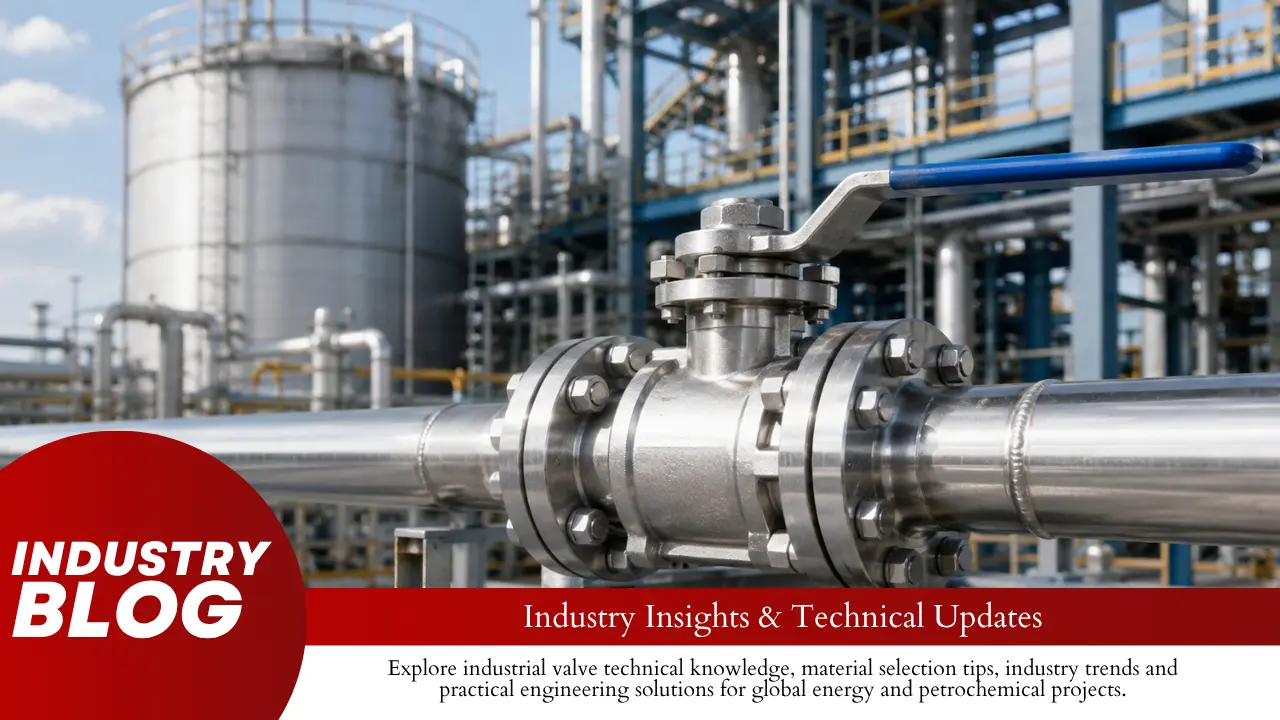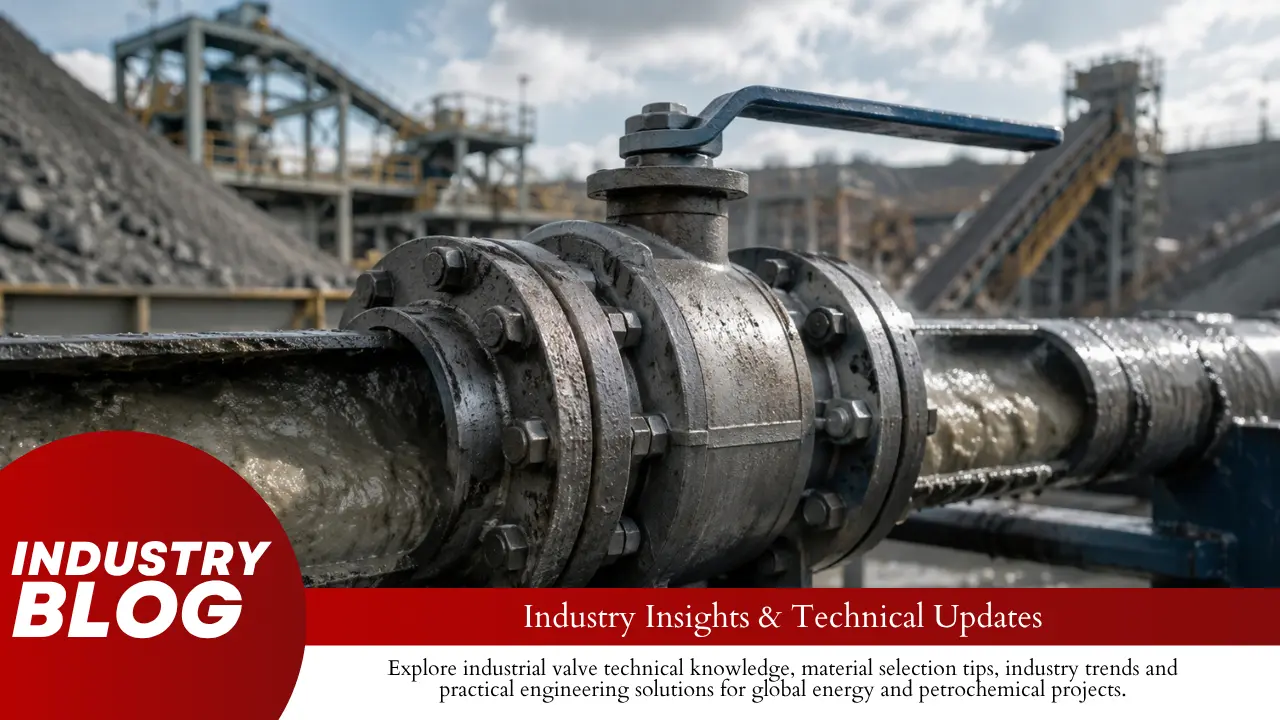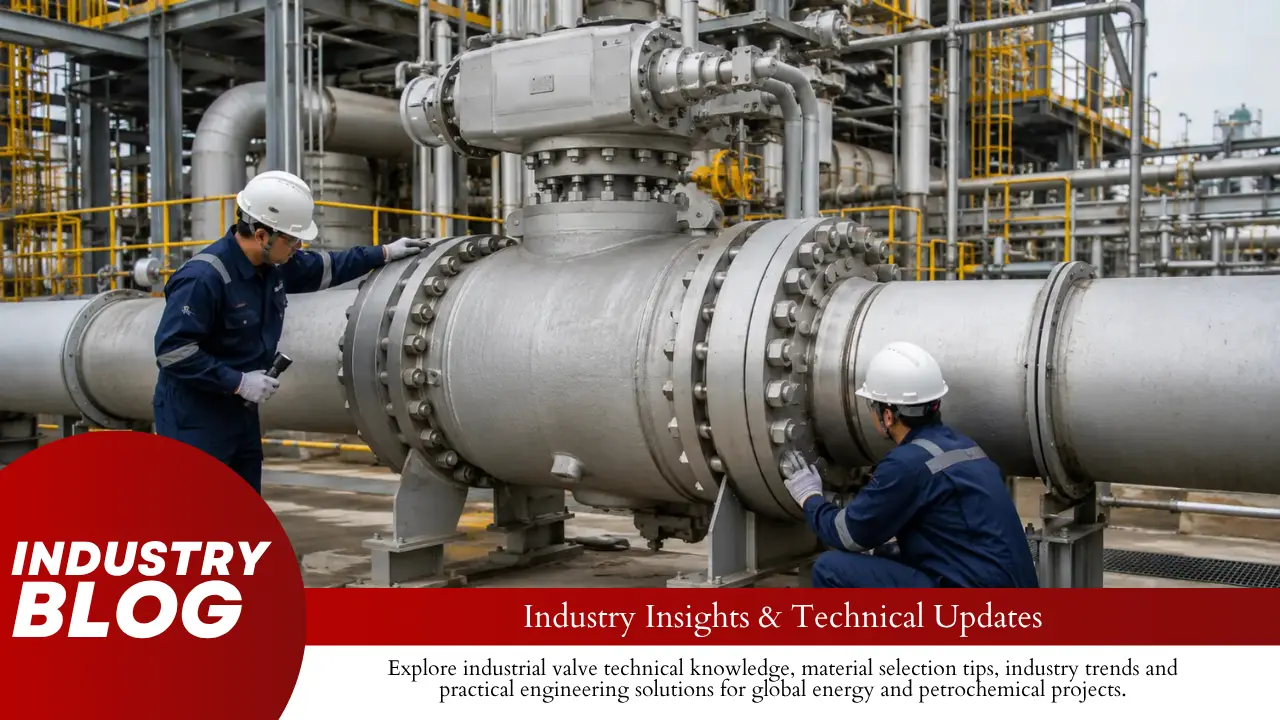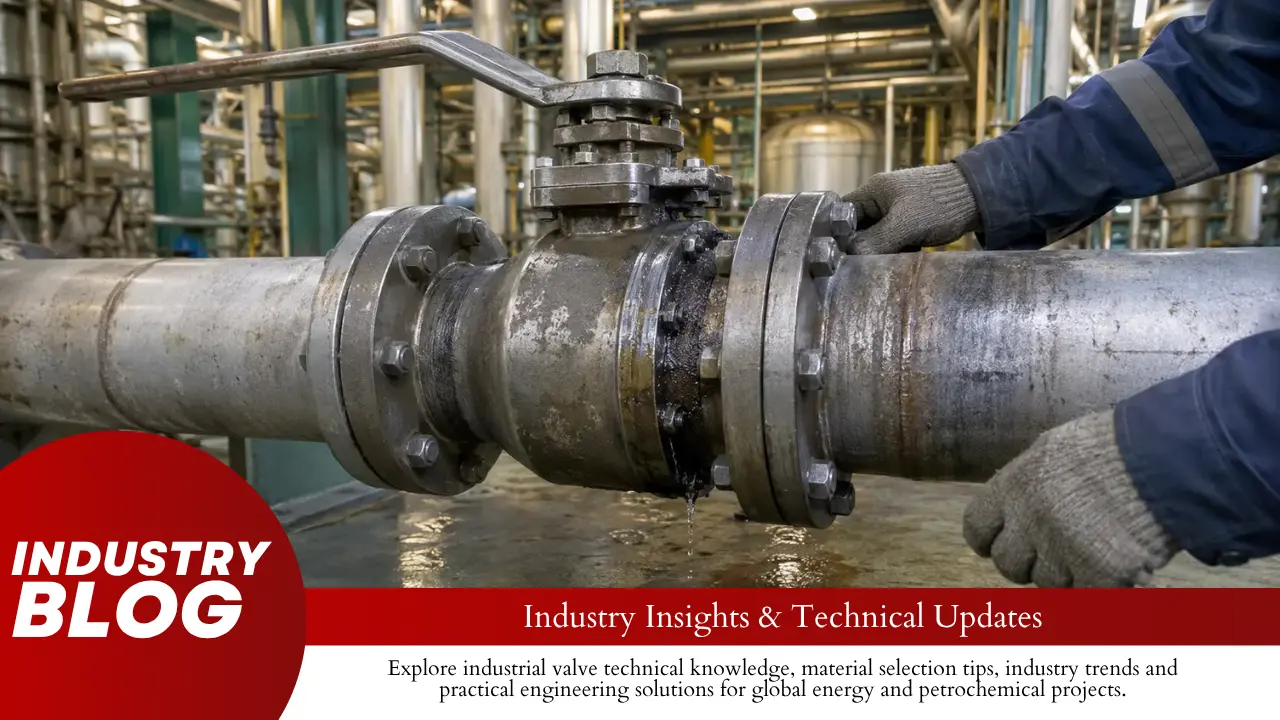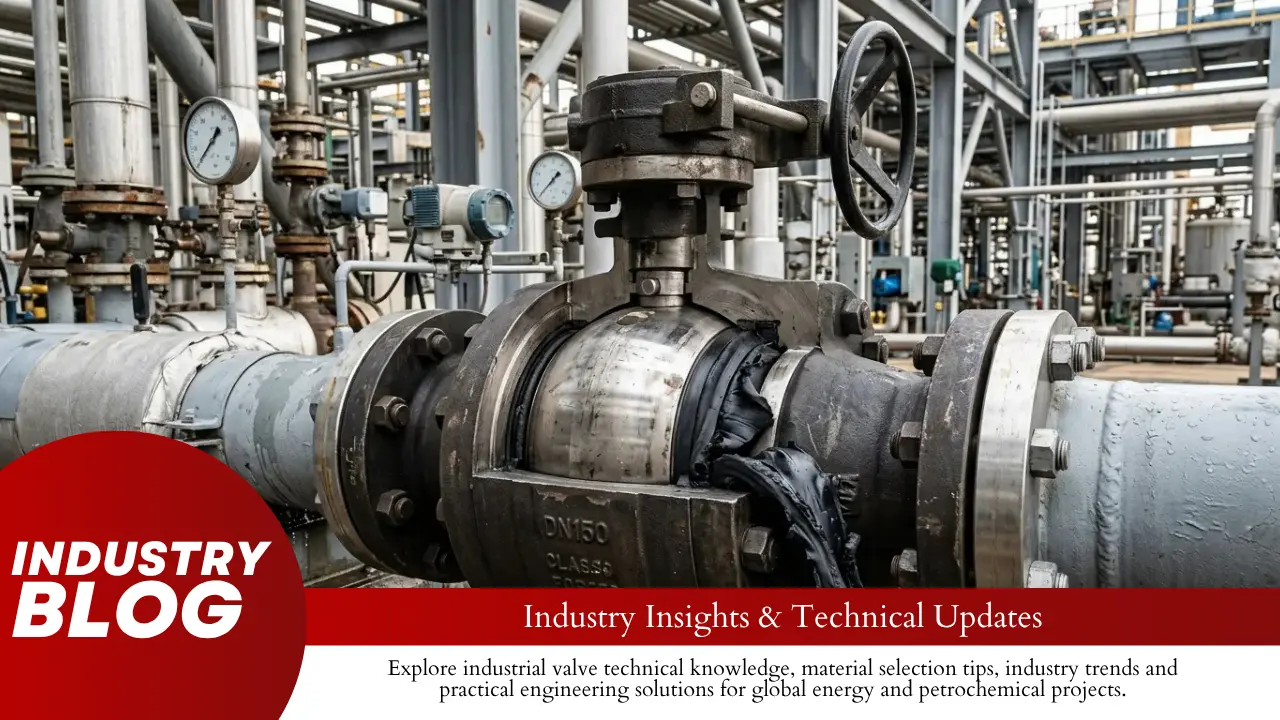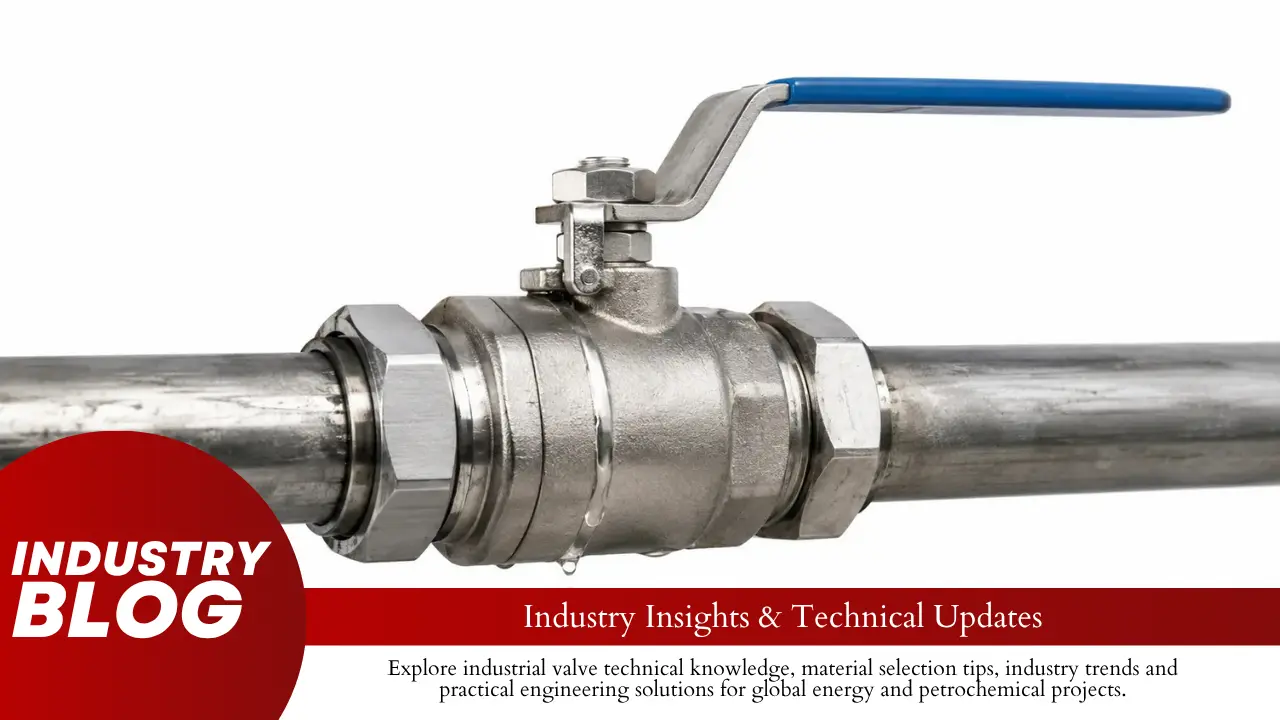
Choosing a ball valve manufacturer in China for oil and gas projects should start with verified qualification, controlled manufacturing capability, relevant project references, and long-term service support. A capable supplier should be able to prove that its quality system, material traceability, machining process, test facilities, documentation control, delivery management, and spare parts system work together in real production.
For pipeline, refinery, petrochemical, gas transmission, LNG, and process-industry projects, the strongest procurement decision is not based on one certificate or one low quotation. It should be based on whether the supplier can meet the exact valve type, pressure class, material grade, service condition, inspection level, documentation package, delivery schedule, and after-sales support period required by the project.
For oil and gas ball valve procurement, a site audit often reveals more than several rounds of document review.
| Evaluation Area | What It Proves | What To Check First |
|---|---|---|
| Qualification credentials | Whether the supplier can meet project entry requirements. | API 6D scope, API Monogram license status, ISO 9001 certification, certification body credibility, and project-specific approvals. |
| Factory capability | Whether the factory can produce stable, traceable, and testable valves. | Material traceability, casting or forging control, CNC machining capability, heat treatment records, inspection records, and test facilities. |
| Project service | Whether the supplier can support the order after purchase order placement. | Technical response, document control, delivery planning, third-party inspection coordination, spare parts commitment, and field issue handling. |
Qualification Standards
API 6D and API Monogram License Verification
API Specification 6D defines requirements for the design, manufacturing, materials, welding, quality control, assembly, testing, marking, documentation, and shipment of valves used in oil and gas applications. The specification covers valve types including ball, check, gate, and plug valves, and is commonly used for projectized oil and gas valve procurement. API 6D covers standard pressure classes including Class 150, Class 300, Class 400, Class 600, Class 900, Class 1500, and Class 2500.[1]
For many pipeline, gas transmission, refinery, petrochemical, and EPC projects, API 6D compliance or API 6D Monogram licensing is treated as a practical prequalification requirement by owners, EPC contractors, or end users. It should not be described as a universal legal requirement in every market. API Monogram is a voluntary licensing program that authorizes licensed manufacturers to apply the API Monogram mark to products that meet the applicable API specification. API also states that licensees must demonstrate a quality management system compliant with API Spec Q1.[2]
During supplier screening, request the current API 6D license and verify it in the API Composite List. The API Composite List is the official directory for checking API Monogram and APIQR certification information. The key point is not only whether the company appears in the directory, but whether the listed scope covers the required product specification, manufacturing location, valve type, and project requirement.[3]
API license status should be checked close to the purchase decision date because license status can change. API states that organizations applying for or holding API Monogram and Repair and Remanufacture licenses must undergo annual audits to verify conformance with API Spec Q1, applicable API product specifications, and program requirements.[4]
- Search the supplier in the API Composite List.
- Confirm the licensed company name and manufacturing location.
- Confirm that API 6D is included in the licensed scope.
- Check whether the project-required valve type, product specification, and pressure class are covered by the licensed scope.
- Request quality records that the supplier is allowed to share, including recent inspection and test documentation.
- Spot-check material certificates, heat numbers, heat treatment records, pressure test reports, and final inspection records for recent production batches.
A serious supplier should not resist reasonable verification. If a factory claims that its API license is under renewal, ask for written evidence and verify the current status in the official API directory before awarding the order.
ISO 9001 and Certification Body Credibility
ISO 9001:2015 is a baseline quality management system standard, but holding a certificate does not prove that the system is effectively implemented on the shop floor. ISO 9001 defines requirements for a quality management system and supports consistent delivery of products and services that meet customer and applicable statutory and regulatory requirements.[5]
ISO states that it does not perform certification or issue ISO certificates. Certification is performed by external certification bodies. Buyers should therefore check whether the certification body is accredited and whether the certificate can be verified through the relevant certification body, accreditation body, or recognized certificate database.[6]
IAF CertSearch helps users validate whether a certification is valid, whether the certification body is accredited, and whether the accreditation body is an IAF MLA signatory. It is a useful tool when checking supplier management system certificates, especially when the certification body is unfamiliar to the buyer.[7]
IATF 16949 should not be treated as a general accreditation body. It is an automotive-sector quality management standard for organizations in the global automotive industry, not a substitute for ISO 9001 certificate verification in oil and gas procurement.[8]
- Request the ISO 9001 certificate and the latest available surveillance audit evidence.
- Confirm the certification body name, accreditation mark, certificate number, scope, address, and validity period.
- Verify the certificate through IAF CertSearch, the certification body, or the relevant national accreditation body.
- Compare the certificate scope with the actual factory activity, product range, and manufacturing location.
- Check whether nonconformities have documented root-cause analysis, corrective actions, and closure records.
- Compare audit records with actual production records, inspection logs, calibration records, and material traceability files on the shop floor.
ISO 9001 alone does not prove product capability. For oil and gas ball valves, stronger evidence is a working quality system that controls materials, machining, welding, heat treatment, assembly, testing, preservation, packing, and documentation.
Export Track Record and Project Relevance
Export experience should be judged by market relevance, not only by shipment volume. A supplier with strong Middle East references may still lack hands-on experience with Southeast Asian offshore, refinery, or coastal petrochemical requirements. A supplier with Southeast Asia experience may still lack approval experience for a national oil company project in the Gulf region.
For H2S-containing production environments, material selection should be checked against the project specification and the applicable ISO 15156 or ANSI/NACE MR0175/ISO 15156 requirements. ISO 15156-1:2020 gives requirements and recommendations for selecting and qualifying metallic materials for equipment used in oil and gas production and natural-gas sweetening plants in H2S-containing environments where failure could pose safety, environmental, or equipment-damage risks.[9] For refinery and downstream sour-service applications, confirm whether the project requires NACE MR0103, ISO 15156, owner-specific requirements, or another applicable material standard.
Valid export performance evidence should include traceable project information. A purchase order screenshot is not enough unless it can be connected to the end user, project name, product type, pressure class, material grade, inspection level, and shipment record.
- Direct supply record to IOCs, NOCs, EPCs, or approved project contractors.
- Shipment records to the target region.
- Reference letters or performance feedback from engineering companies, EPC contractors, or end users.
- Traceability to project name, product type, size range, pressure class, and material grade.
- Evidence of compliance with regional or owner-specific requirements such as sour-service material rules, MESC requirements where specified, coating specifications, documentation formats, or local approval systems.
The most useful references are recent projects with similar service conditions. A supplier that has delivered WCB Class 150 valves for general utility service has not automatically proven capability for Class 900 sour-service pipeline ball valves with strict documentation and third-party inspection requirements.
Factory Capability
Casting, Forging, and Material Traceability
Ball valve body manufacturing commonly uses casting or forging. The better choice depends on size, pressure class, material, design, production volume, cost target, and service severity. Casting is often used for larger and more cost-sensitive valve bodies. Forging is commonly selected for small-bore, high-pressure, or severe-service valves where dense material structure and tighter raw-material traceability are important.
| Process | Common Application | Audit Focus |
|---|---|---|
| Casting | Larger valve bodies or cost-sensitive configurations. | Foundry qualification, casting process control, NDE records, repair control, pressure test performance, and heat number traceability. |
| Forging | Small-bore, high-pressure, or severe-service valves. | Raw material origin, forging process control, heat treatment records, mechanical test reports, and full heat number traceability. |
Pressure class should not be treated as a simple pressure number. ASME B16.34 covers pressure-temperature ratings, materials, marking, and other characteristics of cast, forged, and fabricated valves. The allowable pressure depends on material group and operating temperature, not only on the class designation.[10]
- Request casting or forging supplier qualification records.
- Check whether the factory controls the process internally or through approved subcontractors.
- Verify heat number traceability from raw material to finished valve.
- Review heat treatment charts and mechanical test results.
- Check whether casting repairs, weld repairs, or deviations are documented and approved.
- Confirm whether subcontracted foundry, forging, heat treatment, NDE, coating, or packing processes are controlled under the supplier’s approved supplier system.
Vertical integration can improve schedule control, but outsourcing is not automatically a weakness. A supplier using external foundries or forging shops can still be acceptable if subcontractor qualification, incoming inspection, heat treatment control, NDE, and traceability are strong.
CNC Machining Capability
CNC machine count is useful, but it should not be used alone. A factory with many machines may still have poor output if fixtures are weak, operators are undertrained, inspection is inconsistent, or preventive maintenance is neglected. A factory with fewer machines may perform well if it has strong process planning, stable tooling, capable operators, and strict in-process inspection.
For critical machined features, the audit benchmark should follow the approved drawing, size range, datum system, and inspection method. General claims such as “high precision machining” are not enough. The supplier should provide actual dimensional inspection reports, gauge calibration records, and batch consistency evidence for similar valve sizes and pressure classes.
- Main CNC brands, models, machine age, and maintenance status.
- Number of 4-axis and 5-axis machines actually used for valve components.
- Fixture design and repeated-clamping control.
- Qualified CNC operators per shift.
- Tooling control, tool-life management, and preventive maintenance records.
- In-process inspection frequency and final dimensional inspection records.
- Measurement equipment, CMM capability where applicable, and calibration validity.
Multi-axis machining can reduce repeated clamping and improve geometric consistency, but the real audit question is whether the factory can prove stable results across multiple batches. Ask for inspection reports from recent orders with the same valve size, pressure class, and material type.
Testing Facility Capability
Testing is the final quality gate. A supplier should be able to demonstrate pressure testing, seat sealing testing, instrument calibration, test record control, and raw data traceability. For API 6D valves, API 6D testing requirements are the starting point. API 598 may also be specified by the purchaser or referenced by other valve standards, but it should not be described as automatically mandatory for every API 6D valve order.
| Test Area | Common Standard or Requirement | What To Verify During Audit |
|---|---|---|
| Pressure and seat sealing | API 6D; API 598 when specified | Live test records, calibrated gauges, test medium, test pressure, hold time, and acceptance criteria. |
| Fugitive emission | ISO 15848 or project-specified equivalent | Required tightness class, test medium, endurance class, temperature class, and qualified test evidence. |
| Fire-safe performance | API 607, API 6FA, or project-specified equivalent | Fire-safe test evidence for the applicable design family, size range, pressure class, seat type, and material configuration. |
| Low-temperature or cryogenic service | ISO 28921, BS 6364, or project-specific requirement | Low-temperature test capability, temperature range, test medium, leakage criteria, and valve operation after cooling. |
API 598 covers inspection, examination, supplementary examinations, and pressure test requirements for resilient-seated, nonmetallic-seated, and metal-to-metal-seated valves. It supplements API standards that reference it and may also be applied to other valve types by agreement between the purchaser and the valve manufacturer.[11] This is why the purchase specification should clearly state whether API 598 is required in addition to API 6D.
ISO 15848-1 specifies testing procedures for evaluating external leakage of valve stem seals or shafts and body joints of isolating and control valves intended for volatile air pollutants and hazardous fluids.[12] It does not set one universal 50 ppm limit for every valve. For methane testing, commonly cited ISO 15848-1 tightness classes include AM at no more than 50 ppm, BM at no more than 100 ppm, and CM at no more than 500 ppm; the required class must be confirmed in the project specification.[13]
For fire-safe requirements, API 6FA covers requirements for testing and evaluating the performance of API Specification 6A and API Specification 6D valves when exposed to fire.[14] API 607 specifies fire testing requirements and a method for confirming the pressure-containing capability of quarter-turn valves and valves equipped with nonmetallic or metallic seats.[15] The correct fire-test standard should be selected according to valve type, seat design, project specification, and owner requirements.
For LNG or other low-temperature services, cryogenic testing should follow the project specification. ISO 28921-1 applies to isolating valves for low-temperature and cryogenic applications from -50 °C down to -196 °C, including ball valves.[16] Liquid nitrogen testing at approximately -196 °C is common where such testing is specified, but not every low-temperature application requires the same test temperature.
- Ask the supplier to demonstrate a live pressure or seat sealing test.
- Confirm that pressure gauges, temperature instruments, torque tools, and measuring devices are within calibration validity.
- Request raw test records, not only final pass certificates.
- Check whether test data is recorded in real time and linked to valve serial numbers.
- Confirm whether fugitive emission, fire-safe, and cryogenic tests are performed internally or by qualified third-party laboratories.
- Make sure the test report applies to the same design family, seat type, material configuration, size range, pressure class, and service condition as the valves being purchased.
A test rig without valid calibration is not a reliable quality gate. A test report without traceability to the applicable design and production batch should not be accepted as complete evidence.
Documentation and Traceability Control
Oil and gas valve procurement depends heavily on documentation. A technically capable factory can still create project risk if it cannot submit drawings, inspection and test plans, material certificates, test reports, NDE reports, coating reports, packing lists, and final dossiers on time.
| Document Type | What It Should Prove | Audit Focus |
|---|---|---|
| Material certificate | Material grade, heat number, chemical composition, and mechanical properties. | Traceability from raw material to pressure-containing parts. |
| Heat treatment record | Temperature, holding time, cooling method, furnace batch, and operator record. | Consistency with material specification and mechanical test results. |
| Inspection and test plan | Hold points, witness points, inspection stages, acceptance criteria, and responsible parties. | Alignment with purchase order, owner specification, and third-party inspection requirements. |
| Pressure test report | Shell test, seat test, test medium, pressure, duration, leakage result, and gauge information. | Serial number traceability, gauge calibration validity, and acceptance criteria. |
| Final dossier | Complete manufacturing, inspection, testing, and shipping evidence. | Document completeness, revision control, and project-specific format compliance. |
Traceability should not stop at the material certificate. The supplier should be able to connect purchase order, drawing revision, bill of materials, raw material heat number, machining record, welding or repair record where applicable, heat treatment batch, NDE record, assembly record, pressure test result, nameplate, packing list, and final shipment file.
Project Service and Long-Term Support
Technical Response Speed
Technical responsiveness should be evaluated across several rounds of communication. One fast first reply is not enough. A supplier’s technical team should be able to answer questions about pressure class, materials, trim, seat type, anti-static design, blow-out proof stem, fire-safe design, fugitive emission class, sour-service compliance, coating, packing, preservation, and documentation.
- Inquiry acknowledgment: how quickly the supplier confirms receipt and ownership of the question.
- Technical clarification: how clearly the supplier answers material, pressure, testing, and documentation questions.
- Change handling: how well the supplier responds when the project changes after quotation or purchase order placement.
- Documentation control: how quickly the supplier can issue drawings, ITP, MTC, test reports, coating records, packing lists, and final dossiers.
For export oil and gas projects, the supplier should have a dedicated project or export engineering team. A domestic sales team may not be enough for international orders that require English documentation, third-party inspection coordination, owner-specific forms, and strict submission schedules.
Delivery Management
Delivery commitment should be checked against actual records. Contract promises alone are not enough. Ask for delivery performance from recent export projects with comparable size, pressure class, material, inspection level, and documentation requirements.
| Delivery Evidence | What To Check | Why It Matters |
|---|---|---|
| Recent project delivery records | Contract date, promised delivery date, actual shipment date, and reason for deviation. | Shows whether the supplier can meet project schedules. |
| Production schedule | Material readiness, machining slots, assembly plan, test schedule, inspection booking, and packing plan. | Shows whether the quoted lead time is realistic. |
| Subcontractor control | Foundry, forging, heat treatment, NDE, coating, actuator mounting, packing, and logistics partners. | Shows whether schedule risk is controlled outside the main factory. |
For projectized API 6D ball valves, lead time varies by valve size, pressure class, material, quantity, NDE requirement, third-party inspection, documentation, coating, actuator scope, and stock availability. Small standard valves may be available faster when qualified inventory exists. Large-bore, high-pressure, sour-service, cryogenic, or special-alloy valves usually require more careful schedule review.
If a supplier offers a much shorter lead time than comparable bidders, ask exactly how the schedule will be compressed.
- Is qualified stock being used?
- Are body castings or forgings already available?
- Will testing steps remain unchanged?
- Will third-party inspection still be included?
- Will documentation review time remain unchanged?
- Which subcontractors are involved, and are their slots confirmed?
- Will preservation, painting, marking, packing, and export documentation remain compliant with the project specification?
A short lead time is useful only if it does not reduce inspection, testing, documentation, preservation, or traceability requirements.
After-Sales Spare Parts
Ball valves are long-life equipment. A strong supplier should be able to support seats, seals, stems, bearings, gaskets, packing, bolting, gear operators, actuators, and other critical parts after installation. For oil and gas operators, spare parts availability can be as important as the initial purchase price.
A practical procurement requirement is a long-term spare parts commitment supported by a standardized spare parts coding system. The commitment should be written into the contract or purchase specification. It should not be left as a verbal promise.
- Minimum spare parts support period.
- Standardized spare parts list and coding system.
- Recommended commissioning, two-year, and five-year spare parts packages.
- Emergency spare parts lead time.
- Minimum order quantity rules.
- Consignment stock option for critical projects.
- Price lock or price adjustment mechanism.
- Interchangeability control when the supplier changes design, materials, seats, seals, or sub-suppliers.
Consignment stock can be valuable for operators with critical assets. If consignment stock is not available, the supplier should at least define emergency spare parts lead time and identify which items are normally kept in stock.
Commercial Risk and Low-Price Screening
A low unit price should be checked against the full project scope. Ball valve cost is affected by body material, pressure class, bore type, seat material, sealing design, stem packing, actuator requirement, coating system, sour-service requirement, fugitive emission requirement, fire-safe evidence, third-party inspection, documentation package, and spare parts commitment.
When one quotation is significantly lower than the market range, compare the technical exceptions before treating it as a cost advantage. A low price may come from legitimate inventory, efficient production, or strong purchasing power. It may also come from missing documentation, downgraded materials, excluded testing, simplified coating, weaker packing, unapproved subcontractors, or unclear spare parts obligations.
| Low-Price Item To Check | Risk If Ignored | Required Confirmation |
|---|---|---|
| Material grade and origin | Wrong material, weak traceability, or unsuitable sour-service performance. | MTC, heat number traceability, applicable ISO 15156 or project material compliance where required. |
| Testing scope | Missing fugitive emission, fire-safe, cryogenic, or third-party witnessed testing. | ITP, test standards, witness points, acceptance criteria, and test report applicability. |
| Documentation package | Delayed final dossier or rejection by owner/EPC document control. | Document list, submission schedule, language, format, and revision-control process. |
| Subcontracted processes | Schedule delay or quality escape outside the main factory. | Approved supplier list, subcontractor qualification, incoming inspection, and traceability records. |
| Spare parts | Low initial price but poor lifecycle support. | Spare parts list, emergency lead time, interchangeability rules, and long-term supply commitment. |
The safest comparison is a technically equalized bid tabulation. Before awarding the order, align every bidder to the same valve specification, same inspection and test plan, same document list, same delivery terms, same spare parts requirement, and same commercial conditions.
Supplier Selection Checklist
Prequalification Review
- Verify API 6D scope and API Monogram license status in the API Composite List.
- Verify ISO 9001 certificate validity and certification body accreditation.
- Check whether the factory address on certificates matches the actual manufacturing site.
- Review relevant export project references with similar service conditions.
- Confirm whether owner, EPC, NOC, IOC, or local approval is required.
- Check whether the supplier has experience with required documentation formats and inspection procedures.
Technical Review
- Confirm valve type, size, pressure class, bore type, body material, trim material, seat material, and sealing design.
- Check pressure-temperature rating according to applicable design standard and material group.
- Confirm sour-service, fire-safe, fugitive emission, low-temperature, cryogenic, anti-static, and blow-out proof stem requirements where applicable.
- Review drawings, datasheets, bill of materials, inspection and test plan, and applicable standards list.
- Check whether offered test reports apply to the same design family, size range, pressure class, seat type, and material configuration.
- Review painting, coating, preservation, marking, packing, and shipping requirements.
Factory Audit
- Inspect raw material warehouse and heat number control.
- Review casting, forging, heat treatment, machining, welding, NDE, assembly, and testing records.
- Check CNC machines, fixtures, operators, inspection tools, and calibration records.
- Witness pressure testing or seat sealing testing where possible.
- Review nonconformance records, corrective actions, and customer complaint handling.
- Confirm whether critical processes are performed internally or by approved subcontractors.
Commercial and Delivery Review
- Compare technically equalized quotations instead of headline unit prices.
- Check production schedule, material readiness, inspection booking, and subcontractor capacity.
- Confirm Incoterms, packing method, export documentation, shipping marks, and preservation period.
- Agree on document submission milestones before production, during production, before shipment, and after shipment.
- Define liquidated damages, warranty terms, spare parts supply period, and emergency response process where required.
Final Supplier Selection
A qualified Chinese ball valve manufacturer for oil and gas projects should be evaluated through verified API 6D scope, credible ISO 9001 certification, relevant export references, controlled material traceability, proven machining capability, calibrated test facilities, realistic delivery planning, complete documentation control, and long-term spare parts support.
API 6D and API Monogram licensing help narrow the supplier pool, but they do not replace a project-specific technical and commercial audit. The final decision should depend on whether the supplier can meet the exact service condition, pressure class, material requirement, testing requirement, documentation package, delivery schedule, and after-sales support period required by the project.
No certificate can replace direct verification of the manufacturing process, test bay, records, and people responsible for the order.
For high-value or high-risk oil and gas orders, visit the factory before contract award whenever possible. If a site visit is not possible, request a structured remote audit with live video inspection, real-time document review, production record sampling, and direct verification of test equipment, calibration status, and material traceability.