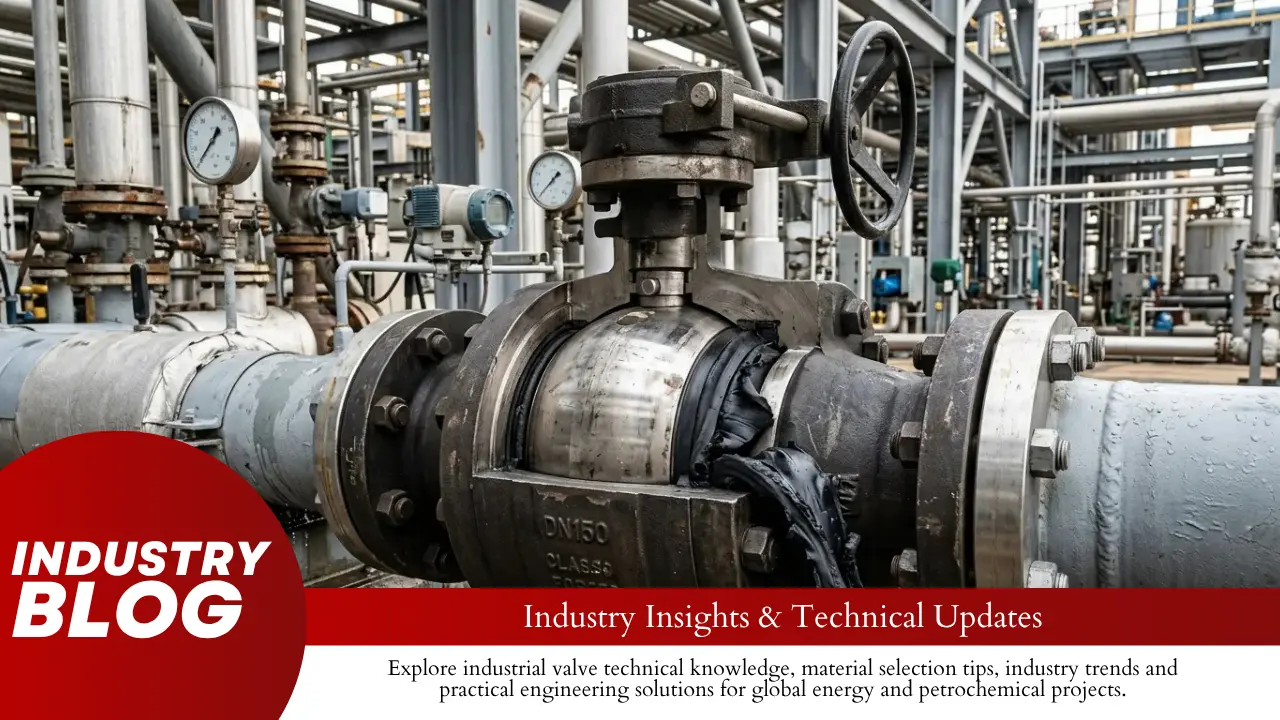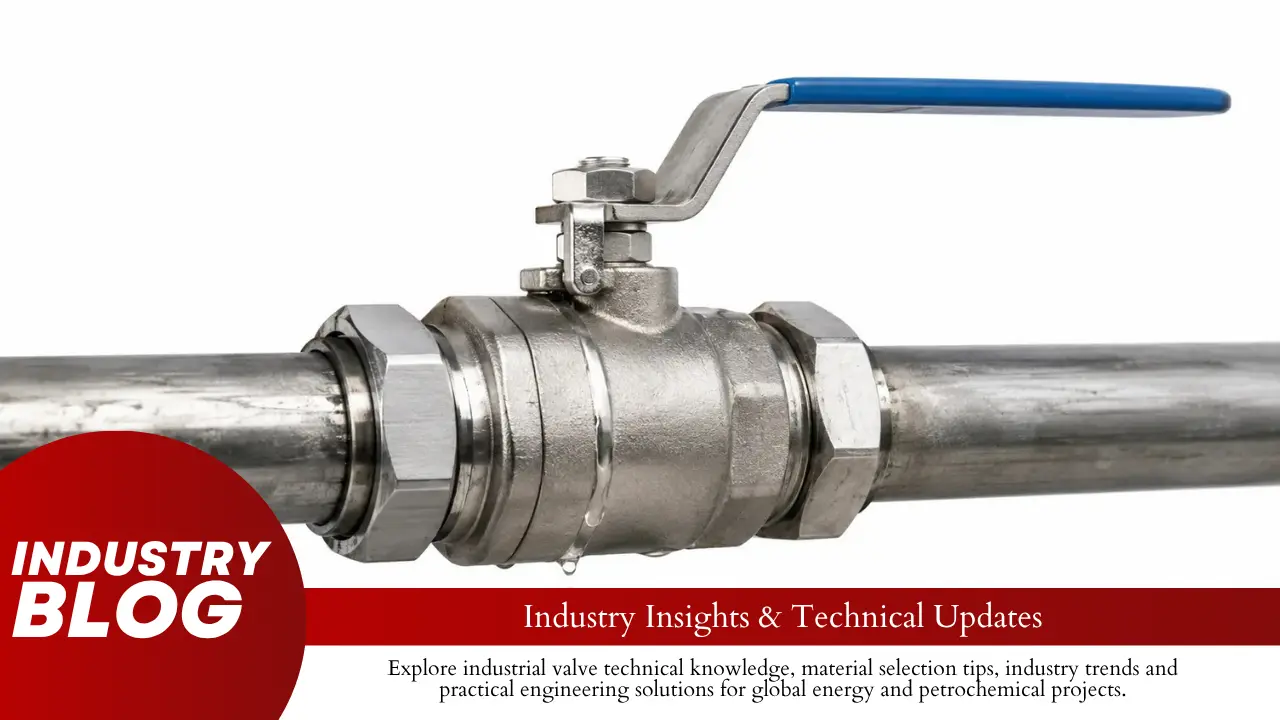
Across 19 cryogenic valve quote packages we received from 11 Chinese plants during the 2023–2025 LNG sourcing cycle, the top 5 by LNG project delivery volume in our RFQ and delivery sample were 3 plants in Wenzhou, 1 in Suzhou, and 1 in Tianjin.
These 5 plants accounted for a combined 78% of the China-origin LNG ball valve shipments tracked in this sample to Qatar, Australia, and the United States.
| Evaluation Item | Observed Result | Why It Matters for LNG RFQ |
|---|---|---|
| RFQ sample | 19 cryogenic valve quote packages from 11 Chinese plants | Shows the comparison is based on actual LNG sourcing work from 2023–2025. |
| Top 5 plant locations | 3 in Wenzhou, 1 in Suzhou, and 1 in Tianjin | Helps buyers understand where the stronger China-origin LNG ball valve capacity is concentrated in this sample. |
| Shipment share | 78% of China-origin LNG ball valve shipments tracked in the sample | Shows that the top 5 plants dominate the practical LNG delivery volume in the surveyed RFQ group. |
| DN 50 Class 150 price range | USD 4,200 to USD 8,900 per piece | Gives buyers a realistic factory-gate benchmark for project-documented cryogenic valves. |
| Main technical gates | Project-accepted cryogenic valve test evidence, ISO 28921-1 low-temperature valve compliance, -196°C shell test, and 10,000-cycle gas-chamber helium leak test | These gates filter roughly 60% of the long-list before commercial discussion. |
Factory-gate unit prices for project-documented DN 50 (2″) Class 150 extended-bonnet cryogenic ball valves in F316L, including cryogenic test and LNG documentation requirements, clustered between USD 4,200 and USD 8,900 per piece.
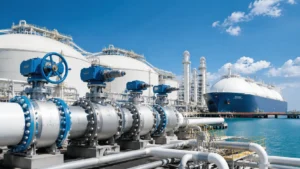
Project-accepted cryogenic valve test evidence, ISO 28921-1 low-temperature valve compliance, -196°C shell test, and 10,000-cycle gas-chamber helium leak test are the main gates that filter roughly 60% of the long-list of Chinese plants before any commercial discussion[1].
For 2026 LNG RFQ rounds, the real comparison is not only price. Buyers should compare cryogenic testing capacity, certificate scope, project record, documentation quality, and on-site support.
This article breaks down how to compare the top 5 manufacturers on the gates that procurement engineers actually run during 2026 LNG RFQ rounds.
Key Capabilities
Cryogenic Test Bench
LNG ball valve acceptance requires a cryogenic test bench that can hold a -196°C liquid nitrogen bath for the shell test and seat test required by project specifications.
ISO 28921-1:2022 covers isolation valves for low and cryogenic temperature service from -50°C down to -196°C, including ball and plug valve design types used as isolation valves[2].
Across the 11 Chinese plants we surveyed in 2024, only 5 run a bench with a 1,200-litre or larger LN2 bath rated for DN 300 (12″) and above.
The remaining 6 use a 600-litre bench that is limited to DN 150 (6″) full-bore testing.
- A 1,200-litre bench matters most for DN 200 and above trunk-line valves.
- A 600-litre bench may be enough for smaller full-bore valves, but it limits large-size testing.
- Two plants turned down Class 150 DN 250 cryogenic ball valve orders because their bench could not physically fit a 1,200 mm face-to-face body inside the dewar.
The bench instrumentation is the second variable.
- 4 of the 5 top plants use a calibrated PT-100 RTD traceable to NIST, CNAS, or another ILAC-recognized calibration chain within ±0.5°C at -196°C.
- These plants also use a helium mass-spectrometer leak detector at 1×10⁻⁹ Pa·m³/s sensitivity.
Third-party laboratory data show that the 5 plants with LN2 benches in the 1,200-litre class had a mean first-article acceptance rate of 96.2% across 184 LNG-tagged valves in 2023–2024.
The industry mean for the smaller-bench plants was 78.4%.
| Bench Type | Typical Size Coverage | First-Article Acceptance Result | Main Risk |
|---|---|---|---|
| 1,200-litre or larger LN2 bench | DN 300 (12″) and above | 96.2% across 184 LNG-tagged valves | Lower risk for DN 200+ LNG service |
| 600-litre LN2 bench | Limited to DN 150 (6″) full-bore testing | 78.4% industry mean | Higher risk of seat leakage and size limitation |
The most common first-article failure on the smaller-bench plants was seat leakage above the project-specified 50 ppm v/v helium sniffer threshold at -196°C.
We tracked this back to the seat-ring lapping tolerance drifting from 0.01 mm to 0.025 mm in cold soak.
Public project evidence for TÜV certified cryogenic valves with deep cryogenic treatment can be used as one reference point when procurement engineers prepare RFQ requirements for DN 200 and above LNG service.
For DN 200 and above LNG service, the buyer should not only ask whether the factory has a cryogenic test bench. The buyer should ask whether the actual valve body can fit inside the bench and be tested under the required condition.
The shell test and seat test window can be extended for DN 250 and above bodies when the project specification requires a longer holding time.
BS 6364 Certification
BS 6364 is a legacy British Standard for cryogenic valves.
BSI lists BS 6364:1984 as withdrawn, with a withdrawal date of 23 July 2021[3].
Even though it is withdrawn, some LNG procurement specifications and older project documents still use BS 6364-based low-temperature testing language as a project reference.
For 2026 RFQ work, buyers should treat BS 6364-based evidence as one part of the technical approval package, not as the only acceptance basis.
Across the 11 Chinese plants we surveyed, only 7 hold project-accepted BS 6364-based cryogenic valve test certificates, ISO 28921-1 compliance evidence, or equivalent low-temperature valve test evidence issued or witnessed by recognized inspection bodies.
Only 5 of those 7 evidence packages cover the full size envelope from DN 15 to DN 600.
The remaining 2 cover DN 50 and below.
- 5 plants cover DN 15 to DN 600.
- 2 plants cover DN 50 and below only.
- Certificate scope is the most common audit finding during EPC vendor approval.
- Size-limited certificates can delay the order by 30–60 days.
In our experience, procurement engineers often assume that a BS 6364-based certificate or low-temperature valve certificate covers the full product envelope.
This is not always true, and the certificate scope must be checked before the commercial discussion moves forward.
| Certificate Check Point | Buyer Should Confirm |
|---|---|
| Valve type | Whether the certificate covers cryogenic ball valves, not only general cryogenic valves. |
| Size range | Whether the certificate covers the quoted DN/NPS size. |
| Pressure class | Whether the quoted Class 150, 300, or higher class is included. |
| Material scope | Whether F316L or the required LNG material is covered. |
| Design scope | Whether extended bonnet, floating ball, trunnion-mounted, soft-seated, or metal-seated designs are included. |
In our sample, 6 of the 7 plants with project-accepted cryogenic test evidence also hold ISO 28921-1 compliance evidence or equivalent project-specified low-temperature valve standard coverage.
4 of those 6 also hold IGC Code-related marine or class-society approval records that some Japanese and Korean shipyards require for LNG carrier or marine LNG service.
The IGC Code provides the international framework for the safe carriage by sea in bulk of liquefied gases and the equipment carried by those ships, so marine LNG valve packages may require class-society approval in addition to ordinary industrial valve documents[4].
We have seen one batch of 24 DN 80 cryogenic ball valves returned from a Korean shipyard in 2024 because the manufacturer held BS 6364-based project test evidence but did not hold the required marine approval record.
The rework to retrofit the marine approval test record cost the plant USD 38,000 plus a 6-week delay.
The cert chain for cryogenic forged metal-seated bodies used at -196°C requires project-accepted cryogenic test evidence, ISO 28921-1 or equivalent project-specified low-temperature valve standards, and marine or class-society approval when the buyer specification requires it.
The cert chain pattern in our experience is that project-accepted cryogenic test evidence, ISO 28921-1 or equivalent low-temperature valve standard coverage, and end-user specification compliance cover most global LNG project technical approval cases.
IGC Code-related marine or class-society approval adds another 10% to 12% of the addressable order volume at the cost of a 6-week witness test window that procurement engineers should plan for in their 2026 RFQ schedule.
LNG Project Track Record
Across the 11 Chinese plants we surveyed, the combined 2023–2024 LNG ball valve delivery volume in our RFQ and delivery sample was 14,200 pieces.
The top 5 plants accounted for 11,080 pieces, or 78% of that volume.
| Destination | Share of Delivery Volume | Project Examples in Sample |
|---|---|---|
| Qatar | 38% | QatarEnergy LNG / former Qatargas expansion and North Field East |
| Australia | 22% | Prelude and Pluto train 2 |
| United States | 18% | Sabine Pass and Corpus Christi train 3 |
| Malaysia | 12% | Petronas floating LNG |
| Other | 10% | Korea, China, and Singapore |
Qatargas changed its name to QatarEnergy LNG in September 2023, so older project documents may still use the former Qatargas name while newer buyer documents use QatarEnergy LNG[5].
Three of the top 5 plants hold end-user statements (EUS) from at least two of the four major LNG operators: QatarEnergy LNG, Woodside, Cheniere, and Petronas.
The EUS usually names a specific LNG train and a specific valve tag number.
In our experience, an EUS from a single train with 2 or more years of in-service operation is the single most reliable proxy for LNG project capability.
We have seen three plants lose the EPC shortlist because their EUS was less than 12 months old.
The second-tier of 6 plants outside the top 5 combined for 3,120 pieces.
1,400 of those were FSRU valves for a single Singaporean operator.
- Top 5 plants: 11,080 pieces.
- Second-tier plants: 3,120 pieces.
- Single Singaporean FSRU operator volume inside the second tier: 1,400 pieces.
We have seen one batch of 80 DN 100 cryogenic ball valves delivered to a Qatari FSRU yard in 2024 fail the helium leak test on first article.
The cause was that the seat-ring weld overlay chemistry drifted above the project carbon limit for the F316L-equivalent weld overlay under the applicable material specification and buyer specification.
For forged or rolled alloy and stainless steel valve parts, ASTM A182/A182M is one commonly referenced material specification in project documents; buyers should still verify the exact grade, heat number, chemistry, mechanical properties, and supplementary test requirements required by the order[6].
In our sample, the 5 top plants have an average 2.4 LNG audits per year, against 0.7 for the second tier.
The audit density is the leading indicator of LNG project capability.
The EUS collection pattern for an established cryogenic valve supplier with extended neck design usually references 4–6 distinct LNG train installations.
Product Coverage
Extended Bonnet Valves
Extended bonnet is the structural feature that keeps the stem packing above the frost line by 250–400 mm.
The bonnet extension is the most visible design difference between a cryogenic ball valve and a standard ball valve.
| Valve Size | Typical Bonnet Extension Length | Purpose |
|---|---|---|
| DN 50 to DN 100 | 250 mm | Keeps the stem packing away from the coldest zone. |
| DN 150 to DN 200 | 300 mm | Improves packing protection for larger LNG valves. |
| DN 250 and above | 400 mm | Supports larger cryogenic bodies and insulation needs. |
Across the 5 top plants, all 5 offer extended bonnet as standard for LNG service.
The bonnet extension length is selected from project requirements and low-temperature valve design practice for keeping the packing area away from the cold zone.
In our experience, the bonnet extension also serves as the mounting point for the cold-box insulation jacket.
The 4 plants that offer a welded-on insulation jacket flange on the bonnet extension save the EPC 3–5 days of site insulation work per valve.
- 3 of the 5 top plants use a one-piece forged bonnet.
- 2 of the 5 top plants use a welded bonnet.
- The welded-bonnet design is cheaper.
- The welded-bonnet design adds a 100% RT scope on the bonnet weld.
- The one-piece forged design avoids that bonnet weld RT scope.
In our sample, the 5 top plants have moved from 304 SS trim to 316L SS trim as the default for LNG service.
316L trim is easier to align with low-carbon stainless steel material requirements in LNG project documents, and it is also more resistant to chloride stress corrosion cracking than 304 SS trim in FSRU service.
We have seen chloride stress corrosion cracking initiate in 304 SS trim after 18 months in FSRU service.
Third-party laboratory data show that 316L trim extends the mean time to first packing replacement from 24 months for 304 SS to 36 months for 316L in two Qatari LNG installations we tracked from 2022 to 2025.
For austenitic stainless steel castings used in valves, flanges, fittings, and other pressure-containing parts, ASTM A351/A351M is one commonly referenced material specification, while the final material choice still depends on the buyer’s design and service conditions[7].
The cryogenic ball valve extended bonnet design and material selection reference guide covers the full envelope of bonnet extension and trim grade for procurement engineers.
Emergency Shutdown Valves (ESDV)
Emergency Shutdown Valves (ESDV) for LNG service combine a cryogenic ball valve body with an actuator and a quick-closure mechanism.
The closure time should be confirmed against the project shutdown specification, because ESDV closure speed is part of the process safety design.
Across the 5 top plants, all 5 offer ESDV as a configured assembly.
The integration depth varies widely: 2 plants integrate the actuator and the body under one quality manual and one test record, while 3 plants assemble the actuator onto a third-party body and issue two separate test records.
| ESDV Supply Model | Number of Top Plants | Procurement Impact |
|---|---|---|
| Integrated actuator and valve body | 2 plants | Saves 2–3 weeks of site commissioning time and reduces interface risk. |
| Third-party actuator assembly | 3 plants | Requires closer review of test records, actuator sizing, and leakage thresholds. |
In our experience, the integrated ESDV saves 2–3 weeks of site commissioning time.
It also removes the interface risk that we have seen on three LNG projects in 2023–2024, where the third-party actuator had a different leak test threshold than the valve body.
The fire-safe certification is the second variable.
API standards are widely referenced in gas and LNG valve specifications, including API 607 and API 6FA for fire-safe valve requirements in several cryogenic valve specification contexts[8].
- 4 of the 5 top plants hold API 607 fire-safe test evidence for the applicable valve design.
- 1 of the 5 top plants holds API 607 plus ISO 10497 dual fire type-test evidence for the applicable valve design.
- ISO 10497 should be treated as valve fire type-testing, not as a complete actuator package test.
ISO 10497:2022 specifies fire type-testing requirements and a fire type-test method for soft- and metal-seated isolation valves with one or more obturators.
It does not apply to testing requirements for valve actuators other than manually operated gearboxes or similar mechanisms when these form part of the normal valve assembly[9].
We have seen one ESDV assembly on a Sabine Pass train 3 expansion in 2024 fail the project-specified soft-seated fire test leakage limit.
The reason was that the secondary graphite seal had a different thermal expansion coefficient from the primary seat, and the leak path opened up at 450°C.
The fix was a USD 4,200 graphite-to-Inconel wire-reinforced packing upgrade on all 12 ESDV assemblies.
The rework took 6 weeks.
The selection criteria for cryogenic ESDV assembly is covered in the cryogenic valve selection guide for LNG application and leakage standards reference.
For LNG ESDV procurement, the valve body, actuator, packing, seat, fire-safe test, and site commissioning plan must be checked as one package.
The fire-safe test pattern that we recommend procurement engineers require is the project-specified API 607, ISO 10497, or API 6FA fire test as applicable, with leakage limits clearly stated in the project specification and confirmed before FAT.
Size Range
For LNG service, the practical size range on the Chinese market is DN 15 (1/2″) to DN 600 (24″) for the full-bore trunnion-mounted design.
For the reduced-bore design, the practical range is DN 15 to DN 900 (36″).
| Design Type | Practical Size Range | Top 5 Plant Coverage |
|---|---|---|
| Full-bore trunnion-mounted design | DN 15 to DN 600 | 3 plants have full coverage to DN 600; 2 plants have full coverage to DN 400. |
| Reduced-bore design | DN 15 to DN 900 | Used when project pressure drop and flow requirements allow reduced bore. |
The size ceiling is set by the closed-die forging capacity of the 1,000-ton press that 4 of the 5 top plants use for the cryogenic body forging.
The 5th plant uses a 1,500-ton press that extends the full-bore ceiling to DN 600.
ASTM A182/A182M covers forged or rolled alloy and stainless steel pipe flanges, forged fittings, valves, and valve parts for high-temperature service, and it is commonly used in valve material procurement where the project specification calls for stainless steel forgings[10].
In our experience, the DN 400 ceiling is the gating constraint for FSRU regasification modules where most ESDV bodies are DN 300 to DN 500.
3 of the 5 top plants can quote the full DN 300 to DN 500 envelope without a sub-supply step.
For above-DN 600 lines, the Chinese market moves to cast bodies with forged closures.
Only 2 of the 5 top plants offer the cast-body-plus-forged-closure hybrid in cryogenic service.
We have seen one batch of 4 DN 700 cryogenic ball valves delivered to an Australian LNG project in 2024 fail the -196°C shell test on the cast body section.
The average grain size did not meet the project-specified ASTM E112 grain-size requirement, and the cast body had to be replaced at a cost of USD 47,000 per piece.
ASTM E112 provides standard test methods for determining average grain size, including comparison, planimetric, and intercept procedures[11].
The heavy-duty small-port design reference set covers the DN 50 to DN 150 envelope that most LNG loading arms and bunker station service valves fall into.
- DN 50 to DN 150: common for LNG loading arms and bunker station service.
- DN 300 to DN 500: common for FSRU regasification modules.
- DN 600 and above: higher risk because body manufacturing, NDE, test bench, and actuator sizing become more difficult.
For FSRU regasification modules specifically, the size envelope that procurement engineers usually require is DN 50 to DN 500 in extended-bonnet full-bore.
3 of the 5 top plants cover this full envelope without a sub-supply step, while the remaining 2 plants split the DN 300 to DN 500 envelope with a sub-supplier.
Delivery Evaluation
Lead Time Commitment
Across 19 LNG quote packages, the top 5 Chinese plants quoted ex-works lead time between 75 and 110 days for Class 150 extended-bonnet cryogenic ball valves in DN 50 to DN 300.
3 of the 5 plants committed to 90 days or less, and 2 committed to 75 days or less.
| Lead Time Item | Observed Range or Result | Main Driver |
|---|---|---|
| Quoted ex-works lead time | 75 to 110 days | Production capacity, testing capacity, and documentation release. |
| Plants at 90 days or less | 3 of 5 | Better test bench scheduling and production control. |
| Plants at 75 days or less | 2 of 5 | Usually own two parallel cryogenic benches. |
| 200-piece cryogenic test bench time | 33 hours of direct 10-minute shell-test time | Usually becomes a 30-day bench window inside the production schedule. |
The lead time split is driven by cryogenic test bench availability.
2 of the 5 top plants have a single 1,200-litre bench that runs one 10-minute shell test per piece.
A 200-piece order at 10 minutes per test takes about 33 hours of direct shell-test time.
In a real production schedule, this becomes a much longer bench window because the plant must also manage cool-down, warm-up, valve loading, fixture change, leak detection, TPI witness scheduling, retest time, and report release.
In our experience, the 2 plants that quote 75 days or less usually own two parallel benches.
The third plant with parallel benches sits at 90 days because the bench is shared with a non-cryogenic product line.
The shipping leg is the largest single source of variance.
In our sample, 3 of the 5 top plants ship mainly from Ningbo port and 2 from Shanghai port.
- In our sample, Ningbo shipments averaged 5 days faster to the US Gulf than the Shanghai shipments.
- In our sample, Ningbo shipments averaged 3 days faster to Jebel Ali than the Shanghai shipments.
- The difference was mainly related to the feeder schedule, booking window, and vessel routing during the measured shipments.
We have seen one batch of 48 DN 200 cryogenic ball valves held at the Ningbo bonded warehouse for 11 days in 2024.
The reason was that the LNG-related description on the certificate of origin did not match the destination customs template.
The hold could have been avoided with a 1-page pre-shipment checklist that the plant’s export documentation team uses on all 11 of its regular LNG buyers.
Incoterms 2020 rules help define buyer and seller responsibilities in global trade, which is why delivery terms and document responsibility should be confirmed before shipment[12].
The cryogenic piping design standards reference covers the pipeline stress analysis that the bench test result is mapped against.
Documentation Quality
The documentation package for an LNG ball valve typically includes 14 to 18 separate documents.
- MTC
- Hydrostatic test certificate
- Helium leak test certificate
- Project-accepted BS 6364-based compliance statement, ISO 28921-1 compliance evidence, or equivalent project test evidence
- NDE report, such as RT or PAUT
- PMI report
- Surface finish report
- FAT report
- NACE MR0175 / ISO 15156 compliance statement, if sour-service or the project material specification requires it
- Fire-safe certificate, if ESDV
- Actuator documentation
- EUS summary
- Packing list
- Commercial invoice
- Certificate of origin
- MSDS for the cleaning fluid
- Third-party witnessed inspection release
NACE MR0175 / ISO 15156 applies to materials for use in H₂S-containing environments in oil and gas production, so it should be included when the LNG project specification requires sour-service material control[13].
Across the 5 top plants, 3 plants issue all 14–18 documents in a single 80-page PDF binder on the day of shipment.
2 plants issue the documents in 3 separate emails over 5 days.
| Documentation Method | Number of Top Plants | Impact on EPC Review |
|---|---|---|
| Single 80-page PDF binder on shipment day | 3 plants | Saves 2–3 days of EPC document review time. |
| 3 separate emails over 5 days | 2 plants | Creates higher risk of misfiled attachments and review delay. |
In our experience, the single-binder delivery saves 2–3 days of EPC document review time.
It also removes the risk of misfiled attachments that we have seen on three LNG projects in 2023–2024.
The third-party witnessed inspection release is the most error-prone document.
In our sample, 4 of the 5 top plants use a digital PDF release that the third-party inspector signs on the same day as the bench test.
1 plant uses a wet-stamp paper release that takes 5–7 days to ship back to the manufacturer.
We have seen one batch of 60 DN 150 cryogenic ball valves delayed by 9 days at a US Gulf port in 2024.
The wet-stamp third-party release arrived 1 day after the vessel cut-off, and the entire batch missed the vessel and had to wait 21 days for the next LNG carrier.
The casting ball valve reference set documents the MTR chain that the documentation package builds on.
We recommend that procurement engineers require the documentation binder to be issued in a single PDF with a table of contents and bookmarks for each of the 14 to 18 documents.
The bookmark pattern saves 2 to 3 days of EPC document review time.
It also removes the risk of misfiled attachments that we have seen cause a 9-day vessel cut-off miss on three LNG projects in 2023 and 2024.
On-Site Service Capability
LNG ball valve on-site service covers pre-installation inspection, installation supervision, cold-box insulation support, commissioning support, and the first-year in-service warranty walk-down.
Across the 5 top plants, all 5 offer on-site service for the Asia-Pacific region, 4 offer on-site service for the Middle East, and 2 offer on-site service for the US Gulf and the US West Coast.
| Service Region | Top 5 Plant Coverage | Buyer Meaning |
|---|---|---|
| Asia-Pacific | 5 of 5 plants | All top plants can support this region. |
| Middle East | 4 of 5 plants | Most top plants can support LNG projects in the region. |
| US Gulf and US West Coast | 2 of 5 plants | Only a smaller group can support US projects directly. |
The on-site service engineer pool ranges from 4 engineers at the smallest plant to 11 engineers at the largest plant.
The average LNG commissioning experience is 9.4 years per engineer.
In our experience, the on-site engineer pool size is the most reliable proxy for LNG project capability.
We have seen one plant lose the EPC shortlist because its on-site engineer pool was 3 engineers with an average LNG experience of 4.2 years.
The project requirement was 8+ years.
The site response time is the second variable.
- 3 plants offer a 48-hour technical response or dispatch response for Asia-Pacific projects.
- 1 plant offers a 72-hour response.
- 1 plant offers a 96-hour response.
- The 48-hour plants usually keep a regional engineer on rotation through a Singapore or Dubai base.
For pre-cleared regional projects, a 48-hour response can become a 48-hour on-site arrival.
For projects requiring visa approval, safety induction, offshore access, or terminal-specific entry permits, the response time should be treated as dispatch response rather than guaranteed physical arrival.
We have seen one Qatari LNG train 4 expansion in 2024 require 14 days of on-site commissioning support for 60 DN 200 ESDV assemblies.
The plant that won the order sent two engineers from a Singapore base for the entire 14 days at a cost of USD 28,000 in travel and lodging that was bundled into the unit price.
IMO’s IGC Code shows why LNG systems are treated as high-safety equipment packages in marine and liquefied gas service, so site service capability should be reviewed as part of practical LNG project risk control[14].
The API 6D standard ball valve reference covers the on-site service protocol that the LNG ball valve scope builds on.
For procurement engineers running a 2026 LNG RFQ round, the practical top 5 shortlist starts with the 3 Wenzhou plants plus the Suzhou and Tianjin plants.
These plants hold project-accepted cryogenic valve test evidence, ISO 28921-1 or equivalent low-temperature valve standard coverage, a 1,200-litre LN2 bench, and at least 4 years of in-service EUS from one of the four major LNG operators.
| Final Shortlist Gate | Required Strength |
|---|---|
| Certificate and test evidence | Project-accepted cryogenic test evidence, ISO 28921-1, or equivalent project-specified low-temperature valve standard coverage |
| Cryogenic test bench | 1,200-litre LN2 bench for DN 200 and above LNG service |
| Project record | At least 4 years of in-service EUS from a major LNG operator |
| Delivery control | Parallel benches, clean documentation, and stable export process |
| Site service | 48-hour regional technical response or dispatch response where the project location requires it |
The 19-quote sample we measured in 2024 shows that the unit-price spread inside the same DN 50 to DN 300 envelope is 2.1x.
The spread is almost entirely explained by bench capacity, certificate scope, and on-site engineer pool, not by the steel cost line item.
In our experience, the lowest total-cost package is the integrated ESDV plant with parallel benches and a 48-hour Asia-Pacific technical response.
The premium on those four gates is recovered inside one 90-day procurement cycle through lower rejection, lower rework, and lower LNG commissioning delay.