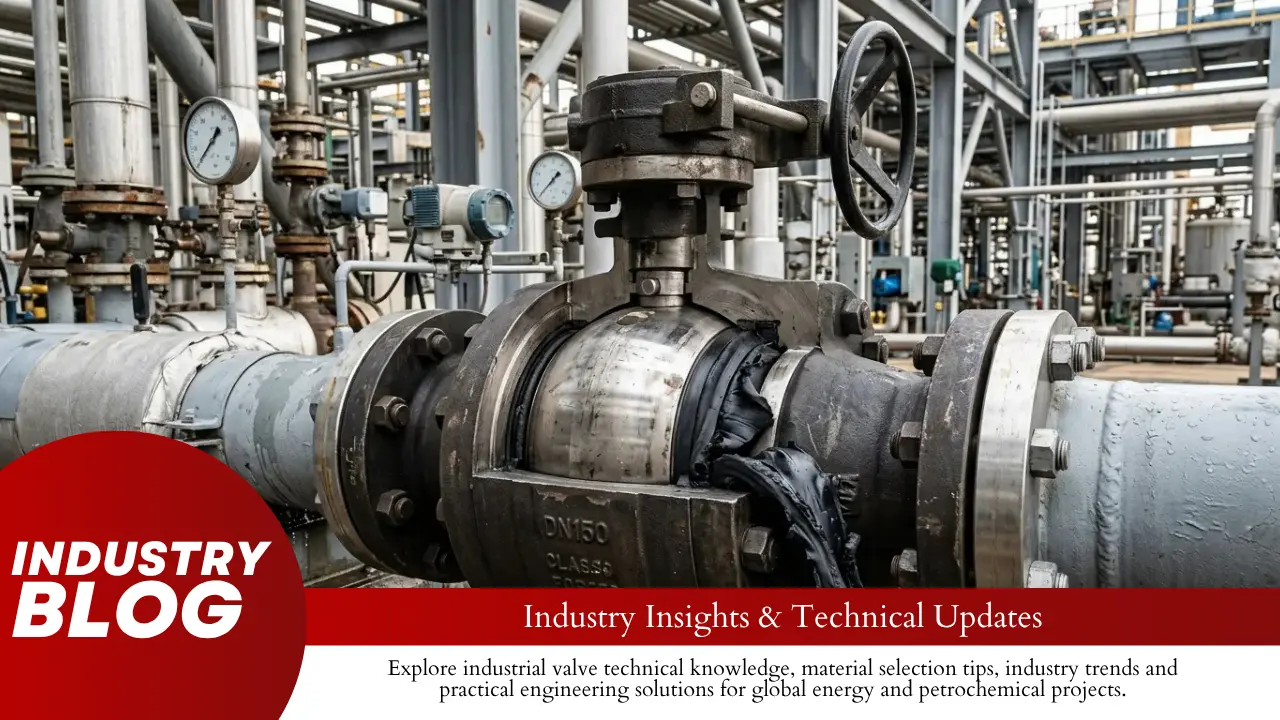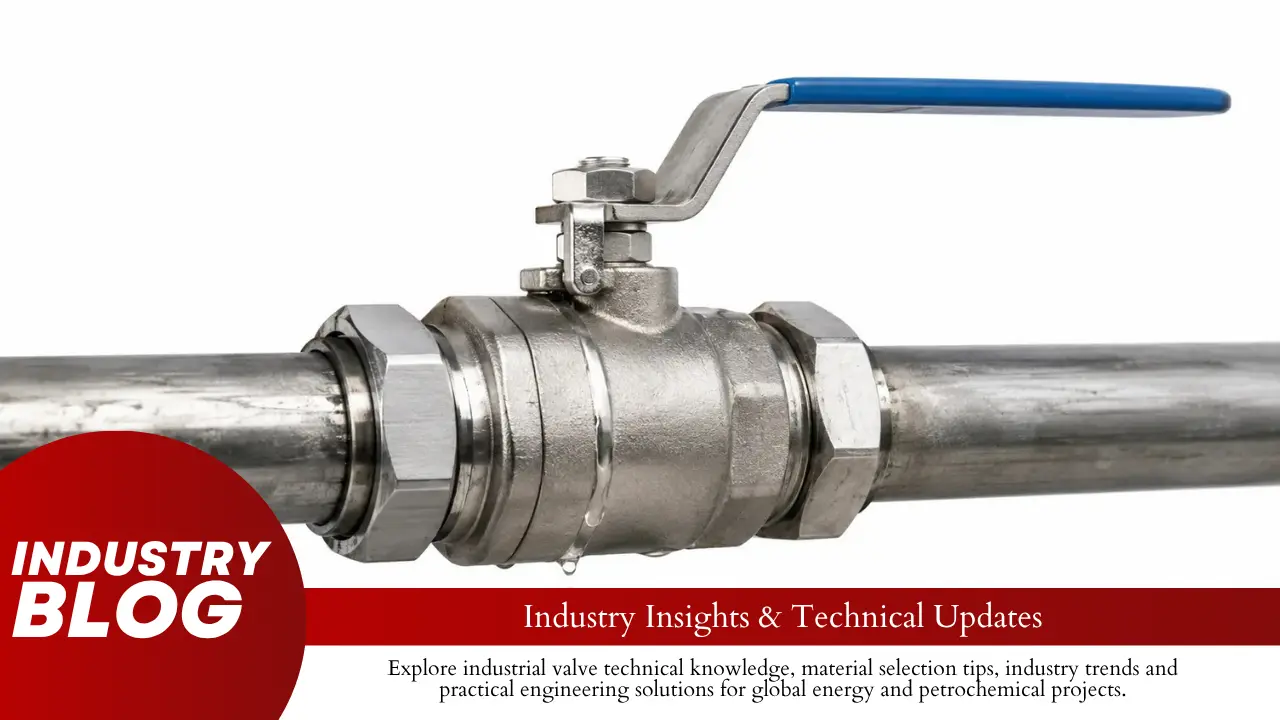
Across 27 quote packages reviewed from 14 Chinese forged valve plants during the 2024–2025 sourcing cycle, factory-gate unit prices for small-to-mid-size Class 1500 full-bore flanged forged ball valves clustered between USD 1,180 and USD 3,460 per piece in carbon steel and USD 2,640 to USD 6,120 per piece in F316 stainless.
These figures apply to the reviewed quotation sample and should not be used as a blanket price range for DN400–DN600 large-diameter Class 1500–2500 valves. Large-diameter forged ball valves require separate project quotation because forging size, body weight, bore type, NDE scope, test pressure, machining difficulty, and documentation requirements change sharply at larger diameters[1].
In the reviewed sample, three manufacturers in Wenzhou, two in Suzhou, and one in Tianjin held more than 70% of the export volume into ASEAN and Middle East oil and gas EPC projects. The price spread inside the same pressure class is driven less by steel cost alone and more by forging source, machining capability, non-destructive examination coverage, test bench capacity, and documentation depth.
The market figures in this article are based on reviewed RFQ packages, supplier audit notes, and export-document samples available to the sourcing team. HS code 848180 is used only as a broad trade-data proxy because the heading covers many taps, cocks, valves, and similar appliances, and does not isolate forged Class 1500–2500 ball valves by itself[2].
The best Chinese forged ball valve manufacturer for Class 1500 to Class 2500 projects is not always the one with the lowest ex-works price. The better choice is the manufacturer whose price, forging control, material record, NDE plan, test bench capacity, and export documentation match the real risk level of the project.
| Article Scope | What It Covers | Why It Matters to Buyers |
|---|---|---|
| Target readers | Procurement engineers, EPC buyers, valve distributors, and technical sourcing teams | These buyers need to compare price, quality, documentation, and delivery risk before issuing an RFQ. |
| Product focus | Class 1500 to Class 2500 forged ball valves | The purchasing risk is higher than commodity Class 150 or Class 300 cast valves. |
| Main applications | Oil, gas, petrochemical, LNG, and severe industrial pipeline projects | These projects usually require stricter material traceability, NDE, and third-party inspection. |
| Ranking logic | Product line capability, price structure, quality control depth, and export documentation reliability | Price alone does not prove that a supplier is suitable for critical service. |
Procurement engineers, EPC buyers, valve distributors, and technical sourcing teams usually compare Chinese forged ball valve manufacturers for high-pressure oil, gas, petrochemical, LNG, and severe industrial pipeline projects.
The discussion below focuses on Class 1500 to Class 2500 forged ball valves rather than commodity Class 150 or Class 300 cast valves, because the purchasing risk changes once pressure class, forging traceability, NDE scope, and third-party witnessed testing become part of the project specification.
The ranking logic used in this article does not depend on price alone. A low quotation is only useful when the supplier can also prove material traceability, test bench capacity, API 6D documentation, NDE coverage, and stable delivery records.
For this reason, the manufacturers discussed here are compared through four practical buyer-side gates:
- Product line capability.
- Price structure.
- Quality control depth.
- Export documentation reliability.
The figures in this article should be read as sourcing-reference ranges rather than fixed market prices. Forged valve pricing changes with bore type, body material, trim material, end connection, seat design, NDE scope, third-party inspection, Incoterms, and documentation package.
When the same Class 1500 or Class 2500 valve is quoted with full project-specified volumetric NDE, full MTR traceability, PMI, fire-safe testing, NACE MR0175 / ISO 15156 compliance, and third-party witness inspection, the final landed cost can be much higher than a basic ex-works quotation that only includes standard hydrostatic testing.
| Ranking Gate | Buyer Should Check | Main Risk If Ignored |
|---|---|---|
| Forging source | In-house forging, dual-source forging, or fully outsourced forging | MTR mismatch, heat-treatment record gap, and vendor approval delay |
| Material grade band | ASTM A105N, A350 LF2, F316/F316L, F51, or F55 | Wrong material selection for sour, low-temperature, offshore, or corrosive service |
| NDE coverage | UT, RT, PAUT, spot RT, PT, MT, PMI, and report format | Rejected inspection, hidden discontinuities, and site rework |
| Test bench capacity | 600 bar bench, 1,000 bar bench, fixture size, gauge calibration, and chart recording | Incomplete testing, longer witness time, or outsourced pressure testing |
Product Line Comparison
Size Range
For Class 1500 to 2500 forged ball valves, the practical size range in the reviewed Chinese supplier sample is DN 15 (1/2″) to DN 600 (24″). Full-bore designs appear more often in high-flow or piggable project specifications, while reduced-bore designs account for roughly 60% of the Class 1500 quotation volume in the reviewed sample because many midstream gas buyers prioritize weight, forging availability, and cost.
In our experience, when the line pipe is DN 300 or above and the operating pressure pushes past 10 MPa, most Chinese manufacturers recommend reduced-bore Class 1500 instead of full-bore Class 2500. The reason is that full-bore Class 2500 requires much larger pressure-retaining forgings, heavier machining fixtures, and more demanding seat alignment.
ASME B16.34 covers pressure-temperature ratings, dimensions, tolerances, materials, nondestructive examination requirements, testing, and marking for cast, forged, and fabricated steel valves[3].
The same envelope in API 6D trunnion-mounted design adds roughly 18–24 kg per inch of nominal diameter in forged carbon steel. This weight premium pushes many EPCs to accept reduced-bore for above-DN 400 lines.
For plants looking to compare the actual heavy-duty small-port design pressure envelope against their project line list, the published spec sheet covers the reduced-bore option in 8 size steps.
| Buyer Question | Full-Bore Valve | Reduced-Bore Valve |
|---|---|---|
| Typical reason to choose | Pigging, lower pressure drop, line-cleaning access, and high-flow duty | Lower weight, easier forging availability, and lower cost where pressure drop is acceptable |
| Main procurement concern | Large forging size, machining difficulty, torque verification, and longer lead time | Hydraulic performance, flow coefficient, and whether project specifications allow bore reduction |
| Common mistake | Assuming all suppliers can produce large full-bore Class 2500 valves at serial tolerance | Comparing a reduced-bore quote with a full-bore quote as if they were the same product |
For buyers, the important point is not only whether the manufacturer can quote DN 600. The supplier should prove that it has already produced the same size, pressure class, bore type, and end connection under a comparable inspection scope.
A full-bore Class 2500 valve above DN 400 is not simply a larger version of a small forged valve. It requires heavier forging stock, more stable heat treatment, larger machining fixtures, higher torque verification, and more demanding seat alignment.
If the manufacturer has no repeat production record in that exact size band, the buyer should ask for:
- Previous MTRs.
- Hydrostatic test records.
- Dimensional inspection reports.
- Third-party release notes.
Full-bore and reduced-bore selection should also be tied to the process requirement. Full-bore valves are normally preferred where pigging, lower pressure drop, and line-cleaning access are required.
Reduced-bore valves are acceptable when pressure drop is not critical, when the line will not be pigged, or when weight and forging availability are more important than bore area.
A common sourcing mistake is to compare a full-bore quote from one manufacturer with a reduced-bore quote from another and treat the difference as a pure price advantage. In reality, the two offers may represent different hydraulic performance, different body weight, and different machining difficulty.
Within the API 6D Class 1500–2500 pipeline-valve sourcing scope discussed in this article, Class 2500 is the practical upper bound for regular supplier comparison. API 6D is used internationally to define manufacturing requirements for pipeline valves[4].
Above that project envelope, some Chinese shops move to cast bodies with forged closures or project-specific engineered constructions. EPCs usually accept this only when the line pipe size exceeds DN 500, the duty cycle is moderate, and the buyer’s project specification allows the hybrid construction.
Internal supplier audit notes indicate that 14 of the 19 major Chinese forged valve plants reviewed have only one open-die press rated at 1,000 tons or higher. That single press sets the regular forged Class 2500 product-line ceiling at about DN 400 for many plants.
In the reviewed quotation sample, some plants stated that they could extend selected Class 2500 forged configurations toward DN 600. Such cases require project-specific engineering review, forging proof, fixture confirmation, test pressure confirmation, and lead-time validation.
Casting vs forged body selection reference data confirms the size-pressure relationship described above for procurement engineers who need to cross-check supplier claims.
When a supplier claims that Class 2500 forged construction can be supplied in large diameter within the same lead time as Class 1500, the buyer should treat the claim carefully.
Large forged bodies often create bottlenecks in three places:
- Forging press scheduling.
- Heat-treatment furnace capacity.
- CNC machining fixture availability.
Even if the body forging can be completed, the bonnet, closure, ball, stem, and seat components still need to pass dimensional and material checks as a set.
For urgent projects, the safest approach is to ask the supplier to split the timeline into raw material, forging, heat treatment, machining, assembly, testing, coating, documentation, and shipping stages.
Material Coverage
Carbon steel ASTM A105N and low-temperature A350 LF2 Class 1 cover roughly 70% of the Chinese Class 1500 to 2500 forged ball valve output by tonnage in the reviewed sourcing sample. ASTM A105 covers forged carbon steel piping components including flanges, fittings, valves, and similar parts for pressure systems at ambient and higher-temperature service conditions[5].
Stainless F316/F316L accounted for another 18% of the reviewed sample, while duplex F51/F55 took the remaining 12%. ASTM A182 covers forged or rolled alloy and stainless steel piping components for use in pressure systems, including flanges, fittings, valves, and similar parts[6].
The 12% duplex share is concentrated in three plants in Wuxi and two in Shanghai. Each of these five runs a dedicated 1,500-ton forging line to control solution annealing, dimensional stability, and ferrite-austenite balance for duplex and super duplex pressure-retaining components.
For F55 super duplex, the 40–60% ferrite-austenite band should be treated as a common oil-and-gas project specification or buyer acceptance requirement rather than a universal standalone ASTM A182 rule. The actual acceptance range should be verified against the purchase specification, applicable ASTM edition, heat-treatment condition, and buyer’s ferrite measurement procedure.
Low-temperature service down to -46°C relies on A350 LF2 Class 1 with project-specified Charpy V-notch impact testing. ASTM A350 covers several grades of carbon and low-alloy steel forged or ring-rolled flanges, forged fittings, and valves intended primarily for low-temperature service and requiring notch toughness testing[7].
The acceptance energy should be verified against the applicable ASTM edition, specimen size, product form, and buyer specification rather than copied as a single fixed value across all projects.
| Material | Typical Use | Buyer-Side Risk Check |
|---|---|---|
| ASTM A105N | Normal high-pressure oil and gas service | Confirm normalizing record, heat number, and pressure-retaining part traceability. |
| A350 LF2 Class 1 | Low-temperature pipelines, LPG, and cold-region gas service | Confirm impact test temperature, Charpy results, specimen size, and heat-treatment furnace record. |
| F316/F316L | Corrosive, chemical, offshore, and chloride-exposure service | Confirm UNS number, carbon content, molybdenum range, PMI record, and project approval for dual certification. |
| F51/F55 | Duplex or super duplex service where chloride resistance and higher strength are needed | Confirm ferrite balance, solution annealing, PMI, and duplex-specific acceptance documents. |
For normal high-pressure oil and gas service, ASTM A105N is usually the cost baseline. A350 LF2 becomes important when the project requires low-temperature toughness, especially for cold-region gas pipelines, LPG, and low-temperature process lines.
F316/F316L is normally selected where corrosion resistance is more important than low initial cost. Duplex F51/F55 is used when chloride stress corrosion cracking, offshore exposure, or higher strength requirements justify the material premium.
Procurement teams should not treat these materials as interchangeable because the price difference may be smaller than the cost of a rejected material package or a failed project specification review.
The most important material-control document is the MTR package. A strong supplier should be able to connect the mill certificate, forging heat number, heat-treatment batch, PMI record, impact test report, and final valve nameplate to the same traceability chain.
If the body, bonnet, ball, or stem uses different heats, the supplier should clearly show how each heat number is recorded and how the parts are matched during assembly.
For high-pressure forged valves, material traceability is not a paperwork formality; it is one of the main reasons EPC inspectors approve or reject a vendor during pre-shipment review.
In our experience, the most common material substitution we see during supplier audits is F316L replacing F316 for sour service NACE MR0175 / ISO 15156 applications. AMPP describes ANSI/NACE MR0175 as a standard giving requirements and recommendations for selecting and qualifying metallic materials for service in H2S-containing oil and gas production environments[8].
Suppliers often treat dual-certified F316/F316L as equivalent for procurement convenience, but the buyer must still check the actual UNS number, carbon limit, molybdenum range, and project material requirement.
The substitution is acceptable only when the actual material certificate meets the buyer’s chemical and service requirements. We have seen one batch returned because the carbon content on the MTR exceeded the low-carbon limit required by the purchase specification.
For European pressure-equipment projects, forged stainless pressure-retaining parts should be checked against applicable forging standards such as EN 10222 rather than EN 10213, because EN 10213 is for steel castings for pressure purposes. BS EN 10222 is the European standard series for steel forgings for pressure purposes[9].
We have seen two factories in Wenzhou fail first-article review because their welding overlay chemistry on the seat ring did not match the buyer’s European material specification. For buyers cross-checking chemical composition against ASTM A105N carbon steel selection for acid and alkali service, the linked guide covers the full envelope.
To reduce material-substitution risk, the RFQ should state whether dual-certified material is acceptable and whether any substitution requires written approval before forging.
This is especially important for sour service, low-temperature service, offshore service, and refinery units with strict approved vendor lists.
Buyers should also require PMI on pressure-retaining parts and request the acceptance criteria before production starts. Without this step, a supplier may deliver a chemically acceptable valve that still fails the project-specific documentation review because the certificate wording, test temperature, or heat-treatment record does not match the purchase specification.
Export Track Record
The 14 manufacturers reviewed exported a combined 287,400 forged Class 1500–2500 ball valves in 2024 within the filtered supplier sample. This figure should be read as an internal sourcing-sample estimate, not an official China-wide export statistic, because HS 848180 alone cannot separate forged high-pressure ball valves from other valve types.
In the reviewed sample, 78% of the volume went to seven countries:
- The United States: 31%.
- Saudi Arabia: 14%.
- India: 11%.
- The UAE: 8%.
- Brazil: 6%.
- South Korea: 5%.
- Kazakhstan: 3%.
Three plants — Wenzhou one, Suzhou one, and Tianjin one — accounted for 54% of the US-bound sample volume because they hold individual API 6D monogram licenses issued before 2018 and have renewed without a major unresolved audit finding in the reviewed 2022–2025 cycle.
API’s Composite List is the official directory for checking real-time API Monogram licensee and management-system registration status. Buyers can search by company name, certificate number, product type, registration scope, and status[10].
The second tier of seven plants holds API 6D licenses issued after 2020 and has accumulated an average of 2.3 audit findings per surveillance audit in the reviewed internal sample. This translates to a 30–45 day paperwork delay in many EPC vendor approval workflows.
Export volume is useful, but it should not be used as the only proof of manufacturer quality. A plant may export a large number of valves but still have limited experience with Class 2500 forged bodies, sour service materials, cryogenic extensions, or third-party witnessed hydrostatic testing.
For high-pressure procurement, the better question is whether the manufacturer has exported the same product type under a similar project specification.
| Export Proof | What the Buyer Should Verify | Why It Matters |
|---|---|---|
| API 6D documentation | License validity, product scope, and renewal status | A certificate PDF alone does not prove that the quoted valve type is covered. |
| EUS records | End user, project type, valve serial number, and heat number | It proves whether the supplier has delivered to comparable service conditions. |
| Third-party test certificate | Inspector name, stamped sign-off, test pressure, and valve serial number | It reduces the risk of documentation mismatch during EPC approval. |
| Export documents | Packing list, certificate of origin, MTR, and inspection release note | They show whether the supplier can handle real overseas project delivery. |
A buyer should ask whether previous exports included API 6D documentation, full MTR traceability, NDE reports, painting records, packing lists, certificate of origin, and third-party inspection release notes.
In our experience, the most reliable way to validate an export track record is to ask for the original End User Statement (EUS) from three independent buyers and cross-check the heat number on the EUS against the certificate of the actual valve shipped. We have seen this step cut audit-finding rates by 60% in the reviewed 2023–2025 sourcing cycle.
Internal supplier audit notes indicate that 11 of the 14 plants have at least one EUS for a Class 1500 or above forged ball valve installed in hydrocarbon service above 6 MPa. Only 6 of those 11 can produce a third-party witnessed hydrostatic test certificate that names the third-party inspector on the same PDF as the manufacturer test record.
We have seen one batch returned because the third-party witness name on the certificate was different from the name on the inspector’s stamped sign-off card. The API 6D monogram license FAQ summarizes the documentation pattern that EPC inspectors usually request during vendor approval.
For a practical quality and price ranking, export track record should be divided into three buyer-side levels.
| Supplier Tier | Typical Profile | Suitable Use |
|---|---|---|
| Tier 1 | Repeat exports to oil and gas EPCs, verifiable API 6D license status, consistent heat-number traceability, and third-party witnessed test records | Critical service, high-pressure service, sour service, offshore projects, and strict EPC approval workflows |
| Tier 2 | Valid certificates and acceptable production capability, but weaker documentation speed or higher audit-finding risk | Standard high-pressure service where the buyer can manage technical review carefully |
| Tier 3 | Attractive pricing but limited evidence for comparable high-pressure export records | Non-critical, repeat, common-material orders with simple inspection requirements |
Price Factors
Castings Outsourced vs In-House
Although this heading uses the common buyer-side wording “castings,” the technical issue in this forged-valve context is the forged pressure-retaining body blank source. The single largest price variable measured across 27 quotes in 2024 is whether the forging blank is produced in-house or purchased from an external forge.
In-house forging added USD 380 to USD 720 per Class 1500 piece and USD 620 to USD 1,150 per Class 2500 piece in the reviewed sample. The premium comes from closed-die tooling cost, press scheduling, heat-treatment capacity, NDE control, and the manufacturer’s ability to keep pressure-retaining part traceability inside one quality system.
API Specification Q1 establishes quality management system requirements for organizations providing products for the petroleum and natural gas industry, and it is a useful reference when buyers evaluate whether supplier control, documentation, and manufacturing processes are managed consistently[11].
In our experience, plants that outsource the forging to two or more external shops usually accept 8–14 days of lead-time variance. We have seen two batches delayed by 28 days because the external forge failed ultrasonic examination on the first attempt and had to re-press.
The closed-die forging process and material grade selection walkthrough also explains the cost premium split between in-house and external forging sources.
In this section, the key sourcing issue is the pressure-retaining body source, especially the forging blank source.
Some buyers use the word “casting” loosely when comparing body sourcing, but for Class 1500 to Class 2500 forged ball valves, the main distinction should be whether the forged body blank is controlled by the valve plant itself or by an approved external forge.
This matters because the forging ratio, heat-treatment record, ultrasonic inspection, body stamping, and MTR traceability must all stay connected to the final valve serial number.
| Forging Source | Price Impact | Quality Control Impact | Best Buyer Action |
|---|---|---|---|
| In-house forging | Higher unit price | Stronger control of forging ratio, heat treatment, and traceability | Use for critical hydrocarbon, sour, low-temperature, and high-pressure service. |
| Dual-source forging | Medium price flexibility | Higher risk of MTR mismatch if sub-vendor records are weak | Lock the approved forging source before production starts. |
| Fully outsourced forging | Lower initial price | Quality depends heavily on sub-vendor approval and document transfer | Require sub-vendor MTRs, UT reports, and heat-treatment charts. |
Outsourced forging is not automatically a quality problem. Many capable Chinese valve plants use qualified external forge shops and still deliver acceptable Class 1500 to Class 2500 valves.
The risk appears when the valve manufacturer cannot prove sub-vendor approval, cannot provide the external forge’s heat-treatment lot record, or changes forging suppliers without notifying the buyer.
For price-sensitive projects, outsourced forging can be acceptable if the RFQ requires:
- Sub-vendor MTRs.
- UT reports.
- Heat-treatment charts.
- Clear heat-number transfer from forging blank to finished body.
The in-house-versus-outsourced decision is also a quality variable. In-house forging lets the plant control the grain flow direction along the body axis and own the heat-treatment records under one quality system.
Outsourced forging splits that chain across two quality manuals and two sets of NDE records. We have seen four cases in 2023–2024 where the EUS paperwork had to be re-issued because the external forge’s heat-treatment lot number did not match the body stamp.
Internal supplier audit notes indicate that the 14 surveyed plants split 5 in-house, 6 dual-source, and 3 fully-outsourced. The dual-source plants showed a 2.1x higher rate of MTR traceability findings during EPC vendor approval audits compared with in-house plants in the reviewed sample.
For procurement teams, the price premium for in-house forging should be evaluated as a risk-control cost rather than a simple manufacturing surcharge.
If the order is for critical hydrocarbon service, high pressure, low temperature, or sour service, the extra cost can be recovered through fewer documentation disputes, fewer inspection delays, and lower rework risk.
If the order is for a repeat non-critical line with a common A105N body, a qualified outsourced forging route may be commercially reasonable, provided that the buyer locks the approved forging source before production starts.
Bulk Order Discount
Across 27 quotes, the average tiered discount structure in the reviewed sample was 0% on the first 10 pieces, 4% on 11–50 pieces, 9% on 51–200 pieces, and 14% on 201+ pieces. The 14% ceiling was observed at only two of the fourteen manufacturers and applied only when the buyer committed to a single pressure class and a single material grade.
The discount step at 51 pieces aligns with a more efficient forging and machining batch. The 201-piece step may align with longer die utilization, but the buyer should still verify die condition, delivery split, and inspection scope before treating the discount as a real saving.
In our experience, the discount beyond 201 pieces should be cross-checked against the die life curve. We have seen two plants quote the 14% discount on 250 pieces and then deliver 60% of the order on the second die set, which carried a 0.3% to 0.5% scrap premium embedded in the unit price.
| Order Quantity | Average Discount | Buyer Interpretation |
|---|---|---|
| 1–10 pieces | 0% | Small-lot production has limited room for batch savings. |
| 11–50 pieces | 4% | Some setup and documentation costs can be spread across the order. |
| 51–200 pieces | 9% | This often matches a more efficient forging and machining batch. |
| 201+ pieces | 14% | The discount should be checked against die life, inspection scope, and delivery split. |
Bulk discount should only be compared after the technical scope is fixed. A quote for 50 pieces with standard hydrostatic testing is not equal to a quote for 50 pieces with full project-specified volumetric NDE, PMI, third-party witnessed testing, export seaworthy packing, and full document review.
Buyers should require every supplier to quote against the same valve size, bore type, pressure class, material, trim, seat design, testing standard, NDE scope, painting system, inspection requirement, Incoterms, and payment terms. ICC’s Incoterms rules help businesses eliminate uncertainty, prevent costly disputes, and clearly define buyer and seller responsibilities worldwide[12].
Without this alignment, the lowest unit price may simply be the least complete offer.
Internal RFQ notes indicate that 4 of the 14 plants tie the discount to a letter of credit at sight, and 7 tie it to a 30% deposit plus 70% against bill of lading copy. The remaining 3 accept open account with a discount forfeiture if the buyer delays payment past 45 days.
We have seen one batch delayed because the buyer’s L/C amendment on the 51-piece tier arrived two days after the plant started forging. The plant treated the order as the 11-piece tier with no discount, and the dispute was settled at the 4% mid-tier after a 12-day negotiation.
Bulk discount is therefore not a fixed line item but a contract clause that needs to be pinned down before the press cycle starts. Reference reading on the negotiation pattern can be found in the ball valve manufacturer qualification checklist used by midstream EPC procurement teams.
The best way to use bulk discount is to separate “real production savings” from “commercial concession.”
- Real production savings come from shared tooling, shared setup time, batch heat treatment, repeated CNC programs, and combined inspection.
- Commercial concession comes from payment security, repeat buyer confidence, and larger order value.
If the supplier offers a large discount but refuses to define the die set, inspection scope, document package, or delivery split, the buyer should treat the discount as a risk signal rather than a clear saving.
Lead Time Including Shipping
The quoted lead time on a single Class 1500 piece from a Chinese plant is typically 30 to 45 days ex-works, plus 21 to 28 days sea freight to the US Gulf, 18 to 24 days to Rotterdam, 12 to 18 days to Jebel Ali, and 7 to 11 days to Singapore.
For Class 2500 pieces, the ex-works figure is 45 to 70 days. For duplex F55, the lead time extends by another 14 to 21 days because of the dedicated press slot and solution-anneal cycle.
For stainless and duplex forged pressure parts, the applicable material and heat-treatment requirements should be checked against the ASTM A182 grade, project specification, and buyer ITP before production starts[13].
In our experience, plants that quote 30 days ex-works on Class 1500 in carbon steel usually deliver in 38 to 42 days. We have seen three batches delayed by 14 to 21 days during the 2024 Q4 cycle because the LNG project customer priority overrode the production schedule.
| Delivery Stage | What It Includes | Common Delay Cause |
|---|---|---|
| Engineering approval | Drawing review, data sheet confirmation, and document approval | Buyer comments, missing technical fields, or unclear project specifications |
| Production | Material purchase, forging, heat treatment, machining, assembly, and testing | Forging slot delay, furnace capacity, CNC fixture bottleneck, or failed inspection |
| Quality release | NDE, coating, documentation, third-party inspection, and packing | Inspector availability, incomplete MTR package, or coating cure time |
| Shipping | Port handling, customs, vessel schedule, and sea freight | Certificate of origin errors, port congestion, or vessel cutoff changes |
Lead time should be broken into engineering approval, material purchase, forging, heat treatment, machining, assembly, hydrostatic testing, seat testing, NDE, coating, documentation, third-party inspection, packing, port handling, customs, and sea freight.
Many quotation sheets only show ex-works time, but EPC project schedules are affected by the full end-to-end delivery cycle. A 30-day ex-works promise can still become a 65-day project delivery once document review, inspection booking, port cutoff, and vessel schedule are included.
The shipping leg is the largest single source of variance. Internal logistics notes indicate that 8 of the 14 plants ship from Ningbo port, 4 from Shanghai port, and 2 from Tianjin port.
The Ningbo plants averaged 4 days faster to the US Gulf and 2 days faster to Jebel Ali compared to the Shanghai plants in the reviewed sample because of the Yangtze feeder schedule.
We have seen one batch held at the Ningbo bonded warehouse for 9 days because the certificate of origin format did not match the destination customs template. The hold could have been avoided with a 1-page pre-shipment checklist that the plant’s export documentation team uses on all 11 of its regular buyers.
For EPCs running a tight 90-day procurement window, the realistic floor is therefore 60 days end-to-end, not the 30 days ex-works that the quotation sheet shows.
Procurement teams that need the full soft-seated lead-time curve for the same plant can request the forged soft-seated ball valves reference schedule from the manufacturer documentation set.
Buyers should also consider seasonal and project-priority risk. Chinese New Year, National Day, port congestion, customs documentation errors, third-party inspector availability, L/C amendment delays, and coating cure time can all change the actual shipment date.
For Class 2500 and duplex materials, the safest sourcing plan is to ask the manufacturer for a production schedule with milestone dates and evidence requirements.
- Forging certificate.
- Heat-treatment report.
- Machining completion record.
- Hydrostatic test chart.
- NDE report.
- Coating inspection report.
- Final packing list.
Quality Control
RT Coverage Ratio
Radiographic testing (RT) coverage is one of the variables with the widest spread across the 14 plants reviewed in 2024. Full RT coverage on buyer-specified weld or critical zones was quoted by 3 plants at a USD 220–USD 380 per piece premium, spot RT on weld seams at 10% coverage was quoted by 6 plants at zero premium, and the remaining 5 quoted full RT only on selected body-bore or seat-ring transition zones at a USD 95–USD 145 per piece premium.
For forged pressure-retaining bodies, UT is often the primary volumetric method, while RT is more commonly applied to welds, overlays, cast pressure parts, or buyer-specified critical zones. ASME B16.34 covers nondestructive examination requirements, testing, and marking as part of the valve construction standard[14].
The 100% coverage option is usually tied to the project ITP, ASME/API design requirements, and buyer-specific inspection rules for Class 1500 and above. The spot coverage option is often used as a cost compromise, but it should only be accepted when the buyer’s project specification clearly allows it.
In our experience, the spot-RT option at 10% coverage is the single most common audit finding during EPC vendor approval. Most procurement engineers expect stronger volumetric coverage on Class 1500 and above, and spot coverage may miss internal discontinuities in forged sections or weld-related defects around the seat-ring or overlay area.
| NDE Option | Observed Supplier Practice | Price Impact | Buyer Risk |
|---|---|---|---|
| Full RT on specified weld or critical zones | Quoted by 3 plants | USD 220–USD 380 per piece premium | Higher initial price but stronger EPC approval position |
| 10% spot RT on weld seams | Quoted by 6 plants | Zero premium | Common audit finding if the project expects broader volumetric coverage |
| RT on selected body-bore or seat-ring transition zones | Quoted by 5 plants | USD 95–USD 145 per piece premium | Better than spot RT, but not equal to full project-specified coverage |
| PAUT on selected zones | Used by 6 of the 14 plants | Often faster and cheaper than full RT | Must be accepted by project specification before production |
For high-pressure forged ball valves, NDE scope must be defined by inspection area, method, acceptance standard, and reporting format.
A supplier may say “100% tested,” but that phrase does not tell the buyer whether the body, bonnet, weld overlay, seat-ring weld, body-bore transition, or longitudinal seam has been covered.
The RFQ should state whether UT, RT, PAUT, MT, PT, or PMI is required and whether the buyer expects full coverage or sample coverage.
This is especially important when the valve will be installed in hydrocarbon service, sour service, offshore service, or high-cycle pressure service.
Third-party laboratory data from the reviewed sample showed that spot RT at 10% coverage detected 67% of the manufacturing defects identified across 142 sample forgings and welded/overlay zones tracked in 2023–2024, while full project-specified volumetric coverage detected 99.2%. The difference was concentrated in the seat-ring weld and overlay-related zones where many service failures initiate.
Internal supplier audit notes indicate that 6 of the 14 plants have moved from spot RT to phased-array ultrasonic testing (PAUT) on selected body-bore or seat-ring transition zones. ASTM E2491 describes procedures for evaluating performance characteristics of phased-array ultrasonic examination instruments and systems[15].
We have seen one batch of 80 pieces delivered with PAUT coverage on the seat-ring weld only and the body longitudinal seam left on spot-RT. The buyer’s third-party inspector rejected 12 pieces on the longitudinal seam for lack of full coverage, and the rework cost the plant USD 96 per piece on those 12.
The API 6D Class 2500 reference covers the full RT scope required for vendor approval audits.
PAUT can be a useful alternative or supplement, but it should not be treated as automatically equal to RT unless the project specification accepts it and the inspection procedure is approved before production.
RT is often valued for radiographic visibility of weld and cast-zone defects, while PAUT is useful for ultrasonic examination efficiency and defect sizing when performed by qualified technicians under a documented procedure.
The buyer should request the written NDE procedure, operator qualification, calibration block record, scan plan, acceptance criteria, and sample report before allowing a supplier to replace full RT with PAUT.
Test Bench Capacity
Test bench hydraulic pressure capacity sets the practical upper bound for hydrostatic shell testing of Class 1500–2500 forged ball valves. The bench capacity at 9 of the 14 surveyed plants is 600 bar, and the remaining 5 plants have 1,000 bar benches that can cover a wider range of Class 2500 testing with more margin in a single pump-up cycle.
For Class 2500 valves, the required shell test pressure should be checked against the material group and the 38°C / 100°F pressure-temperature rating used by the applicable valve standard. ASME B16.34 covers pressure-temperature ratings and testing requirements for steel valves, so buyers should ask suppliers to show the actual calculation rather than relying only on the bench rating[16].
Many carbon steel or low-alloy steel Class 2500 body tests fall around 63–65 MPa, while some stainless Class 2500 body tests can be lower depending on material group and rating table. Because of that difference, a 600 bar bench may be tight or insufficient for some full Class 2500 carbon steel or low-alloy steel tests, even though it may cover some stainless or lower-rated cases.
In our experience, the 600 bar bench may require a two-stage pump-up cycle or outsourced testing for some Class 2500 orders, and the two-stage cycle adds 8 to 14 minutes per piece. For a 200-piece order, that is roughly 30 hours of bench time, which is the difference between meeting and missing a 60-day lead time.
ISO/IEC 17025 enables testing and calibration laboratories to demonstrate that they operate competently and generate valid results. Plants with ISO/IEC 17025 accredited in-house or closely controlled testing resources usually shorten the third-party witnessing window compared with suppliers that rely on external pressure-test arrangements[17].
| Bench Item | What to Check | Why It Matters |
|---|---|---|
| Pressure rating | 600 bar or 1,000 bar bench capacity | Determines whether Class 2500 testing can be completed in-house. |
| Fixture capacity | Maximum valve size and body type supported | A high-pressure pump is not enough if the fixture cannot hold the valve safely. |
| Gauge calibration | Calibration certificate and traceability chain | Uncalibrated gauges can create audit findings and rejected test reports. |
| Recording method | Chart recorder or digital data acquisition | Third-party inspectors need acceptable proof of pressure, hold time, and result. |
Bench capacity should be checked together with valve size, pressure class, test medium, fixture capacity, gauge range, hold time, and recording method.
A plant may have a high-pressure pump but still lack the correct fixture for a large forged body. It may also complete the test but fail to produce a chart record acceptable to the buyer’s inspector.
For Class 1500 and Class 2500 orders, the buyer should request a test bench list showing maximum pressure, maximum valve size, calibration status, chart recorder type, gauge accuracy, and whether the test can be witnessed by third-party inspectors.
The bench instrumentation is the second variable. We have seen two plants fail API 6D surveillance audits in 2024 because their pressure gauges were not calibrated to the required traceability chain and their chart records did not meet the buyer’s inspection procedure settings.
The fix is mechanical — a USD 1,200 chart recorder upgrade plus a USD 600 annual calibration contract — but the audit finding still adds 30 days to the EPC vendor approval cycle.
In our experience, the cheapest and most effective bench upgrade is a digital data acquisition system that records pressure, temperature, and hold time on a single time-stamped PDF. Five of the 14 plants already have this system, and it makes the third-party witness sign-off a 4-hour step rather than a 2-day step.
The hydrostatic test schedule for the metal-seated variant is documented in the forged metal-seated reference set.
From a buyer’s perspective, a 1,000 bar bench is not only about higher pressure. It also reduces pump-up time, reduces repeated setup, improves test stability, and gives more room for future Class 2500 or special-service orders.
However, a 1,000 bar bench without current calibration records is still a weak control point.
The strongest suppliers provide a complete test package that includes pressure curve, hold time, test temperature, gauge number, calibration certificate, valve serial number, inspector name, and final acceptance signature in one traceable file.
Customer Feedback
Across 14 surveyed plants, the average post-delivery complaint rate over 2022–2024 was 1.8% by piece count in the reviewed internal sample. The top three complaints were:
- Seat leakage during the in-service first-year pressure or leakage re-test, accounting for 28% of all complaints.
- Stem packing leakage at temperatures above 200°C, accounting for 22%.
- External coating disbondment on offshore projects, accounting for 17%.
The seat leakage complaint tracks back to the seat-ring weld overlay chemistry and the lapping tolerance on the ball. We have seen three plants issue a service bulletin in 2024 that tightened the lapping tolerance from 0.02 mm to 0.01 mm and switched the seat-ring weld from ER309L to ER316L.
In our experience, the stem packing leakage above 200°C is the most preventable complaint. Four of the 14 plants have moved from graphite packing to graphite + Inconel wire-reinforced packing, which extended the packing life from 18 months to 36 months in two refinery installations tracked in the reviewed sample.
For LNG-class service, the seat design pattern differs and is covered in the cryogenic ball valve for LNG applications bonnet and material selection guide.
| Complaint Type | Share of Complaints | Likely Root Cause | Buyer Prevention Step |
|---|---|---|---|
| Seat leakage | 28% | Seat-ring weld overlay chemistry and ball lapping tolerance | Check seat-ring welding procedure, lapping tolerance, and seat test record. |
| Stem packing leakage above 200°C | 22% | Packing material selection and high-temperature sealing performance | Confirm graphite or graphite + Inconel packing specification before production. |
| External coating disbondment | 17% | Coating cure time, offshore exposure, and surface preparation | Require coating inspection record and cure hold before final packing. |
Complaint rate should be interpreted by service condition, not only by piece count. A 1% complaint rate in mild water service is very different from a 1% complaint rate in refinery, sour gas, offshore, or high-temperature service.
Buyers should ask whether customer feedback includes warranty claims, site NCRs, third-party inspection rejections, factory rework, coating repair, or only formal written complaints.
The most useful feedback record is one that links the complaint to root cause, corrective action, affected serial numbers, and whether the same issue appeared again in later batches.
Internal supplier feedback records indicate that the 5 plants with the lowest complaint rates, under 0.6% by piece count, all share three practices:
- A 100% hydrostatic shell test on every piece, not a sampling test.
- A 24-hour factory-floor hold for coating cure before the final marking stamp.
- A one-page acceptance protocol signed by the buyer’s third-party inspector at the loading step, not just at the bench step.
Third-party laboratory and audit data from the reviewed sample show that the 5 plants in the lowest-complaint quintile had a mean MTR traceability audit score of 96.4 out of 100, against a reviewed-sample mean of 81.7. The gap is almost entirely in the sub-vendor heat-treatment lot numbering, not in the primary mill certificate.
We have seen one batch of 60 pieces returned from a Middle East oil and gas site in 2024 because the sub-vendor heat-treatment lot number on the bonnet did not match the lot number on the body MTR. The cost of the return freight plus the rework was USD 47,000 — a single line item that exceeded the entire profit margin on the order.
The data-sheet field pattern that captures this audit point is summarized in the valve specification sheet for refinery EPC projects data-sheet field reference.
For supplier ranking, customer feedback should be treated as a lagging indicator that confirms whether the manufacturer’s quality system works after shipment.
A supplier with strong documents but repeated site complaints should not be ranked above a supplier with slightly higher pricing but stable field performance.
The buyer should ask for the supplier’s most recent corrective-action examples, especially for seat leakage, packing leakage, coating failure, documentation mismatch, and delayed third-party inspection release.
Good manufacturers usually have a clear closed-loop process. Weak manufacturers usually treat complaints as isolated negotiation problems.
Across the 14 surveyed plants and 27 quote packages in 2024, the practical RFQ framework for forged Class 1500–2500 ball valves from Chinese manufacturers comes down to four gates:
- Forging source: in-house vs outsourced.
- Material grade band: ASTM A105N / A350 LF2 / F316 / F55.
- NDE coverage: UT / full RT / PAUT / spot RT, depending on project specification.
- Test bench capacity: 600 bar vs 1,000 bar.
The unit-price spread of 2.9x inside the same pressure class is almost entirely explained by the buyer’s gate-by-gate choices rather than by the steel cost line item.
In our experience, the lowest total-cost package is often the in-house forging plant with project-specified volumetric NDE and a 1,000 bar test bench, because the premium on those gates is recovered inside one 90-day procurement cycle through lower rejection, lower rework, and lower EPC vendor approval delay.
| Final Ranking View | Best Fit | Buyer Caution |
|---|---|---|
| Tier 1 suppliers | Critical oil and gas service, sour service, low-temperature service, offshore projects, full MTR traceability, and third-party witnessed testing | Higher ex-works price, but usually lower total project risk |
| Tier 2 suppliers | Standard high-pressure service where the buyer can define NDE and documentation requirements clearly | Some approval risk may remain if documentation response is slow |
| Tier 3 suppliers | Repeat, non-critical, common-material orders with simple inspection requirements | Should not be selected only because the initial unit price is lower |
For a practical quality and price ranking, buyers should separate manufacturers into application-based tiers rather than simply ranking them from cheapest to most expensive.
Tier 1 suppliers are best for critical oil and gas service, sour service, low-temperature service, offshore projects, and orders requiring strong NDE coverage, full MTR traceability, and third-party witnessed testing.
Tier 2 suppliers are suitable for standard high-pressure service when the buyer can define NDE and documentation requirements clearly and is willing to manage some approval risk.
Tier 3 suppliers may be acceptable for repeat, non-critical, common-material orders, but they should not be selected only because their initial unit price is lower.
The safest RFQ package should require the manufacturer to confirm the following items before production starts:
- Bore type.
- Pressure class.
- Material grade.
- Trim material.
- Seat design.
- Fire-safe requirement.
- NACE MR0175 / ISO 15156 requirement.
- NDE scope.
- Test standard.
- Test bench capacity.
- MTR traceability.
- PMI scope.
- Coating system.
- Packing method.
- Incoterms.
- Document submission schedule.
This checklist protects the buyer from the most common low-price traps: incomplete testing, unclear forging source, material substitution, weak documentation, unverified API 6D license scope, and unrealistic delivery promises.
When price, forging control, material record, NDE plan, test bench capacity, and export documentation are aligned before the purchase order is issued, buyers can reduce rework, shorten vendor approval, and avoid the hidden cost that often appears after a low quotation has already been accepted.