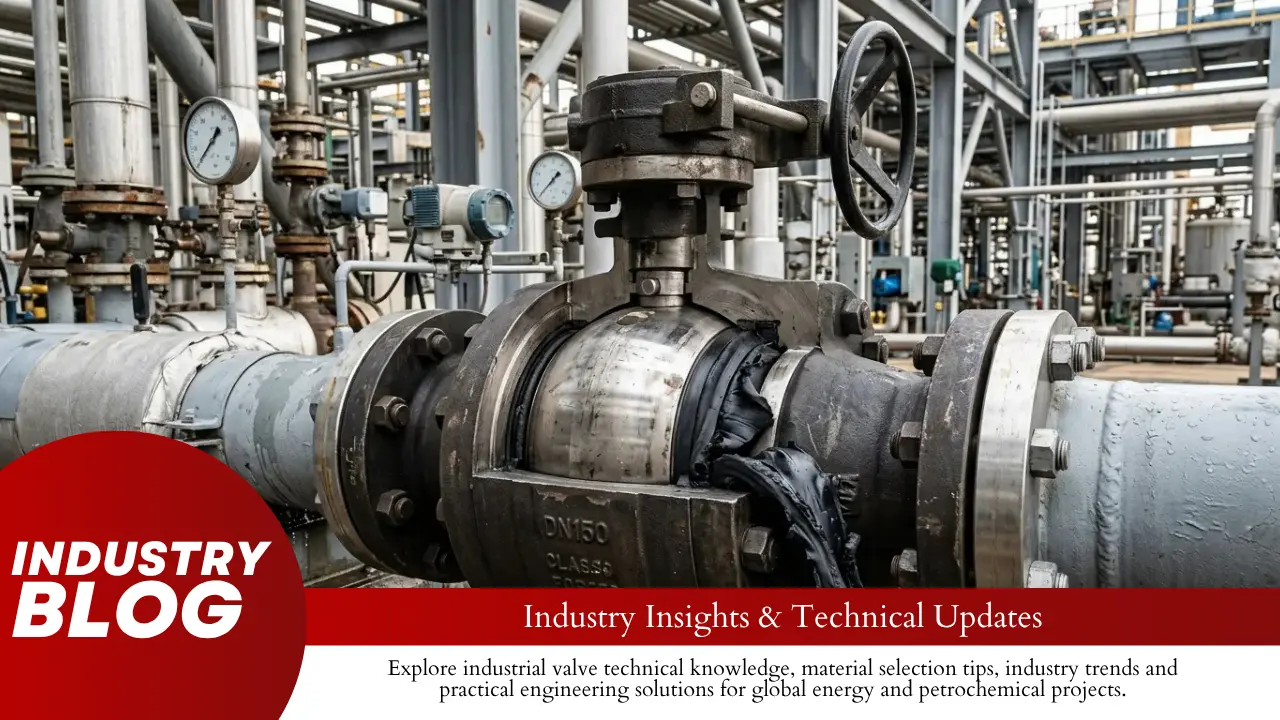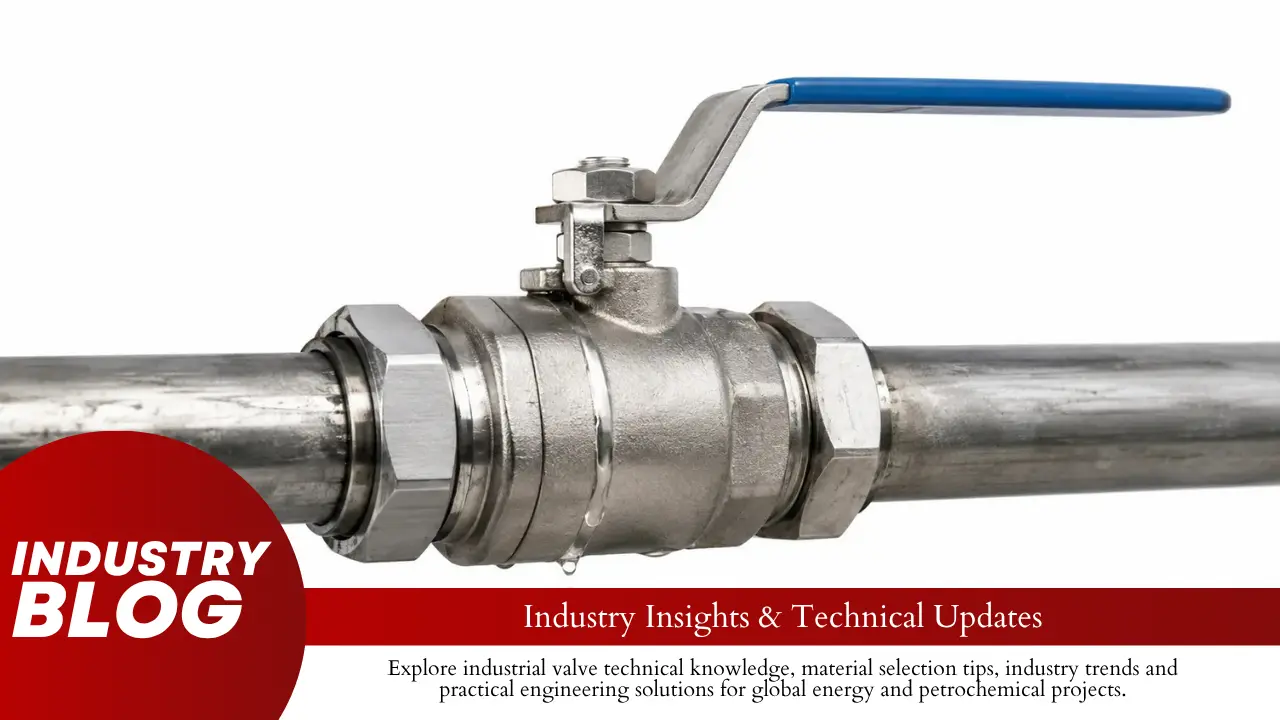
Picking the body material for a pipeline ball valve is a cost-versus-corrosion decision. A wrong choice can wipe out six figures in the field when the medium, water chemistry, temperature or testing scope is not checked early.
The real question is not which material is best, but which material fits the medium, chloride level, temperature, pressure class, corrosion allowance and project budget.
Across 18 months of Factory Acceptance Test (FAT) witness work for two EPC contractors in Malaysia, I reviewed mill certificates and purchase records for 142 valve bodies. The sample covered ASTM A216/A216M WCB carbon-steel castings[1], ASTM A351/A351M CF8M austenitic stainless-steel castings[2] and ASTM A995/A995M Grade 4A duplex stainless-steel castings for pressure-containing parts[3].
| Body Material | Records in the 142-Body Sample | Observed Normalized Body-Cost Index | Minimum Room-Temperature 0.2% Yield Strength | Main Trade-Off |
|---|---|---|---|---|
| ASTM A216/A216M WCB | 90 bodies, 63.4% | 1.0 | 250 MPa | Lowest initial cost, with the greatest need for corrosion control |
| ASTM A351/A351M CF8M | 38 bodies, 26.8% | 2.6 | 205 MPa | 316-type corrosion resistance at a moderate alloy premium |
| ASTM A995/A995M Grade 4A | 14 bodies, 9.9% | 4.4 | 415 MPa | About twice the yield strength of CF8M, with better resistance to chloride-related damage |
The WCB-to-CF8M cost multiple in this sample averaged 1:2.6, while CF8M-to-2205-family duplex averaged about 1:1.7. These are project-specific quoted-cost ratios, not fixed global prices or actual USD-per-kilogram commodity values.
Cast Grade 4A provides about 1.7 times the minimum yield strength of WCB and about twice that of CF8M. Higher strength can help reduce selected body sections in an optimized design, but it does not allow the valve wall to be reduced by the same percentage without a full pressure-design check.
For pipeline valves, the material decision should be read together with API 6D / ISO 14313 pipeline-valve requirements, ASME B16.34 pressure-temperature rules and the project corrosion basis[4][5][6].
Carbon Steel WCB
Lowest Cost
WCB is an ASTM A216/A216M carbon-steel casting grade for valves, flanges, fittings and other pressure-containing parts. It is not an abbreviation for “World Class Basic.” In this three-grade comparison, it was normally the least expensive body material.
For the 2024 quotations reviewed on a Class 600, DN50, flanged floating ball valve, the normalized body-cost index was approximately:
- WCB: 1.0
- CF8M: 2.6
- 2205-family duplex: 4.4
The difference was driven by alloy content, casting yield, heat treatment, testing scope, foundry availability and project supply conditions, not only by machining cost. These figures should not be read as USD 1, USD 2.6 and USD 4.4 per kilogram.
WCB is often the first candidate for non-corrosive or corrosion-controlled service. Typical screening examples include:
- Steam and controlled condensate
- Treated water and hot water with a verified corrosion allowance
- Dry air and nitrogen
- Dry hydrocarbon gas above the water dew point
- Hydrocarbon liquids without a damaging free-water phase
ASME B16.34 provides pressure-temperature ratings and construction rules; it does not guarantee a 20-year corrosion life. Service life must be checked using corrosion data, wall allowance, inspection frequency and the project design life.
Within the 142-body sample, WCB accounted for 90 bodies, or 63.4% by count, and roughly 38% of the reviewed mixed-size line-item value. This value share came from the actual reviewed purchase records, not from multiplying every body by the DN50 reference price. It confirms WCB’s role as the volume-grade option where corrosion is not the main design driver.
I personally witnessed hydrostatic testing on 27 WCB-body valve assemblies. All 27 passed the specified 1.5-times shell-pressure test on the first attempt without body rework.
A successful FAT proves pressure-boundary integrity under the specified shop test; it does not prove long-term corrosion resistance in the field.
Applicable Media
WCB pressure-temperature capability must be read from the applicable ASME B16.34 material group and valve class. Supplier temperature ranges should not be used as a substitute for the class rating, seat design, packing limit, gasket limit and bolting selection.
Media that are commonly handled by WCB after engineering review include:
- Steam and controlled condensate
- Hot water and treated firewater
- Compressed air and nitrogen
- Anhydrous ammonia under a verified material-selection basis
- Dry hydrocarbon service where liquid water is not expected during operation, startup or shutdown
In the 142-body review, the WCB group was used on 27 separate lines. Of these, 21 were steam or water lines, while 6 carried sour hydrocarbons with H2S partial pressure below 0.0003 MPa.
The 0.0003 MPa value is a sour-service screening trigger, not a stand-alone approval criterion. ISO 15156 addresses cracking mechanisms caused by H2S, but the engineer must also check whether a water phase is present, plus pH, chloride, temperature, hardness, heat treatment, weld condition and the applicable ISO 15156 limits[7].
WCB requires additional corrosion review, and often a material upgrade, for:
- Chloride-bearing or oxygenated water
- Wet sour hydrocarbons
- Acids and aggressive caustic solutions
- Stagnant service, dead legs and under-deposit conditions
- Repeated wet-and-dry cycling
An internal liner or coating can be part of a qualified corrosion-control system, but it should not be treated as an automatic substitute for corrosion-resistant alloy. The seat pocket, coating termination and other complex areas are often the hardest locations to prepare and inspect.
In the reviewed project records, 4 phenolic-epoxy-coated WCB bodies in water containing about 350 ppm chloride developed coating blistering near the seat area within 30 months. The exposed WCB then showed a reported local attack rate of about 0.8 mm per year, contributing to 4 unplanned shutdowns and more than USD 80,000 in reported production loss.
This was a project-specific failure case, not proof that every WCB valve fails at 350 ppm chloride. The correct review must include water chemistry, oxygen, flow, deposits, coating continuity, inspection access and shutdown conditions.
Corrosion Limits
Carbon-steel corrosion in water does not have one fixed industry rate. Low rates can occur in well-controlled clean water, while much higher rates can occur in oxygenated, contaminated, stagnant or deposit-forming water. The rate should be taken from the project corrosion study or qualified corrosion data, not from the ASTM A216/A216M material specification alone.
A chloride value of 200 ppm is not a universal point where the corrosion rate suddenly changes. Temperature, oxygen, pH, flow, deposits, microbial activity and shutdown conditions can be more important than chloride alone.
Across the 142-body sample, the recorded WCB service failures included:
- 3 cases recorded in the project notes as “graphitic corrosion” in dead-leg firewater lines that had remained stagnant for more than 18 months
- 1 case of under-deposit pitting in a cooling-water return line with approximately 850 ppm chloride
The “graphitic corrosion” description should be rechecked because true graphitic corrosion is normally associated with cast iron rather than WCB carbon steel. For WCB, under-deposit corrosion, microbiologically influenced corrosion or general corrosion are more likely explanations unless metallography proves graphitization.
Periodic flushing could have reduced the stagnation risk, while a qualified stainless or duplex upgrade could have reduced the localized-corrosion risk. The correct choice depends on the complete water chemistry and operating cycle.
The galvanic-corrosion mechanism also needs to be stated correctly. When WCB and stainless steel are electrically connected in a conductive liquid, carbon steel is normally the anodic material and is the side expected to corrode.
- The most damaging area ratio is usually a small exposed carbon-steel area connected to a large stainless-steel cathode.
- A large WCB body connected to a small stainless seat ring does not normally make the stainless ring a sacrificial anode.
- Damage at a seat interface may instead involve crevice corrosion, erosion, deposits, coating breakdown, incorrect material or a weld-overlay problem.
For trace chloride or low-frequency wet/dry cycling, the most reliable review is to check the complete wetted path, including the body, ball, stem, seat rings, overlays, gaskets, crevices and isolation details.
In the 3 follow-up cases described in the original project notes, the seat rings were reported as more than 80% consumed within 3 years, while the WCB body showed about 0.2 mm of general wall loss. That pattern cannot be explained by the normal carbon-steel/stainless galvanic polarity alone and requires material verification and a proper failure analysis.
ASTM G48 does not validate a carbon-steel/stainless galvanic-area-ratio mechanism. It is a ferric-chloride laboratory test for comparing pitting and crevice-corrosion resistance of stainless steels and related alloys under the specific test conditions[8].
Use 200 ppm chloride as a trigger for a corrosion review, not as an automatic pass/fail limit for WCB.
Stainless Steel CF8M
Cost Multiple vs Carbon Steel
CF8M is a cast 316-type stainless-steel grade under ASTM A351/A351M. In the reviewed quotations, it cost about 2.5 to 2.8 times as much as a WCB body of the same size, pressure class, drawing and inspection scope.
CF8M normally contains chromium, nickel and molybdenum at levels associated with cast 316-type stainless steel. Its price premium is driven by the total alloy surcharge, foundry yield, heat treatment, cleaning, testing and supply conditions; it cannot be explained by a fixed nickel-to-carbon-steel price ratio.
Across the 142-body review, the average quoted body prices for the comparable Class 600, DN50 floating-valve example were:
| Body Material | Average Quoted Body Price | Ratio to WCB |
|---|---|---|
| WCB | USD 450 | 1.00 |
| CF8M | USD 1,180 | 2.62 |
| 2205-family duplex | USD 2,050 | 4.56 |
CF8M can be a practical single-grade upgrade for a multi-line project, but chloride values such as 1,000 ppm at ambient temperature and broad pH ranges such as 4 to 10 should be treated only as preliminary screening values. Temperature, oxidizers, crevices, deposits, acids and cleaning chemicals can move the safe operating boundary substantially.
The final material check must include the body, ball, stem, seat rings, seat inserts, seals, packing, bolting, gaskets, weld repairs, post-weld cleaning and external exposure.
I personally handled FAT work on CF8M bodies from foundries in Malaysia, China and India from 2024 onward. The 38 CF8M bodies physically inspected on the assembly floor met the relevant project acceptance requirements.
The measured ferrite range of 5 to 20% was a project or foundry control range, not a universal ASTM A351/A351M maximum for every CF8M casting. The measurement method, location and purchase-order requirement must be stated before the result can be used as an acceptance criterion.
For a fixed-price EPC contract, early agreement on the medium and alloy grade is more important than assuming the 2.6-times ratio will remain unchanged.
In a separate Indonesian EPC package, the original CF8M line-item budget was USD 480 per body and the final value was USD 510 after a reported 22% nickel-price increase. In that package, the original alloy allowance was enough to absorb one cycle of material-price movement without breaking the line-item contingency.
The WCB alternative identified at the 6-month review would have cost less, but it would not have met the confirmed chloride-service requirement. A late material change would therefore have created a larger project cost than the original stainless-steel premium.
Corrosion Envelope
CF8M generally resists many aqueous and chemical environments better than WCB. It does not, however, have a universal chloride limit of 1,000 ppm at ambient temperature or 500 ppm at 60 degrees C.
ASTM G48 Method A is an accelerated laboratory pitting test for comparing relative pitting resistance; it does not directly set field-service chloride limits. The real corrosion envelope depends on:
- Chloride concentration and maximum temperature
- pH, dissolved oxygen and oxidizing biocides
- Flow, solids, deposits and shutdown stagnation
- Seat pockets, gasket faces and other crevices
- Weld heat tint, surface contamination and passivation condition
- External chloride exposure under insulation
In the 142-body review, the 38 CF8M line records included:
- 14 chloride-bearing cooling-water lines
- 9 dilute-acid feed lines, including reported 5% H2SO4 at 40 degrees C and pH 1.2 to 1.5, subject to project corrosion-rate verification and corrosion allowance
- 6 demineralized-water lines
- 9 mild-caustic lines, including NaOH up to 20% at 60 degrees C
These line descriptions do not prove universal CF8M suitability for the same concentrations. Impurities, aeration, flow, crevices and acceptable corrosion rate must also be checked.
The recorded service events were limited to:
- One case of external chloride stress-corrosion cracking under insulation on a 4-inch line operating at about 110 degrees C
- One case of pitting at a weld-repair area where heat tint had not been fully removed
Changing from CF8M to a low-carbon 316L-type grade can reduce sensitization-related intergranular-corrosion risk, but it does not remove chloride stress-corrosion-cracking risk. External coating, dry low-chloride insulation, weather sealing, drainage, temperature control and inspection are the main controls for external chloride SCC.
Weld-zone corrosion is reduced by qualified welding, complete heat-tint removal, cleaning, pickling and passivation where required by the project. Surface treatment should follow the applicable procedure rather than being treated as a substitute for correct alloy selection.
Within the subset of CF8M lines that had usable follow-up records, the reported mean time to the first corrosion event was 6.4 years where the specified surface-treatment and coating controls were followed, and 1.8 years where they were not. This small project dataset should be read as an internal observation, not a general 3.5-times service-life guarantee.
If chloride, temperature or crevice severity increases, perform a documented corrosion review before choosing thicker CF8M or moving to duplex.
Operating Temperature
CF8M pressure-temperature capability must be taken from the applicable ASME B16.34 material group and valve class. The often-quoted -29 to 425 degrees C range is not a complete valve rating because allowable pressure falls with temperature and the seat, packing, gasket and bolting can impose lower limits.
For temperatures below -29 degrees C, carbon-steel designs commonly move to an impact-tested low-temperature grade such as ASTM A352 LCC. Austenitic stainless materials can be used for much lower temperatures, including cryogenic service near -196 degrees C, only when the exact casting or forging grade and the complete valve design are qualified.
The low-temperature review should include:
- Charpy impact requirements and specimen location
- Body, bonnet, stem, ball and bolting materials
- Seat, seal, packing and gasket temperature limits
- Thermal contraction, operating torque and bonnet extension
- Project-specific low-temperature or cryogenic leakage testing
I personally witnessed 2 CF8M bodies for -46 degrees C low-temperature hydrocarbon service connected with an LNG facility. This was not liquid LNG service near -162 degrees C; LNG is natural gas condensed to liquid form by reducing its temperature to approximately -162 degrees C at ambient pressure[9]. Both bodies met the project Charpy V-notch acceptance requirement of 20 J on the first test.
In the 142-body review, 11 CF8M bodies were used on lines operating between 200 and 380 degrees C. They met the project-specified seat-leakage acceptance based on ISO 5208 Rate B[10].
The ISO 5208 acceptance rate must be taken from the specified edition, test medium, valve type, nominal size and leakage-rate class. A simplified expression should not be used as a universal Rate B formula.
Two reviewed lines carried steam service near 320 degrees C, and one carried hot oil at about 280 degrees C with reported sulfur content of 0.5%. These examples were within the selected CF8M valve design and pressure-temperature rating, but they do not prove that WCB is automatically unsuitable at the same temperatures.
WCB may still be acceptable when its pressure-temperature rating, corrosion allowance and process chemistry are suitable. The final decision must be made from the complete valve rating and medium, not from temperature alone.
Above the approved CF8M valve rating, the next step is not automatically “elevated-temperature CF8M,” Alloy 20 or Hastelloy. The engineer must select a listed material with suitable high-temperature strength and corrosion resistance, then verify the seats, packing, bolting and body-joint design.
Across the 11 CF8M lines operating above 200 degrees C, no sensitization-driven intergranular attack was recorded during the available follow-up period of up to 7 years. This supports the performance of those heats and operating conditions, but it is not a universal guarantee for all CF8M castings.
Duplex Stainless Steel
Strength vs 316
For cast valve bodies, ASTM A995/A995M Grade 4A has a minimum room-temperature 0.2% offset yield strength of about 415 MPa, compared with about 205 MPa for ASTM A351/A351M CF8M. This is approximately twice the CF8M minimum and about 1.7 times the 250 MPa minimum for WCB.
For forged products, ASTM A182/A182M covers forged or rolled alloy and stainless-steel flanges, forged fittings, valves and parts for high-temperature service[11]. Yield-strength comparisons between forged duplex and 316-family wrought materials should be made from the governing product specification, product form and purchase-order requirements, not by mixing cast and forged values without qualification.
The tensile-strength increase is smaller than the yield-strength increase. For the cast grades discussed here, duplex should not be described as having 1.6 times the CF8M tensile strength unless the exact specifications and test values are shown.
The strength comes from the duplex ferrite-austenite microstructure. Ferrite contributes strength and chloride-SCC resistance, while austenite contributes toughness and ductility.
The structure is designed to contain substantial amounts of both phases, but it is not guaranteed to be exactly 50:50. Chemistry, solution heat treatment, section thickness, cooling rate and welding all affect the final balance.
Higher allowable stress may let the designer reduce selected body sections, but the reduction is not proportional to yield strength. ASME minimum wall rules, casting allowance, local stress, flange or weld-end geometry, corrosion allowance and design validation still apply.
Across the 142-body review, 14 duplex bodies were used, all in Class 600 or higher. The approved designs averaged a 23% body-weight reduction compared with the reviewed CF8M alternatives, but that value is specific to those drawings.
The observed duplex microstructure was reported near a 45:55 ferrite-austenite balance, and the specified ASTM A923 Method A screening tests passed. ASTM A923 is used to detect detrimental intermetallic phases in duplex stainless steels when toughness or corrosion resistance is significantly affected; it does not certify an exact phase percentage[12].
For an offshore DN200, Class 600 example, the project drawing showed a reduction of roughly 18 kg per body. Across the 14-body scope, the reported total reduction was close to 250 kg of installed structural load.
From a welding perspective, a thinner qualified butt-weld section can reduce deposited weld volume. It does not automatically reduce total site time because duplex also needs tighter control of heat input, interpass temperature, filler metal, purging, cleaning and inspection.
The original project estimate used about 15% less welding time per joint and reported an average of 2 fewer hookup days per valve, or 28 days over 14 lines. These values are specific to that offshore schedule and should not be applied to flanged valves or other welding procedures.
The rig-time assumption in that estimate was more than USD 200,000 per day. Any saving must be recalculated from the actual weld geometry, shifts, NDE plan, repair rate and critical path.
Duplex also extends the chloride-pitting and SCC envelope compared with CF8M. Screening figures such as 5,000 ppm chloride at ambient temperature or 3,000 ppm at 60 degrees C should not be treated as universal service limits.
Laboratory critical-pitting-temperature or critical-crevice-temperature values are useful for relative comparison, but they depend on test method, solution, surface condition, product form, crevice geometry and weld condition. A valve seat pocket or gasket crevice may fail below an open-surface laboratory value.
Price Comparison
In the reviewed quotations, duplex 2205-family material cost about 1.7 times CF8M. Combined with the 2.6-times CF8M-to-WCB ratio, duplex was approximately 4.4 to 4.6 times the WCB body price for the same reviewed specification.
The Grade 4A chemistry range is approximately:
- Chromium: 21.0 to 23.5%
- Nickel: 4.5 to 6.5%
- Molybdenum: 2.5 to 3.5%
- Nitrogen: 0.10 to 0.30%
Duplex pricing also includes tighter heat-treatment and casting controls. ASTM A995/A995M notes that duplex stainless steels offer enhanced mechanical properties and corrosion resistance when properly balanced and properly heat treated. It also notes that ferrite levels are not specified, but these grades normally develop roughly 30 to 60% ferrite with the balance austenite.
ASTM A890/A890M also covers iron-chromium-nickel-molybdenum corrosion-resistant duplex castings for general application, but ASTM A995/A995M is the more direct pressure-containing casting specification for valve bodies[13].
In the 142-body review, the comparable Class 600, DN50 body prices averaged USD 2,050 for duplex, USD 1,180 for CF8M and USD 450 for WCB. This gives a ratio of approximately 4.56:2.62:1, or 1:2.62:4.56 when WCB is the base.
I personally cross-checked 8 duplex-body purchase orders. Their alloy and testing requirements were consistent with the observed price difference, although raw-material content alone cannot prove that no commercial markup was present.
The practical question is whether the corrosion and strength benefits justify the initial premium. Chloride above 1,000 ppm, wet sour service above the screening threshold and seawater exposure all justify a deeper review, but none of them makes duplex an automatic answer at every temperature.
The original 20-year model estimated about USD 65,000 per valve in avoided life-cycle cost for selected chloride and sour services. It also estimated about a 6-times reduction in life-cycle cost for those duties and about a 2.5-times reduction for the reviewed seawater cases.
Those results depend on the assumed failure frequency, shutdown duration, lost production, inspection interval, repair cost, replacement cost and discount rate. They should be presented as project-model outputs, not guaranteed savings.
When to Use Duplex
The reviewed projects used three main screening routes for duplex 2205-family material. These are starting points for engineering review, not automatic material-selection rules.
- Seawater and brackish water: The original project screen used chloride above 1,000 ppm and considered the higher chromium, molybdenum and nitrogen content of 2205-family duplex grades. The final decision must also include temperature, chlorination, oxygen, deposits, biological fouling, stagnation and crevice geometry.
- Wet sour service: The original screen used H2S partial pressure above 0.0003 MPa. The body and seat-overlay hardness limits must come from the applicable ISO 15156 table and project specification; HRC 28 for the body and HRC 35 for an overlay can be project limits, but they are not universal values for every duplex product and environment.
- Subsea and offshore service: Duplex can reduce localized-corrosion risk and may reduce body weight, lifting load and weld volume. Offshore location alone is not enough; external exposure, maintenance access and the actual internal medium still control the decision.
In the 142-body review, the 14 duplex bodies were used on:
- 7 seawater-injection lines
- 4 sour-gas lines
- 2 offshore-platform firewater lines
- 1 produced-water reinjection line
These services were judged to carry unacceptable corrosion or cracking risk in WCB, and several also exceeded the preferred CF8M envelope. It is not technically defensible to state that every WCB version would fail within 5 years or every CF8M version would develop external SCC within 10 years without a line-specific corrosion model.
One line that did not justify duplex was a 6-inch dry sour-gas line at 30 bar with no free water. It had operated in CF8M for 7 years without a recorded issue, and the duplex upgrade would have added a reported USD 16,000 per valve without a demonstrated service-life benefit.
As a preliminary screen, chloride below 1,000 ppm and no free-water phase may support CF8M. It does not make CF8M automatically safe because condensation during startup, shutdown or upset conditions must also be ruled out.
Duplex is not a universal high-temperature upgrade. ASTM A995/A995M Grade 4A and related duplex casting grades are generally not recommended above 315 degrees C because of the risk of embrittling phase precipitation, and some design rules or project specifications use lower long-term limits.
Choose duplex when the complete corrosion, cracking, strength and life-cycle case supports it—not from chloride concentration, H2S partial pressure or offshore location alone.