
When Should You Use Ni60 on the Ball and Ni55 on the Seat | A Practical Guide for Metal Seated Ball Valves
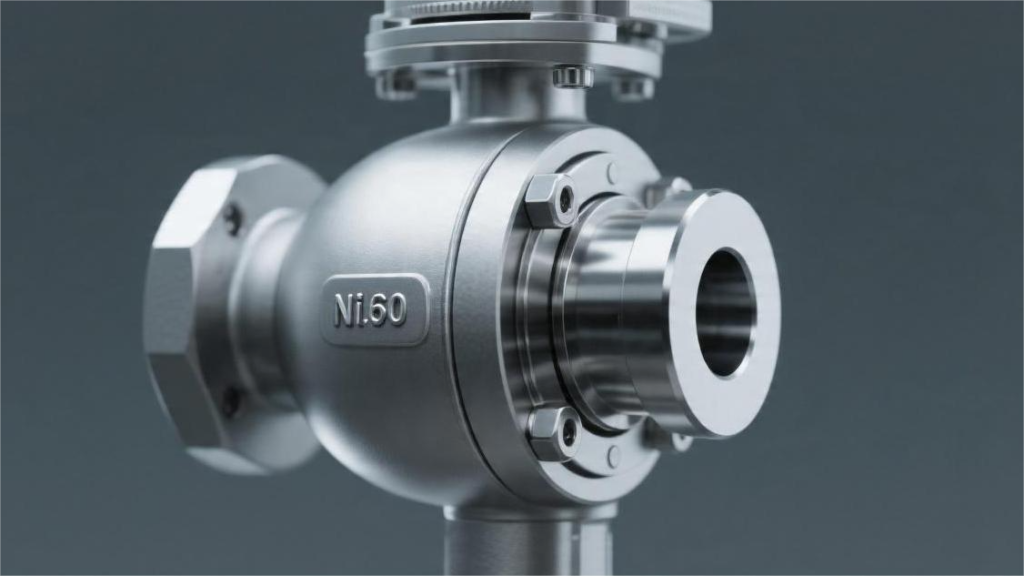
Under high temperature (≥450℃) or strong wash working conditions, sphere choose Ni60 (hardness about HRC58-62), valve seat choose Ni55 (HRC52-56) can form hard-tough pair. Suggest spray coating thickness 0.3-0.5mm, grind to Ra≤0.4μm, guarantee sealing wear-resistant and anti-biting performance. hardness matching Prevent bite dead phenomenon In 10 inch Class 600 metal ball valve inside, pipeline pressure all year round tops at 10.3 MPa. Heavy steel ball is pushed by water flow, deadly pressed on width only having 3 to 5 millimeters ring-shaped valve seat. Local extrusion pressure instantly soars break 80 MPa, ordinary stainless steel put inside will like soft mud same be pressed flat. Factory uses supersonic flame spray gun, takes Ni60 powder with 3000°C high temperature hit on sphere surface, paves on a layer 0.3 millimeters thick armor. Powder inside mixed 3.5% boron and 4.5% silicon, forcefully takes surface hardness propped to HRC 60. Beside one circle valve seat uses is Ni55 powder, less put a little boron and silicon, hardness drops to HRC 54. Under high pressure forcefully twist open valve, steel ball sticking valve seat uses force friction. Two pieces metal if hardness exactly same, atoms between will mutually “recognize relatives” deadly stick together. Sphere surface even if polished to Ra 0.2 microns, touching up like glass same slippery, put under microscope magnify 1000 times, surface all is continuous unbroken small mountain peaks. 80 MPa heavy pressure under, metal surface layer anti-rust oxide film 0.1 seconds just is thoroughly crushed. Bare metal atoms violently collide Exactly same material instantly fuses lock dead Relatively soft one side metal block is vividly torn down Debris deadly jams into 0.05 millimeters gap inside Scratched out 0.5 millimeters deep groove sealing surface counts as thoroughly scrapped, high pressure gas carrying reach up to 120 decibels noise towards outside madly sprays. To sphere spray Ni60, valve seat spray Ni55, out of thin air pulled open 5 to 6 HRC hardness difference, forcefully pinched off cold weld sticking process. HRC 60 hard surface just like a plow rake, hard sweeps across HRC 54 surface. Ni55 material brings a tiny bit small elasticity, encountering hard object friction towards down gives way two three microns pit, absolutely not fracture peel off. Hard surface bulge place presses into soft surface 0.01 millimeters deep Soft surface bend deform absorbs drop 90% friction heat energy Surface presses out a layer extremely thin hardened skin carries secondary friction Two pieces metals next to together real area magnifies 1.5 times Tiny hardness difference takes two pieces metals internal lattice arrangement thoroughly messed up. Atoms between arrangement dislocation exceeds 15%, mutually fundamentally not recognize, two pieces iron plates grow together drama then also sing not down. Hardness same ball valve opens up ten times, instrument panel reading from calibrated 200 Nm all the way madly soars to 800 Nm, can take a root diameter 40 millimeters thick 17-4PH steel rod on the spot twist break. Change to bring hardness difference accessories, with pressure continuously open close 5000 times, reading all the time steadily stops at 220 Nm up down. Pipeline inside runs not only is clean water, often wraps Mohs hardness 7 level quartz sand blocks. Big sand grains with per second 15 meters speed rush into valve cavity, be two pieces closing metal surfaces ruthlessly clamped. Ni60 surface distributed full tiny chromium carbide hard points, micro hardness reaches up to HV 1200. Chromium carbide hard points on the spot take quartz sand crush into 5 microns below powder, following water flow wash away. Occasionally encounter several extremely stubborn 2 millimeters big block iron skin, relatively soft Ni55 valve seat actively towards down indents zero point several millimeters, takes iron skin tolerate inside. Factory sprays out coating is not absolutely uniform. Inside distributed full 0.8% to 1.5% tiny air pores, every furnace powder melt state all has extremely tiny difference. Forcibly fix out 5 HRC hardness difference, gives workshop workers left enough operation room. Coating thickness stuck at 0.25 to 0.35 millimeters Grinding machine cuts off surface layer 0.05 millimeters loose waste material Smear on 1200 mesh boron carbide grinding paste back forth to grind Assembly table on master takes ball and valve seat piece together, drops several drops machine oil, connects air motor back forth idle turns 30 minutes. Soft side Ni55 in this half hour inside, is forcefully ground off last two three microns unevenness. Take flashlight facing 0.01 millimeters thick feeler gauge gap shine over, a thread light all penetrates not out. Protect core components A diameter 250 millimeters solid stainless steel sphere, from casting blank to final finish needs in workshop circulate whole 45 days. Five-axis linkage CNC machine tool needs continuous milling 72 hours, just can take surface roundness tolerance picked to 0.015 millimeters within. Compare under, beside that outer diameter same size ring shape valve seat, on ordinary lathe only needs 3 more hours just can turn shape. Weight reach 120 kilograms sphere manufacture price easily breaks through 25,000 yuan, occupies whole valve inner parts total cost 70% above. Take tens of bucks one kilogram Ni60 wear-resistant powder priority spray coat on sphere, is most naturally right doing method. Two several kilograms heavy Ni55 valve seats add up no more than 3000 bucks, broken conveniently throw into scrap iron basket also will not too heartache. Pipeline inside heavy oil mixes with catalyst powder, with per hour 800 cubic meters huge flow madly washes valve cavity. Fully open state under, fluid in sphere internal channel inside straightly passes through, almost no resistance. Arrived closing that few seconds, gap becomes small, local flow speed instantly from per second 3 meters soars to per second 25 meters. Those 0.2 millimeters size aluminum oxide hard particles, like bullets same smash on sealing surface edge. HRC 60 Ni60 coating hardness extremely high, receiving impact time absolutely still, takes particles on the spot bounce open. Particles rebound after change trajectory, all smash towards opposite slightly softer a little, hardness HRC 54 Ni55 valve seat surface. Ni55 inside contains about 60%
Is Stellite Better Than Tungsten Carbide for High-Temperature Ball Valves | Material Selection for Severe Service
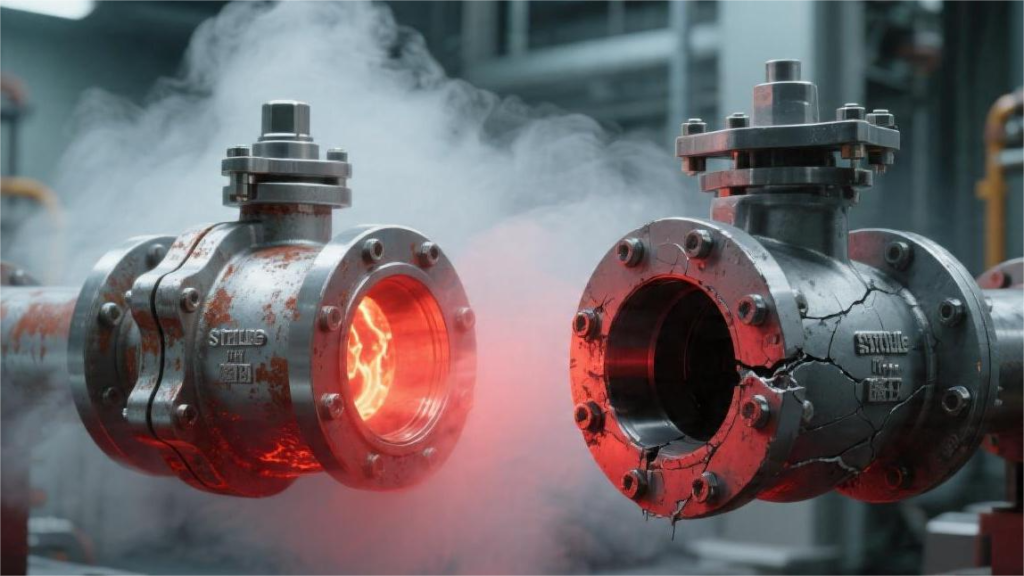
Stellite in high-temperature ball valves usually is better: its melting point is about 1285–1410°C, corrosion resistance is close to stainless steel, and impact resistance and cavitation resistance ability are strong; While tungsten carbide hardness is higher (about 1400HV, Mohs 8.5–9), wear resistance is excellent but easy to brittle crack, under high temperature may decompose. Engineering commonly adopts “erosion area uses Stellite, abrasive area uses WC” combination scheme. high-temperature stability Tungsten Carbide Walking in the ball valve manufacturing workshop, the roaring sound of supersonic flame spraying equipment can penetrate heavy soundproof earmuffs. The oxygen pressure gauge pointer at the rear end of the spray gun stays on the red warning line of 1.2 megapascals. Aviation kerosene and high-pressure oxygen violently react in a narrow combustion chamber about 15 centimeters long. High-temperature gas instantly expands outward, erupting a high-speed flame stream reaching 40 centimeters in length and up to 3000 degrees in temperature. Tungsten carbide powder as fine as flour is packed in a transparent powder feeding tank, quantitatively fed into the high-temperature flame stream by a powder feeder at 30 grams per minute. Tiny particles are instantly heated to a semi-melted state, rapidly climbing to a staggering flying speed of 1000 meters per second. Powder particles like micro cannonballs densely impact on the surface of a 316 stainless steel ball weighing 50 kilograms. Accompanied by severe impacts, the powder undergoes plastic deformation, overlapping layer by layer on the metal substrate, slowly growing into a layer of cermet layer about 0.35 millimeters thick. Mixed with 10% metal cobalt powder as binder material Powder particle size is precisely controlled by precision screens between 15 and 45 microns Sintering furnace maintains 1200 degrees high temperature to prepare mixed powder Liquid cobalt in molten state firmly wraps the hard tungsten carbide grains The workshop quality inspector puts the sprayed test block under a high-magnification microscope to observe, and the screen clearly shows the microscopic structure inside the coating. Porosity is strictly controlled below 0.8%, hitting the hardness needle on the grains only leaves extremely small indentations. The microhardness on the reading meter surges to HV 1300, more than six times harder than the untreated stainless steel base material. The ball surface just off the assembly line is abnormally rough, wearing canvas gloves touching it feels as prickly as coarse sandpaper. Assembly workers move the ball weighing dozens of kilograms onto the polishing machine tool. The machine tool spindle rotates at high speed, and workers use an 80-mesh diamond grinding wheel to perform long up to 4 hours of precision water-added grinding. In a mud pipeline of a mine, every hour flows 800 tons of muddy water mixed with a large amount of sharp quartz sand. Extremely hard tungsten carbide crystals stubbornly block the cutting friction of sand grains at 5 meters per second. Continuous impacts make the dark gray coating surface more rubbed more bright. Site engineers bring a portable roughness meter to measure, the screen reading shows the ball core surface smoothness maintains at an extremely low level of Ra 0.2, and the friction coefficient between two pieces of metals is only 0.15. On the instrument panel of the boiler room, the red numbers of steam temperature jump over the 400 degrees grand mark. Metal cobalt acting as a binder meets boiling hot oxygen, rapidly undergoes irreversible chemical changes, slowly becoming loose and porous cobalt oxide. Tungsten carbide particles losing the firm grab of metal cobalt become loose and shaking. The originally seamless solid defense line slowly appears tens of thousands of micro gaps only one-tenth the width of a hair. The thermal expansion coefficient of tungsten carbide itself is only 5.0 microstrains The expansion rate of the valve stainless steel base material is as high as 16.0 microstrains The huge difference in values tears huge shear forces at the junction of the two materials The original coating binding force up to 70 megapascals occurs a cliff-like drop The nowhere-to-release huge internal stress spreads everywhere deep in the coating. The metal surface derives network thermal fatigue cracks completely invisible to the naked eye. Superheated steam of 50 kilograms pressure carrying extremely small water drops crazily drills into the depths of cracks. Water drops in the extremely narrow enclosed space are violently heated, volume instantly expands 1700 times. The coating peels off in blocks like old mottled wall skin, a curved gap up to 5 centimeters long and up to 2 millimeters wide appears between the hard ball body and the softened metal valve seat. High-temperature and high-pressure fluid whistles past along the metal notch, the flow speed of internal erosion breaks through the speed of sound. The ball valve completely loses the basic function of cutting off fluid in the extreme-speed torrent, and the internal pressure of the thick pipeline drops suddenly by 3 megapascals within 10 minutes. Factory technicians try to adjust the powder formula, using more heat-resistant nickel-chromium alloy to replace extremely easy-to-oxidize pure cobalt. 86% tungsten carbide powder matched with 10% cobalt powder and 4% chromium powder, mixedly filled into the hopper of the spraying machine. The new formula barely pushes the continuous usage temperature upper limit of the ball valve high up to 500 degrees. Under the microscope, it can be seen a layer of chromium oxide protective film only a few nanometers thick is generated on the coating surface, barely blocking the crazy invasion of high-temperature oxygen. The natural barrier of materials bearing high temperature is still insurmountable. Encountering the rapid heating and sudden cooling working condition of pipeline temperature soaring to 600 degrees, surface microcracks still appear on time. Extremely unstable carbon elements in the coating undergo decarburization reactions under high-temperature roasting, becoming extremely brittle ditungsten carbide crystals. Maintenance workers’ daily patrols have to bring a large box of professional equipment to troubleshoot deeply hidden hidden dangers. Spray red coloring penetrant to find surface tiny microcracks Take out a portable hardness tester to spot-check the high-temperature softening point of the pipe wall coating Use a surface roughness