
What to Look for When Buying an Industrial Ball Valve | sealing performance, material options, low maintenance
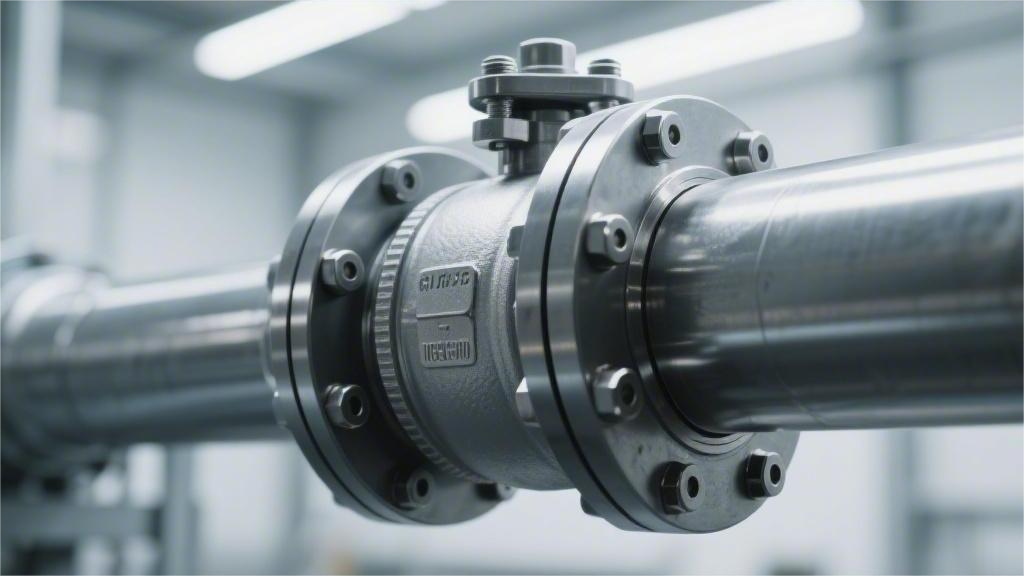
Industrial ball valve selection should target ANSI Class VI shutoff performance, with CF8M stainless steel as the preferred body material for PN64 high-pressure service. To reduce maintenance costs, specify an ISO 5211 direct-mount pad together with live-loaded self-compensating stem packing. Leaving a 15% torque margin during installation helps ensure smooth long-term operation and significantly extends sealing life. Sealing Performance Seat Materials PTFE seats typically have a hardness of Shore D 50 to 60 and a density of 2.14 g/cm³. Under service temperatures around 150°C, this material is prone to cold flow, behaving almost like soft putty. Once pressure exceeds 5 MPa, the sealing surface can thin under compression, leading to internal leakage. RPTFE, reinforced with 15% glass fiber, increases hardness to around Shore D 65. At 14 MPa, its resistance to extrusion is roughly 30% higher than that of virgin PTFE. A 25% carbon-fiber-filled grade can reach a thermal conductivity of 0.6 W/(m·K), dissipating heat at more than twice the rate of standard PTFE. TFM 1600, a modified PTFE, has a lower internal void ratio than standard grades. Its permeability is only about half that of conventional PTFE, providing stronger gas barrier performance. After 5,000 cycles at 20 MPa, seal wear remains below 0.05 mm. Even at -100°C, it still retains 5% elongation and does not fail in a brittle, glass-like manner. PEEK offers a tensile strength of 100 MPa and a melting point of 343°C. In 250°C steam service, dimensional deviation can be held within 0.02 mm. Devlon V-API reaches Shore D 82 with water absorption below 0.1%, solving the swelling and sticking issues common in wet gas field conditions. Nylon 6 provides compressive strength above 80 MPa. With its low coefficient of friction and good impact resistance, it is often used in crude oil pipelines carrying sand or grit. In Class 2500 high-pressure valves, the back of the seat is typically fitted with a Viton GLT O-ring to maintain sealing elasticity at -40°C. Metal-seated valves generally use seat thicknesses ranging from 5 mm to 12 mm. Their surfaces are often coated by HVOF spraying with an alloy of 88% tungsten carbide and 12% cobalt. The coating hardness exceeds HV 1100, equivalent to over HRC 70, allowing it to withstand welding slag and hard mineral debris in the pipeline. Stellite overlay thickness should be at least 1.5 mm. After coating, ball roundness deviation must remain within 0.01 mm. The sealing surface should achieve a roughness of Ra 0.1 μm, with a true mirror finish. An Inconel 718 wave spring behind the seat provides initial preload. Chromium carbide coatings can remain stable up to 815°C, resisting oxidation and spalling at high temperature. For every additional 0.01 mm of roundness error on the ball surface, closing torque rises by about 15%. Under frequent cycling, poor roundness can cause localized seat wear of up to 0.2 mm. The flat engagement tolerance between the stem and the ball should be limited to within 0.05 mm. The stem packing box should contain 5 to 8 rings of high-purity flexible graphite. Standard graphite purity is 98%, minimizing chemical pitting on the stem. Stem surface finish should reach Ra 0.4 μm; once roughness exceeds Ra 0.8 μm, graphite packing may be ground into powder within 100 operating cycles. ISO 15848-1 AH class requires a helium leakage rate below 10^-6 mg/(s·m). API 622 requires the packing to withstand 1,510 thermal cycles at 260°C. Live-loading should use three sets of 17-7PH disc springs. The spring stack must provide sustained compression above 20 MPa to offset packing wear. API 607 fire testing simulates flame exposure at around 900°C. Once the soft seat is burned away, process pressure forces the ball against the metal shoulder inside the valve body. This metal-to-metal secondary seal must limit external leakage to only a few dozen milliliters per minute per inch of valve size. Rising cavity pressure is a major risk factor in valve failure. When trapped liquid inside the cavity expands under heat and pressure exceeds 1.5 times the line pressure, an SPE single-piston seat can lift like a relief valve to discharge pressure. DPE double-piston seats provide bidirectional sealing, but in liquid service above Class 600 they require an external relief valve. When chloride concentration exceeds 50 ppm, 316 stainless steel balls can suffer pitting corrosion. Duplex 2205 has a yield strength of 450 MPa, roughly twice that of 316. This higher strength helps prevent even microscopic seat support deformation above 0.02 mm under pressure fluctuation. PCTFE is specifically used for liquid nitrogen service at -196°C. Its coefficient of thermal expansion is tightly controlled at 0.000045/°C to prevent shrinkage issues at low temperature. A 24-hour cryogenic treatment is required before machining to eliminate residual internal stress. The sealing contact width is typically controlled between 2 mm and 4 mm to balance shutoff performance and service life. Sealing contact pressure is generally set at 1.2 to 2 times the process pressure. Excessive preload can drive operating torque from 50 Nm up to 120 Nm, accelerating wear of the actuator gears. By adjusting the R-angle profile of the seat seal ring, shutoff tightness and operating smoothness can be balanced more effectively. When purchasing, the EN 10204 3.1 certificate should include full chemical composition data. Pressure test reports should clearly state the hold times for both high-pressure hydrostatic and low-pressure pneumatic testing. For a DN200 valve, the high-pressure test must hold for at least 60 seconds with no visible pressure drop to be considered acceptable. International Leakage Testing API 598 specifies that low-pressure pneumatic seat tests must be conducted between 0.4 and 0.7 MPa. For a soft-seated DN50 ball valve, the test must last at least 15 seconds with no visible bubbles. If the size increases to DN200, the required duration rises to 60 seconds. For the high-pressure hydrostatic strength test, the test pressure must be 1.1 times the rated working pressure. If water is used as the test medium, chloride content must not exceed 50 ppm to prevent pitting of stainless steel balls.
Which Industrial Ball Valve Material Is Best for Harsh Environments | stainless steel, carbon steel, chemical resistance
316 stainless steel ball valves outperform carbon steel in harsh environments. With 2%–3% molybdenum, they can withstand strong acid and alkali corrosion as well as temperatures up to 450°C. When selecting a valve, if the process fluid has a pH below 6, switch directly from carbon steel to a 316L flanged ball valve to prevent rust and leakage and to help keep the system maintenance-free for 10 years. Stainless Steel Chemical Stability When 65% nitric acid rushes through a pipeline, the inner wall of ordinary carbon steel will start bubbling violently in less than 3 seconds. With 18% chromium, 304 stainless steel keeps the corrosion rate in strong oxidizing acids below 0.02 mm per year at room temperature. Oxygen atoms in nitric acid continuously replenish the metal surface, so even if the 1–5 nm chromium oxide film is scratched by sand or debris, it can reform almost instantly. At room temperature, 304 can barely tolerate nitric acid below 10% concentration or in the very high range above 85%, limiting metal loss to about 0.1 mm per year. But around 50% concentration, once the liquid temperature rises above the critical 40°C, the surface film can dissolve and peel off completely within hours. This is where 316 stainless steel, with 2.5% molybdenum, takes over. Molybdenum atoms act like anchors in the crystal lattice, locking iron atoms in place. In 20% sulfuric acid at 60°C, the annual corrosion loss of 316 drops to just one-fifteenth of that of 304. When liquid alkali reaches 50% concentration and furnace temperatures exceed 80°C, nickel at the grain boundaries becomes essential. With 10%–14% nickel, 316 stainless steel keeps annual metal loss below 0.05 mm even in hot, concentrated caustic solutions. In plants handling hazardous chemicals, veteran supervisors usually keep a strict fluid compatibility chart close at hand: 98% sulfuric acid: flow velocity must not exceed 1.5 m/s 20% hydrochloric acid: 300-series stainless steels are prohibited 65% nitric acid: operating temperature must stay below 85°C 50% caustic soda pipelines: stress-relief annealing is mandatory Once a ball valve and pipe flange are welded together, the weld zone can enter the dangerous 425°C–815°C sensitization range within seconds. If the torch lingers for just two extra minutes, carbon atoms inside the grains migrate to the boundaries and combine with chromium, forming large amounts of chromium carbide precipitates. As chromium is depleted, the free chromium content at the grain boundaries can drop below the critical 10.5% threshold. Even mildly corrosive fluids can then creep into microscopic gaps. In less than three weeks, a once-solid valve weld can turn into a sponge-like structure full of corrosion pits, with high-pressure fluid ready to burst through at any time. Modern steelmaking uses AOD argon oxygen decarburization to strip carbon from molten steel. Standard 304 stainless steel allows up to 0.08% carbon, while 316L stainless steel cuts that to below 0.03%. With less carbon available, welding can no longer cause enough carbide precipitation to rob chromium from the weld area, so the gaps in corrosion resistance remain protected. On fabrication sheets handed to welders, a few rules are never negotiable: Standard 316: carbon content ≤ 0.08% 316L: carbon content ≤ 0.03% Avoid the 425°C–815°C sensitization range L-grade stainless steel should not be used continuously above 426°C Semiconductor etching lines often run 99.5% glacial acetic acid every day. At room temperature, it is fairly stable. But once a little water mixes in, or the liquid nears its 118°C boiling point, free acetic acid molecules begin attacking the underlying iron atoms in groups. Machining centers mechanically polish the valve bore to a surface roughness below Ra 0.4 μm, leaving it so smooth that even organic residues struggle to cling to it. Then the surface is pickled and passivated to remove microscopic free iron, raising the chromium-to-iron ratio from 1.2 to above 2.5, effectively sealing off the pathways that acetic acid molecules would otherwise exploit. Natural gas from oil and gas wells often contains toxic hydrogen sulfide. Once the partial pressure exceeds 0.05 psi, hydrogen atoms released during hydrolysis—only 0.053 nm in size—can squeeze into metal gaps. These atoms combine into hydrogen molecules, expanding several times in volume and forcing cracks open along the grain boundaries. Valves built to NACE MR0175 sour-service standards must keep hardness below 22 HRC. A slightly softer metal lattice provides more flexibility, allowing hydrogen atoms to diffuse through microscopic voids and escape instead of accumulating and rupturing the steel from within. Paper mills use wet chlorine gas to bleach pulp. Once mixed with water, it turns into hypochlorous acid. Its molecules are small and extremely oxidizing, and the normal 1–5 nm chromium oxide film offers little protection. 317L stainless steel, with 3%–4% molybdenum, can double service life in wet chlorine environments. Negatively charged chloride ions target the weak points in passive films. At just 0.181 nm, they can penetrate the nanoscale oxide layer and combine with iron atoms beneath it to form soluble ferrous chloride. In high-flow pipelines, the dissolved material is constantly washed away, and before long the bright steel surface becomes riddled with fine pinhole pits. 304 vs. 316 When purchasing ball valves for water treatment plants, suppliers usually offer 304 stainless steel first. With 18% chromium and 8% nickel, it is more than adequate for purified water. In dyeing and finishing plants in Jiangsu and Zhejiang, where valves are installed on weakly acidic waste liquid lines, this cost-effective alloy combination can last for years in environments around pH 5.5. Move that same pipeline to a coastal saltworks, and 304 quickly reaches its limit. Seawater contains about 35,000 ppm chloride ions. After two months of sea breeze exposure, the bright silver valve body will start showing reddish rust spots. On chemical plant drawings, buyers often revise the material callout directly to 316 stainless steel, precisely because it can resist the aggressive chloride attack of saltwater. When steelmakers add 2%–3% molybdenum, 304 effectively becomes 316 in terms of chemical resistance. On the spot market, pure molybdenum powder can cost nearly RMB 450,000
What Is the Difference Between Full Port and Reduced Port Industrial Ball Valves | flow capacity, pressure loss, application fit
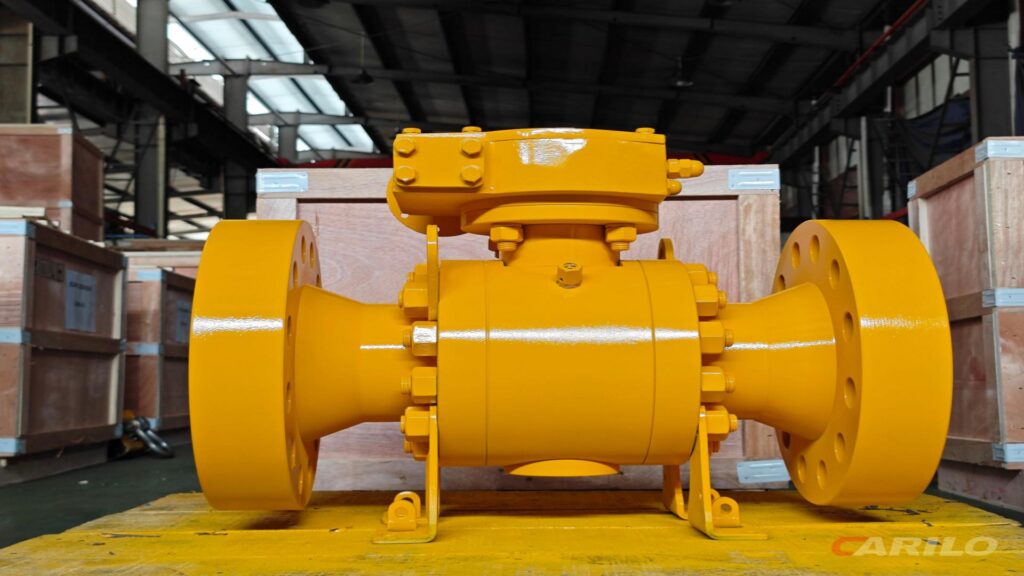
Full-port ball valves have a bore equal to the pipe I.D., delivering 100% flow capacity with extremely low pressure loss. They are ideal for applications that require pigging or the transfer of high-viscosity fluids. Reduced-port ball valves usually have a bore one size smaller than the pipe connection size—for example, a 2-inch valve with a 1.5-inch bore. Flow capacity typically drops to around 70%, with a noticeable pressure drop, making them suitable for conventional clean water or gas systems where pressure loss is not critical. Flow Capacity Full-Port Ball Valve Take a 4-inch valve as an example. Measure the diameter of its internal passage with a caliper, and it comes out to 102.26 mm—exactly the same as the inside diameter of the connected standard steel pipe. As water passes through this metal passage, the flow stream does not contract at all. It maintains the same velocity of 2.5 m/s it had before entering the valve. The friction factor between the pipe wall and the water remains at a very low 0.015. When calculating resistance, the K value of this type of valve is only 0.05, whereas a traditional shutoff valve of the same size can have a K value as high as 5.5. As the water flows through this 150 mm-long metal cavity, it behaves almost as if it were passing through an ordinary straight pipe. That tiny difference in resistance is directly tied to the plant’s power bill. A 75 kW pump running 24 hours a day, transporting clean water with a density of 1000 kg/m³, will see less than 0.5 psi of total pressure loss across a network containing 10 of these equal-bore valves. Over 365 days of continuous operation, the pump motor will consume around 650,000 kWh. Replace those valves with ordinary models whose internal passage is 20% narrower, and the pump must work against an additional 30 psi of resistance. To move the same volume of water, annual power consumption jumps to more than 720,000 kWh, wasting tens of thousands in electricity costs. Because the inside of the passage is smooth and step-free, even fine sand particles suspended in the water have no reason to impact and abrade internal surfaces. When the pipe is carrying ore slurry containing 15% quartz sand, the internal geometry becomes a decisive factor in service life. Sand particles move straight through an equal-bore passage. The probability of impacting the central metal ball surface stays below 2%. Annual wear on the stainless-steel base is only 0.05 mm. Lateral pulling force on the adjacent sealing ring is reduced by 60%. Oilfield maintenance crews keep detailed records of pigging cycles. A 50 km crude oil pipeline may require a 200 mm polyurethane pig every month. Driven forward by a 0.5 MPa pressure differential, the pig scrapes off wax deposits up to 3 mm thick from the pipe wall. When the pig passes through a full-port valve, the contact between its outer rubber skin and the valve wall remains above 99%. With no internal steps or sudden restrictions, tens of kilograms of sticky wax and sludge can pass smoothly through the center. The rubber skin is not cut by metal edges, and the pig arrives intact at the receiving station 50 km away. Highly viscous fluids are especially sensitive to passage diameter. At -10°C, heavy oil can reach a viscosity of 2000 cSt. Under these conditions, even a 1 mm reduction in internal diameter can force the downstream transfer pump to deliver an extra 1.5 kW of power. Heavy oil flows slowly through a 200 mm pipe at 0.8 m/s. Wall adhesion resistance remains at 50 Pa. Outlet flow stays stable at 150 m³/h. Severe pipe vibration caused by flow instability is avoided. In dairy plants, CIP cleaning is carried out with 85°C, 2% caustic solution. Flowing through the valve at 2.5 m/s, the solution can remove 99.9% of milk fat residue in just 5 minutes. Any unreachable dead zone is less than 0.1 cm², and measured bacterial counts remain far below the national limit of 100 CFU/g. The polymer seat seals tightly against the metal ball. In a Class 150 line, the assembly withstands a hydrostatic test pressure of 1.96 MPa. When the valve is fully open, the erosive force of the water on the plastic sealing face is reduced to a minimum. The plastic seat can reliably withstand 50,000 operating cycles. At a coastal LNG terminal, cryogenic pipelines impose extremely strict dimensional requirements on metal components. Liquefied natural gas at -162°C flows through a 24-inch line at 5000 m³/h. Ultra-low temperature causes stainless steel to contract by about 0.3%. A full-port design leaves adequate room for thermal expansion and contraction. Daily gas boil-off is kept below 0.05%. The temperature difference across the valve remains within 0.2°C. Buying an 8-inch carbon steel full-port valve may cost RMB 12,000 initially. But over three years of operation, it can save the trouble of two unplanned shutdown repairs. Each replacement requires 4 experienced technicians working for 6 hours. In a chemical plant, one day of downtime can mean losing 30 tons of plastic pellets. At RMB 8,000 per ton, that is RMB 240,000 in lost output in a single day. A few extra millimeters of full bore on a drawing can turn into real money over hundreds of days of continuous operation. Reduced-Port Ball Valve Open up a reduced-port 2-inch valve connected to a 50 mm water pipe, and the opening through the stainless-steel ball is only 38 mm. Water that originally filled the entire pipe cross-section must suddenly squeeze through a narrow throat. The flow area drops by nearly one-third, and velocity rises instantly from 1.5 m/s to 2.3 m/s. Water crowds through the 38 mm opening and then expands abruptly downstream, striking the pipe wall. Manufacturers describe this with the Cv value. A full-port 2-inch valve can reach around 410, while a reduced-port design drops to about 130. The gauge tells the truth: the flow loses roughly 1.2 psi of pressure passing through the
Best Industrial Ball Valve Options for High-Pressure Applications | sealing performance, body strength, service life
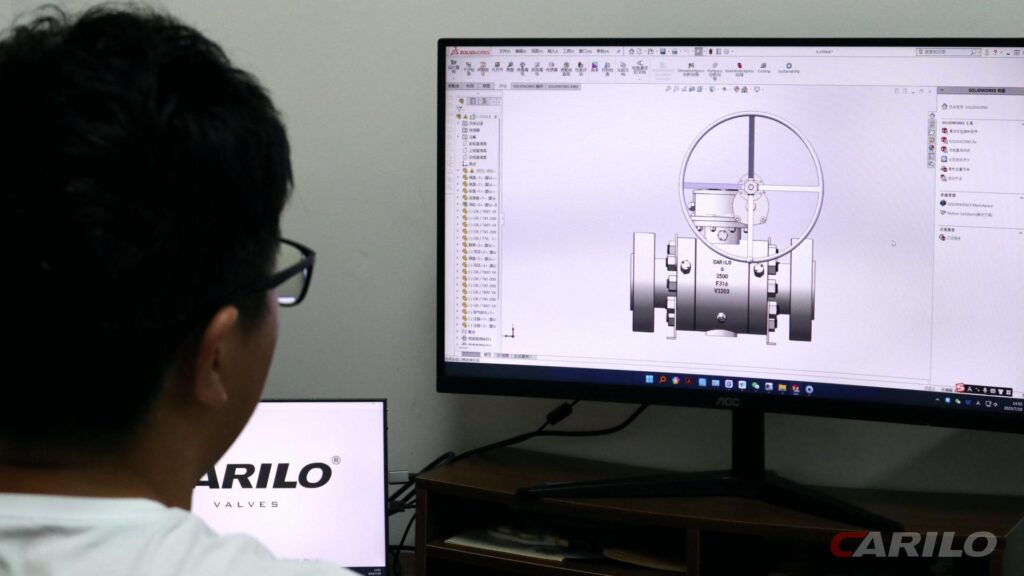
For extreme high-pressure service, a forged steel F316L trunnion-mounted ball valve is the preferred choice to withstand ultimate pressures up to 10,000 PSI. The sealing system should use a PEEK seat paired with a tungsten carbide coating to ensure zero leakage under a 400 bar differential pressure. A gear operator must be used for slow opening and closing to prevent water hammer, and 100,000-cycle pressurized actuation test data should be verified to ensure long-term service life. Sealing Performance High-Pressure Conditions In subsea pipelines 3,000 meters below the Gulf of Mexico, heavy crude loaded with large amounts of quartz sand flows continuously through the line. Internal pressure can reach a staggering 15,000 PSI, roughly equivalent to balancing the weight of a small car on the area of a fingernail. The surrounding seawater stays at 2 to 4°C year-round, while the pipe wall is repeatedly hit by crude oil at 130°C. That severe temperature differential causes the thick steel to expand and contract every day in ways the naked eye cannot see. A standard PTFE gasket would not survive even five minutes in this environment. Under hundreds of tons of pressure, it would deform like chewing gum and extrude past the edge of the steel flange. For deep-sea ball valves, the seat base is upgraded to duplex stainless steel F51, a material with an impressive tensile strength of 620 MPa. Inside that rigid base sits an extremely thin high-performance PEEK ring. Only 0.5 mm protrudes above the metal surface. Any more would be crushed instantly under pressure; any less would fail to seal against the ball. The machining center must hold the dimensional tolerance of that sealing groove within ±0.02 mm, roughly one quarter of the diameter of a human hair. Workshop temperature is kept constant at 22°C Cutting feed rate is set at 0.05 mm per revolution Measurements are taken with a coordinate measuring machine Surface finish must reach Ra 0.4 μm A hydraulic motor delivers 12,000 N·m of torque to rotate a two-ton ball, and at that scale, friction becomes intensely destructive. Sharp-edged quartz particles scour the sealing surface at 15 m/s. A pure plastic seat would already have been ground into invisible powder and flushed away by the flow. To solve this, engineers apply a tungsten carbide coating to the surface of the solid stainless steel ball using HVOF spraying. This gray protective layer is only about 0.3 mm thick, yet its hardness reaches HRC 72, enough to scratch bulletproof glass. But a hard ball and an equally hard metal seat alone are not enough to stop high-pressure media. The two components must undergo a matching lapping process that lasts 48 hours. Workers spread a gray-black lapping compound across the contact surface and use a pneumatic actuator to simulate normal opening and closing cycles, rubbing the parts together tens of thousands of times. 400-grit diamond abrasive for rough lapping 1000-grit abrasive for semi-finishing 3000-grit diamond paste for final lapping Contact ratio must exceed 95% After lapping, the two metal contact surfaces become mirror-like, with almost no dead angles. The fit is so precise that even a water droplet as small as 0.005 mm cannot pass through. Leak testing no longer relies on watching for water droplets. The factory uses high-pressure helium instead. The fully assembled ball valve is placed inside a sealed vacuum chamber, and helium is pressurized into the pipeline cavity. Helium atoms are only 0.26 nanometers in diameter and are extremely penetrating. A probe scans repeatedly along both ends of the valve body, searching for any escaping molecules. If the mass spectrometer shows a leak rate higher than one hundred-thousandth of a cubic centimeter per second (1.0E-5 cc/sec), the entire five-ton valve—worth USD 200,000—must be disassembled and rebuilt from scratch. Even when the process fluid is fully blocked inside the line, the area where the stem exits the body remains the most vulnerable escape path for high-pressure gas. The valve stem rotates dozens of times a day to regulate flow, and repeated metal friction gradually opens fatigue gaps in the packing material. The stuffing box is packed with five alternating rings of flexible graphite. The three middle rings have a density of 1.4 g/cm³ and mainly absorb radial expansion pressure. The two outer graphite rings are reinforced with ultra-fine stainless steel mesh, raising their density to 1.6 g/cm³. Workers then tighten the hex bolts to 150 N·m with a torque wrench, compressing the graphite firmly around the stem. This arrangement can hold gas securely inside the valve body under Class 2500 pressure ratings, or roughly 42 MPa. In refinery lines handling hydrogen sulfide, operating pressure often rises to 20 MPa. At just 10 ppm, H₂S gives off a strong, offensive smell; at 800 ppm, inhalation can stop breathing within minutes. That is why 4 or 6 disc springs are stacked in a specific opposing sequence on the gland bolts, providing about 3,000 pounds of continuous preload. Spring material: 50CrVA spring steel Surface treatment: zinc-plated for corrosion resistance Pre-compression: 2.5 mm Fatigue life: over 100,000 cycles As the graphite rings gradually wear down by 0.1 mm over time, the springs extend automatically and fill the newly formed micro-gaps. Another hidden danger appears once both ends of the pipeline are sealed by the valve: the residual liquid trapped in the cavity between them. Under desert sun, cavity temperature can rise from 25°C to 60°C, and the crude oil inside expands violently. Based on the liquid’s volumetric expansion coefficient, internal hydraulic pressure can rise by 75 PSI for every 1°C increase. In less than an hour, pressure can exceed the yield strength of the cast steel body. Even a 50 mm-thick carbon steel shell can split under that force. To prevent this, an Inconel X-750 spring hidden behind the seat takes over the pressure-relief function. When cavity pressure exceeds upstream line pressure by about 100 PSI, the spring compresses backward by 1 to 2 mm. That tiny movement is enough to let a few drops of crude oil escape
How to Select an Industrial Ball Valve for Corrosive Media | corrosion resistance, seat material, long-term reliability
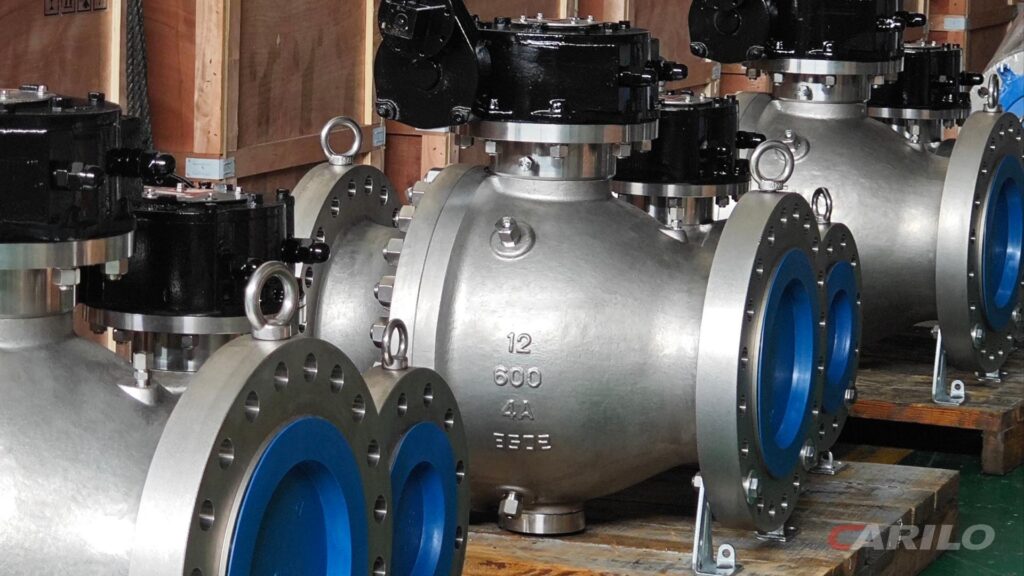
When selecting a ball valve for corrosive media, the valve body should use Hastelloy C-276 to withstand strong acids above 50% concentration, while the seat should be made of PFA-lined material rated to 260°C to ensure zero leakage. It is also recommended to test stem torque once every 5,000 open-close cycles to maintain long-term reliability. Corrosion Resistance Forms of Corrosion Once water contains as little as 500 ppm chloride ions, the wall of an ordinary 304 stainless steel pipe can develop tiny pits about 0.15 mm deep after just 72 hours of continuous exposure. Water trapped inside those pits cannot escape, and the pH can quickly drop to around 1.5. Large amounts of iron ions dissolve into the water, and a sound pipe wall can be fully penetrated within weeks. In chemical plants, material testing is often done by immersing metal coupons in a 6% ferric chloride solution. For every 5°C increase in water temperature, the material’s resistance to localized dissolution drops sharply, and the protective threshold quickly collapses. The joint where the metal ball meets the plastic seat inside a ball valve is one of the most failure-prone areas. Liquid gets trapped in stagnant gaps only 0.02 to 0.1 mm wide. In this dead zone, oxygen is depleted, and the oxide passivation film on the metal surface can no longer remain stable. Dead edges beneath flange gaskets Contact surfaces between soft seats and metal components V-ring grooves at the bottom of the stem Threaded joints where pipes are tightly screwed together In chemical plants, material selection often focuses on the critical crevice corrosion temperature. 2205 duplex stainless steel begins to fail at around 20°C in standard test solutions. By contrast, 254SMO super austenitic stainless steel, with 6.1% molybdenum, raises that threshold to above 35°C. The high heat from welding can turn good steel into scrap. When temperature stays in the 450–850°C range, the carbon in the steel combines with chromium, the element responsible for corrosion resistance. Large quantities of chromium carbide crystals then precipitate along grain boundaries. Legacy-standard fittings with 0.08% carbon Rough castings that have not been solution annealed at 1040°C Weld joints repeatedly built up with excessive current Once chromium content at the grain boundaries falls below 12%, corrosion resistance is effectively lost. Experienced buyers often specify 304L or 316L ultra-low-carbon grades instead, keeping carbon below 0.03% by weight so that destructive chromium carbide precipitation is minimized. When slurry moves through a pipe at speeds above 3 m/s, it becomes disastrous for valves. The freshly formed anti-corrosion film on the metal surface, only about 0.01 microns thick, can be stripped away by sand in less than half a second. The exposed metal then suffers both acid attack and constant abrasive wear. To address this, plants often use supersonic spraying to apply a 0.25 mm tungsten carbide coating to the surface of the valve ball. With a Vickers hardness above HV1200, the coating can withstand severe cutting wear even in pipelines carrying heavy sand-laden media. Serious problems also occur when dissimilar metals are fastened together and immersed in saltwater. In seawater lines, a titanium alloy valve bolted to an ordinary carbon steel flange can develop a natural potential difference of about 0.8 volts. Stainless steel seawater pipes connected to brass fittings Titanium plates touching steel supports near pickling tanks Pipe sections buried in high-salinity alkaline soil The carbon steel, acting as the anode, corrodes 3 to 5 times faster than normal. If the titanium alloy has a large surface area and the carbon steel a small one, the weaker steel section can perforate within days. For this reason, installers must place a 3 mm rubber isolation gasket between the flanges before tightening the bolts. Condensing lines at the top of refinery towers often crack without warning. The pipes operate under about 2.5 MPa of internal pressure while also carrying cooling water containing 30–50 ppm chloride ions. Under the microscope, the cracks appear as branched, tree-like fractures running through the metal grains. From the outside, the pipe may show no visible thinning or deformation. If the water temperature rises from 50°C to 80°C, the growth rate of these branched cracks can multiply. Natural gas wellheads are constantly exposed to high concentrations of hydrogen sulfide. When acidic water reacts with iron, it releases atomic hydrogen. These tiny hydrogen atoms force their way into crystal lattice gaps up to 0.5 mm deep within the steel. Once dozens of hydrogen atoms collect in microscopic voids, they combine into hydrogen gas pockets. The expansion pressure can reach thousands of atmospheres, creating stepped blisters inside the steel plate. Factory qualification testing therefore requires immersion in acidic water at pH 2.7 for 96 hours without cracking. Material Selection On cooling-water circulation lines around chemical plants, WCB carbon steel ball valves are common. Once ambient relative humidity exceeds 70%, an unprimed cast steel surface can oxidize by about 0.01 mm per month. If the line carries dilute sulfuric acid at a concentration as low as 0.05%, the inner wall can develop pinhole corrosion the size of a fingernail in less than three days. Switching to CF8 cast 304 stainless steel, which contains about 18% chromium and 8% nickel, can solve this in some services. In nitric acid below 65% concentration at room temperature, the pipe wall can remain intact for five years without scaling. But if it is mistakenly installed in a hydrochloric acid line, yellow-brown acid-wash bubbles can appear on the surface within two hours. CF8M, which corresponds to 316 stainless steel, usually costs about 30% more per ton than 304. That extra cost mainly comes from the added 2–3% molybdenum. In coastal refinery systems handling seawater with about 30,000 ppm salinity, that molybdenum helps protect the flow passage from rust formation. Under the high-pressure, high-salinity conditions of offshore drilling platforms, ordinary stainless steel is no longer sufficient. 2205 duplex stainless steel uses a roughly 50/50 austenite-ferrite microstructure, giving it a yield strength of about 450 MPa, more than twice that of 316 stainless